
Tommy's Sannomiya higashi ten is a Kobe bread counter with Tabelog Bread WEST 100 selection in 2022 and a sub-¥1,000 price band. Its appeal sits in the city’s everyday bakery culture rather than formal dining: take-out service, family-friendly access, and Sannomiya station-area convenience make it a practical stop for travellers reading Kobe through food at street level.
Pearl is the En Primeur Club membership app — saves, bookings, and concierge access live there. Same editors, same standards.
- Address
- 兵庫県神戸市中央区琴ノ緒町4-1-5-393
- Phone
- +81782527693
- Website
- tommys-kobe.com
 Saves & bookings on Pearl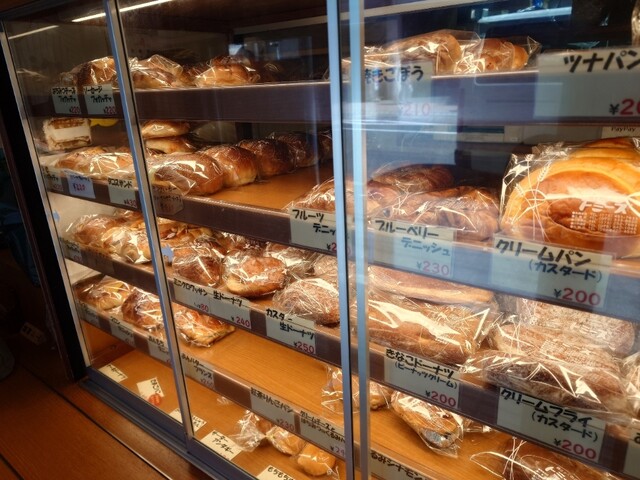
Under the rail-side rhythm of Sannomiya, Kobe’s bakery culture feels less like a detour than a daily system: commuters, families, and office workers folding bread into the shape of the day. That matters in a city better known to visitors for beef, port history, and European-influenced café habits, because the bakery counter is where Kobe’s cosmopolitan appetite becomes ordinary. Tommy's Sannomiya higashi ten belongs to that low-friction category: bread, take-out, children welcome, and a price band that keeps the decision casual rather than ceremonial.
The useful way to read this address is through reputation, not spectacle. Its selection for Tabelog 100 Bread WEST 2022 places it within a regional bakery conversation rather than a restaurant-awards hierarchy. Tabelog’s Hyakumeiten lists tend to reward specialist consistency across categories, and bread is a category where repeat custom matters more than occasion dining. A score of 3.66 adds another signal: this is not framed as a luxury tasting-menu room, but as a recognised everyday bakery in a city with serious expectations around wheat, texture, and morning trade.
Kobe bread culture, measured through a station-side counter
Kobe has long absorbed outside foodways with unusual ease. The port-city history explains part of it, but the more useful observation for travellers is how naturally Western-style bread, coffee, confectionery, and yoshoku sit inside local eating patterns. Around Sannomiya, that shows up in compact formats: counters, cafés, take-out bakeries, and casual dining rooms that do not require a long meal to say something about the city.
That is why the award signal carries weight here. Bread awards are not only about rare ingredients or theatrical service; they capture whether a bakery earns attention in a crowded daily-use field. In Kobe, that field is demanding. A bakery near the station competes with convenience stores, department-store food halls, coffee shops, and old-line neighbourhood operations, so recognition has to imply more than novelty. It suggests a place that can hold its ground in a category where customers notice small differences, even when they are buying quickly.
For a broader read on the city’s range, the contrast is useful. Kobe’s restaurant map can run from beef-focused rooms such as Aburi Niku Kobo Wakkoku Shinkobe ten and Aburi Niku Kobo Wakkoqu Kitano Sakamoto Ten to coffee culture at Akaneya Coffee Ten, casual Japanese rooms such as Akari, and international everyday dining at Ali's Halal Kitchen. Bread sits differently from all of these: faster, cheaper, more repeatable, and more revealing of how locals actually eat between appointments.
Recognition without the theatre of fine dining
The sub-¥1,000 price range is not a minor detail; it changes the editorial frame. Kobe has polished dining rooms where the bill signals commitment before the first course arrives. Comparison venues in the city show the spread clearly: Grill Ippei Sannomiya ten occupies a mid-priced yoshoku bracket, Toriryori Ranpu moves into a higher dinner band, and CHEZ CHILO sits in a much more expensive register. Tommy's Sannomiya higashi ten operates at the opposite end of that spectrum, where the test is not pacing or service choreography but whether a bakery can justify repeat attention at everyday spend.
That makes the format especially useful for travellers. A bakery visit does not compete with a dinner reservation; it fills the gaps around train travel, coffee, hotel check-out, or a walk through the commercial side of Sannomiya. Take-out service reinforces that role. The absence of private rooms and the non-smoking setting point to a functional, open-use bakery rather than a linger-over-wine address. Credit card, electronic money, and QR code payment acceptance also align it with a practical urban stop, not a cash-only nostalgia exercise.
The station-area location matters because Sannomiya is Kobe’s hinge: rail connections, shopping streets, business traffic, and quick food all press into the same blocks. A bakery here is judged by convenience, but convenience alone does not explain awards recognition. The stronger interpretation is that a daily-use format has earned category attention without changing its scale into destination theatre. That is often where Japanese food cities become legible: not at the formal table, but in the inexpensive specialist shop that locals can use repeatedly.
How to fit it into a Kobe food day
Use this as a calibration stop rather than a centrepiece. Kobe’s higher-profile eating is easy to over-plan around beef and dinner reservations, but a bread counter gives a different register of the city: breakfast, train snacks, family errands, and the small purchases that define a neighbourhood’s food habits. Travellers pairing it with coffee or a walk around Sannomiya will understand more about Kobe’s everyday palate than they would from another long-form meal alone.
The wider EP Club Kobe map helps position that choice. For restaurant planning, start with Our full Kobe restaurants guide; for where to stay, compare neighbourhood bases in Our full Kobe hotels guide. Evening planning sits separately in Our full Kobe bars guide, while regional drinking and day-trip context can be checked through Our full Kobe wineries guide and Our full Kobe experiences guide.
For readers building a wider Japan food itinerary, the same logic applies outside Kobe: small specialist formats often say as much as formal dining. Compare that with -Grilled beef Sukiyaki- KAMAKURA TANUKIAN 鎌倉 たぬき庵 in Kamakura. 鮪と炭火焼き うお炭 秋葉原店 in Tokyo.cafe in Osaka.know in Kumamoto, (Shoku) Vietnam in Kawasaki, and [Curry Senmon Ten] Maruyama Kyoju. in Sapporo. Even abroad, Japanese casual formats have become their own lens, as seen at Jōdo Saké Bar in Los Angeles and Onigiri Time in Pasadena.
The verdict is compact: this is a reputation-backed bakery stop in a city where bread has cultural depth, not a formal restaurant to build a night around. The 2022 Tabelog Bread WEST 100 selection, 3.66 score, take-out format, and sub-¥1,000 range make it a sharp read on Kobe’s daily food economy.
Price and Positioning
Comparable options at the same price tier.
| Venue | Cuisine | Price | Notes |
|---|---|---|---|
| Tommy's Sannomiya higashi tenThis venue — the venue you are viewing | Chūō, Japanese Bakery & Café | $ | Not listed |
| Koga Ryuseimen | Higashinada, Ramen & Tsukemen | $ | Not listed |
| Yoshoku no Fuji | Not listed | $ | Chūō, Yoshoku (Japanese-style Western cuisine) |
| Tachinomi ZUTTO | Chūō, Japanese Tachinomi Izakaya | $$ | Not listed |
| Marutaka Chuka Soba Kobe Ninomiya Ninomiya ten | Chūō, Japanese Ramen | $ | Not listed |
| Kinton Koube ten | Not listed | $ | Chūō, Tonkatsu (Japanese pork cutlet) |
Recognition history
Dated appearances from independent guides and award organizations, with the underlying list record or original source where available.
Tabelog 100 #32 · No. 32
Tabelog · Tabelog 100 - Bread - WEST - 2022
Continue exploring
More in Kobe
Restaurants in Kobe
Browse all →
Bars in Kobe
Browse all →

Hotels in Kobe
Browse all →


At a Glance
- Cozy
- Casual
- Lively
- Solo
- Family
- Casual Hangout
- After Work
- Standalone
- Local Sourcing