
A low-cost Kobe ramen counter with serious local gravity, Marutaka Chuka Soba Kobe Ninomiya Ninomiya ten belongs to the city’s everyday noodle culture rather than its luxury dining circuit. Its Tabelog Ramen WEST 100 selections from 2023 through 2025, compact 22-seat format, and ramen-dumpling-Chinese category mix make it a useful read on how Kansai ramen rewards clarity, speed, and repeat custom.
Pearl is the En Primeur Club membership app — saves, bookings, and concierge access live there. Same editors, same standards.
- Address
- Japan, 〒651-0093 Hyogo, Kobe, Chuo Ward, Ninomiyacho, 4 Chome−11−9 二宮ビル
- Phone
- +81 78-242-4008
- Website
- instagram.com
 Saves & bookings on Pearl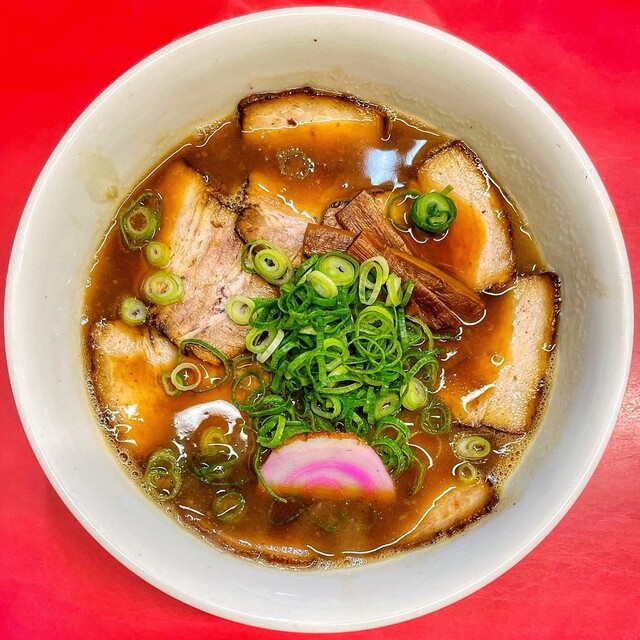
Approaching a Kobe ramen shop of this scale is less about ceremony than compression: a small room, counter seats, table seats, the rhythm of tickets, bowls, and turnover. In Ninomiya, just above Sannomiya’s transport-heavy core, ramen works as both lunch infrastructure and late-night ballast. Marutaka Chuka Soba Kobe Ninomiya Ninomiya ten sits inside that tradition, closer to the city’s working appetite than to the reservation-led dining culture that shapes much of premium Kobe.
That distinction matters. Kobe’s restaurant identity is often reduced to beef, yet the city’s day-to-day eating map is broader: chuka soba shops, gyoza counters, coffee rooms, curry specialists, and small Chinese kitchens all carry equal weight in how locals actually eat. The point here is not a chef-led narrative or a luxury signal. It is a ramen shop selected for Tabelog Ramen WEST 100 in 2023, 2024, and 2025, operating in the same city where higher-spend restaurants such as Bar Ciccia, Ciccia, Grill Suematsu, Yuzaburo, and Ali's Halal Kitchen define different price and occasion bands.
Chuka soba in Kobe is a sourcing story before it is a style statement
Chuka soba has always depended on restraint: a stock base, noodles, tare, fat, and toppings working within a narrow frame. In Kansai, that frame often privileges balance over volume, and Kobe adds a port-city logic to the category. Chinese food has long been part of the city’s urban palate, so a ramen, dumpling, and Chinese classification is not incidental. It places the shop in a practical lineage where wheat noodles, soup craft, and side dishes belong to the same everyday table.
Ingredient sourcing is the quiet engine of this format. A bowl at this level does not need theatrical plating to communicate discipline; it needs stock consistency, noodle handling, and a tare that can survive repetition across lunch and dinner service. The public menu detail does not name suppliers or signature dishes, so the safer reading is structural: the shop’s recognition comes from executing a familiar form with enough consistency to land in a regional ramen selection for three consecutive years. For ramen, that is a more useful credential than luxury language.
The price tier also changes the critical lens. A meal band under JPY 1,000 puts the shop outside the tasting-menu economy and into a category where small variations carry disproportionate weight: broth temperature, noodle timing, table turnover, and whether a side order feels integrated rather than bolted on. In Kobe, where beef restaurants can quickly move into five-figure yen territory, this kind of ramen shop keeps the city’s dining hierarchy honest.
A compact room built for repetition, not performance
The format is small enough to preserve the ramen-shop tempo: 22 seats, split between counter and tables. Counter seating suits solo diners and quick meals; tables make the room more flexible for friends and families. That mix is part of why the category travels well in Japan. Ramen can be solitary, social, late-night, or routine without changing its essential grammar.
Reservations are unavailable, which places the experience in the walk-in economy rather than the concierge economy. That has consequences for travelers. It rewards timing and tolerance for a short wait, not advance planning. Payment is cash-led through a ticket vending machine, and cards, electronic money, and QR payments are not accepted. Those details are not charming footnotes; they define the transaction. Arrive prepared, order decisively, eat with the pace of the room, and the format makes sense.
There is also a useful contrast with Kobe’s more destination-coded meals. A night built around beef at Aburi Niku Kobo Wakkoku Shinkobe ten or Aburi Niku Kobo Wakkoqu Kitano Sakamoto Ten asks diners to think in terms of spend, pacing, and occasion. A ramen stop in Ninomiya asks a different question: how much pleasure can a city deliver through a narrow, inexpensive format repeated thousands of times?
Where it fits in a serious Kobe itinerary
For a traveler mapping Kobe beyond the steakhouse shorthand, this shop works as a corrective. Pairing a ramen counter with a classic coffee stop such as Akaneya Coffee Ten, a neighborhood meal at Akari, or a different casual register at Ali's Halal Kitchen gives a clearer sense of Kobe’s range than another luxury-only itinerary. The broader city edit is easier to plan through our full Kobe restaurants guide, with parallel context in our full Kobe hotels guide, our full Kobe bars guide, our full Kobe wineries guide, and our full Kobe experiences guide.
Japan’s casual dining depth also benefits from comparison outside Kobe. The same trip-planning logic can stretch from beef sukiyaki at -Grilled beef Sukiyaki- KAMAKURA TANUKIAN 鎌倉 たぬき庵 in Kamakura to charcoal tuna cooking at. 鮪と炭火焼き うお炭 秋葉原店 in Tokyo, cafe culture at.cafe in Osaka, and contemporary regional dining at.know in Kumamoto. For a broader casual-food thread, compare it with (Shoku) Vietnam in Kawasaki, [Curry Senmon Ten] Maruyama Kyoju. in Sapporo, Jōdo Saké Bar in Los Angeles, and Onigiri Time in Pasadena.
The editorial case is simple: this is not Kobe at its grandest, but it is Kobe in a form that travelers often understand too late. Ramen here functions as city literacy. The Tabelog recognition supplies the trust signal, the price tier keeps the stakes democratic, and the room’s scale keeps the experience close to the counter culture that made chuka soba endure.
Fast Comparison
Comparable venues by category and price.
| Venue | Cuisine | Price | Notes |
|---|---|---|---|
| Marutaka Chuka Soba Kobe Ninomiya Ninomiya tenThis venue — the venue you are viewing | Japanese Ramen | $ | Not listed |
| Sanuki Menbo Suzume | Traditional Sanuki Udon & Tempura | $ | Chūō |
| Gyoza Senmon Ten Akaman Sannomiya ten | Gyoza specialty shop | $ | Chūō |
| Motomachi Kissa | Traditional Japanese kissaten & café | $ | Chūō |
| Ipposhi | Tori paitan ramen shop | $ | Nada |
| Tommy's Sannomiya ten | Japanese bakery & sandwich counter | $ | Chūō |
Recognition history
Dated appearances from independent guides and award organizations, with the underlying list record or original source where available.
Tabelog 100 #14 · No. 14
Tabelog · Tabelog 100 - Ramen - WEST - 2025
Continue exploring
More in Kobe
Restaurants in Kobe
Browse all →
Bars in Kobe
Browse all →




Hotels in Kobe
Browse all →


At a Glance
- Classic
- Cozy
- Solo
- Casual Hangout
- Late Night
- Standalone
- Sake Program
Current opening hours
- Monday
- Closed
- Tuesday
- 11 AM–2:30 PM, 5 PM–1:30 AM
- Wednesday
- 11 AM–2:30 PM, 5 PM–1:30 AM
- Thursday
- 11 AM–2:30 PM, 5 PM–1:30 AM
- Friday
- 11 AM–2:30 PM, 5 PM–1:30 AM
- Saturday
- 11 AM–2:30 PM, 5 PM–1:30 AM
- Sunday
- 11 AM–2:30 PM, 5 PM–1:30 AM
Hours can change for holidays and private events. Last verified .
Casual, no-frills ramen-shop atmosphere with a small house-restaurant feel and a busy, late-night service rhythm.