
Teuchi Udon Sumita belongs to Tokyo’s serious noodle culture rather than its luxury dining circuit: a compact Akabane-Iwabuchi udon house where hand-cut wheat noodles, tempura, oden, sake and shochu define the appeal. Its repeated Tabelog 100 Udon selections place it among the city’s specialist addresses, with a neighbourhood setting that keeps the experience grounded rather than ceremonial.
Pearl is the En Primeur Club membership app — saves, bookings, and concierge access live there. Same editors, same standards.
- Address
- Japan, 〒115-0042 Tokyo, Kita City, Shimo, 2 Chome−52−8 キヨハイツ
- Phone
- +81 3-3903-0099
- Website
- facebook.com
 Saves & bookings on Pearl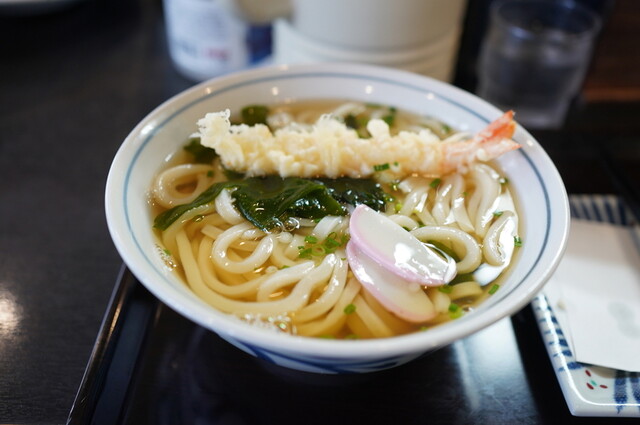
On the northern edge of Tokyo’s restaurant map, the mood changes before the meal begins. Akabane-Iwabuchi is not Ginza, Aoyama, or Ebisu; it is a working neighbourhood of low-rise streets, rail connections, and everyday eating rooms where a serious bowl of noodles can carry as much local weight as a tasting counter across town. In that context, Teuchi Udon Sumita reads correctly: compact, practical, and built around the discipline of hand-made wheat noodles rather than the theatre of destination dining.
Tokyo’s noodle hierarchy is often discussed through ramen and soba, but udon has its own grammar. The pleasure is not only broth or toppings; it is chew, cut, temperature, and the way wheat behaves when handled by a shop that has made the form its centre of gravity. A Tabelog score of 3.72 and selection for Tabelog 100 Udon EAST 2024 put this address in a serious specialist bracket. The recognition is not decorative. It signals a shop judged against other udon houses, not against broad Japanese restaurants where noodles are one category among many.
Akabane-Iwabuchi gives the udon house its proper scale
The northern Tokyo setting matters. Restaurants in this part of the city tend to feel less mediated by hotel concierges and luxury itineraries, and more tied to repeat local use. The room format reinforces that point: 14 seats, with counter seating and two tables, makes the meal close-range rather than grand. This is the scale at which noodle shops can be precise without becoming formal. The counter gives the work a public edge; the tables keep it accessible for small groups and families.
The menu category also tells a Tokyo story. Udon, tempura, and oden sit together comfortably because the meal belongs to the city’s everyday Japanese repertoire, not to the imported logic of courses and pairings. Oden gives the address a colder-weather pull in a city where simmered dishes have long served as a quiet counterweight to sushi bars and grill counters. Tempura, meanwhile, offers the crisp counterpoint that udon shops often use to bring texture and richness to a bowl-led meal. Specific dishes change from shop to shop; the broader pattern is stable and culturally legible.
Against the comparison set, the distinction becomes clearer. Ittoan sits in Tokyo’s soba lane, where buckwheat aroma and dipping sauce are the defining measures. Sansanto and Kuromatsu Honpo Sogetsu occupy lower-budget snack or confectionery territory rather than a full noodle-house rhythm. Darumaya Mochigashi Ten belongs closer to the sweets tradition. Teuchi Udon Sumita’s position is narrower and more meal-shaped: a wheat-noodle specialist with enough supporting categories to justify a trip beyond a quick bowl.
Recognition here belongs to craft, not ceremony
Tabelog’s Hyakumeiten lists are useful in Japan because they reward genre fluency. A restaurant selected for Udon EAST 2024 is not being praised for linen, spectacle, or international polish; it is being placed among addresses that serve a specific food at a level Japanese diners track closely. The repeated selection history matters too, with appearances noted across 2017, 2018, 2019, 2020, 2022, and 2024. Longevity in this category suggests consistency in a field where regulars notice small changes in noodle texture and service rhythm.
The format stays disciplined. Large portions are not offered; diners who want more are directed to order two items. That detail says more than a paragraph of mood-setting could. It frames the kitchen’s portioning as intentional and keeps the experience aligned with the shop’s pacing. Payment is cash-oriented, and the absence of private rooms or private-use service places the restaurant firmly in the everyday Tokyo category, even as its reputation draws serious noodle followers.
Reservations are available only in a limited night format for parties of two or more, up to two groups, and tied to course meals. That creates two different experiences: a daytime noodle run with tighter turnover, and a more structured evening use of the room. Neither should be mistaken for luxury dining in disguise. The value is the opposite: a focused genre restaurant where the craft is allowed to remain plain-spoken.
How to place it within a Tokyo food itinerary
For visitors building a Tokyo dining plan, this is the sort of address that balances the city’s reservation-heavy counters. It belongs beside, not below, sushi, yakitori, tempura, and kaiseki because it explains another part of Tokyo’s food culture: the specialist shop that does one family of dishes with repetition and restraint. The appeal is strongest for travellers who already understand that Tokyo’s strongest meals are not always its longest or costliest ones.
A northern-Tokyo noodle stop also helps break the habit of reading the city only through central districts. Akabane and its surrounding neighbourhoods show a different dining temperature: more residential, less staged, and connected to commuter rhythms. That makes the trip useful beyond the bowl. It gives context to how Tokyo eats when the meal is not attached to a hotel lobby, shopping complex, or international ranking chase.
Readers planning around the city can cross-reference Our full Tokyo restaurants guide, then build contrast with addresses such as . 鮪と炭火焼き うお炭 秋葉原店, 12/10 Shinjuku ten, 124. KAGURAZAKA (Yakitori), 2D Cafe, and 3 Chome no Curry Ya San. For a wider Japan food map, compare the category spread with -Grilled beef Sukiyaki- KAMAKURA TANUKIAN 鎌倉 たぬき庵 in Kamakura.cafe in Osaka.know in Kumamoto, (Shoku) Vietnam in Kawasaki, [Curry Senmon Ten] Maruyama Kyoju. in Sapporo, and [ki:] in Kyoto. City planning does not stop at restaurants: Our full Tokyo hotels guide, Our full Tokyo bars guide, Our full Tokyo wineries guide, and Our full Tokyo experiences guide help frame the wider trip. For overseas Japanese-food references, see Jōdo Saké Bar in Los Angeles and Onigiri Time in Pasadena.
The editorial case is simple: Tokyo’s dining depth is measured by these specialists as much as by its famous counters. Teuchi Udon Sumita is valuable because it keeps udon in its proper register, local, repeatable, tightly focused, and serious without trying to look grand.
At a Glance
Comparable venues by price and recognition.
| Venue | Cuisine | Price | Notes |
|---|---|---|---|
| Teuchi Udon SumitaThis venue — the venue you are viewing | Kita, Japanese Udon | $$ | Not listed |
| Uguisu to Koku | Toshima, Cafe, Bread & Cake | $$ | Not listed |
| Iriya Kishimojin Monzen no Daya | Taitō, Japanese Unagi | $$ | Not listed |
| Kirimugi Ya Jinroku | Shinjuku, Udon and Tempura | $$ | Not listed |
| Grill Sakura | Not listed | $$ | Taitō, Classic Yoshoku (Japanese‑style Western) |
| Namiki Yabu Soba | Taitō, Traditional Japanese Soba | $$ | Not listed |
Recognition history
Dated appearances from independent guides and award organizations, with the underlying list record or original source where available.
Tabelog 100 #20 · No. 20
Tabelog · Tabelog 100 - Udon - EAST - 2024





At a Glance
- Cozy
- Classic
- Solo
- Family
- Casual Hangout
- Standalone
- Beer Program
Current opening hours
- Monday
- Closed
- Tuesday
- 11 AM–1:30 PM, 6–8:30 PM
- Wednesday
- 11 AM–1:30 PM, 6–8:30 PM
- Thursday
- 11 AM–1:30 PM
- Friday
- 11 AM–1:30 PM, 6–8:30 PM
- Saturday
- 11 AM–1:30 PM, 6–8:30 PM
- Sunday
- Closed
Hours can change for holidays and private events. Last verified .
A compact, house-style udon shop with a simple, neighborhood feel and a warm, casual atmosphere.