Our verdict
Tecchan sits in Itoman, the fishing city at Okinawa's southern tip where the prefecture's relationship with the sea is oldest and most direct. Dining here places you inside a supply chain that runs from the East China Sea to the plate with minimal interruption, a different proposition from the resort-facing restaurants further north along the coast.

Pearl is the En Primeur Club membership app, where members save venues, book tables and use the concierge.
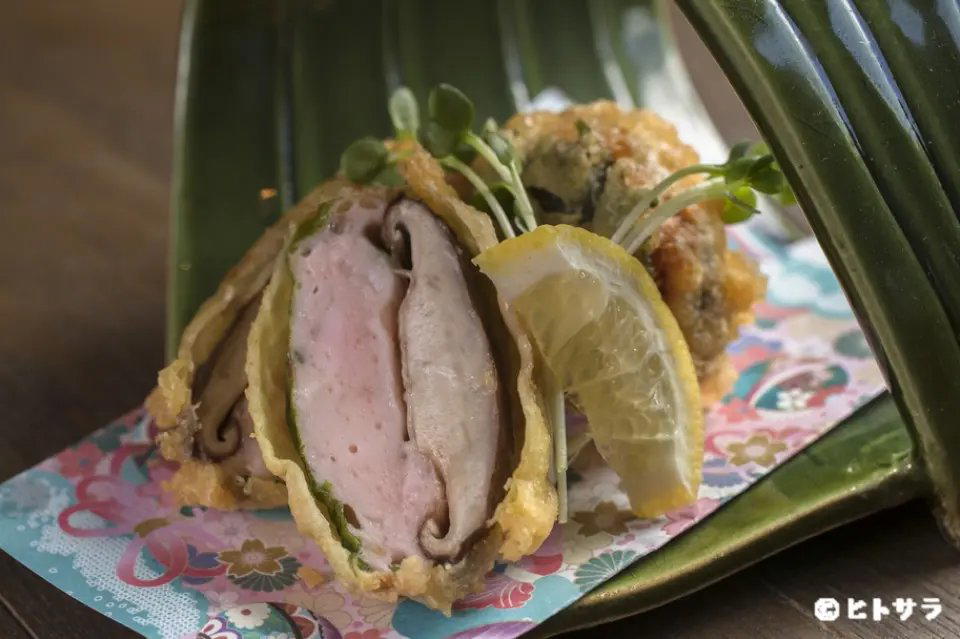
The menu
What to order
- Fish from Coastal Waters Grilled in Butter
Where Okinawa's Fishing Economy Meets the Table
Itoman has been Okinawa's primary fishing port for centuries. The city sits at the island's southern tip, and its identity is inseparable from the water, the East China Sea to the west, the Pacific to the east, and a working harbour that supplies much of the prefecture with its daily catch. Restaurants in this part of the island operate inside that supply chain rather than at a remove from it. The resort corridor further north, from Naha up through Onna Village, draws the international hotel dining rooms and the polished kaiseki counters; Itoman draws the people who want to eat what came off the boat that morning. Our full Itoman restaurants guide maps that distinction across the city's dining options.
Tecchan, addressed at 989-57 Itoman in the Okinawa 901-0361 postal district, occupies this context. The address alone positions it away from tourist infrastructure and inside a working port city, the kind of location where ingredient provenance is a matter of geography rather than marketing language.
The Sourcing Argument for Itoman
Okinawa's cuisine rests on a different biological pantry than mainland Japan. The subtropical waters around the Ryukyu archipelago support species rarely found in the colder seas off Honshu: ishimochi, gurukun (the prefecture's designated fish), tuna from the Kuroshio current, and a range of reef fish that appear in mainland Japan only as imports, if at all. Proximity to the source is not a minor variable here. Fish landed in Itoman and served the same evening is a categorically different product from the same species shipped north and distributed through Tokyo's Toyosu market system.
This sourcing geography is what separates the Okinawan south from the capital's finest seafood counters. Harutaka in Tokyo and the leading Ginza omakase houses achieve precision through aging, selection, and technique applied to distributed supply chains. Itoman operates on immediacy and specificity of place. Neither approach is superior; they are answers to different questions about what fish-forward cooking can be.
The same logic applies when you consider how Japan's premium restaurant tier handles sourcing at the national level. HAJIME in Osaka builds its tasting menus around ecological sourcing philosophy, sourcing from small producers across Japan's coastline. Gion Sasaki in Kyoto draws on Kyoto's traditional supplier networks. What Itoman offers is something structurally simpler and more direct: a fishing economy so close to the restaurant that the supply chain barely qualifies as a chain at all.
The Broader Okinawan Table
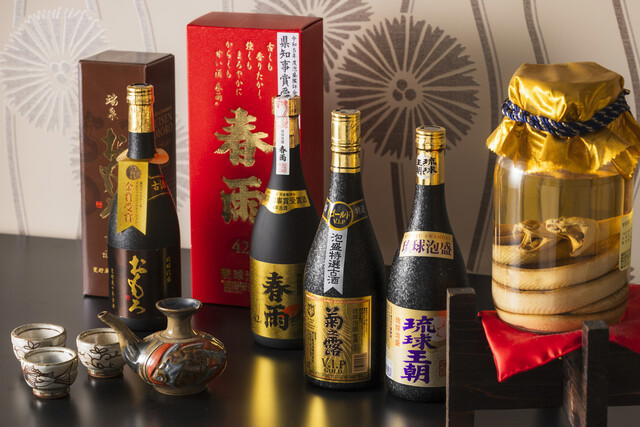
Understanding Tecchan requires placing it inside Okinawan food culture rather than inside a national fine-dining conversation. Okinawan cuisine is the product of a distinct historical trajectory, the Ryukyu Kingdom maintained independent trade relationships with China, Southeast Asia, and mainland Japan simultaneously, and that exchange left traces in the kitchen. Pork holds a central position that has no equivalent in most Japanese regional cuisines. Bitter melon (goya) appears in dishes from domestic cooking through to restaurant menus. Awamori, the Ryukyuan spirit distilled from Thai indica rice, frames the drinks side of the meal in a way that sake does further north.
Fish-focused dining in Itoman sits alongside this broader pantry. The city's restaurants draw on what the sea provides, but they also operate within the island's distinct flavour preferences, a tendency toward assertive seasoning by mainland Japanese standards, and a willingness to use ingredients that Tokyo restaurants would classify as too regional to place on a menu. Goh in Fukuoka and akordu in Nara each represent how Japanese regional identity can translate into fine-dining format. Itoman's version of that translation is less formal, more rooted in the working-port economy.
Planning a Visit to Itoman
Itoman sits roughly 13 kilometres south of Naha, the prefectural capital and the main entry point for visitors arriving at Naha Airport. Without a car, reaching the city requires planning, public transport connections between Naha and Itoman exist but are not as frequent as within Naha itself, and the restaurant addresses in the southern part of the city are not well-served by bus routes designed for commuters rather than diners. Renting a car in Naha remains the most practical approach for an evening in Itoman, and it also opens up the southern cape area, including the Okinawa Peace Memorial Park, which warrants time before dinner.
The leading months to eat seafood in Okinawa's south run from late autumn through spring, when the subtropical summer heat gives way to milder temperatures and the fishing activity around the port is at its most varied. Summer brings humidity and the typhoon season risk; restaurants in Itoman, as across the island, may close at short notice during weather events. Arriving between October and March gives the most predictable conditions. For context on what comparable regional Japanese dining experiences look like in other cities, Blue Ocean Steak in the Nakagami District represents the Okinawan mainland restaurant scene at a different price point and format.
The practical approach is to visit in person during afternoon hours to confirm availability, a common arrangement for smaller restaurants in working-port cities where the daily menu depends on what arrived at the harbour that morning. Bistro Ange in Toyohashi and Denko Sekka in Hiroshima illustrate how regional Japanese restaurants at different points on the formality spectrum handle the relationship between daily supply and menu structure.
For those building a broader Japan itinerary that includes Itoman, comparison with what the premium restaurant tier offers elsewhere in the country is useful for calibrating expectations. Le Bernardin in New York City and Atomix in New York City represent the kind of structured, award-validated fine dining that Itoman's port restaurants do not attempt to compete with. The value proposition here is orthogonal: immediacy of sourcing, local specificity, and a dining context shaped by the fishing economy rather than by hospitality industry formats. Cafe Naoshima Konichiwa in Naoshima offers a useful comparison case for how Japan's smaller island communities build food culture around what is immediately available and locally produced.
Additional regional context is available through bodai, Birdland in Sakai, 一本杉川島 in Nanao, 古仁屋山乃 in Sapporo, 湖畔荘 in Takashima, and 羽根屋 in Nishikawa Machi, each of which represents a different strand of Japan's regional dining identity.
Frequently asked questions
Does Tecchan work for a family meal?
Port-area restaurants in Itoman generally run informal, making a family setting plausible. Itoman itself is a working fishing city rather than a resort strip, so the surrounding atmosphere tends toward casual local use.
What's the overall feel of Tecchan?
Tecchan sits in Itoman at Okinawa's southern tip, a city whose identity is built around its fishing port rather than tourism infrastructure. Expect something closer to a working local restaurant than a polished dining room. That context shapes everything from the menu logic to the clientele, this is not the Naha fine-dining circuit.
How far is Tecchan from Naha, and how do you get there?
Tecchan's address places it in Itoman, roughly 13 kilometres south of Naha along Okinawa's main island. Public transport between Naha and Itoman exists but is infrequent, and the port area is difficult to cover on foot from any bus stop. A rental car or taxi from Naha is the most dependable option for the journey.
What's the must-try dish at Tecchan?
No confirmed dish list exists for Tecchan. Itoman's position as Okinawa's primary fishing port means the most credible strategy is asking what came off the boats that morning. The subtropical waters around the Ryukyu archipelago produce species rarely found in mainland Japan, so the daily catch is the most honest guide to ordering.
In Context: Similar Options
Comparable venues nearby, for context on price, style, and recognition.
| Venue | Cuisine | Price | Awards | Notes |
|---|---|---|---|---|
| TecchanThis venue (the venue you are viewing) | Okinawan Seafood Izakaya | $20–30 | Not listed | Not listed |
| Itoman Gyomin Shokudo | Okinawan seafood diner | $20–30 | Tabelog 100 #62 | Nishizakicho |
| Kawakami-an | Authentic Shinshu Soba & Duck Specialties | $20–30 | Not listed | Karuizawa Ginza |
| Takehara | Traditional Tuna Specialist | $10–20 | Not listed | Katsuura |
| 麺屋 菜々兵衛 | Ramen | $10–20 | Tabelog 100 #82 | Shiroishi-ku |
| Tatsu (日本の大衆食堂 たつ吉) | Japanese Grill & Craft Beer | $10–20 | Not listed | Narita Airport |
Continue exploring
More in Itoman
Restaurants in Itoman
All restaurants in Itoman →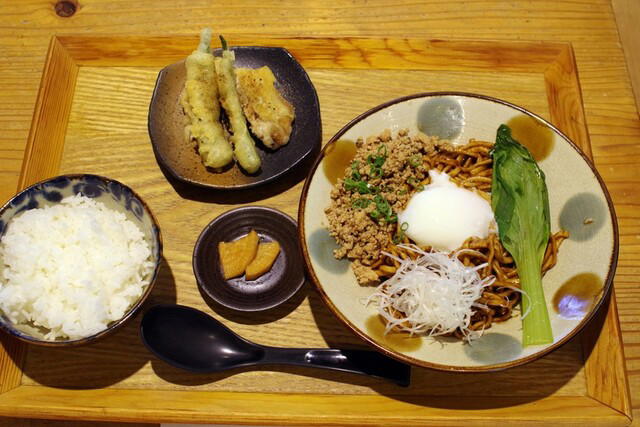
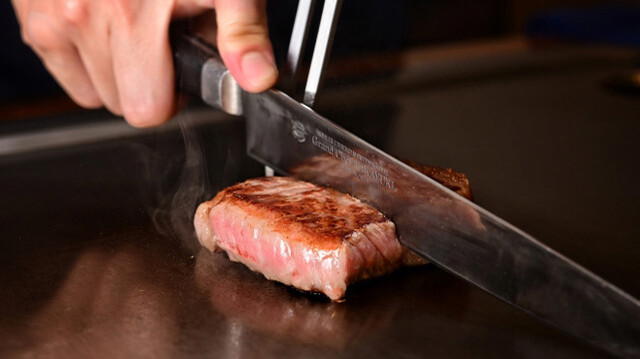
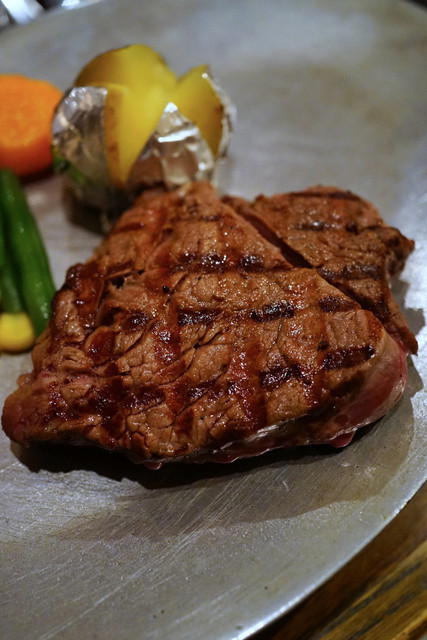

Details
- Cozy
- Lively
- Casual Hangout
- Group Dining
- Open Kitchen
- Sake Program
- Local Sourcing
- A La Carte
- Small Plates
- Sake
- Shochu
Current opening hours
- Monday
- 5 PM–12 AM
- Tuesday
- Closed
- Wednesday
- 5 PM–12 AM
- Thursday
- 5 PM–12 AM
- Friday
- 5 PM–12 AM
- Saturday
- 5 PM–12 AM
- Sunday
- 5 PM–12 AM
Hours can change for holidays and private events. Hours as of .
Warm and relaxing atmosphere with open kitchen counter seating and sunken kotatsu table seating.