Our verdict
Taverna al Remer occupies a medieval canalside setting in Cannaregio, placing it within Venice's mid-tier dining tier alongside trattorias focused on lagoon seafood and traditional cicchetti. Compared to the formal tasting-menu houses around Rialto and San Marco, al Remer offers a more accessible register while still drawing on the same Adriatic larder that defines serious Venetian cooking.

Pearl is the En Primeur Club membership app, where members save venues, book tables and use the concierge.
The menu
What to order
- Tiramisù
- Spaghetti al nero di seppia
- Baccalà mantecato
A Courtyard Off the Grand Canal
Arriving at Taverna al Remer requires a degree of deliberate navigation that most canal-facing restaurants in Venice do not. The address sits inside Campiello Widmann, a small courtyard in Cannaregio that opens unexpectedly from the narrow calle running parallel to the Grand Canal. The physical approach, off a quieter route, through an arched passage, places al Remer at a remove from the foot traffic that sustains the more visible dining rooms around Rialto and the Strada Nuova. That distance is not incidental. Venetian dining rooms that have lasted have often done so by serving a neighbourhood rather than a tourist corridor, and Cannaregio has long operated on that logic.
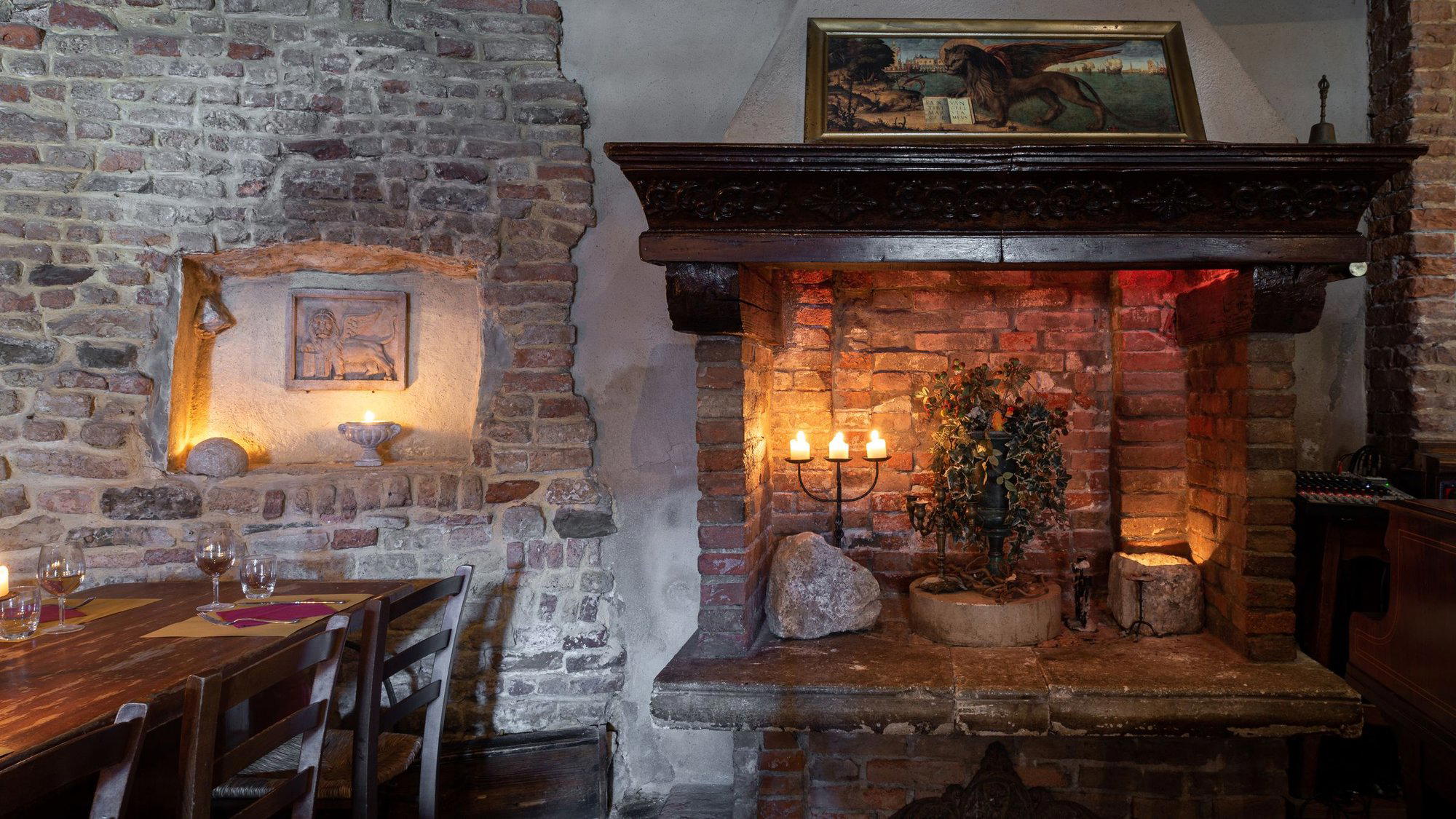
The setting itself carries considerable historical weight. Gothic stone arches frame the courtyard, and the dining space retains structural elements from the medieval building fabric of the sestiere. In a city where atmospheric spaces are frequently converted into scenery for genericised menus, the architectural backdrop at al Remer functions as context rather than decoration, it places the kitchen inside a specific tradition of lagoon-edge hospitality that predates the modern restaurant entirely.
Where Adriatic Produce Meets the Venetian Kitchen
Venice's culinary identity has always been shaped by its position as a trading port as much as by its fishing tradition. The Rialto market, which remains one of the most important fresh seafood markets in northern Italy, supplies the same Adriatic species, molecole (soft-shell crabs), moeche, seppie, branzino, and coda di rospo, to kitchens across the city. What separates dining rooms in Venice is less the sourcing than the technique applied to those shared ingredients.
The broader category that Taverna al Remer occupies sits between the cicchetti bar and the formal tasting counter. At this register, the kitchen is expected to handle traditional preparations, sarde in saor, bigoli in salsa, risotto di go, with a degree of craft that a bacaro does not aim for, but without the architectural plating language of the city's Michelin-facing rooms. This is the territory where Venetian cooking is most honestly tested, because the dishes are well known enough that a competent diner can identify the difference between a version made with care and one produced at volume.
The intersection of local ingredient and applied technique is the operative question for any kitchen working in this register. Branzino sourced from the lagoon carries a salinity and texture that differs from farmed alternatives, and the way a kitchen chooses to cook it, whether it respects that quality or masks it, signals its actual orientation. The same logic applies to the choice between dried and fresh bigoli, or between house-made and purchased pasta. These are the calibrations that experienced diners in Venice use to read a room's seriousness, long before consulting any formal rating.
For context on how this fits within the wider city, the restaurants at the formal end of Venetian dining, including Glam Restaurant by Enrico Bartolini, Local, Oro Restaurant, Ristorante Quadri, and Wistèria, operate with tasting menus, serious wine programs, and price points that sit considerably above the mid-tier. Al Remer is not in direct competition with that cohort. It belongs to a different and equally valid layer of the city's hospitality, where the measure of success is execution of tradition rather than departure from it.
Cannaregio as a Dining Neighbourhood
Venice's six sestieri each carry a distinct dining character. Cannaregio, the largest and among the most residential, has a higher proportion of kitchens oriented toward regulars than toward the passing trade that sustains restaurants in San Marco or Dorsoduro. This does not make it less serious, several of the city's most durable dining rooms operate here, but it does mean that the metrics of success differ. Longevity, a returning local clientele, and a consistent seasonal menu matter more in Cannaregio than a placement on a tourist itinerary.
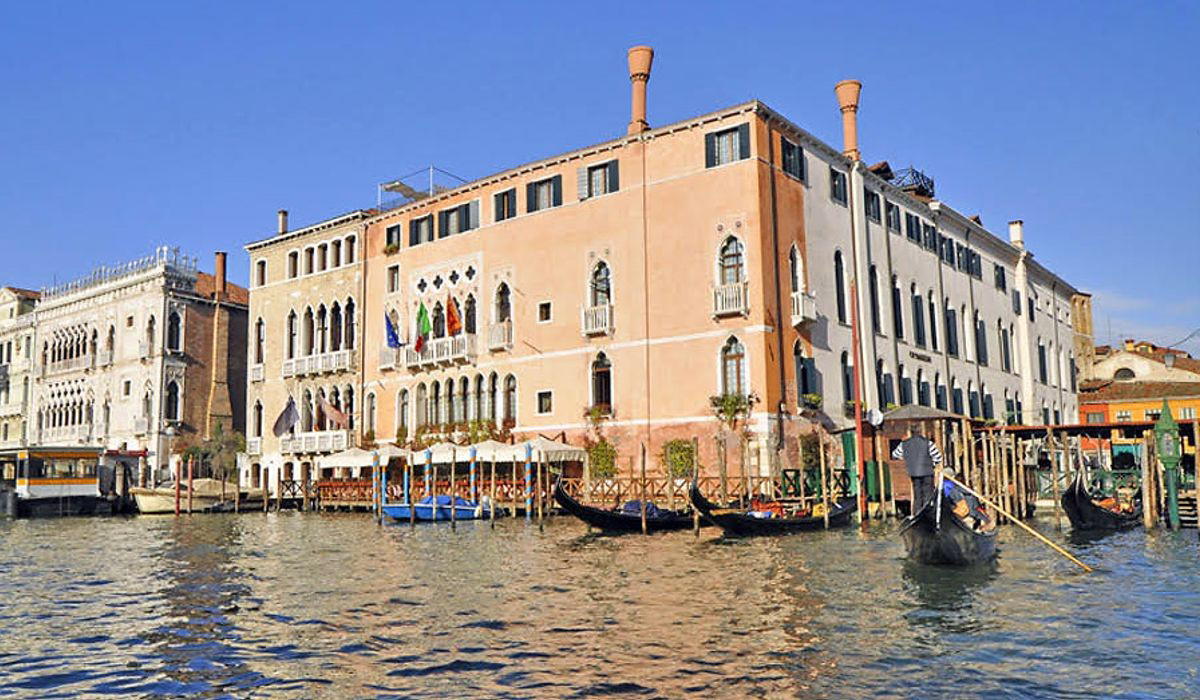
The neighbourhood's relationship with the Grand Canal at its southern edge gives certain addresses, including al Remer, a physical setting that few restaurants in other parts of the city can match. A canalside courtyard in Cannaregio, with views toward the water and the sounds of boat traffic carried on the evening air, is not a manufactured experience. It is simply the physical reality of eating in that part of the city.
For travellers building a Venice itinerary with multiple dining stops, our full Venice restaurants guide maps the city's dining across all price tiers and neighbourhoods.
The Wider Italian Frame
The tradition that Taverna al Remer connects to is one that runs across northern and central Italian coastal cooking. The emphasis on single-source seafood, minimal intervention, and regional pasta forms is a discipline that the leading Italian kitchens, from Uliassi in Senigallia to Quattro Passi in Marina del Cantone, interpret at a technical level that places them in national and international conversations. At the level below that tier, the discipline still applies, even if the ambition is more contained. The question is whether a kitchen working in the mid-register applies the same respect for ingredient quality that the starred rooms do, or whether it defaults to volume and convenience.
Italy's most influential dining rooms, Osteria Francescana in Modena, Le Calandre in Rubano, Piazza Duomo in Alba, Dal Pescatore in Runate, Reale in Castel di Sangro, and Enoteca Pinchiorri in Florence, operate in a different register entirely. But the values they represent, seasonality, regional specificity, respect for the primary ingredient, filter down through the entire Italian dining culture, and a kitchen like the one at al Remer is legible against that broader backdrop. The alpine-facing kitchens of northern Italy and the urban fine-dining rooms of Milan each apply the same underlying logic to their own regional ingredients. Venice's lagoon simply provides a different larder.
Planning a Visit
Taverna al Remer is located at Campiello Widmann già Biri, 5701, in the Cannaregio sestiere. Finding the courtyard requires attention on arrival, the campiello is set back from the main pedestrian routes and does not announce itself from the street. Visitors approaching from the Rialto direction should follow the canal bank rather than the Strada Nuova to locate it more directly. Given that the setting includes outdoor courtyard seating, visiting during the quieter shoulder seasons of April through early June or September through October is likely to be more comfortable than the peak summer period, when Cannaregio's relative calm is less guaranteed.
Frequently asked questions
What should I order at Taverna al Remer?
Venetian kitchens at this register draw from a shared Adriatic larder centred on lagoon seafood, so the strongest choices tend to follow the season and whatever was landed that morning at the Rialto market. Traditional preparations, sarde in saor, risotto with local fish, bigoli in salsa, function as the clearest signals of a kitchen's technical commitment at this price tier. If the menu references the current season or names specific local species, those dishes are worth prioritising over anything with a more international framing. Venice's leading formal rooms, including Ristorante Quadri and Glam by Enrico Bartolini, apply the same Adriatic sourcing logic at a higher technical register, which provides a useful calibration point.
Is Taverna al Remer reservation-only?
In Venice broadly, any restaurant with a courtyard setting and limited outdoor capacity will fill quickly on weekends and during the summer months, so contacting the venue ahead of your intended visit is advisable. The city's mid-tier dining rooms operate in a competitive space, those at the formal end, such as Oro Restaurant and Local, typically require advance reservations weeks or months out, while neighbourhood trattorias sometimes accommodate walk-ins, particularly at lunch.
What's the defining dish or idea at Taverna al Remer?
The defining idea at this register of Venetian dining is the relationship between a tightly constrained local ingredient list and the technique applied to it. The lagoon and the northern Adriatic produce a specific set of species, moeche, seppie, branzino, molecole, and the Venice dining tradition has developed its own vocabulary for handling them. A kitchen that applies those traditional methods accurately, without defaulting to simplified versions of the dishes, is making a statement about seriousness. That orientation is more meaningful as a signal than any individual dish, though the traditional pasta and risotto preparations tend to show it most clearly. For the city's most technically advanced interpretations of the same ingredients, Wistèria offers a useful comparison point.
How does Taverna al Remer's canalside setting compare to other Venice courtyard restaurants?
Courtyard dining in Venice is rarer than the city's general density of canal-facing terraces might suggest, most outdoor spaces are either bridge-adjacent or directly on a riva, rather than set back in a private campiello. Al Remer's position inside Campiello Widmann places it in a smaller category of rooms where the outdoor setting feels genuinely enclosed and away from the main pedestrian flow, rather than simply adjacent to it. That physical distinction matters in summer, when the primary calli become congested. For travellers comparing experiences across the city and Italy more broadly, Le Bernardin in New York and Atomix represent how comparable coastal seafood traditions are applied in a formally different dining culture, which underscores how specifically Venetian the al Remer setting and format remain.
Compact Comparison
Comparable venues nearby, for context on price, style, and recognition.
| Venue | Cuisine | Price | Awards | Notes |
|---|---|---|---|---|
| Taverna al RemerThis venue (the venue you are viewing) | Venetian Seafood Taverna | $50–100 | Not listed | Not listed |
| Ombra del Leone | Venetian Italian | Not listed | Falstaff Restaurant - 93 Falstaff Points | San Marco, Classic Venetian Seafood |
| Ristorante Casa Cappellari | Venetian Trattoria | $50–100 | Not listed | San Polo, Venetian Trattoria |
| Principessa | Venetian Seafood | $50–100 | Not listed | Castello, Venetian Seafood |
| Osteria Enoteca San Marco | Modern Venetian Osteria | $50–100 | Not listed | San Marco, Modern Venetian Osteria |
| Trefanti | Modern Venetian Seafood Osteria | $50–100 | Not listed | Santa Croce, Modern Venetian Seafood Osteria |
Continue exploring
More in Venice
Restaurants in Venice
All restaurants in Venice →
Bars in Venice
All bars in Venice →


Details
- Romantic
- Rustic
- Intimate
- Classic
- Date Night
- Special Occasion
- Waterfront
- Live Music
- Historic Building
- Terrace
- Extensive Wine List
- Waterfront
- A La Carte
- Vegetarian Friendly
- Gluten Free Options
Current opening hours
- Monday
- 11:30 AM–11:45 PM
- Tuesday
- 11:30 AM–11:45 PM
- Wednesday
- 11:30 AM–11:45 PM
- Thursday
- 11:30 AM–11:45 PM
- Friday
- 11:30 AM–11:45 PM
- Saturday
- 11:30 AM–11:45 PM
- Sunday
- 11:30 AM–11:45 PM
Hours can change for holidays and private events. Hours as of .
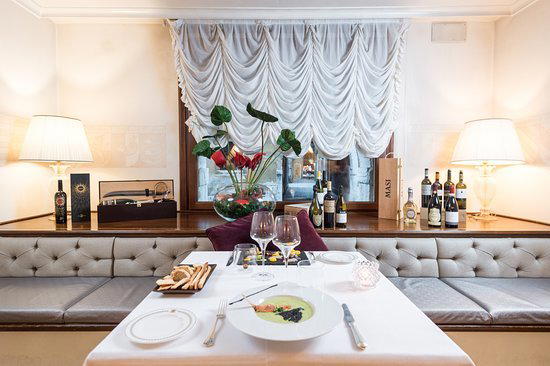
Dim lighting in rustic old warehouse with ancient fireplace and old brickwork, creating romantic and timeless Venetian charm.