
Charcoal yakiniku in Sakae with Tabelog 100 Yakiniku EAST 2025 recognition, a late-night format, and a spend level that sits below several Nagoya peers. The appeal is practical as much as culinary: grilled beef, izakaya flexibility, drinks from sake to cocktails, English-supporting menu tools, and enough scale for groups without drifting into banquet-room anonymity.
Pearl is the En Primeur Club membership app — saves, bookings, and concierge access live there. Same editors, same standards.
- Address
- 愛知県名古屋市中区栄3-1-18 23ビル B1F
- Phone
- +81522657789
- Website
- tabelog.com
 Saves & bookings on Pearl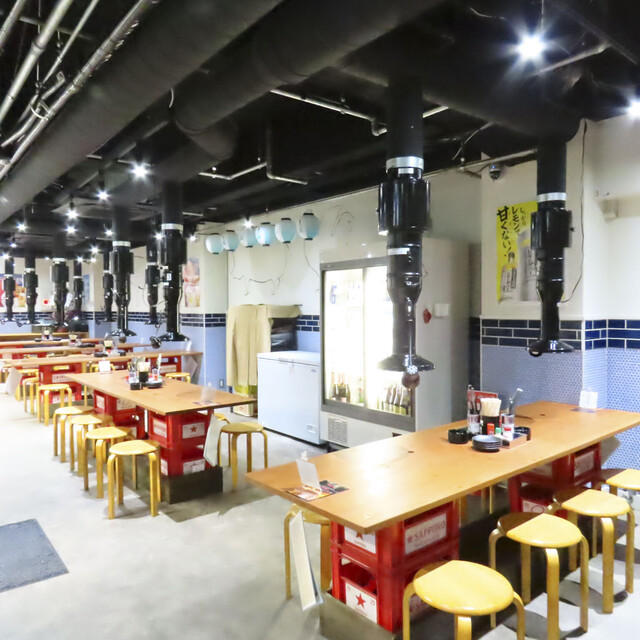
Below street level in Sakae, the appeal starts before the grill is lit: a basement room, charcoal smoke, tables set for meat over ceremony, and Nagoya’s late urban rhythm. Yakiniku here is not a hushed tasting-menu ritual. It is social dining built around heat, timing, drinking, appetite, and diner control, with value shaped by how much work the table wants to do.
That matters in Nagoya, where restaurant culture often rewards substance over theatre. Tokyo’s premium yakiniku has moved deeper into branded beef, omakase pacing, and counter-like exclusivity; Nagoya’s stronger middle tier is more useful for travellers wanting quality beef, conversation, and a bill that does not behave like Ginza. takumi sits in that bracket: recognised by Tabelog 100 Yakiniku EAST 2025, yet operating with the accessibility and breadth of a city-centre grill rather than the posture of a rarefied beef salon.
Charcoal, beef, and the Sakae late-night equation
Japanese yakiniku sits between restaurant and participation: the kitchen sources and cuts; the diner finishes. In charcoal-led rooms, temperature and timing shape the meal in real time. The format suits Sakae, where dinner can slide into drinks without changing neighbourhoods. The table is less about a single chef’s authorship than the cut list, ventilation, pacing, drink program, and whether the room can handle groups without turning blunt.
The category mix defines the venue. Yakiniku anchors it, but izakaya and ramen sit nearby, pushing the experience toward a wider Nagoya night out rather than a narrow beef-only tasting. That flexibility is part of the value proposition. Diners are not paying for a scripted progression; they are paying for charcoal grilling, meat-focused ordering, and enough supporting food and drink to build the table by appetite. takumi is closer to the practical heart of Japanese dining than the export image of precision-only luxury.
Tabelog Hyakumeiten recognition gives the room a useful, category-specific trust signal. It does not make a restaurant a luxury object, but it places the venue inside a competitive yakiniku field across eastern Japan. For Nagoya travellers using Our full Nagoya restaurants guide, that is more meaningful than a vague popularity claim: it locates the restaurant within a defined genre and current awards cycle.
What the spend buys in Nagoya's grill culture
The smarter comparison is not with high-formality beef counters, but with Nagoya restaurants where dinner can scale quickly once drinks, premium cuts, and group ordering enter. Sen Kame and Alan. sit in a higher stated dinner band, while Sugimoto Honten rises higher again at dinner. Against that local spread, takumi offers controlled spend for a charcoal-grill night in Sakae, with enough recognition to justify choosing it over anonymous station-area yakiniku.
This makes the restaurant more useful to travellers than a trophy address. Sakae has department-store dining, bars, izakaya, cafés, and late food clustered in a compact centre; the district rewards venues that can carry a whole evening, not just one seating. A 56-seat room suggests turnover, groups, and regular city use, not only small-party special occasions. Private rooms are not part of the proposition, so read the atmosphere as open-table and social rather than sealed-off.
The drinks list points to breadth: sake, shochu, wine, and cocktails all fit the format. That helps with yakiniku because beef fat, smoke, tare, salt, and grilled vegetables pull in different directions. Sake and shochu keep the meal in a Japanese register; wine and cocktails help mixed groups. Multilingual, photo, and digital menu support also lowers friction for visitors who want confident ordering without translation admin.
Nagoya’s wider dining map sets expectations. The city can be conservative in presentation but generous in format, especially around meat, noodles, and izakaya dining. For a broader local read, compare its spread through 1022, 451, Aaron, and All Day Dining Montmartre. These do not share a cuisine; they show Nagoya working across formats, from hotel all-day rooms to specialist counters and late grills. Visitors planning a full trip should pair restaurants with Our full Nagoya hotels guide, Our full Nagoya bars guide, Our full Nagoya wineries guide, and Our full Nagoya experiences guide.
Who should prioritise this table
This suits diners who want yakiniku as a lively evening, not a reverential beef seminar. The smoking policy is a real filter, not a footnote, and all-seat smoking makes the room less suitable for families or smoke-sensitive travellers. For everyone else, the trade-off is clear: a central Sakae grill with recognised category standing, group capacity, drink breadth, and a practical price-to-pleasure ratio.
The restaurant also works as a Japan itinerary counterpoint. Travellers moving between cities may compare meat-led formats with -Grilled beef Sukiyaki- KAMAKURA TANUKIAN 鎌倉 たぬき庵 in Kamakura, charcoal and seafood-adjacent casuality at. 鮪と炭火焼き うお炭 秋葉原店 in Tokyo, or everyday Japanese formats such as.cafe in Osaka.know in Kumamoto, (Shoku) Vietnam in Kawasaki, and [Curry Senmon Ten] Maruyama Kyoju. in Sapporo. For United States readers, Jōdo Saké Bar in Los Angeles and Onigiri Time in Pasadena show how Japanese drinking and casual formats travel differently outside Japan.
The editorial read is simple: choose takumi for charcoal yakiniku with evidence behind it, not a hushed luxury meal. In Nagoya, that distinction matters. The city’s better-value meals often come from formats that know exactly what they are, and this one is built around beef, smoke, drinks, and a late Sakae rhythm.
Where the Accolades Land
Comparable venues for orientation by cuisine and category.
| Venue | Cuisine | Price | Notes |
|---|---|---|---|
| takumiThis venue — the venue you are viewing | Charcoal-grilled Yakiniku & Izakaya | $$ | Not listed |
| Obanzai Anko | Traditional Japanese Obanzai Izakaya | $$ | Nakamura |
| Kurumi | Okonomiyaki, Izakaya & Teppanyaki | $$ | Naka |
| PORKMAN | Japanese Yakiniku & Horumon Izakaya | $$ | Naka |
| Barikiya | Traditional Yakiniku (Japanese BBQ) | $$ | Nishi |
| Menya Hanzou | Modern seafood-focused ramen & tsukemen | $$ | Meitō |
Recognition history
Dated appearances from independent guides and award organizations, with the underlying list record or original source where available.
Tabelog 100 #14 · No. 14
Tabelog · Tabelog 100 - Yakiniku - EAST - 2025
Continue exploring
More in Nagoya
Restaurants in Nagoya
Browse all →
At a Glance
- Lively
- Trendy
- Energetic
- Cozy
- Group Dining
- Casual Hangout
- Late Night
- After Work
- Celebration
- Standalone
- Beer Program
A stylish, spacious charcoal-yakiniku izakaya with a contemporary feel, smokey grill aromas, and a buzzy late-night atmosphere suitable for groups and parties.