
A compact Fujigaoka ramen counter with 16 seats, counter seating, and a Tabelog Ramen AICHI 100 selection for 2025, Menya Hanzou belongs to Nagoya’s value-driven noodle tier rather than its formal dining circuit. The appeal is format discipline: tsukemen, ramen, abura-soba, and maze-soba served in a low-friction setting near Fujigaoka Station.
Pearl is the En Primeur Club membership app — saves, bookings, and concierge access live there. Same editors, same standards.
- Address
- 148 Fujigaoka, Meito Ward, Nagoya, Aichi 465-0032, Japan
- Phone
- +81 52-777-6755
- Website
- menya-hanzo.com
 Saves & bookings on Pearl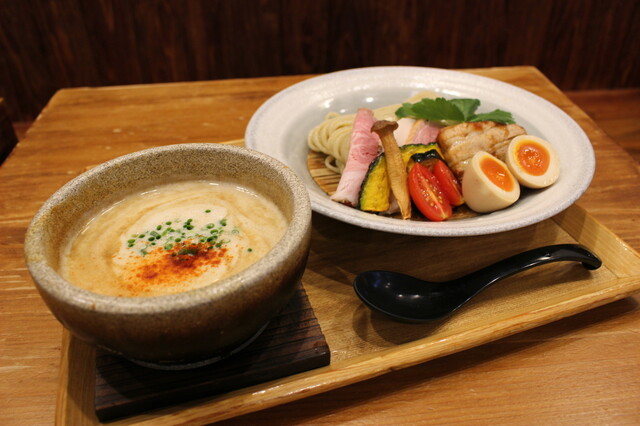
Fujigaoka’s ramen traffic has a different rhythm from the station-dense center of Nagoya. The approach is local, quick, and practical: a short walk from the subway, a compact room, counter seating, and a line culture that rewards solo diners and small groups who know what they want before reaching the ticket or ordering point. In that context, Menya Hanzou fits the city’s serious everyday noodle economy: not a ceremony, not a tasting-menu performance, but a focused ramen shop whose credibility rests on repeatability, speed, and a narrow price-to-satisfaction equation.
Nagoya dining often gets flattened into miso-katsu, hitsumabushi, and kishimen, but the city’s ramen scene has developed its own granular map. Suburban stations matter. Local regulars matter. Tabelog’s regional Hyakumeiten selections matter because they recognize shops that compete inside a specific prefectural noodle culture rather than against Tokyo’s national hype cycle. Menya Hanzou’s selection for Tabelog Ramen AICHI 100 in 2025 places it in that Aichi conversation, where a shop can be modest in footprint and still carry enough local weight to shape a lunch plan.
Tsukemen sets the value argument in Fujigaoka
The defining idea here is breadth within a narrow noodle vocabulary: tsukemen, ramen, abura-soba, and maze-soba. That range matters because it gives the counter more than one weather pattern. Tsukemen suits diners who want a more concentrated dipping format; soup ramen keeps the meal in familiar territory; abura-soba and maze-soba move toward the sauce-coated, broth-light side of the category. Without naming a specific bowl beyond the listed categories, the menu signals a shop built around texture and format rather than a long izakaya-style spread.
The value proposition is direct. In Nagoya, the lower everyday dining tier can still include places with strong regional recognition, and ramen is where that equation is clearest. Compared with higher-spend local categories such as yakiniku or formal Japanese dining, a serious noodle counter compresses craft, turnover, and neighborhood loyalty into a shorter meal. The comparison is useful for travelers: a restaurant such as Senkun'an belongs to a different spend and occasion bracket, while Minami Indo Katei Ryori Karnataka sits closer to the same accessible price conversation but through another cuisine. Ramen’s advantage is that its format makes the decision fast without making the meal feel casual in the careless sense.
Menya Hanzou also sits in a useful position for readers mapping a Nagoya food day beyond the obvious central wards. Fujigaoka is not the default first stop for a visitor chasing department-store basements or station-area dining, yet that is precisely why this kind of shop tells a better story about local eating habits. The 16-seat scale keeps the experience compact, and the no-reservations format puts it closer to Japan’s classic queue-and-eat ramen grammar than to the appointment-based restaurants that dominate luxury itineraries.
A counter built for turnover, not lingering
Ramen shops ask for a different kind of etiquette from fine dining. The pleasure is compressed: choose decisively, eat while the noodles are in condition, and make room for the next party. Here, the listed facilities point to a practical setup: counter seating, non-smoking service, wheelchair accessibility, no private rooms, and no private use. Children and strollers are accepted, which gives the shop a wider neighborhood role than the hushed eight-seat counters that define more formal Japanese dining.
The queue note is worth reading as part of the culture rather than as a minor rule. Parties are asked to line up only once everyone has arrived; placeholders are moved to the end. That detail says a great deal about the social mechanics of Japanese ramen, where fairness, speed, and order matter as much as culinary ambition. For travelers used to restaurant reservations solving every timing problem, this is a different contract: arrive together, commit to the line, eat efficiently.
Recognition does not make the room precious. Tabelog lists a 3.64 score for the shop, and the 2025 Aichi ramen selection gives it a verifiable marker in a crowded category. Those signals are strongest when read against the format: this is a small counter with a local station address, not a destination dining room built around luxury cues. That contrast is the point. Aichi ramen credibility often lives in places that operate with little theatrical distance between the door, the line, and the bowl.
How to place it in a Nagoya itinerary
For a visitor, the cleanest use case is a focused noodle stop on a day that already pulls toward eastern Nagoya, Fujigaoka, or the Higashiyama Line. It is less suited to a drawn-out evening and better suited to a meal where the goal is to understand how a respected local ramen counter functions at street level. The shop’s format also makes it a useful counterweight to higher-commitment dining: sushi, kaiseki, yakiniku, and hotel restaurants all occupy more formal decision space, while ramen leaves room in the day for museums, cafés, bars, or late snacks.
Travelers building a broader Nagoya plan can use Our full Nagoya restaurants guide for the city’s dining range, then cross-check adjacent categories through Our full Nagoya hotels guide, Our full Nagoya bars guide, Our full Nagoya wineries guide, and Our full Nagoya experiences guide. For other restaurant references across Japan and beyond, see 1022, 451, Aaron, Alan., All Day Dining Montmartre, -Grilled beef Sukiyaki- KAMAKURA TANUKIAN 鎌倉 たぬき庵 in Kamakura. 鮪と炭火焼き うお炭 秋葉原店 in Tokyo.cafe in Osaka.know in Kumamoto, (Shoku) Vietnam in Kawasaki, [Curry Senmon Ten] Maruyama Kyoju. in Sapporo, Jōdo Saké Bar in Los Angeles, and Onigiri Time in Pasadena.
The editorial read is simple: choose the restaurant when the goal is a recognized Aichi ramen counter with a compact format and a clear noodle brief. The reward is not ceremony; it is the efficiency of a local shop operating inside a category where small differences in format, queue discipline, and regional reputation carry real weight.
Standing Among Peers
Comparable venues for orientation by cuisine and category.
| Venue | Cuisine | Price | Notes |
|---|---|---|---|
| Menya Hanzou | Modern seafood-focused ramen & tsukemen | $$ | Meitō |
| Yakiniku Horumon Gensho | Traditional Wagyu Offal Yakiniku | $$ | Kita |
| Kurumi | Okonomiyaki, Izakaya & Teppanyaki | $$ | Naka |
| Koyo Ken | Traditional Japanese Ramen | $$ | Shōwa |
| Nishimura | Japanese | $$ | Naka |
| Kitchen Beniy | Classic Yoshoku (Japanese-style Western) & Steak | $$ | Naka |
Recognition history
Dated appearances from independent guides and award organizations, with the underlying list record or original source where available.
Tabelog 100 #2 · No. 2
Tabelog · Tabelog 100 - Ramen - AICHI - 2025
Continue exploring
More in Nagoya
Restaurants in Nagoya
Browse all →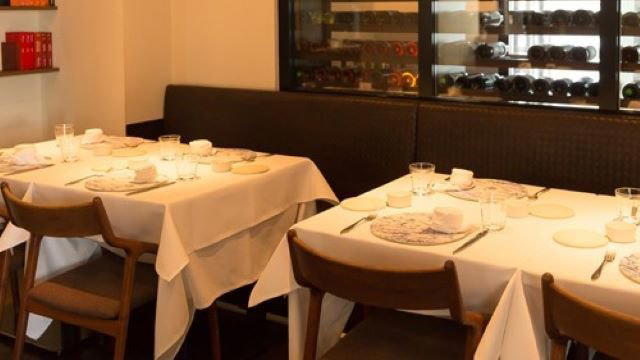
At a Glance
- Cozy
- Modern
- Lively
- Solo
- Casual Hangout
- Family
- After Work
- Standalone
- Local Sourcing
- Farm To Table
- Street Scene
Current opening hours
- Monday
- 11 AM–3 PM, 5:30–9:30 PM
- Tuesday
- 11 AM–3 PM, 5:30–9:30 PM
- Wednesday
- 11 AM–3 PM, 5:30–9:30 PM
- Thursday
- 11 AM–3 PM, 5:30–9:30 PM
- Friday
- 11 AM–3 PM, 5:30–9:30 PM
- Saturday
- 11 AM–3 PM, 5:30–9:30 PM
- Sunday
- 11 AM–3 PM, 5:30–9:30 PM
Hours can change for holidays and private events. Last verified .
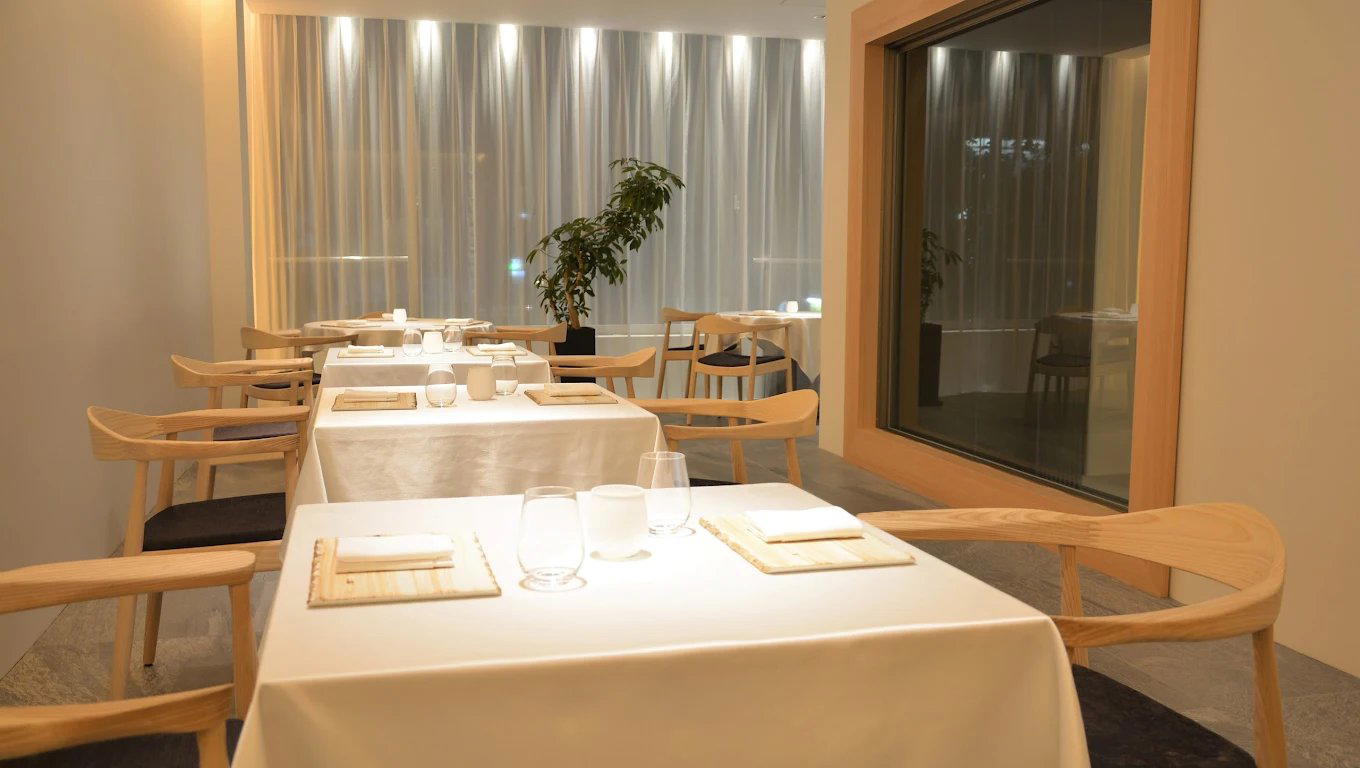
Small, cozy ramen shop near Fujigaoka Station with counter seating and a few tables, casual and lively at peak meal times, designed to be welcoming for solo diners and families alike.