
Barikiya places Nagoya’s yakiniku culture in a compact, meat-led register: Japanese barbecue and tripe, sake and shochu, and a room built for close-range grilling rather than ceremony. Its Tabelog 100 Yakiniku EAST 2025 selection gives it a credible place in the region’s serious beef conversation, below luxury wagyu rooms but above casual grill-house territory.
Pearl is the En Primeur Club membership app — saves, bookings, and concierge access live there. Same editors, same standards.
- Address
- 1 Chome-23-31 Shinmichi, Nishi Ward, Nagoya, Aichi 451-0043, Japan
- Phone
- +81 52-551-0598
- Website
- aikou.asia
 Saves & bookings on Pearl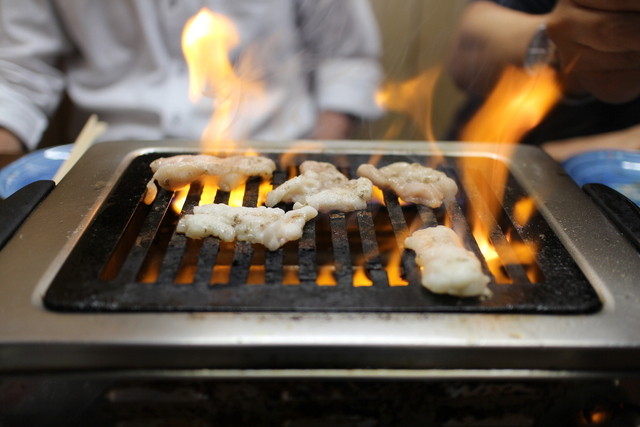
The first signal at a serious yakiniku counter is not theatrical plating, but control: heat at the table, raw cuts handled with purpose, and a room arranged so the grill becomes the centre of attention. In Nagoya, where eating culture often rewards density over display, that format suits the city. Barikiya belongs to the school of yakiniku where the meal is built from sourcing, trim, offal knowledge, and the diner’s own timing over flame.
Nagoya’s beef restaurants sit across several registers. At one end are casual grill rooms built for beer, smoke, and repetition; at the other are higher-spend wagyu venues such as Ozara Yakiniku Roujuu, where the budget bracket signals a more formal meat program. Barikiya occupies the middle with sharper credibility than its spend suggests: Japanese barbecue and tripe, sake and shochu, and a 2025 selection in Tabelog 100 Yakiniku EAST. That recognition matters because yakiniku is a category where local diners tend to judge consistency cut by cut, not by a single showpiece plate.
Yakiniku here is a sourcing argument, not a luxury pose
The clearest way to read a yakiniku restaurant is through how much attention it gives to secondary cuts. Beef culture in Japan is often flattened abroad into marbling and brand names, but the better grill rooms make a broader case: tongue, skirt, diaphragm, intestine, stomach, and other offal can carry as much identity as prime wagyu when handled cleanly and cut correctly. Barikiya’s listing as both yakiniku and tripe puts it in that more specialist lane, where the value is not only in expensive beef but in the confidence to serve texture-driven cuts to a regular audience.
That emphasis is especially relevant in Nagoya. The city’s dining character is not as export-polished as Tokyo’s high-end counters or Kyoto’s temple-adjacent kaiseki circuit. It is practical, regional, and often built around repeat local use: miso katsu, tebasaki, kishimen, hitsumabushi, and grilled meat all thrive because they make sense after work and with drinks. A yakiniku room that gives space to tripe fits that appetite. It asks less for reverence and more for attention: how long a cut sits on the grill, whether it wants a quick sear or a slower turn, and how fat, chew, salt, sauce, sake, and shochu interact over the course of dinner.
The Tabelog score of 3.75 gives another useful signal. In Japan, that number is not casual praise; Tabelog scoring is famously conservative, and restaurants above the mid-threes usually have a meaningful base of committed diners. The 2025 Tabelog 100 Yakiniku EAST selection, alongside earlier appearances in the same broad award family, places the restaurant inside a regional conversation rather than a purely neighbourhood one. It is not the same proposition as a luxury beef counter selling spectacle. It is closer to the kind of place serious eaters use to test whether a city understands grill craft at everyday scale.
Where Nagoya's grill culture meets the Shinmichi neighbourhood rhythm
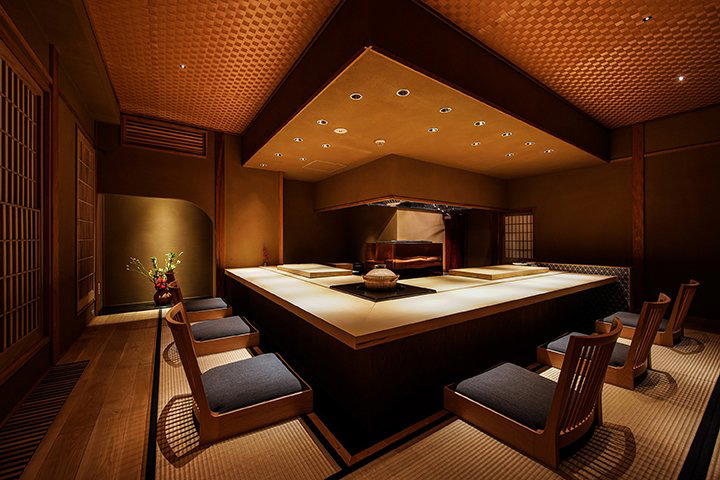
Shinmichi and the Sengencho side of Nishi Ward are not framed by the heavy nightlife shorthand used for Sakae or Meieki. That matters. Yakiniku outside the city’s brighter entertainment zones often depends on local return custom rather than tourist throughput, and the room format follows suit: counter seating, tatami, and sunken seating point to a flexible, old-school pattern of use. Friends can settle in around a grill; solo diners and pairs can read the room from the counter; groups get the slower rhythm that yakiniku rewards.
The absence of private rooms also says something about the genre. Much of Japan’s premium dining has moved toward controlled isolation: private suites, chef’s counters, quiet luxury cues. Yakiniku resists that when it is working properly. Smoke, heat, shared tongs, and the minor negotiation of grill space are part of the social contract. A no-smoking policy keeps the focus on the food rather than the room haze, while the drink list’s sake and shochu orientation keeps the meal inside a Japanese register rather than pushing it toward wine-pairing formality.
Against Nagoya peers, the positioning is clear. Don Hyara sits in a lower casual bracket; Endoji Makkori Jozoujo occupies a drinks-friendly middle at a softer spend; Ozara Yakiniku Roujuu moves higher. Barikiya’s appeal is the combination of tripe-led specificity and award recognition without crossing into occasion-only pricing. For travellers building a food itinerary, that makes it a useful counterpoint to sushi or hotel dining: less polished, more local in rhythm, and more revealing of how the city eats when beef is treated as craft rather than status.
How to fold it into a Nagoya dining plan
The meal makes the strongest sense as part of a Nagoya itinerary that balances regional staples with one serious grill night. Use Our full Nagoya restaurants guide to map it against sushi, izakaya, and contemporary dining, then keep nearby hospitality decisions separate through Our full Nagoya hotels guide, Our full Nagoya bars guide, Our full Nagoya wineries guide, and Our full Nagoya experiences guide. Within the local restaurant field, compare different moods through 1022, 451, Aaron, Alan., and All Day Dining Montmartre.
For broader Japanese context, it helps to see how focused grill, rice, café, curry, Vietnamese, and sake-led formats travel across cities: -Grilled beef Sukiyaki- KAMAKURA TANUKIAN 鎌倉 たぬき庵 in Kamakura. 鮪と炭火焼き うお炭 秋葉原店 in Tokyo.cafe in Osaka.know in Kumamoto, (Shoku) Vietnam in Kawasaki, [Curry Senmon Ten] Maruyama Kyoju. in Sapporo, Jōdo Saké Bar in Los Angeles, and Onigiri Time in Pasadena. The comparison underlines the point: Barikiya is not about novelty. It is about a Japanese barbecue tradition where sourcing, trimming, offal literacy, and grill discipline carry the meal.
Comparison Snapshot
Comparable venues at a glance for context.
| Venue | Cuisine | Price | Notes |
|---|---|---|---|
| BarikiyaThis venue — the venue you are viewing | Traditional Yakiniku (Japanese BBQ) | $$ | Not listed |
| Suzunami Esuka ten | Traditional Japanese set-meal diner | $$ | Nakamura |
| Yakiniku Jingu | Yakiniku (Japanese BBQ) & Tripe Izakaya | $$ | Atsuta |
| Hamburger Steak Shokudo Enomoto Yoshihiro Shoten | Japanese Hamburger Steak / Yoshoku | $$ | Higashi |
| TSUMUGI Kitchen | Yoshoku / Japanese-Style Western Cuisine | $$ | Chikusa |
| Koyo Ken | Traditional Japanese Ramen | $$ | Shōwa |
Recognition history
Dated appearances from independent guides and award organizations, with the underlying list record or original source where available.
Tabelog 100 #62 · No. 62
Tabelog · Tabelog 100 - Yakiniku - EAST - 2025
Continue exploring
More in Nagoya
Restaurants in Nagoya
Browse all →
At a Glance
- Lively
- Cozy
- Energetic
- Classic
- After Work
- Group Dining
- Casual Hangout
- Late Night
- Solo
- Standalone
- Beer Program
- Sake Program
Current opening hours
- Monday
- 5–11 PM
- Tuesday
- Closed
- Wednesday
- 5–11 PM
- Thursday
- 5–11 PM
- Friday
- 5–11 PM
- Saturday
- 5–11 PM
- Sunday
- 5–11 PM
Hours can change for holidays and private events. Last verified .
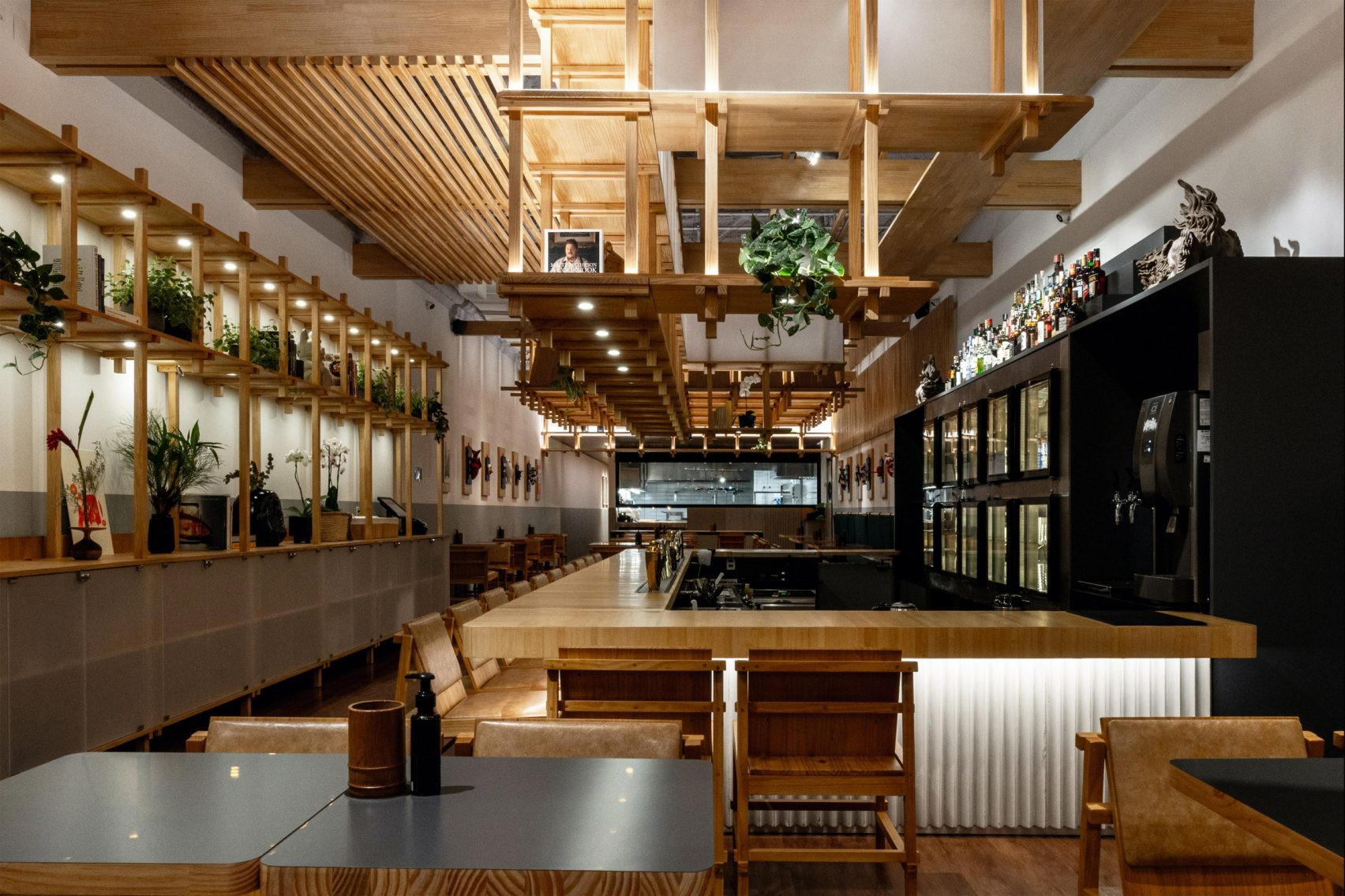
A compact, down-to-earth yakiniku dining room with counter and table grills, dim warm lighting, smoke and sizzling sounds from the roasters, and a bustling, convivial atmosphere typical of an old-school neighborhood BBQ joint.