

Tabelog Bronze #441
Our verdict
Tada is an eight-seat Kitashinchi sushi counter led by Jun Takeuchi, with a 2026 Tabelog Bronze award, repeated Tabelog Award recognition, and selection for Tabelog Sushi WEST 100 in 2025. The appeal is ingredient-led rather than theatrical: a small-room Osaka sushi format where fish sourcing, sake, wine, and counter discipline define the meal.

Pearl is the En Primeur Club membership app, where members save venues, book tables and use the concierge.
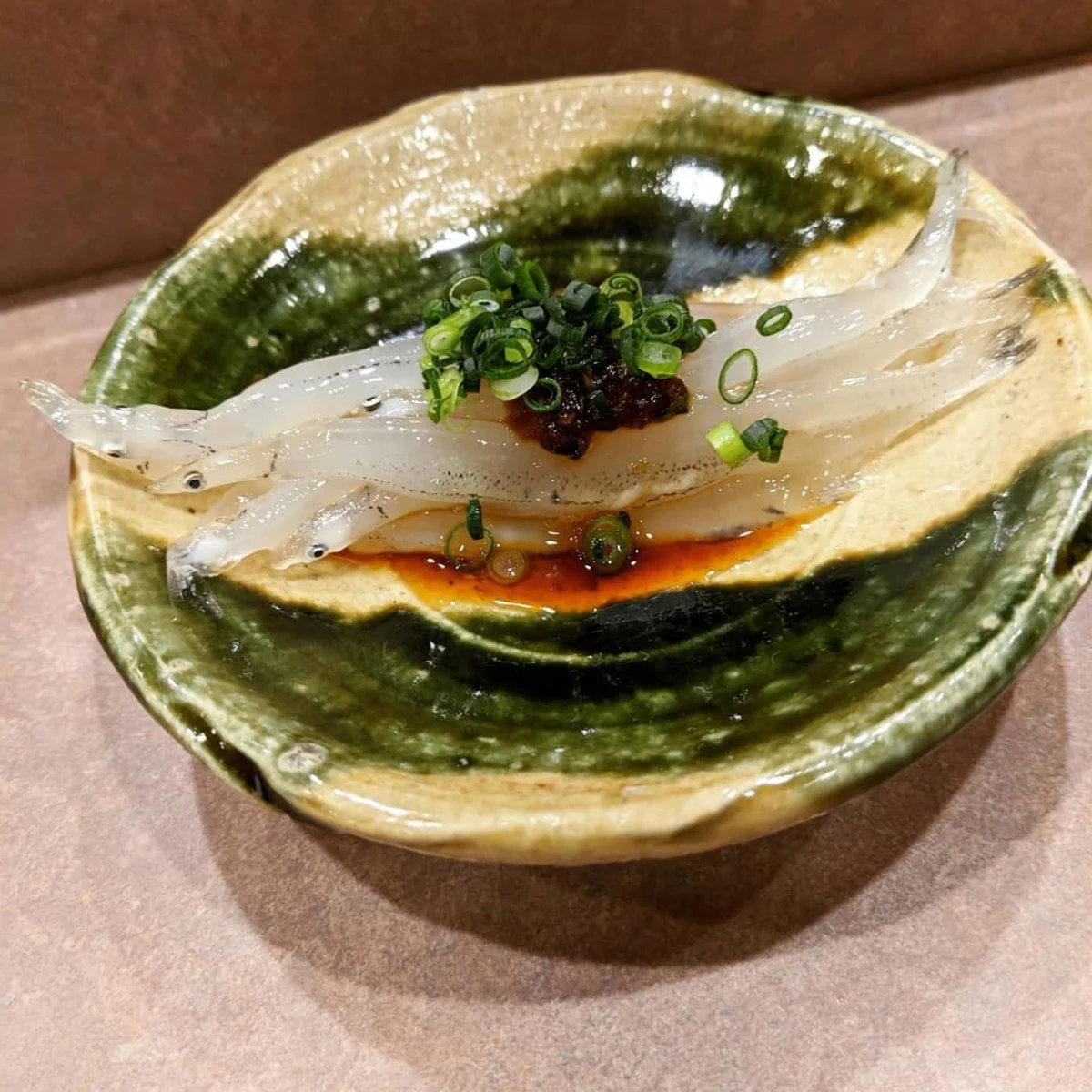
After dark, Kitashinchi shifts: office towers, hostess clubs, late restaurants, and narrow building entrances compress Osaka’s appetite into a few blocks north of the Dojima River. Here, serious sushi is less temple-like isolation than controlled intimacy. The counter is the stage; fish is the argument. Tada sits in the small Osaka tier where procurement, pacing, and trust matter more than spectacle, and where a seat signals access to a tightly held dining circuit rather than casual discovery.
Osaka’s sushi culture is often framed by older pressed and boxed forms, yet its contemporary high-end counters now follow national omakase expectations: seasonal fish, rice temperature, drinking pairings, and chef-led sequencing. Stronger rooms are separated not by louder narrative but clearer supply chain. A restaurant can buy good fish; a serious counter builds each meal around what is worth serving that night, how it should be cut, and how much intervention it needs.
Fish sourcing drives the hierarchy at Osaka's serious sushi counters
At this level, ingredients define value. Tada is listed for sushi, with emphasis on fish, sake, and wine, placing it among the few counters where seafood quality must justify scarce seats and the spend. Its eight-seat format sharpens the point: little room for menu sprawl, and the meal depends on precision rather than variety.
The 2026 Tabelog Bronze award and prior Tabelog Award history, including a 2021 Silver and multiple Bronze wins, give the restaurant a measurable signal inside Japan’s user-driven dining culture. Its selection for Tabelog Sushi WEST 100 in 2025 also matters because western Japan’s sushi field is not just an extension of Tokyo’s Ginza model. Osaka rewards counters that function within a more socially charged, late-night rhythm while maintaining premium sushi seriousness.
That distinction matters for travelers comparing Kitashinchi categories: teppanyaki at tanpopo, a mid-priced branch format at tanpopo Kitashinchi honten, or tempura at Numata. Sushi at this level is a different calculation, asking for a smaller room, higher trust, and a narrower margin for error because the meal is built around sequence and sourcing rather than à la carte choice.
Chef Jun Takeuchi belongs in that context, though the story is not biography. At a counter restaurant, the chef translates market conditions into a disciplined meal. Structurally, an eight-seat sushi room in Kitashinchi, operating within a referral-based culture, tells diners that consistency, regulars, and controlled access are part of the format. The chef guarantees that system, not merely personifies it.
A compact counter, built for concentration rather than performance
The small-room format changes how luxury feels in Osaka. Grandeur is unnecessary when the restaurant is reduced to counter seating, fish, rice, drink pairings, and timing. That restraint is also a filter. Diners seeking a broad menu, private rooms, or casual walk-in flexibility are in the wrong genre. The bargain is narrower: guests trade choice and spontaneity for a chef-controlled progression built around seafood and the day’s buying.
Photography rules reveal the room’s culture. A full photography ban was introduced in 2009, with an allowance for private reservations. In an era of course-by-course counter photography, that is significant. It points to older, private etiquette: attention stays on the counter, not content capture. The experience circulates more through reputation and repeat diners than social media abundance.
The drink program follows the format: sake and wine rather than cocktail-driven pairing. That matters because Osaka sushi counters increasingly serve drink-literate guests who want acidity, umami management, and temperature control across the meal. Attention to sake and wine states how the seafood should be read, not just what should be poured beside it.
Private use is available for larger groups, changing the dynamic. A full-room counter booking removes the usual mix of regulars and visitors and turns the meal into a controlled party format. With strict access and photography customs, that distinction is meaningful: the public counter and private-use counter are not the same social experience, even when the cooking framework remains sushi.
How to place it within an Osaka dining itinerary
For a first Osaka trip, Tada is not the city’s whole dining story. It is the high-control sushi chapter, best understood against the city’s range. A traveler could map the broader field through Our full Osaka restaurants guide, then use lighter or more casual stops such as 551 Horai (551蓬莱), 52CHO-ME BAKERY, .cafe, 99 Pizza Napoletana Gourmet, and a canto (Italian) to see how wide Osaka’s appetite runs beyond sushi.
That context matters because Osaka rewards contrast. Serious sushi after bakeries, pork buns, coffee, or Italian cooking reads differently from sushi as an isolated trophy meal. The city is strongest when high discipline and everyday appetite sit side by side. For lodging, drinking, wine, and cultural planning around the meal, use Our full Osaka hotels guide, Our full Osaka bars guide, Our full Osaka wineries guide, and Our full Osaka experiences guide.
For a Japan-wide food route, Tada raises a larger question: how local formats travel across cities. Beef sukiyaki in Kamakura at -Grilled beef Sukiyaki- KAMAKURA TANUKIAN 鎌倉 たぬき庵 in Kamakura, charcoal tuna in Tokyo at. 鮪と炭火焼き うお炭 秋葉原店 in Tokyo, Kumamoto dining at.know in Kumamoto, Vietnamese cooking in Kawasaki at (Shoku) Vietnam in Kawasaki, Sapporo curry at [Curry Senmon Ten] Maruyama Kyoju. in Sapporo, and Kyoto cooking at [ki:] in Kyoto frame the same issue differently: regional food culture is not a single hierarchy. Even outside Japan, sake and rice-focused formats such as Jōdo Saké Bar in Los Angeles and Onigiri Time in Pasadena show how Japanese dining categories change in another market.
The editorial case for Tada is specific, not universal. It is for diners who know a small Osaka sushi counter is measured not by décor language or menu breadth, but by fish quality, counter discipline, recognition over time, and the social mechanics of access. In Kitashinchi, that combination has force: the neighborhood supports late, adult, relationship-driven dining, and this room compresses that culture into eight seats.
Frequently asked questions
Where is Tada located?
Tada is located in Osaka.
When is Tada open?
Hours at Tada: Mon, Tue, Wed, Thu, Fri, Sat 18:00 - 02:00.
Who is the chef connected to Tada?
The chef associated with Tada is Jun Takeuchi.
What's the standout thing about Tada?
The main draw is the format: an 8-seat counter in Kitashinchi with reservation-only, by-referral access. It also carries a 2026 Tabelog Award Bronze and repeated Tabelog 100 Sushi WEST selections, which gives it real standing in Osaka’s sushi scene.
Can Tada handle vegetarian requests?
Tada is listed as a sushi counter with a focus on fish, so vegetarian requests are likely limited. The practical approach is to call 06-6346-7227 in advance and ask whether any accommodation is possible for your booking.
Is Tada suitable for children?
The room is built around an 8-seat counter, with dinner service from 18:00 to 02:00, so it suits adults more naturally than family dining. The restaurant data does not indicate a family-friendly setup, and private use is listed separately for up to 20 people.
Price Lens
Comparable venues nearby, for context on price, style, and recognition.
| Venue | Cuisine | Price | Awards | Notes |
|---|---|---|---|---|
| TadaThis venue (the venue you are viewing) | Edomae Omakase Sushi | $200–300 | Tabelog Bronze #441 | Not listed |
| Sushi Takumi | Modern Japanese Omakase | $150–200 | Michelin Plate · Tabelog 100 #17 | Chūō, Modern Japanese Omakase |
| Niku Kappou Yamaguchi | Meat Kappo | $300–500 | Tabelog Bronze #512 | Kita, Meat Kappo |
| Sushi Oga | Sakai, Tuna-Focused Omakase Sushi | Not listed | Not listed | Not listed |
| Teppanyaki WAJO | Modern Teppanyaki | $300–500 | Michelin Plate | Chūō, Modern Teppanyaki |
| Yakitori Shinose | High-End Yakitori Omakase | $150–200 | Tabelog 100 #67 | Kita, High-End Yakitori Omakase |
Recognition history
Dated appearances from independent guides and award organizations, with the underlying list record or original source where available.
Tabelog Bronze #441
Tabelog
Opinionated About Dining Top Restaurants in Japan Recommended
Opinionated About Dining
Full recognition history (4 entries)
Tabelog Bronze
Tabelog
Tabelog 100 #14 · No. 14
Tabelog · Tabelog 100 - Sushi - WEST - 2025
Continue exploring
More in Osaka
Restaurants in Osaka
All restaurants in Osaka →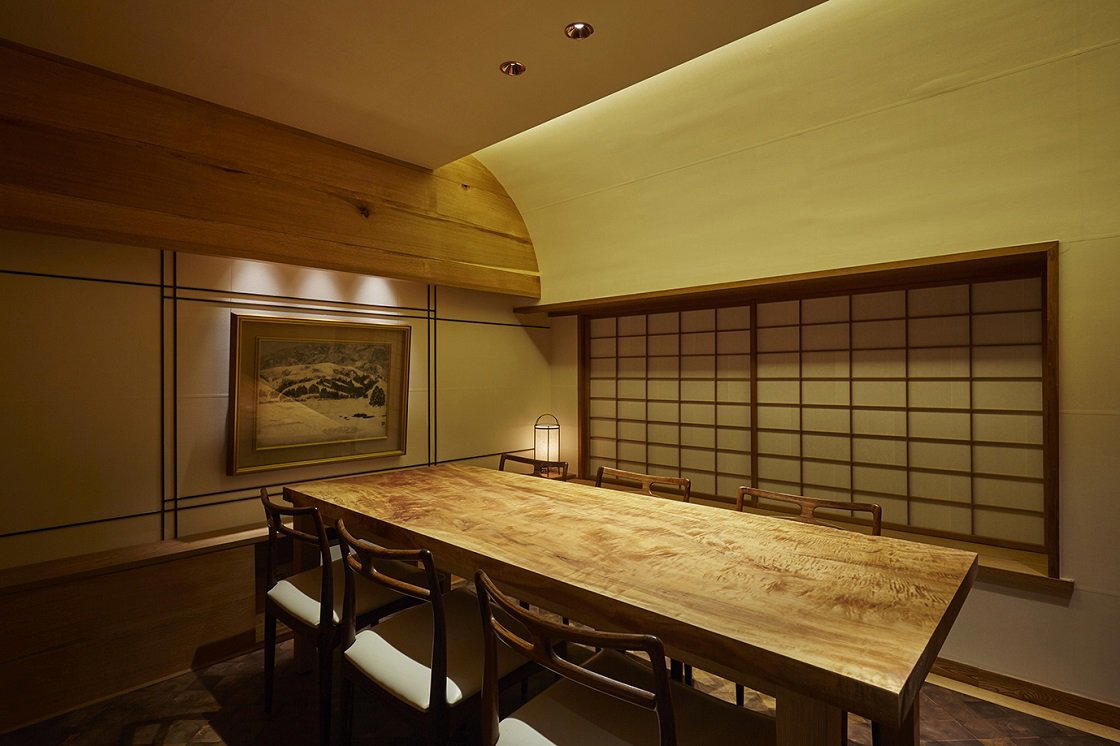


Bars in Osaka
All bars in Osaka →



Hotels in Osaka
All hotels in Osaka →


Wineries in Osaka
Browse all →
Details
- Intimate
- Sophisticated
- Elegant
- Special Occasion
- Date Night
- Chefs Counter
- Sake Program
- Local Sourcing
- Omakase
- Counter Dining
- Sake Program
Calm and serene counter-only space with relaxing atmosphere focused on the sushi craftsmanship.