't Ouwe Bruggetje
Our verdict
Situated along the Voorhaven waterfront in Rotterdam's Delfshaven district, 't Ouwe Bruggetje occupies a setting that places it squarely within the city's older harbour character. The kitchen draws on the intersection of classical technique and local North Sea and Dutch agricultural produce, operating within a Rotterdam dining scene that increasingly favours precision over volume. A considered choice for those seeking neighbourhood depth over city-centre spectacle.

Pearl is the En Primeur Club membership app — saves, bookings, and concierge access live there. Same editors, same standards.
- Address
- Voorhaven 6A, 3024 RM Rotterdam, Netherlands
- Phone
- +31 10 477 3499
- Hours
- Mon–Thu ClosedFri–Sat 6 PM–12 AMSun 5–11 PM
- Website
- historisch-delfshaven.nl
- Directions
- Get directions
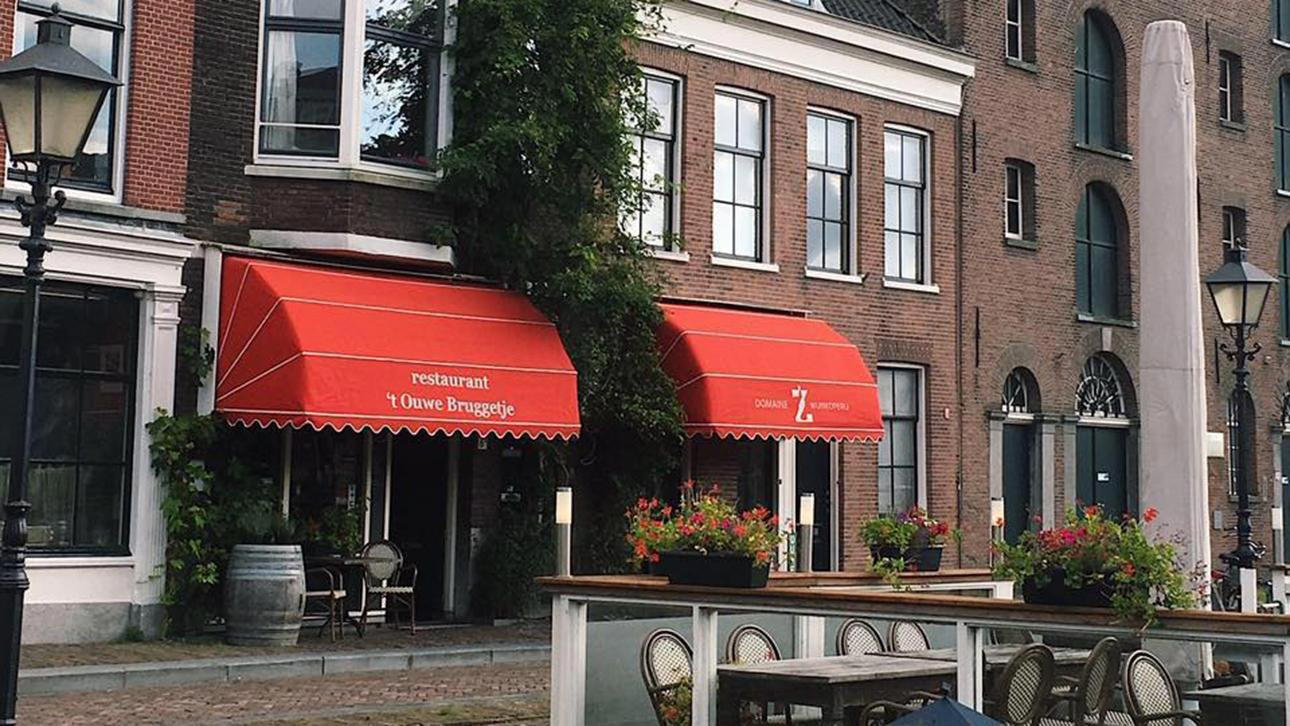
Where Rotterdam's Harbour History Meets the Plate
Delfshaven is one of the few parts of Rotterdam that survived the 1940 bombing largely intact, and Voorhaven — the street of gabled canal houses fronting the old harbour basin — carries that history in its brickwork and proportions. Dining along this stretch means arriving by water's edge, the reflections of Dutch Golden Age facades in the canal doing most of the atmospheric work before you've even reached the door. 't Ouwe Bruggetje sits at Voorhaven 6A, directly on this waterfront, in a neighbourhood that functions as a counterpoint to Rotterdam's dominant architectural story of bold post-war reconstruction.
That physical context matters for how Rotterdam's restaurant scene has developed in the western districts. While the city centre and the Nieuwe Maas riverbank have attracted most of the high-concept dining investment, venues like FG - François Geurds and Parkheuvel anchor the city's €€€€ tier with international recognition, Delfshaven has maintained a different register: smaller, more embedded in neighbourhood life, less oriented toward trophy dining.
The Waterfront Kitchen Tradition in the Netherlands
Dutch waterfront restaurants occupy a distinct category within the country's dining culture. Proximity to working harbours historically meant direct access to North Sea catch, herring, plaice, sole, and eel, and the leading kitchens in these settings have always calibrated their menus to what arrives rather than what the menu promised six months earlier. This is a tradition that the broader Dutch fine dining scene, increasingly influenced by French classical training and Nordic foraging approaches, has worked to reconcile with global technique. The tension between local immediacy and imported methodology is productive: it pushes kitchens to treat provenance as a discipline rather than a marketing note.
Across the Netherlands, that intersection has produced some of the most considered cooking in Europe. De Librije in Zwolle and Aan de Poel in Amstelveen both demonstrate how classical French structure applied to Dutch seasonal ingredients can generate something that reads as genuinely regional rather than derivative. Further south, Brut172 in Reijmerstok and De Lindehof in Nuenen pursue similar logic with different landscape ingredients. 't Ouwe Bruggetje operates within this broader Dutch framework, where the waterfront address is not merely scenic but structurally connected to what ends up on the plate.
Local Ingredients, European Method
The editorial angle that applies across Rotterdam's serious dining addresses is the question of how much technique disciplines the product versus how much the product shapes the technique. At the city's highest tier, Fred, Amarone, and Fitzgerald among them, the answer tends toward structured French and modern European frameworks applied with considerable precision. 't Ouwe Bruggetje's Delfshaven address places it outside that competitive set, in a neighbourhood tier where the relationship between kitchen and supplier is often more direct and the format less formal.
Dutch seasonal produce follows a reliable rhythm. Spring brings white asparagus from Limburg and Zeeland, one of the Netherlands' most closely watched agricultural moments. Summer shifts toward North Sea sole and fresh herbs. Autumn introduces game from the Dutch polders and the first root vegetables of the season. Winter, particularly around the holiday period, is when Dutch kitchens tend to pull hardest on preserved and braised preparations. Any kitchen at Voorhaven operating with genuine seasonal discipline will track these cycles, and arriving in the right window, late April through early June for asparagus, or October for early game, makes a material difference to what the kitchen has to work with.
For reference on how the Dutch kitchen has been pushed in more radical directions with foraged and fermented products, De Nieuwe Winkel in Nijmegen and De Groene Lantaarn in Staphorst represent the more experimental end of that local-ingredients framework.
Rotterdam in Context: A City That Rewards Neighbourhood Exploration
Rotterdam's dining reputation has been built disproportionately on its headline addresses. Ciel Bleu in Amsterdam draws the international comparison point for Dutch fine dining at altitude, but Rotterdam has developed its own distinct character: more architecturally adventurous, more port-city pragmatic, and increasingly confident in neighbourhood-level dining outside the centre. Our full Rotterdam restaurants guide maps this broader picture.
Internationally, the technique-meets-terroir argument that defines Dutch cooking at its most ambitious has parallels in how Le Bernardin in New York City applies classical French discipline to high-quality oceanic produce, or how Atomix in New York City uses Korean product logic filtered through fine dining precision. The underlying principle, that technique should illuminate rather than override the ingredient, runs through all of them. In Rotterdam's harbour neighbourhoods, the same argument plays out at a smaller scale and in a more embedded setting.
Delfshaven rewards walking. The neighbourhood is accessible from central Rotterdam by tram, and the Voorhaven waterfront is a short distance from the Delfshaven metro station. The area is leading explored mid-week when the canal-side streets carry fewer visitors and the neighbourhood's working character is more visible.
Frequently asked questions
What part of town is 't Ouwe Bruggetje in?
't Ouwe Bruggetje is located at Voorhaven 6A, 3024 RM Rotterdam, Netherlands, Rotterdam.
Is 't Ouwe Bruggetje a good choice for dining in Delfshaven specifically, rather than central Rotterdam?
For visitors whose interest is in Delfshaven's historic harbour character rather than Rotterdam's downtown restaurant cluster, Voorhaven 6A puts 't Ouwe Bruggetje at the heart of the neighbourhood rather than on its edge. Delfshaven functions as a distinct village within the city, and eating here rather than near the Markthal or Witte de Withstraat means staying inside that scale. It suits an itinerary built around the neighbourhood rather than one that treats Delfshaven as a detour.
What's the best thing to order at 't Ouwe Bruggetje?
The kitchen sits on Voorhaven in Delfshaven, one of Rotterdam's few pre-war harbour quarters, which points toward a menu grounded in Dutch waterfront cooking traditions. Without a published menu on record, the practical move is to ask staff what is running that day — waterfront kitchens in this part of the Netherlands have historically built their offer around seasonal and locally sourced produce. Calling ahead or arriving with an open brief tends to yield the most representative meal.
How hard is it to get a table at 't Ouwe Bruggetje?
Delfshaven draws consistent visitor traffic as Rotterdam's best-preserved historic district, and Voorhaven addresses that face the canal fill quickly, particularly on weekends. Reservation details are not on public record, so contacting the venue directly via the address at Voorhaven 6A, 3024 RM Rotterdam is the clearest route to confirming availability. Weekday lunches at waterfront spots in this neighbourhood generally offer more flexibility.
What's the standout thing about 't Ouwe Bruggetje?
The address itself is the primary distinction: Voorhaven 6A places the venue directly on the historic canal frontage of Delfshaven, the part of Rotterdam that survived the 1940 bombing largely intact. Very few Rotterdam restaurants sit within a genuinely 17th-century streetscape of gabled canal houses, which gives the physical setting a context that the city's headline dining districts in the centre cannot replicate. The harbour view here is working history, not reconstruction.
Do they accommodate allergies at 't Ouwe Bruggetje?
The most reliable approach is to contact the venue at Voorhaven 6A, Rotterdam before visiting, particularly for serious dietary requirements. Dutch licensing standards require allergen information to be available on request, so the kitchen should be able to address specific concerns directly.
Same-City Peers
Comparable venues nearby, for context on price, style, and recognition.
| Venue | Cuisine | Price | Awards | Notes |
|---|---|---|---|---|
| 't Ouwe BruggetjeThis venue — the venue you are viewing | French-Dutch Bistro | $50–100 | Not listed | Not listed |
| Bistro Eddie | Classic French Bistro | $30–50 | Not listed | Nieuwe Werk |
| Café Pompette | French Bistro | $50–100 | Not listed | Liskwartier |
| EAUX POSSE | French-Basque Fine Dining | $50–100 | Not listed | Nieuw Mathenesse |
| The Suicide Club | Asian-Mediterranean Fusion Small Plates | $30–50 | Not listed | C.S. Kwartier |
| De Harmonie 23 | Modern French Fine Dining | $100–150 | Michelin Plate | Dijkzigt |
Continue exploring
More in Rotterdam
Restaurants in Rotterdam
Browse all →
Bars in Rotterdam
Browse all →
Hotels in Rotterdam
Browse all →
Wineries in Rotterdam
Browse all →
't Ouwe Bruggetje
The wine
- Wine program
- Curated wine list
- Extensive wine list
Details
- Romantic
- Intimate
- Cozy
- Historic
- Date Night
- Special Occasion
- Waterfront
- Historic Building
- Terrace
- Extensive Wine List
- Local Sourcing
- Waterfront
- Street Scene
- A La Carte
- Wine
- Vegetarian Friendly
Current opening hours
- Monday
- Closed
- Tuesday
- Closed
- Wednesday
- Closed
- Thursday
- Closed
- Friday
- 6 PM–12 AM
- Saturday
- 6 PM–12 AM
- Sunday
- 5–11 PM
Hours can change for holidays and private events. Last verified .
Warm, inviting, and intimate ambiance in a historic building with a pleasant atmosphere praised by guests.