

Tabelog Silver #136
Our verdict
Sushi Takamitsu belongs to Tokyo’s small-counter sushi tier where recognition, price, and seat count define the experience before a piece of nigiri is served. The Nakameguro address carries a Tabelog Award 2026 Silver, a 4.49 Tabelog score, and a place on the 2026 OAD Japan ranking, with chef Takamitsu Yasuda attached to a 10-seat room built around fish-led omakase expectations.

Pearl is the En Primeur Club membership app, where members save venues, book tables and use the concierge.
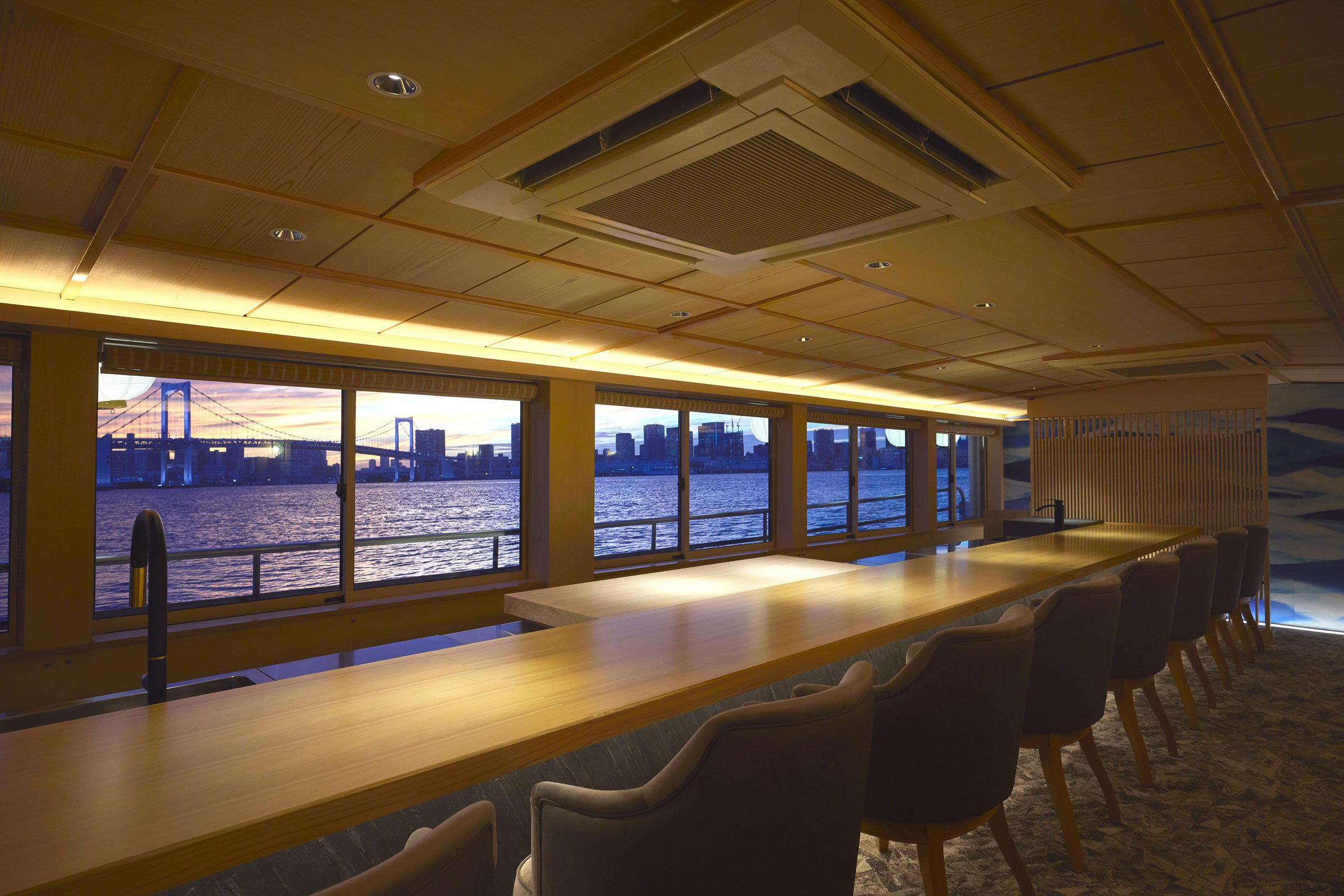
Approaching Aobadai from Nakameguro, Tokyo’s polished sushi culture feels less Ginza-formal than residential: narrow streets, quiet frontage, and a dining room where the counter is the format, not the decoration. Sushi Takamitsu sits in the city’s serious sushi bracket not by spectacle, but by hard-to-ignore numbers: 10 seats, a dinner budget of JPY 50,000 to JPY 59,999, a Tabelog score of 4.49, Tabelog Award 2026 Silver, and No. 93 on Opinionated About Dining’s 2026 Japan ranking.
Tokyo rewards sushi counters that make restraint legible. At this level, the decision is about allocation more than abundance: how many guests can be served, how much attention the counter can absorb, and how clearly sourcing and fish work justify the tariff. Sushi Takamitsu’s public identity is direct: Tabelog lists it as “particular about fish” and notes drinks across sake, shochu, and wine. The focus stays where Tokyo sushi culture puts it: product, timing, and control of pace.
Nakameguro gives serious sushi a quieter address
Ginza remains the international shorthand for expensive sushi, but Tokyo’s stronger dining map has outgrown it. Nakameguro and the Meguro-Daikanyama-Ebisu corridor offer another rhythm: less hotel-lobby grandeur, more compact rooms, more local regularity, and fewer visual cues for first-time visitors. For travellers comparing sushi addresses here, the useful frame is not glamour versus informality, but whether the counter’s recognition and capacity justify planning a night around it.
By that measure, Sushi Takamitsu occupies a high-demand lane. Consecutive Tabelog Silver status signals durable domestic approval rather than a single-season spike, while selection for Tabelog Sushi TOKYO 100 in 2025 places it among the city’s closely watched sushi counters. OAD’s Japan ranking adds an international dining-list signal for visitors comparing Japanese-language reputation with English-language recognition.
The neighbourhood also shapes the itinerary. Dinner here pairs naturally with western central Tokyo rather than a cross-city dash from Marunouchi or Asakusa. Travellers building a food-focused stay can compare nearby restaurant context through 3110, Daikanyama Ogawaken, and sushi peers such as Edomae Sushi Hanabusa. For the wider city map, keep our full Tokyo restaurants guide open alongside our full Tokyo hotels guide, our full Tokyo bars guide, our full Tokyo wineries guide, and our full Tokyo experiences guide.
The smarter booking question is not lunch, but timing
In many expensive Japanese restaurants, lunch is the sharper play: fewer courses, lower spend, and a softer entry point into a counter that is harder to justify at night. That logic does not transfer cleanly here. Sushi Takamitsu’s public schedule is built around evening service, so the planning question is more precise. This is a dinner counter, and should anchor the night rather than serve as a midday hedge.
That matters because Tokyo sushi pricing has split into distinct bands. Entry-level omakase still exists across the city, but counters in the JPY 50,000 to JPY 59,999 dinner range compete in a narrower category, where recognition, seat count, and repeat approval outweigh broad accessibility. A 10-seat room changes the equation: small is not automatically better, but the evening is more exposed. There is less margin for distraction, and the chef’s pacing becomes part of the value proposition.
Chef Takamitsu Yasuda’s name is attached to the restaurant’s sushi identity, but the stronger editorial point is the category he works within. Tokyo’s serious sushi counters are controlled service formats where the guest buys into sequence, temperature management, sourcing choices, and a room calibrated for concentration. The better comparison is not casual sushi bars, but other compact counters where a dinner seat is the whole event. In Tokyo, Sushi Tsubomi, UDATSU SUSHI, Daikanyama Ogawaken, Kozasa-zushi, and 3110 sit in the broader conversation for travellers mapping sushi-led nights.
The absence of private rooms reinforces that counter logic. This is not for business entertaining that needs separation, nor for a loose group wanting its own tempo. Credit card acceptance is listed for JCB and AMEX; electronic money and QR code payments are not. Parking is unavailable, nudging the experience toward Tokyo’s rail-and-taxi dining pattern. The nearest-station context points to Nakameguro, with the address in Aobadai, Meguro City.
Where it fits in a Tokyo dining itinerary
Use Sushi Takamitsu as a focused sushi dinner in a west-side itinerary, not a universal recommendation for every Tokyo visitor. Its case rests on concentration: limited seats, high domestic recognition, and a price band for diners who already understand why Tokyo sushi counters command this spend. The counter is non-smoking, private rooms are unavailable, and BYO drinks are listed, details that matter more to experienced diners than decorative language.
For travellers widening the trip beyond sushi, Tokyo’s dining range benefits from contrast, not repetition. A compact counter dinner can sit beside French-inflected cooking at Bistrot Dia or an Ebisu meal at Ebisu Endo. Outside Tokyo, the national picture stretches from -Grilled beef Sukiyaki- KAMAKURA TANUKIAN 鎌倉 たぬき庵 in Kamakura and.cafe in Osaka to.know in Kumamoto, (Shoku) Vietnam in Kawasaki, [Curry Senmon Ten] Maruyama Kyoju. in Sapporo, [ki:] in Kyoto, AKA to SHIRO, Sushi in Osaka, and Akikos, Sushi in San Francisco.
The editorial read is clear: this is for diners who value Tokyo’s small-counter discipline and are comfortable paying for a narrow, fish-driven format. The lunch-workaround strategy that often helps travellers access serious Japanese dining is not the governing idea here. Plan for dinner, keep the party small, and judge it against other recognized sushi counters, not casual sushi or hotel dining.
Frequently asked questions
How do I find Sushi Takamitsu?
Sushi Takamitsu is located in Tokyo.
Who runs the kitchen at Sushi Takamitsu?
The chef associated with Sushi Takamitsu is Takamitsu Yasuda.
What cuisine category does Sushi Takamitsu fall under?
Sushi Takamitsu serves Sushi cuisine.
When can I go to Sushi Takamitsu?
Hours at Sushi Takamitsu: Hours: Monday 6 pm–12 am Tuesday 6 pm–12 am Wednesday 6 pm–12 am Thursday 6 pm–12 am Friday 6 pm–12 am Saturday 6 pm–12 am Sunday Closed.
What has Sushi Takamitsu built its reputation on?
It has built its reputation on recognition from Tabelog and Opinionated About Dining: Tabelog Silver in 2026 and selection in Tabelog Sushi TOKYO 100, plus OAD ranking recognition in Japan. The 10-seat counter in Aobadai, Meguro City, keeps the format tight and focused on sushi.
Is Sushi Takamitsu a family-friendly restaurant?
The venue does not position itself as family-oriented. It is a 10-seat sushi counter in Tokyo with evening service only, running Monday to Saturday from 6 pm to midnight.
Style and Standing
Comparable venues in the metro at similar price points.
| Venue | Cuisine | Price | Awards | Notes |
|---|---|---|---|---|
| Sushi TakamitsuThis venue (the venue you are viewing) | Modern Japanese Omakase | $300–500 | Tabelog Silver #136 | Not listed |
| Motoazabu Kushima | Modern Japanese Kappo Omakase with Wagyu | $150–200 | Michelin Plate | Minato |
| Kioicho Mitani | Modern Sushi Omakase with Wine Pairing | $300–500 | Tabelog Bronze #179 | Chiyoda |
| Hakkoku | Edomae Omakase | $200–300 | Tabelog Bronze | Chūō |
| Sushi Iwa | Traditional Japanese Omakase Sushi | $200–300 | Not listed | Chūō |
| Arakicho Kintsugi | Michelin-Recognized Seasonal Kaiseki Omakase | $100–150 | Michelin Plate | Shinjuku |
Recognition history
Dated appearances from independent guides and award organizations, with the underlying list record or original source where available.
Opinionated About Dining Top Restaurants in Japan Ranked #93
Opinionated About Dining
Tabelog Silver #136
Tabelog
Full recognition history (7 entries)
Opinionated About Dining Top Restaurants in Japan Ranked #85
Opinionated About Dining
Tabelog Silver
Tabelog
Tabelog 100 #89 · No. 89
Tabelog · Tabelog 100 - Sushi - TOKYO - 2025
Opinionated About Dining Top Restaurants in Japan Ranked #83
Opinionated About Dining
Opinionated About Dining Top Restaurants in Japan Ranked #73
Opinionated About Dining
Continue exploring
More in Tokyo
Restaurants in Tokyo
All restaurants in Tokyo →


Bars in Tokyo
All bars in Tokyo →






Details
- Elegant
- Intimate
- Sophisticated
- Date Night
- Special Occasion
- Chefs Counter
- Sake Program
- Sustainable Seafood
- Street Scene
- Omakase
- Counter Dining
- Sake Program
Current opening hours
- Monday
- 6 PM–12 AM
- Tuesday
- 6 PM–12 AM
- Wednesday
- 6 PM–12 AM
- Thursday
- 6 PM–12 AM
- Friday
- 6 PM–12 AM
- Saturday
- 6 PM–12 AM
- Sunday
- Closed
Hours can change for holidays and private events. Hours as of .
Calm counter seating atmosphere with warm hospitality and lively izakaya-style interactions.