Tenzushi Kyomachi



La Liste Top Restaurants · Tabelog Silver #141
Our verdict
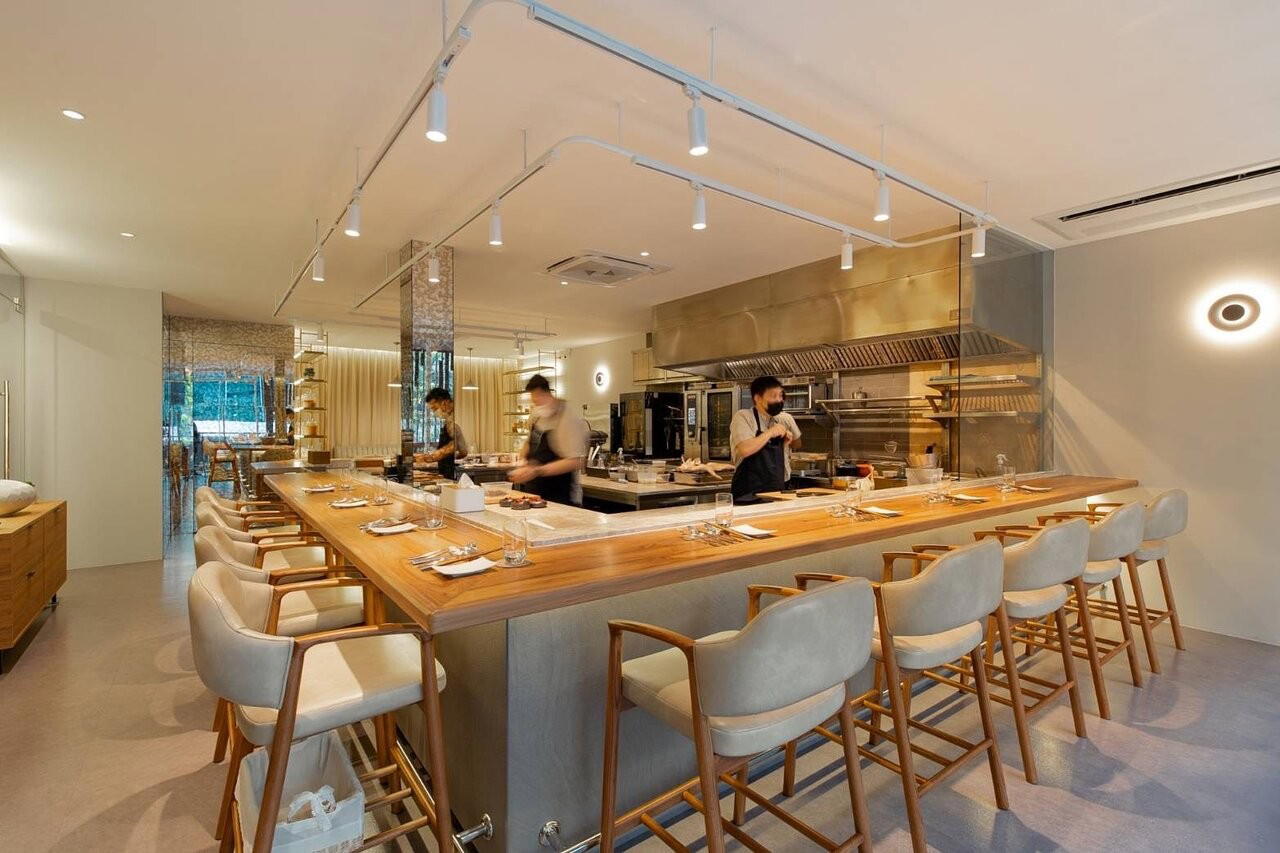
Tenzushi Kyomachi operates from a six-seat counter in Kitakyushu's Kokura district, serving Kyushu-mae sushi that draws on kaiseki-influenced technique and hyper-regional fish sourcing. Established in 1939 and holding Tabelog Gold consecutively from 2017 through 2025, it ranks among the most decorated sushi counters in western Japan, with Opinionated About Dining placing it first among all Japanese restaurants in 2023.

Pearl is the En Primeur Club membership app, where members save venues, book tables and use the concierge.
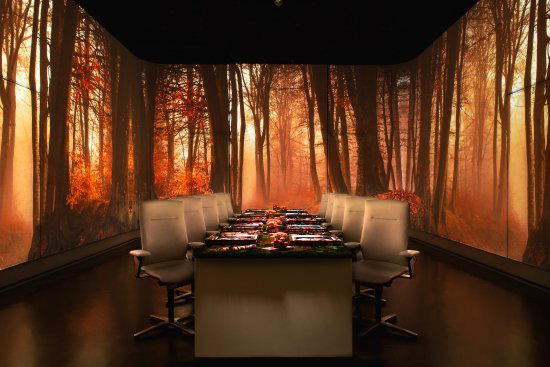
Kokura's Counter: Where Kyushu-Mae Sushi Meets Kaiseki Discipline
Kitakyushu sits at the northern tip of Kyushu, separated from Honshu by the Kanmon Strait and positioned at one of Japan's most historically active fish crossroads. The waters here, the Genkai Sea to the west, the Suo Sea to the east, the strait itself, produce fish with distinct seasonal rhythms that differ materially from the Pacific-facing catches that supply Tokyo's Toyosu market. That geography has long shaped a regional sushi tradition sometimes called Kyushu-mae, a style that carries the structural logic of Edo-mae but substitutes local fish, different vinegar profiles, and a formality borrowed from kaiseki. Tenzushi Kyomachi, operating from a six-seat counter in Kokura's Kyomachi district, represents the clearest current expression of that tradition.
A Sourcing Philosophy Built on Regional Waters
The editorial angle on Tenzushi Kyomachi begins with what arrives at the counter before a single piece of nigiri is formed. Kyushu-mae sushi, at its most disciplined, is not Tokyo omakase transplanted south. The fish is different: conger eel from local straits, locally-sourced sea bream (tai) prepared with techniques that shade toward kaiseki, shellfish from the shallow bays that indent the coast between Fukuoka and Saga prefectures. Where Tokyo's elite counters, including those carrying Kanesaka or Saito lineage, build their identity around Toyosu procurement and Edo-era rice technique, the Kitakyushu tradition integrates fish that rarely appear at northern counters, often prepared with additional steps: curing, marinating, light cooking applied with the kind of judgment more common in kappo kitchens than in strictly raw-focused sushi bars.
Chef Isao Amano works within that tradition at Tenzushi Kyomachi, which traces its founding to 1939, a provenance that places it among the oldest continuously operating sushi houses in western Japan. The current iteration at the Kyomachi location opened in February 2004, but the lineage behind it is considerably longer. That historical depth matters in a category where even highly awarded newcomers can lack the accumulated seasonal knowledge that shapes how a house sources and handles specific species across years of practice.
Award Record and Competitive Position
In Japan's peer-reviewed dining hierarchy, Tabelog Gold is awarded to roughly the top 0.1% of listed restaurants, and it is unusually difficult to hold across multiple years given the competitive density of major cities. Tenzushi Kyomachi has held Tabelog Gold consecutively from 2017 through 2025, a run of nine consecutive years, before stepping to Silver in 2026, still carrying a Tabelog score of 4.57. It has also been selected for the Tabelog Sushi WEST "100" list in 2021, 2022, and 2025, placing it among the confirmed leaders of the western Japan sushi category.
The international data reinforces the picture. La Liste, which aggregates critical scores across global publications and review systems, rated Tenzushi Kyomachi at 82.5 points in 2025, rising to 88 points in 2026. Opinionated About Dining, the platform that ranks restaurants based on aggregated expert opinions rather than single-critic visits, placed it first among all restaurants in Japan in 2023, second in 2024, and third in 2025. That sustained presence at the top of a national ranking that covers all cuisine types is a different signal than winning a category prize: it suggests a consistent level of execution that holds up across multiple independent observers over time.
Within Fukuoka's sushi scene, the comparison set is narrow. Sushi Gyoten and Sushi Karashima occupy adjacent territory in the premium tier, while Sushi Osamu and Chikamatsu represent the kaiseki-adjacent dining tradition that sits alongside sushi in the city's fine dining map. Across Japan's broader sushi conversation, the Kitakyushu counter is increasingly mentioned alongside the capital's most awarded rooms: Harutaka in Tokyo operates at a comparable award tier, as does the regional precision of Gion Sasaki in Kyoto in a different cuisine register. For internationally-oriented visitors who have covered Sushi Shikon in Hong Kong or Shoukouwa in Singapore, Tenzushi Kyomachi offers a materially different reference: not Japanese sushi exported to a cosmopolitan market, but Kyushu-mae sushi on its own ground.
The Format and What It Demands of the Diner
Six seats, counter only, with four service slots each operating day: 12:00–13:30, 14:00–15:30, 17:30–19:00, and 19:30–21:00. The restaurant is closed Mondays and Tuesdays, and the first and third Sundays of each month. The format is deliberately tight, which shapes the entire experience: with six diners at a counter, pacing is unified and the progression of courses runs as a single movement rather than as a collection of individual orders. There is no alcohol service, and guests are asked not to bring their own. For diners accustomed to wine-pairing omakase formats common at Tokyo counters and at venues like HAJIME in Osaka, this is a significant operational difference that reflects a deliberate choice about what the counter is for.
The average spend runs JPY 50,000–59,999 per person at both lunch and dinner, with a 10% service charge added to the bill. At that price point, Tenzushi Kyomachi sits in the same bracket as Tokyo's most recognised three-Michelin-star omakase counters, positioning it not as a regional alternative but as a peer-tier choice with a distinctly different regional character. Payment by credit card is accepted; QR code payment (PayPay) is also available. One parking space is available on site, which is relevant given the Kokura location and the absence of late-night public transport pressure at earlier sittings.
Reservations are available through Tabelog; the platform notes that any change to reservation date, time, or guest count is treated as a cancellation and incurs a fee. Given the Opinionated About Dining rankings and the multi-year Gold award history, advance planning is advisable. The counter is a five-minute walk from Kokura Station, providing direct access for visitors arriving by Shinkansen from Hakata or by the Sanyo line from the Osaka direction.
Where Tenzushi Kyomachi Fits in the Fukuoka Region
Fukuoka Prefecture is a more complex dining region than its proximity to Tokyo's critical infrastructure might suggest. The prefecture encompasses the Hakata waterfront culture of the city's southern wards, the yakitori and ramen streets that receive most of the international press, and the distinct Kitakyushu identity of the industrial north, where Kokura's commercial district has supported high-end dining for decades without the promotional machinery that surrounds Hakata's food scene. Tenzushi Kyomachi operates squarely within that quieter Kitakyushu tradition. It is not a destination that benefits from tourist-facing media coverage or proximity to Fukuoka's central hotel corridors, which partly explains why its award record outpaces its international name recognition.
For visitors building a Fukuoka itinerary around serious food, the full picture extends well beyond sushi. Gahoujin represents the sushi side of Hakata proper, while the wider dining scene mapped in our full Fukuoka restaurants guide covers the breadth of the prefecture's fine dining options. Those planning an extended stay should also consult our Fukuoka hotels guide, bars guide, and experiences guide. For those extending travel across Kyushu and western Japan, the range of what EP Club covers in Japan can be sampled through entries like akordu in Nara and 1000 in Yokohama, or further afield at 6 in Okinawa. The Fukuoka wineries guide is also available for those combining the prefecture's table with its growing craft wine scene.
Planning Your Visit
Tenzushi Kyomachi is located at 3 Chome-11-9 Kyomachi, Kokurakita Ward, Kitakyushu, a five-minute walk from Kokura Station. Four daily sittings run Wednesday through Sunday (closed Monday, Tuesday, and the first and third Sundays of each month). The counter holds six seats; average spend is JPY 50,000–59,999 plus a 10% service charge. Reservations are made through Tabelog, and changes to bookings incur a cancellation fee. There is no alcohol service and no BYO permitted. Smart casual dress is expected; excessively casual footwear may result in refused entry.
Frequently asked questions
Does Tenzushi Kyomachi work for a family meal?
The counter seats six people only, with no private rooms available and no alcohol served. That format works well for two adults or a small group of serious diners, but it is not suited to families with children. The JPY 50,000–59,999 per-person price point and the strict counter-only seating reinforce this as a destination for focused dining rather than a casual family outing.
Is Tenzushi Kyomachi better for a quiet night or a lively one?
The six-seat counter and no-alcohol policy define the tone clearly: this is a quiet, focused setting. Each sitting runs to a fixed window (90–120 minutes), so conversation naturally centres on the food in front of you. Solo diners are explicitly noted as welcome, which signals the kind of attentive, unhurried atmosphere the format produces.
What distinctions does Tenzushi Kyomachi have?
Tenzushi Kyomachi has received recognition including:
What dish is Tenzushi Kyomachi famous for?
The kitchen identifies its approach as Kyushu-mae sushi with a kaiseki sensibility, meaning the counter is known for its treatment of regional fish rather than any single signature piece. Tabelog reviewers consistently score the experience at 4.57–4.62, and Opinionated About Dining ranked it the number-one restaurant in Japan in 2023, citations that reflect the overall omakase rather than an individual dish.
Is Tenzushi Kyomachi focused on a specific cuisine style?
What It’s Closest To
Comparable venues nearby, for context on price, style, and recognition.
| Venue | Cuisine | Price | Awards | Notes |
|---|---|---|---|---|
| Tenzushi KyomachiThis venue (the venue you are viewing) | Modern Kyushu-style Omakase Sushi | $300–500 | La Liste Top Restaurants · Tabelog Silver #141 | Not listed |
| Chikamatsu | Edomae Sushi Omakase | $200–300 | La Liste Top Restaurants · Tabelog Gold #5 | Chūō |
| Imoto | Modern Kyoto Kaiseki | $200–300 | Tabelog Bronze #133 | Chūō |
| 鮨おさむ | Traditional Japanese Omakase Sushi | $150–200 | Tabelog Bronze #342 | Takamiya |
| Chiso Nakamura | Kyushu Kaiseki Omakase | $200–300 | Tabelog Bronze | Hakata |
| Sudo Haruyoshi | Premium Omakase Yakiniku | $150–200 | Tabelog Bronze #424 | Chūō |
Recognition history
Dated appearances from independent guides and award organizations, with the underlying list record or original source where available.
La Liste Top Restaurants
La Liste
Opinionated About Dining Top Restaurants in Japan Ranked #7
Opinionated About Dining
Tabelog Silver #141
Tabelog
Full recognition history (10 entries)
La Liste Top Restaurants
La Liste
Opinionated About Dining Top Restaurants in Japan Ranked #3
Opinionated About Dining
Tabelog 100 #59 · No. 59
Tabelog · Tabelog 100 - Sushi - WEST - 2025
Tabelog Gold
Tabelog
Tabelog Chef's Gold
Tabelog
Opinionated About Dining Top Restaurants in Japan Ranked #2
Opinionated About Dining
Opinionated About Dining Top Restaurants in Japan Ranked #1
Opinionated About Dining