SUSHI GANG occupies a streetside address in Kreuzberg's Graefestraße, placing it inside one of Berlin's most food-literate neighbourhoods. The name signals an informal, counter-culture attitude toward Japanese fish cookery that has found a receptive audience in a city that tends to reward substance over ceremony. For those tracking Berlin's sushi scene, this is a reference point worth knowing.
Pearl is the En Primeur Club membership app — saves, bookings, and concierge access live there. Same editors, same standards.
- Address
- Graefestraße 8, 10967 Berlin, Germany
- Phone
- +4915126188216
- Website
- sushi-gang.de
- Directions
- Get directions
 Saves & bookings on Pearl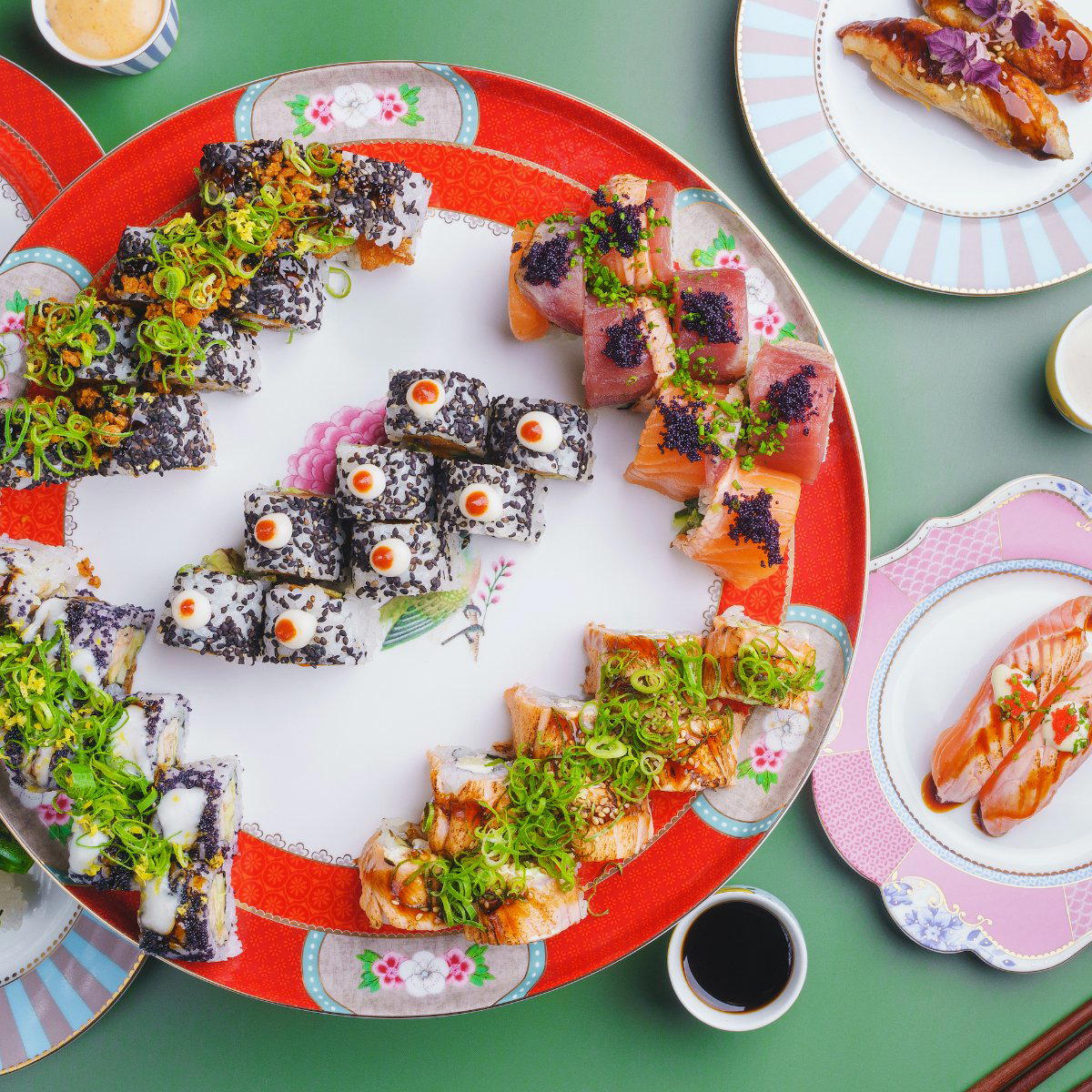
Kreuzberg's Appetite for Japanese Fish
Berlin's relationship with sushi has never been direct. For years the city occupied a peculiar middle ground: a dense population of Japanese restaurants and sushi conveyor belts on one hand, and almost no serious omakase culture on the other. Across Kreuzberg and Neukölln, a generation of more technically minded operations has emerged, often stripping away the red-lacquer aesthetic in favour of something that looks more like the neighbourhood around it. It fits inside that shift. The address sits in a stretch of Graefestraße that runs through the Graefekiez, a sub-neighbourhood known less for destination dining than for the kind of daily commerce that keeps a local community fed. Dropping a sushi concept into that fabric rather than into Mitte or Prenzlauer Berg says something about audience expectations and price positioning, even
What the Name Does
In most cities, a restaurant name signals something about the room's tone before you open the door. "SUSHI GANG" operates in the same register as a Berlin record shop or a natural wine bar: deliberate informality deployed with some confidence. The all-caps treatment and the word "gang" together push back against the deference traditionally expected in Japanese fish restaurants, where restraint and quiet authority are the standard register. This places the venue in a growing cohort of European sushi operations that treat the product seriously without treating the room as a shrine. Comparable moves have happened in London's Soho, in Copenhagen, and in Paris's 11th arrondissement, where operators discovered that younger audiences wanted the technique without the reverence. Berlin, with its persistent allergy to unnecessary formality, is a logical city for that approach.
Kreuzberg as Context
Graefestraße connects Bergmannstraße to the Landwehrkanal, threading through one of the more lived-in parts of Kreuzberg. The street has an organic market on Saturdays, a cluster of independent cafés, and the kind of residential density that creates a reliable weekday lunch crowd. It is not the neighbourhood where Berlin's €€€€ tasting-menu circuit operates: that gravitates toward central and western addresses, or the destination-specific rooms like Nobelhart & Schmutzig and FACIL, which draw on a different kind of occasion-dining logic. Graefestraße is neighbourhood-scale, which shapes what works there. A sushi operation built around accessibility rather than ceremony is better calibrated to that context than an omakase counter priced against Rutz or CODA Dessert Dining.
Sustainability in the Sushi Context
Japanese fish cookery has a complicated relationship with environmental accountability. Bluefin tuna, one of the category's most prized proteins, has been the subject of sustained conservation concern for decades. The Marine Stewardship Council and similar bodies have pushed sourcing conversations into restaurant dining rooms that once treated provenance as either irrelevant or a trade secret. Across Europe, the sushi operations that have gained traction with younger, more environmentally attentive audiences are increasingly the ones that make some accommodation for that conversation, whether through species substitution, seasonal rotation, or transparent supplier relationships. Berlin's dining audience, already sensitised to sourcing debates through its natural wine scene and its farm-to-table restaurants, applies a similar lens to fish. A sushi concept positioned in Kreuzberg, aimed at a neighbourhood clientele rather than expense-account tables, is more likely to be navigating these questions at a practical price level than at the high-ticket end, where sourcing prestige often means rarity rather than responsibility. For comparison, operations like Le Bernardin in New York City have spent years building sustainability credentials into their fish sourcing at stronger examples from the market. The challenge at the accessible end is doing so without passing the premium on to the customer.
Where SUSHI GANG Sits in Berlin's Broader Scene
Berlin's decorated restaurant tier runs from the three-Michelin-starred Restaurant Tim Raue (which built much of its identity on Asian flavour systems, including Japanese ones) down through a long chain of mid-market operators. The sushi category specifically lacks a single dominant critical reference point in the city in the way that, say, Hamburg's Restaurant Haerlin anchors fine dining expectations in its city. That absence creates room for operators at multiple price points to establish their own authority without being measured against an obvious ceiling. SUSHI GANG, with its Kreuzberg address and its informal name, is not competing with Germany's leading destination tables at Aqua in Wolfsburg, Schwarzwaldstube in Baiersbronn, or Vendôme in Bergisch Gladbach. It is operating in a different register entirely, closer to the neighbourhood sushi bars that function as reliable weekly fixtures than to the occasion-dining rooms. That is not a criticism; it is a different kind of value, and one that Kreuzberg residents appear to require. The restaurant occupies a different tier, and should be evaluated on its own terms.
Planning a Visit
Awards and Standing
Comparable venues nearby, for context on price, style, and recognition.
| Venue | Cuisine | Price | Notes |
|---|---|---|---|
| SUSHI GANGThis venue — the venue you are viewing | Japanese-Latin Fusion Sushi | $$$ | Not listed |
| SAN | Modern Japanese Sushi | $$$ | Prenzlauer Berg |
| MIYO Sushi Experience | Modern Japanese Sushi | $$$ | Charlottenburg |
| est. | Modern Japanese Fusion | $$$ | Charlottenburg |
| Iimori Ramen | Japanese Ramen | $$ | Mitte |
| Restaurant Jolesch | Traditional Austrian with Modern Twists | $$$ | Kreuzberg |
Continue exploring
More in Berlin
Restaurants in Berlin
Browse all →
Bars in Berlin
Browse all →
Hotels in Berlin
Browse all →
Wineries in Berlin
Browse all →
At a Glance
- Trendy
- Modern
- Lively
- Date Night
- Casual Hangout
- Open Kitchen
- Sake Program
Current opening hours
- Monday
- 4–10:30 PM
- Tuesday
- 4–10:30 PM
- Wednesday
- 4–10:30 PM
- Thursday
- 4–10:30 PM
- Friday
- 4–10:30 PM
- Saturday
- 4–10:30 PM
- Sunday
- 4–10:30 PM
Hours can change for holidays and private events. Last verified .
Lush greenery, soft lighting, warm seductive atmosphere with colorful pop interior and open show kitchen.