Our verdict
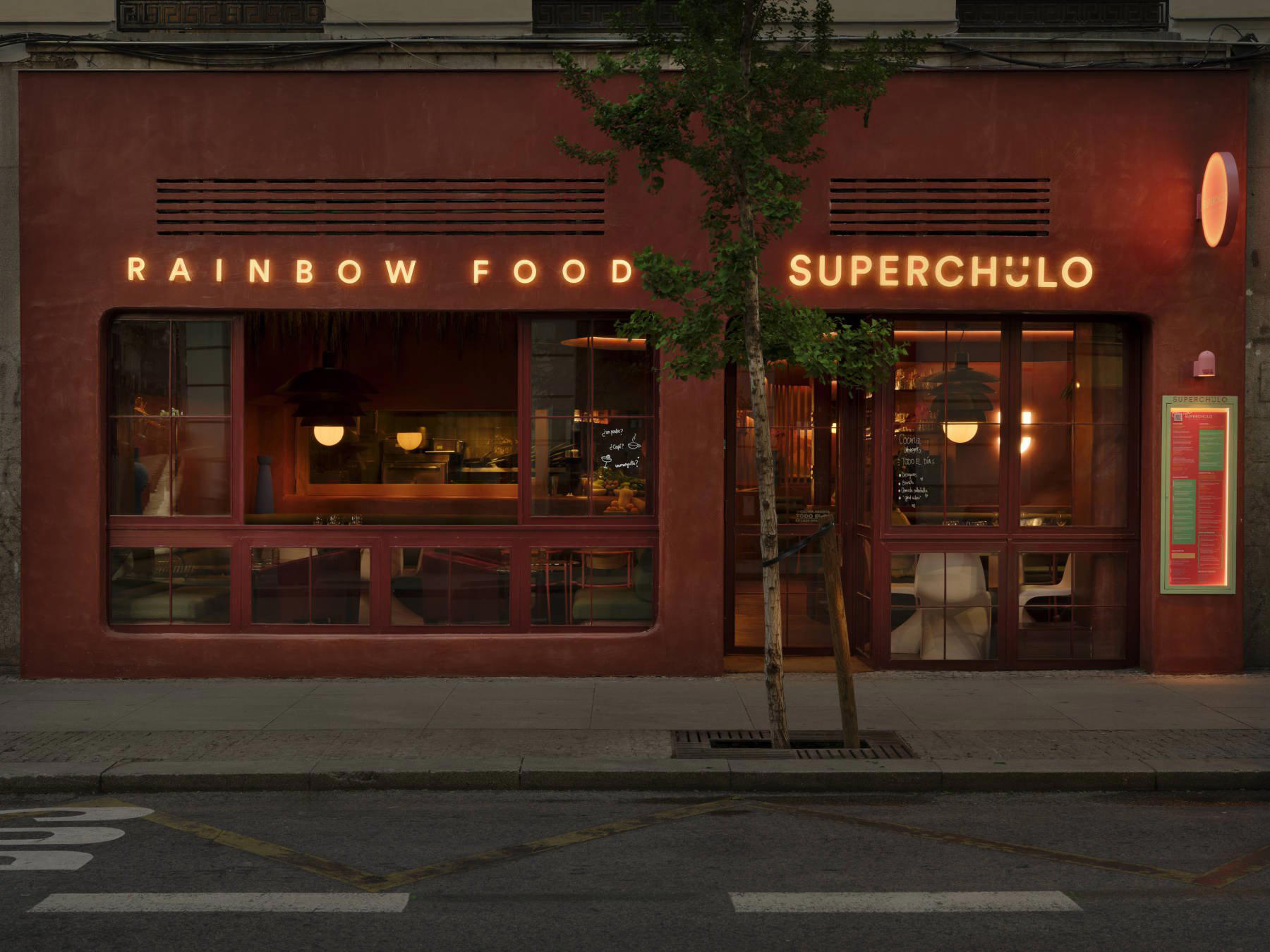
On Calle de Fuencarral in Madrid's Centro district, Superchulo occupies a stretch of street where neighbourhood bars and contemporary dining rooms coexist without apology. The kitchen works at the intersection of local Spanish produce and technique borrowed from further afield, positioning it within a Madrid scene that has grown increasingly confident about mixing indigenous ingredients with global methods. A reservation here is an entry point into that broader conversation.

Pearl is the En Primeur Club membership app — saves, bookings, and concierge access live there. Same editors, same standards.
- Address
- Calle de Fuencarral, 74, Centro, 28004 Madrid, Spain
- Phone
- +34911088048
- Hours
- Mon–Thu 10 AM–11 PMFri–Sat 10 AM–12 AMSun 10 AM–11 PM
- Website
- superchulorestaurante.com
- Directions
- Get directions
- Booking
- Book on CoverManager
The menu
What to order
- Açai Bowl
- Funday Toasty
- La Rebel Burger
Fuencarral's Register: Where the Street Meets the Plate
Calle de Fuencarral runs from the Gran Vía northward through Chueca and into Malasaña, changing character with almost every block. By the time you reach number 74, the street has shed its tourist-facing commercial layer and settled into something more local: independent shops, small bars, residents moving at their own pace. That address, and the crowd it draws, tells you something about where Superchulo positions itself inside Madrid's dining spectrum. This is not the white-tablecloth corridor of Salamanca, nor the Michelin-flagged rooms of DiverXO or Coque. It is a dining room that draws from the neighbourhood's energy while applying a kitchen sensibility that reaches well beyond the block.
Madrid's mid-tier creative dining scene has expanded considerably over the past decade. The city now supports a range of rooms that sit between the casual tapas bar and the tasting-menu institutions, and it is in that middle register where venues like Superchulo operate. The reference point is not the elaborate multi-course format of Deessa or DSTAgE, but something more immediate: food that carries technical intent without demanding ceremony from the diner.
Local Produce, Borrowed Methods
Spain's current culinary moment is defined as much by what its kitchens import intellectually as by what they grow or raise domestically. The country has long exported technique — the Basque school, the Ferran Adrià generation, the current wave of fire-led cooking visible at places like Paco Roncero — but it has also absorbed influences from Japan, Latin America, and Southeast Asia with a fluency that distinguishes the better Madrid kitchens from more insular European scenes. Superchulo sits within this pattern, working Spanish and Iberian produce through a lens that acknowledges what is happening in kitchens considerably further away.
This approach is not confined to Madrid. Across Spain, the most interesting rooms are those where local identity is treated as a starting point rather than a constraint. Aponiente in El Puerto de Santa María extracts technique from the Atlantic; Quique Dacosta in Dénia recodes Mediterranean produce through a contemporary lens; Arzak in San Sebastián has maintained a dialogue between Basque tradition and global reference for decades. What unites these approaches is a refusal to treat regionality as a ceiling. Superchulo belongs to a Madrid chapter of that same story, one written at a more accessible price point and with less institutional weight.
The Neighbourhood as Context
Understanding a restaurant often means understanding the street it sits on. Fuencarral at number 74 is in the Centro district, which in Madrid's postal and cultural geography covers a wide range: from the Gran Vía's commercial density to the quieter residential pockets that feed into Chueca. The area attracts a crowd that is younger on average than Salamanca's dining room regulars, more international than the old-school tabernas of La Latina, and generally more comfortable with menus that mix references rather than commit to a single tradition.
That demographic context matters for how a kitchen like Superchulo's is received. A diner who grew up eating tortilla de patatas at a bar on this street and later worked or travelled internationally arrives with a specific kind of appetite: they want to recognise something, but they also want to be shown something they have not seen assembled quite this way before. That is the tension a kitchen working at the local-ingredients, global-technique intersection has to manage, and it is where the more interesting meals in this register tend to live.
For a broader orientation to what Madrid's dining scene offers across price tiers and formats, the EP Club Madrid restaurants guide maps the full range, from tasting-menu flagships to neighbourhood rooms worth knowing.
Spain's Creative Dining Conversation
Placing Superchulo within the national conversation requires acknowledging the weight of the rooms it is in dialogue with, even at a remove. Spain holds more three-Michelin-star restaurants per capita than almost any comparable country, and the concentration of serious cooking talent outside Madrid, in Girona at El Celler de Can Roca, in the Basque Country at Mugaritz and Martin Berasategui, in Larrabetzu at Azurmendi, in Barcelona at Cocina Hermanos Torres, in València at Ricard Camarena, and in Cáceres at Atrio, has pushed Madrid's kitchens to sharpen their own identity rather than simply mirror what is happening elsewhere.
The city has responded by developing a distinctive voice: urbane, cross-referential, comfortable with informality in the room while maintaining rigour on the plate. That voice is audible across a range of Madrid addresses, and Superchulo contributes to it at a register that makes the conversation accessible to a wider audience. The comparative framing is useful here: where Atomix in New York City or Le Bernardin demand significant financial and scheduling commitment, Madrid has built an infrastructure of thoughtful mid-register rooms that distribute creative cooking more broadly through the city.
Planning a Visit
Superchulo is located at Calle de Fuencarral, 74, in the Centro district of Madrid, postcode 28004. The address is walkable from the Gran Vía metro station and sits within the Chueca neighbourhood boundary. As with most Madrid dining rooms operating at this level, reservations are advisable, particularly for weekend evenings when the Fuencarral corridor is at its most active. Contact and booking details are best confirmed directly through current listings, as operational hours in this category can shift seasonally.
Quick reference: Calle de Fuencarral, 74, Centro, 28004 Madrid.
Frequently asked questions
Where is Superchulo located?
Superchulo is located at Calle de Fuencarral, 74, Centro, 28004 Madrid, Spain, Madrid.
Is Superchulo a good option for visitors wanting creative Madrid cooking without a tasting-menu commitment?
Superchulo sits at Calle de Fuencarral 74 in Madrid's Centro district, within walking distance of the Gran Vía metro, which makes it logistically straightforward for visitors staying in central Madrid. The format skips the multi-hour tasting-menu structure that defines rooms like DiverXO or Coque, offering instead an à la carte approach to contemporary Spanish cooking. For travellers with one or two evenings in the city, that means genuine engagement with Madrid's current kitchen culture at a more manageable pace and spend.
What should I eat at Superchulo?
The kitchen operates at the intersection of Spanish produce and technique drawn from a wider international reference set — the approach common to Madrid's more engaged creative dining rooms rather than a fixed regional menu. Ordering à la carte gives you access to the kitchen's range without a tasting-menu commitment, which is part of the venue's appeal on Fuencarral. Go with what's seasonal and ask the floor for direction on the day.
How hard is it to get a table at Superchulo?
Madrid's mid-tier creative dining rooms on streets like Fuencarral tend to fill Thursday through Saturday with a neighbourhood-loyal crowd, so same-week walk-ins at those times are unreliable. Earlier in the week, the room is more accessible. A few days' advance notice covers most scenarios outside peak weekend service.
What has Superchulo built its reputation on?
Superchulo's reputation rests on location and approach: a Calle de Fuencarral address that places it inside one of Madrid's most active dining corridors, running through Chueca and into Malasaña. The kitchen works Spain's current creative moment — domestic produce read through a broader international technique set — without the formality or price point of a destination tasting-menu room. That positioning has made it a reference point for the neighbourhood rather than solely a draw for out-of-town visitors.
A Credentials Check
Comparable venues nearby, for context on price, style, and recognition.
| Venue | Cuisine | Price | Awards | Notes |
|---|---|---|---|---|
| SuperchuloThis venue — the venue you are viewing | Colorful Vegetarian Rainbow Food | $20–30 | Not listed | Not listed |
| ZÍNGARA MADRID | Modern Vegetarian Fusion | $30–50 | Macarfi 6.8 Food Rating | Justicia |
| MENDRUGO | Spanish Taproom with Craft Beer | $20–30 | Not listed | Chueca |
| Oven Mozzarella Gran Vía | Authentic Italian Pizza and Pasta | $20–30 | Not listed | Chueca |
| DCorazon | Spanish Fusion in Historic Caves | $20–30 | Not listed | Sol |
| Warehouse | Spanish | Not listed | Not listed | El Viso |