Suntory Lomas
Suntory Lomas occupies a particular niche in Mexico City's Lomas de Chapultepec dining corridor, where Japanese culinary discipline meets the expectations of one of the capital's most established residential enclaves. The address on Montes Urales 535 places it within easy reach of Polanco's more publicized restaurant circuit, yet the surrounding neighbourhood sets a distinctly quieter, more residential tone that shapes the experience from the moment you arrive.
 Discover on Pearl
Pearl is the En Primeur Club membership app — saves, bookings, and concierge access live there. Same editors, same standards.
- Address
- C. Montes Urales 535, Lomas - Virreyes, Lomas de Chapultepec, Miguel Hidalgo, 11000 Ciudad de México, CDMX, Mexico
- Phone
- +525552024711
- Website
- suntory.com.mx
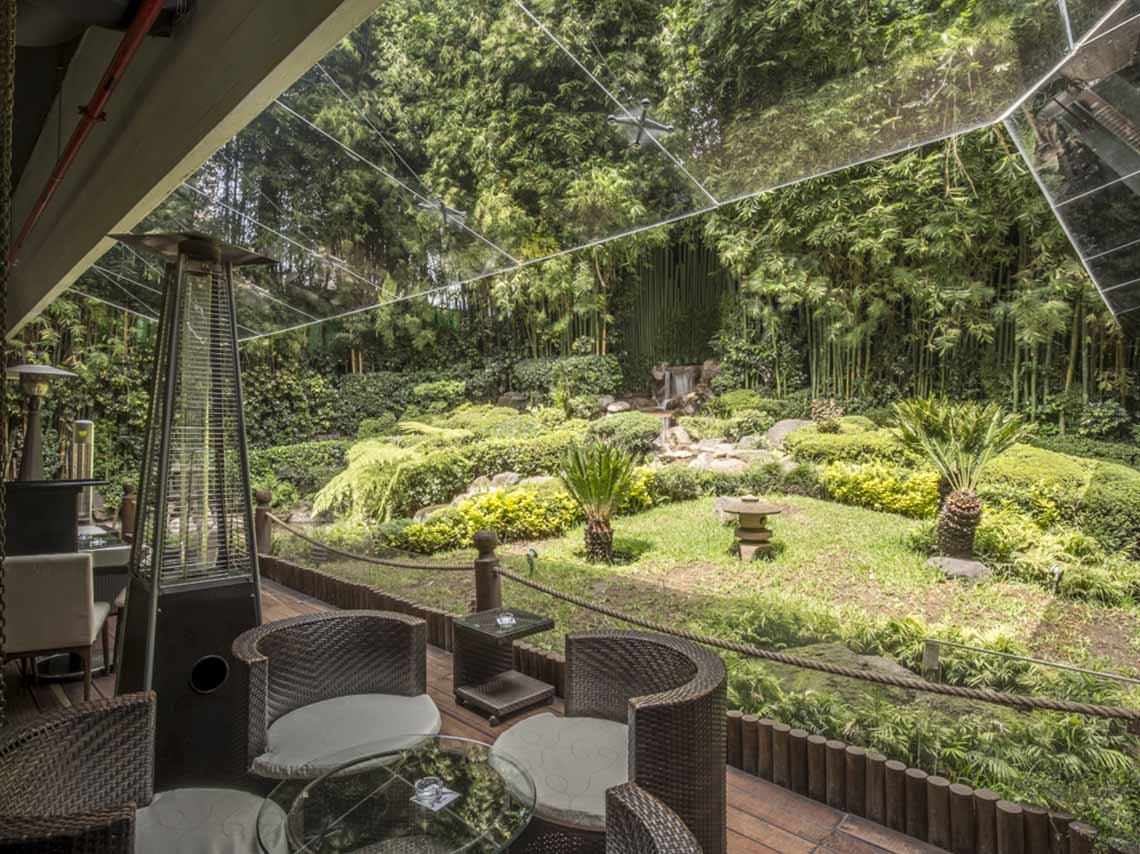
A Quiet Address With a Specific Gravity
Lomas de Chapultepec operates on different terms than Polanco or Roma Norte. The streets are wider, the buildings lower, the foot traffic minimal. Arriving at Montes Urales 535, the neighbourhood itself signals something: this is not a restaurant that depends on passing curiosity. The clientele here is largely local, largely regular, and the room reflects that. What greets you instead is the kind of interior calm that comes from years of serving a consistent audience rather than chasing a rotating one.
That residential enclave character matters for how you read the experience. Lomas has historically functioned as a dining destination for Mexico City's established professional class rather than for the international press circuit that keeps Pujol and Quintonil in perpetual discussion. Suntory Lomas belongs to that quieter tributary of the city's dining geography, and understanding it means setting aside the metrics that apply to the tasting-menu tier.
The Japanese Restaurant in a Mexican Capital
Mexico City has developed one of Latin America's more serious Japanese dining ecosystems over several decades, driven partly by a significant Japanese-Mexican community and partly by the capital's appetite for precision cooking at multiple price points. That context is worth holding onto when placing Suntory Lomas. The Suntory brand in Mexico has a longer institutional presence than most international names in the city's food scene, which positions it closer to the category of established dining institution than to newer Japanese-inflected restaurants that have opened across Polanco and Cuauhtémoc in recent years.
Where newer Japanese-influenced addresses in the capital tend toward omakase formats or fusion-forward menus, the Suntory model in Mexico has historically leaned into teppanyaki, sushi, and traditional Japanese set structures. That is a different conversation than the one happening at Em or Rosetta, both of which operate on creative, chef-driven premises. Suntory Lomas occupies a more institutional register: the Japanese restaurant that a certain generation of Mexico City diners has used for business lunches, celebrations, and the kind of occasion that requires a reliable room rather than a surprising one.
Lunch and Dinner: Two Different Conversations
The lunch-versus-dinner divide at a restaurant like this is not merely a scheduling question. It reflects two distinct dining cultures operating under the same roof at different hours of the day.
Daytime service at Lomas-area restaurants of this profile tends to draw a professional crowd: executives from the financial corridor between Reforma and Santa Fe, residents from the surrounding blocks, people for whom proximity and reliability outweigh novelty. Lunch formats in this register often offer set menus or abbreviated versions of the evening card, priced to suit a midday rhythm. The room reads differently in daylight, less atmospheric, more functional, and the transaction between kitchen and table carries less ceremony.
Evening service shifts the register considerably. The Lomas dining room after dark operates with more deliberate pacing, and the expectation of a full Japanese meal, whether sushi, teppanyaki, or a broader set structure, comes into focus. The gap between a lunch visit and a dinner visit here is more pronounced than at a bistro format. At dinner, the investment in time and attention is higher on both sides of the pass, and that is where the kitchen has more room to demonstrate range. For a first visit, the evening service is the more revealing one.
Value logic runs in the opposite direction. Lunch tends to offer the more accessible entry point to the kitchen's output without the full commitment of an evening meal. For readers who want to calibrate the experience before committing to dinner, a midday visit is the lower-stakes test.
Where Suntory Lomas Sits in the City's Wider Circuit
Mexico City's restaurant conversation has expanded well beyond its traditional Polanco center of gravity. The past decade has seen serious investment in creative cooking across Roma, Condesa, and Juárez, and the city's position in the Latin American dining narrative has been shaped largely by tasting-menu formats at addresses like Sud 777. Suntory Lomas does not compete in that register, and it does not need to.
The more useful comparison set is the category of established international-cuisine restaurants that have served Mexico City's upper-residential neighbourhoods for decades: Japanese, French, and Italian houses that predate the contemporary fine-dining moment and continue to hold their audiences through consistency rather than reinvention. In that peer group, longevity is itself a signal. A restaurant that has operated in Lomas de Chapultepec without the support of the international press cycle has done so because the room keeps filling.
For readers planning a broader Mexico trip, the country's dining circuit extends well beyond the capital. Animalón in Valle de Guadalupe, Alcalde in Guadalajara, KOLI Cocina de Origen in Monterrey, and Levadura de Olla in Oaxaca each represent distinct regional perspectives on Mexican cooking. On the coast, HA' in Playa del Carmen, Le Chique in Puerto Morelos, and Huniik in Merida cover the Yucatan Peninsula's more ambitious end. Lunario in El Porvenir, Pangea in San Pedro Garza Garcia, and Olivea Farm to Table in Ensenada extend the map further.
For international reference points on disciplined Japanese cooking, Le Bernardin in New York offers a parallel case study in how European-heritage institutional fine dining holds an audience across decades, while Atomix in New York represents the contemporary Korean tasting-menu format that has redefined what Asian fine dining can mean in a Western capital.
Planning a Visit
Where the Accolades Land
Comparable venues nearby, for context on price, style, and recognition.
| Venue | Cuisine | Price | Awards | Notes |
|---|---|---|---|---|
| Suntory LomasThis venue — the venue you are viewing | Premium Japanese Teppanyaki and Sushi | $$$$ | , | |
| Rokai Ramen-Ya | Authentic Japanese Ramen-Ya & Sushi | $$$ | , | Cuauhtemoc |
| Narú | Mexican-Japanese Fusion | $$$ | , | Bosques de Las Lomas |
| Ginza Cráter | Japanese Sushi Bar | $$$ | , | Pedregal de San Jeronimo |
| Onomura Santa Fe | Japanese Nigiri Room | $$$$ | , | Centro Comercial Santa Fe |
| Kotsu By Onomura | Mexican-Japanese Omakase | $$$$ | , | Nva Anzures |
Continue exploring
More in Mexico City
Restaurants in Mexico City
Browse all →
Bars in Mexico City
Browse all →
At a Glance
- Elegant
- Sophisticated
- Classic
- Date Night
- Business Dinner
- Special Occasion
- Open Kitchen
- Sake Program
Warm and elegant with meticulous decor that evokes traditional Japanese authenticity while blending modern flair.