Sud 777







1 Michelin Star · World's 50 Best #59 · La Liste Top Restaurants
Our verdict
Sud 777 operates from Jardines del Pedregal with a plant-forward Mexican kitchen that has earned a Michelin star and placed as high as #70 on the World's 50 Best list. Chef Edgar Núñez draws from an on-site vegetable garden to produce dishes that read simple on the plate but carry real technical depth. The wine list runs to 2,300 bottles with strong representation from Mexico, Italy, and California.

Pearl is the En Primeur Club membership app, where members save venues, book tables and use the concierge.
Pedregal, at a Remove from the Centro Noise
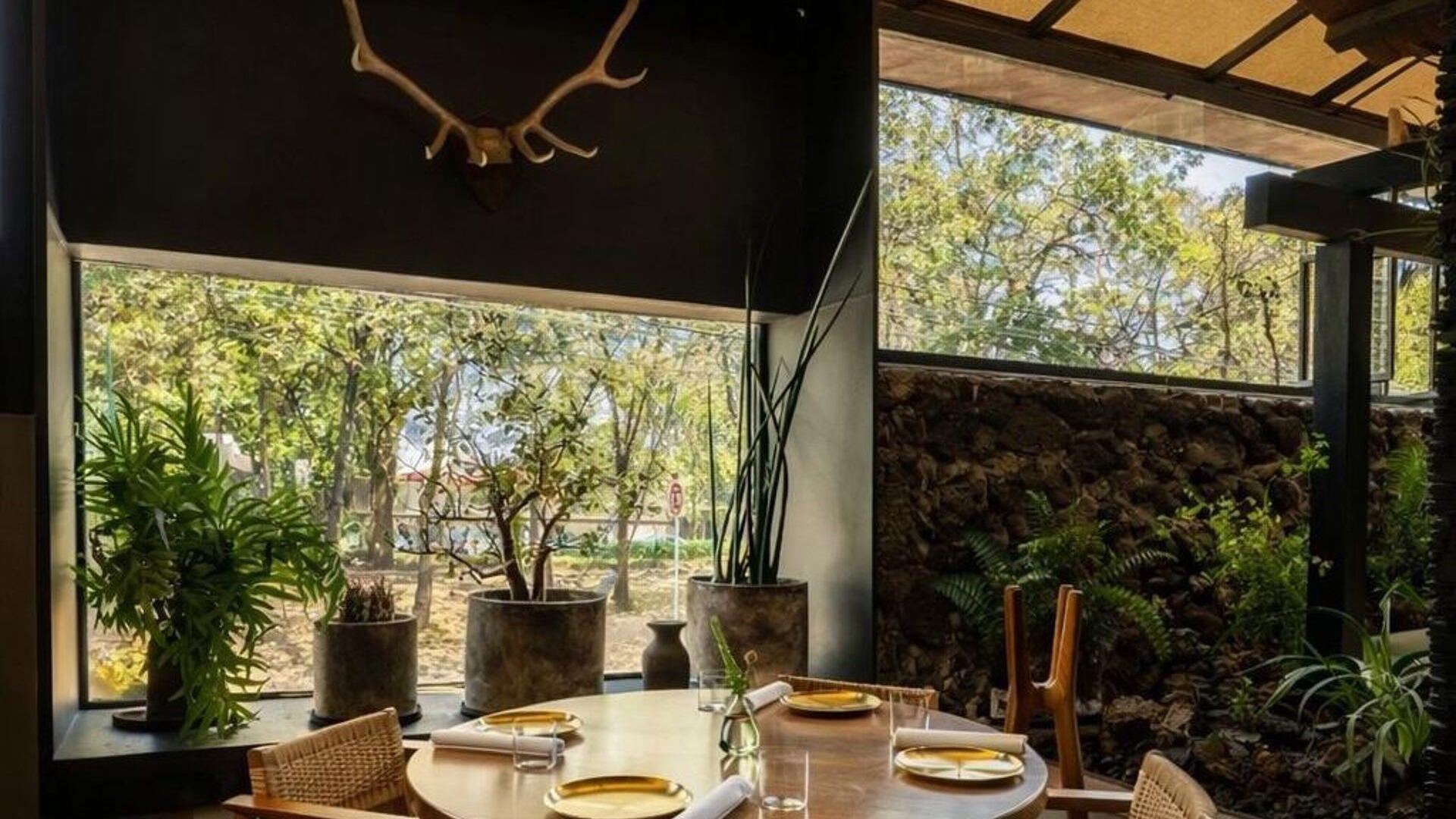
Jardines del Pedregal sits in the southwest of Mexico City, built across the volcanic lava fields of the Pedregal de San Ángel, far from the Condesa-Roma-Polanco axis that most international visitors trace. The neighbourhood is residential and quiet by CDMX standards, its wide boulevards lined with mid-century houses set behind stone walls. Arriving at Blvrd de la Luz 777, there is none of the street-level bustle that frames restaurants like Pujol or Quintonil in Polanco. The separation is part of the logic: Sud 777 is a destination restaurant in the literal sense, one you travel to with purpose rather than stumble upon.
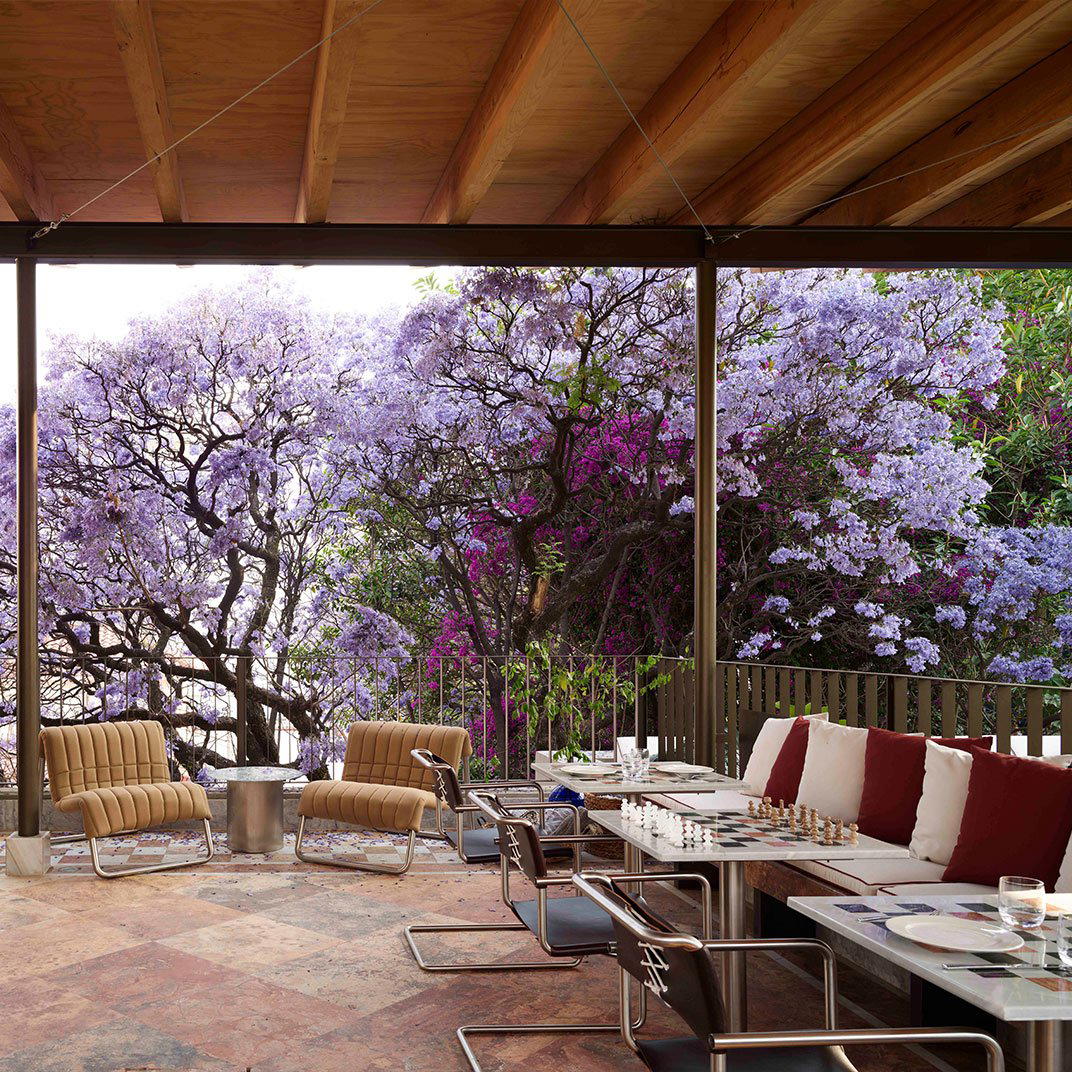
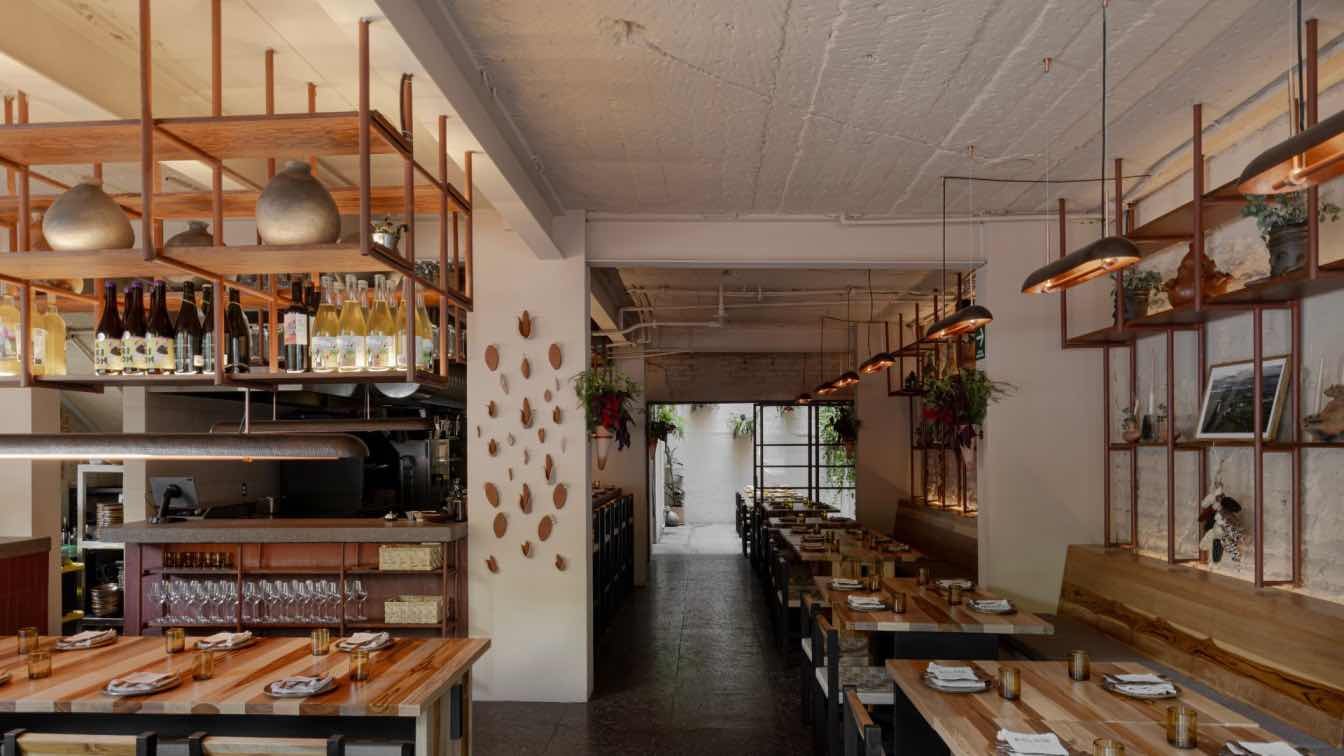
That remove shapes the experience before you sit down. A suburban address in a city as dense and vertical as Mexico City carries its own signal. Properties in Pedregal tend toward the sprawling rather than the compressed, and the restaurant makes use of that space. The effect is composed rather than theatrical, more house than stage set. For Mexico City's creative-kitchen tier, where the room is often as considered as the plate, the restraint reads as a deliberate position.
Where Sud 777 Sits in Mexico City's Creative Kitchen Tier
Mexico City's fine-dining scene has fragmented into distinct peer sets over the past decade. At the top of the price band, Pujol and Quintonil price at the $$$$ tier and compete directly with one another for the city's most-awarded table designation. A middle band has emerged, priced at $$ to $$$, where the cooking can match or exceed the top tier in ambition while remaining more accessible in cost. Sud 777 occupies that middle position at the $$ cuisine price point, which in Mexico City's current context places a typical two-course meal under forty dollars, before beverages.
The awards trail tells a more complex story than the price point suggests. A Michelin star in both 2024 and 2025, a placement at #70 on the World's 50 Best list in 2023 and #82 in 2024, an Opinionated About Dining ranking among the leading restaurants in North America across consecutive years, and an 85.5-point score on La Liste in 2025 revised to 83 points in 2026: the credentials align Sud 777 with the top tier of Latin American creative kitchens regardless of its mid-range pricing. That gap between cost and recognition is the most editorially interesting thing about the restaurant's position in the city's hierarchy. For comparison, Em prices at $$$ and Rosetta sits at $$ in the creative-Italian register; Sud 777 competes with both in terms of recognition while holding a different cuisine identity.
Across Mexico, a pattern has emerged at the creative end of regional kitchens: chefs trained in or heavily influenced by European technique returning to apply that discipline to local ingredients, particularly plants. Levadura de Olla in Oaxaca works through a fermentation lens; Animalón in Valle de Guadalupe foregrounds open-fire technique; Le Chique in Puerto Morelos applies high modernist method to Yucatecan tradition. Sud 777 occupies the plant-forward urban end of that spectrum.
The Kitchen: Vegetables as the Central Argument
Mexican creative cooking has historically foregrounded proteins, mole complexity, and masa technique as its primary vocabulary. What makes Sud 777's position editorially significant is that it has built a Michelin-starred, 50 Best-ranked kitchen around vegetables as the central argument rather than a secondary register. Chef Edgar Núñez draws from an on-site vegetable garden, with that supply informing what appears on the menu.
La Liste's notes on the kitchen describe preparations that read minimal: roasted beets with coffee butter, Brussels sprouts, artichoke in sea urchin sauce, endive with parsnip puree and pine kernels. The combination of a Mexican chef using European brassicas and Mediterranean preparations alongside indigenous ingredient logic is characteristic of the generation of CDMX kitchens that came of age in the 2010s. The sea urchin entry is a marker of technical ambition: pairing a typically marine luxury product with an artichoke requires precise calibration of bitterness and brine. That a dessert course moves into seaweed and fig leaf ice cream suggests the kitchen applies the same logic across the full meal, not only in savoury courses where plant-forward ambition is more conventional.
The cuisine is listed as both Mexican and vegan in the records, which positions the kitchen to serve a dietary requirement that remains underserved at the awards tier in Latin America. For visitors who eat plant-based at home but frequently find creative menus only partially accommodating, Sud 777 represents an unusually complete option within a Michelin context.
The Wine Program: Scale and Range at the Mid-Price Tier
A 2,300-bottle inventory with 550 selections is a programme of serious scale for any restaurant operating at the $$ cuisine price point. Wine Director Aisha Moreno oversees a list with declared strengths across Mexico, Italy, California, France, and Spain. The Mexico inclusion is of particular note: domestic wine from Baja California's Valle de Guadalupe and neighbouring valleys has established credibility over the past fifteen years, and a Pedregal restaurant with genuine investment in the category aligns with producers like those featured at Olivea in Ensenada and estates tracked through EP Club's Mexico City wineries guide.
The wine pricing sits at $$ on La Liste's scale, which the guide defines as a range of pricing rather than a budget or premium list. A corkage fee of $35 is available for those bringing their own bottles. The breadth of the list, five regions of genuine depth, positions it as a serious dining companion rather than an afterthought, and the Mexican section specifically offers something the classic European-heavy lists at comparable creative kitchens rarely provide.
For readers tracking how Latin American creative kitchens handle wine at this level, the comparison with Lunario in El Porvenir or KOLI Cocina de Origen in Monterrey is worth making: each represents a regional approach to pairing within Mexico's expanding wine culture, but few match the raw inventory depth that Sud 777 commits to.
Sud 777 in the Broader Creative Kitchen Conversation
Restaurants like Alléno Paris au Pavillon Ledoyen and Enrico Bartolini in Milan represent European creative kitchens at the highest awards tier. Sud 777 sits in a different category by price and geography, but its consecutive 50 Best placements and sustained Michelin recognition mean the comparison is not merely aspirational. The kitchen has been validated against international benchmarks while retaining a specifically Mexican ingredient identity rooted in what the garden produces.
That combination, garden-sourced locality, Mexican technique applied to plant materials European kitchens traditionally own, and international award recognition, is what makes Sud 777 a useful lens for understanding where Mexico City's creative dining has arrived. It is not trying to replicate what Pujol does with masa and memory, nor what El Tigre Silencioso attempts in a different register. It has staked out a position on the city's southwest edge and built a case for it over a number of consecutive award cycles.
Readers planning a multi-restaurant visit to Mexico City will find the full context in EP Club's Mexico City restaurants guide. Accommodation options across the city are mapped in the hotels guide, and the bar and experiences programmes are covered at EP Club's Mexico City bars guide and experiences guide respectively.
Know Before You Go
- Address: Blvrd de la Luz 777, Jardines del Pedregal, Álvaro Obregón, 01900 Ciudad de México
- Neighbourhood: Jardines del Pedregal, southwest Mexico City
- Cuisine: Creative Mexican, plant-forward and vegan-friendly
- Chef: Edgar Núñez
- Wine Director: Aisha Moreno
- Cuisine Pricing: $$ (typical two-course meal under $40 before beverages)
- Wine List: 550 selections, 2,300-bottle inventory; strengths in Mexico, Italy, California, France, Spain
- Wine Pricing: $$ (range across price points)
- Corkage: $35
- Meals Served: Lunch and Dinner
- Awards: Michelin 1 Star (2024, 2025); World's 50 Best #70 (2023), #82 (2024); La Liste 85.5pts (2025), 83pts (2026); Opinionated About Dining North America ranked
- Owners: Sergio Berger, Jose Jarero, Edgar Núñez
Frequently asked questions
What kind of cuisine does Sud 777 serve?
What part of town is Sud 777 in?
Sud 777 is located at Blvrd de la Luz 777, Jardines del Pedregal, Álvaro Obregón, 01900 Ciudad de México, CDMX, Mexico, Mexico City.
Has Sud 777 won any awards?
Sud 777 has received recognition including: La Liste Top Restaurants (2026): 83pts; Chef Edgar Nunez' Mexican vegetable kitchen is completely our cup of tea. A lot of the ingredients come from his own vegetable garden, which he uses in simple preparations, such as roasted beets with ….
What's the signature dish at Sud 777?
Sud 777 does not publicise a fixed signature dish. The menu follows seasonal output from Chef Edgar Núñez's own vegetable garden, so the lineup shifts accordingly. La Liste, which awarded the restaurant 85.5 points in 2025, highlights preparations like roasted beets with coffee butter, artichoke in sea urchin sauce, and ice cream with seaweed and fig leaf as representative of the kitchen's approach.
What price level is Sud 777?
Pricing at Sud 777 is listed as $$.
Who is the chef connected to Sud 777?
The chef associated with Sud 777 is Edgar Núñez.
How It Stacks Up
Comparable options at a glance, pulled from our tracked venues.
| Venue | Cuisine | Price | Awards | Notes |
|---|---|---|---|---|
| Sud 777This venue (the venue you are viewing) | Modern Mexican Fine Dining | $50–100 | 1 Michelin Star · World's 50 Best #59 | Not listed |
| Pujol | Modern Mexican Fine Dining | $200–300 | 2 Michelin Stars · World's 50 Best #60 | Mexican |
| Quintonil | Modern Mexican Fine Dining | $300–500 | 2 Michelin Stars · World's 50 Best #7 | Modern Mexican, Contemporary |
| Rosetta | Mexican-Italian Fusion Fine Dining | $30–50 | 1 Michelin Star · World's 50 Best #39 | Italian, Creative |
| Em | Modern Japanese-Mexican Fusion | $200–300 | 1 Michelin Star · World's 50 Best #71 | Mexican |
| Comedor Jacinta | Traditional Mexican | Not listed | Michelin Bib Gourmand | Mexico, Mexican |
Recognition history
Dated appearances from independent guides and award organizations, with the underlying list record or original source where available.
Michelin 1 Star
Michelin
World's 50 Best Latin America's Best Restaurants #59
World's 50 Best
La Liste Top Restaurants
La Liste
Opinionated About Dining Top Restaurants in North America Highly Recommended
Opinionated About Dining
Wine Spectator Best of Award of Excellence
Wine Spectator
Full recognition history (16 entries)
La Liste Top Restaurants
La Liste
Michelin 1 Star
Michelin
The Best Chef Two Knives
The Best Chef
We're Smart World Top 100 #47
We're Smart World
We're Smart World 5 Radishes
We're Smart World
Wine Spectator Best of Award of Excellence
Wine Spectator
Michelin 1 Star
Michelin
Opinionated About Dining Top Restaurants in North America Ranked #182
Opinionated About Dining
World's 50 Best Restaurants #82
World's 50 Best
Opinionated About Dining Top Restaurants in North America Highly Recommended
Opinionated About Dining
World's 50 Best Restaurants #70
World's 50 Best