



1 Michelin Star · Canada's 100 Best Restaurants #62
Our verdict
Shoushin occupies a hinoki counter on Yonge Street in Toronto's Lawrence Park neighbourhood, where chef Jackie Lin runs one of Canada's most critically recognised omakase programs. Awarded a Michelin star in 2024 and ranked among Opinionated About Dining's top restaurants in North America, the kitchen draws almost exclusively on Japanese-sourced product, with sake pairings that move in step with the progression of the meal.

Pearl is the En Primeur Club membership app — saves, bookings, and concierge access live there. Same editors, same standards.
- Address
- 3328 Yonge St, Toronto, ON M4N 2M4, Canada
- Phone
- (416) 488-9400
- Hours
- Mon–Tue ClosedWed–Sun 6–10 PM
- Website
- shoushin.ca
- Directions
- Get directions
- Booking
- Book on Tock
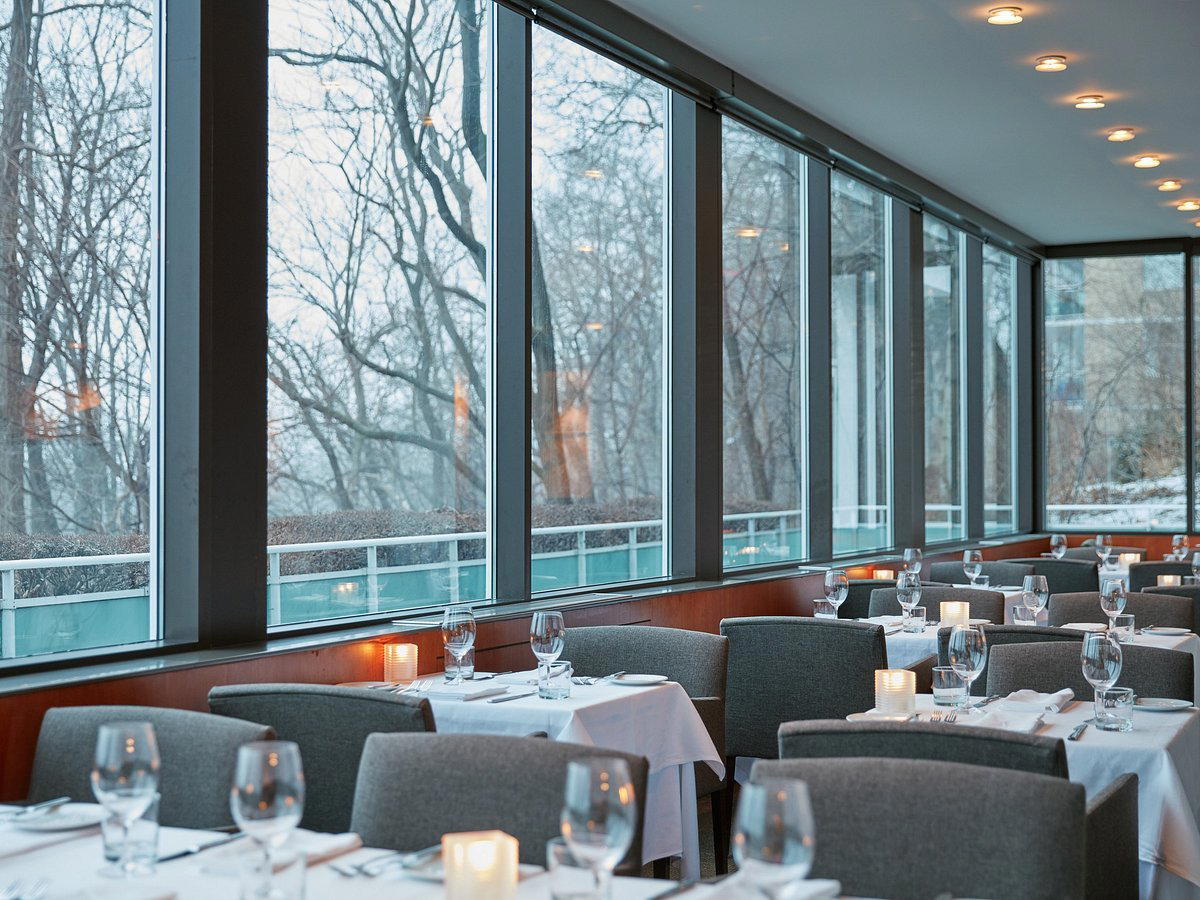
A Counter in North Toronto, a Program Rooted in Japan
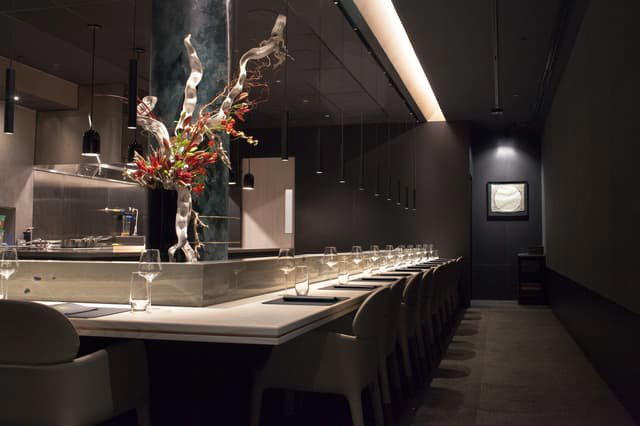
Toronto's premium Japanese dining scene has developed along two broad lines: the high-volume aburi and izakaya formats that colonised downtown, and the quieter, counter-led omakase programs that have emerged more gradually in residential pockets further north. Shoushin sits firmly in the second category. Located at 3328 Yonge Street, it operates four evenings a week — Wednesday through Sunday, service from 6 PM — in a format that privileges depth over throughput. The physical anchor is a hinoki counter, the pale Japanese cypress wood that has become shorthand in North American sushi rooms for seriousness of intent. It signals something before a single course arrives.
That framing matters when placing Shoushin against Toronto's $$$$ tier. Peer venues like Kappo Sato and Yukashi share the kaiseki-adjacent end of the market, while JaBistro operates at higher volume with a broader menu format. Shoushin's competitive set is narrower: omakase-only rooms where the counter itself is the dining room, the chef is in direct sight throughout the meal, and the sequence is fixed rather than ordered. Within that niche in Canada, the recognition is notable. Opinionated About Dining ranked Shoushin at #429 in North America in 2025, up from #554 in 2024 and following an initial recommendation in 2023, a three-year trajectory that mirrors the program's growing grip on the city's serious dining conversation. The Michelin star, awarded in 2024, confirmed what local regulars had been saying for longer.
How the Sake Pairing Earns Its Place
In Edomae omakase, the beverage program is often an afterthought, a sake list that arrives in a laminated sleeve and departs ignored. The better rooms treat it differently, sequencing the pour to track the progression of flavour intensity across the meal. At Shoushin, the sake pairing is described by Opinionated About Dining's assessors as reaching its peak during the sashimi course, which suggests a deliberate architecture: lighter, more delicate pours in the early courses giving way to something with more texture and presence as the fish moves from subtle to assertive.
This approach reflects a wider shift in how North American omakase rooms have started to think about sake. A decade ago, most Canadian and American sushi counters defaulted to cold junmai daiginjo across the board, a crowd-pleasing but undifferentiated choice. The more considered programs now match the brewing style to the course weight: a fragrant ginjo alongside the lighter white-fleshed sashimi, a fuller kimoto or yamahai as the meal moves toward richer preparations. Whether Shoushin's list is built on that logic cannot be confirmed from available data, but the external assessment that the pairing specifically enhances the sashimi sequence points in that direction.
What that means practically: if you are splitting the two omakase formats on offer, the shorter menu with snacks and ten nigiri, or the longer, more personalised option, the sake pairing likely rewards the extended format more, where the full arc of the meal gives it room to move. The nigiri sequence itself runs from lighter, silvery kohada through to the richer anago at the close, and a sake program that tracks that progression from clean and mineral to broader and more textured would be doing serious work.
The Product and the Season
Almost all of Shoushin's fish and ingredients are sourced from Japan, which at this price point and in this format is the baseline expectation, but it is worth stating directly: the logistics of maintaining Japanese-sourced product in Toronto at this consistency level are non-trivial. The city is not Tokyo, not New York, and not Los Angeles, where proximity to major air freight hubs and larger Japanese-Canadian supplier networks ease the supply chain. That Shoushin has sustained this sourcing model through the period of its OAD recognition, from recommended in 2023 to ranked in the top 430 in North America by 2025, suggests the infrastructure is real and not occasional.
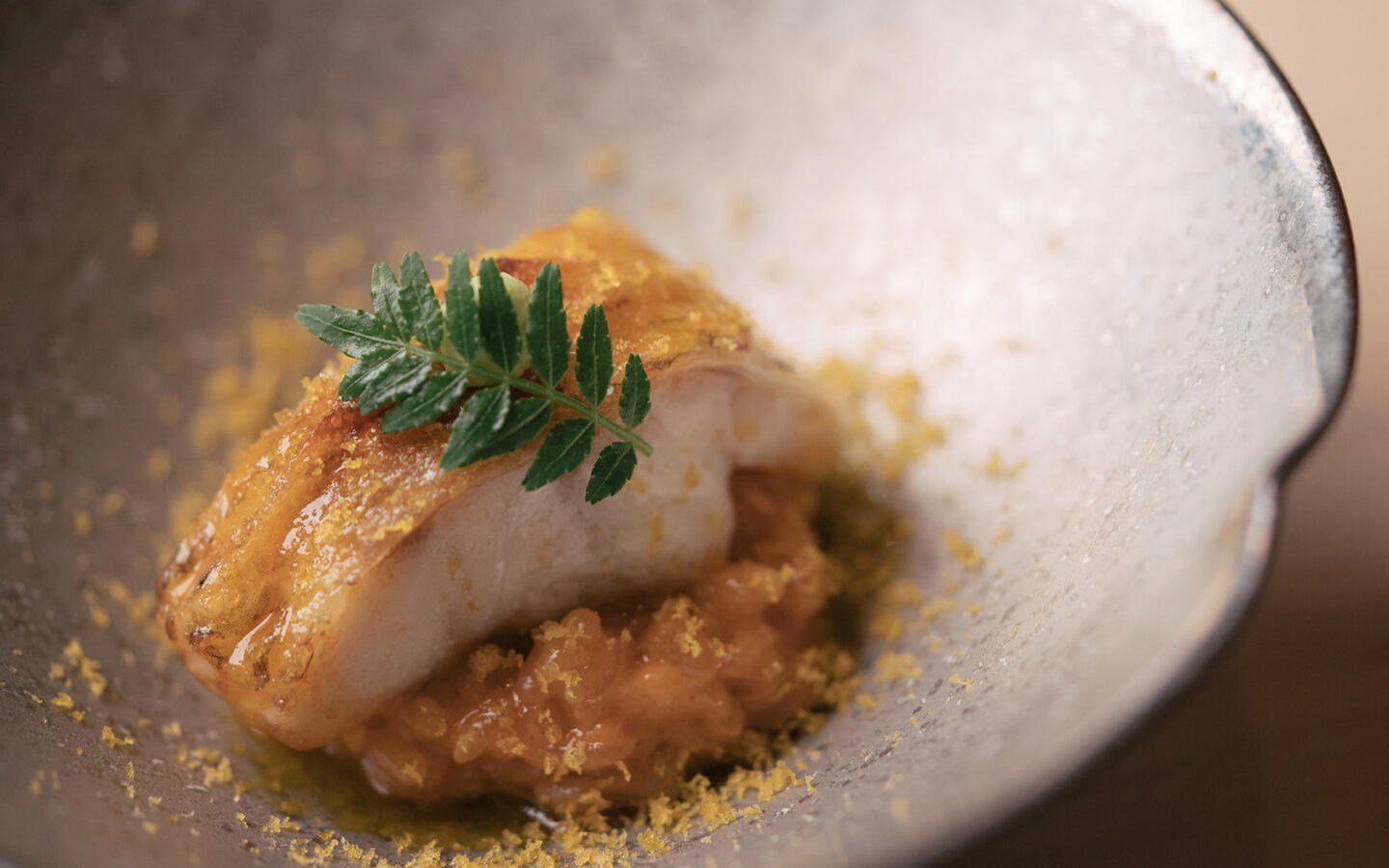
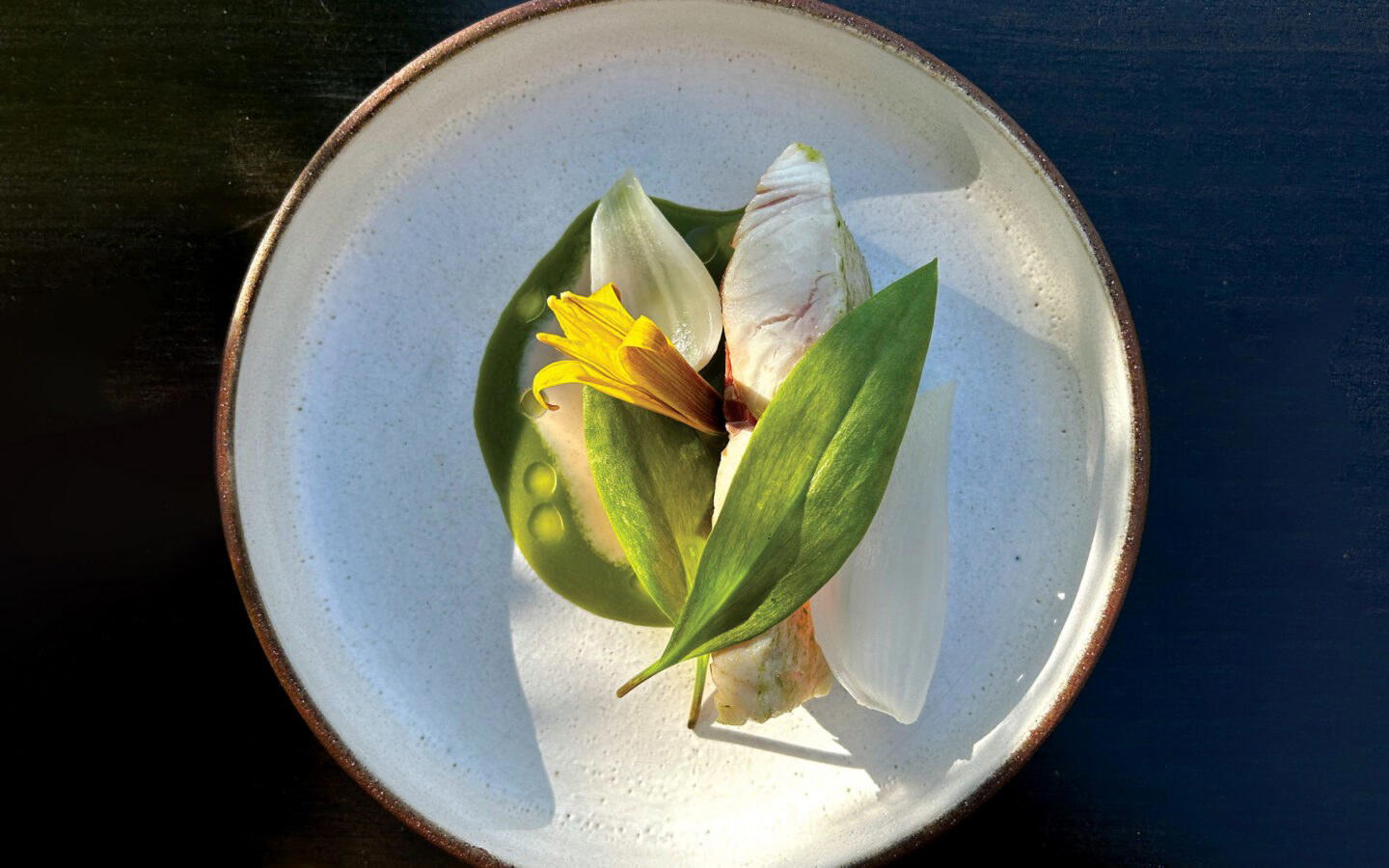
Seasonality is embedded in how the kitchen operates. The OAD citation specifically references springtime preparations: poached monkfish liver plated with firefly squid from Toyama Bay. Firefly squid, or hotaru ika, has a narrow window, roughly March through May, and the Toyama Bay designation is specific, pointing to the region most associated with the ingredient in Japan. The monkfish liver preparation, rich and demanding technical control to avoid bitterness, is the kind of course that separates accomplished sushi rooms from the ones still coasting on the quality of the fish alone. Together, those two spring courses signal a kitchen operating in both the cold and hot sections simultaneously, an observation confirmed by external assessment: the hot kitchen is described as equally accomplished as the sushi work.
The nigiri rice deserves a specific note. At Shoushin it is a blend of two varieties, served at natural colour without over-polishing, with acidity calibrated to work with the fish rather than compete with it. Rice is the quiet variable that separates technically serious Edomae work from the decorative, and the fact that assessors noticed and called it out specifically places it among the things worth paying attention to during the meal.
Where Shoushin Sits in the Wider Canadian Context
Canada's Michelin-starred restaurants are still relatively few, and within that group the Japanese category is smaller still. Toronto's starred rooms now compete with programs in Montreal, Jérôme Ferrer's Europea operates at the top of that city's contemporary French tier, and in smaller markets like Québec City, where Tanière³ has established a national profile, and Rimouski, where Narval has drawn attention to what serious cooking outside major urban centres can look like. In that wider national picture, Shoushin represents something specific: a Japanese omakase room in a mid-block position on a residential stretch of Yonge Street, operating entirely without the advantage of a downtown address or a hotel dining room platform, that has nonetheless reached OAD's top 500 in North America.
The comparison with Vancouver is instructive. AnnaLena in Vancouver operates in contemporary Canadian territory rather than Japanese, but the two share a positioning logic: serious, independently run rooms in cities still building the critical infrastructure to support them. Against Alo within Toronto's own fine dining market, Shoushin is doing something more specialised and in some ways more demanding, the omakase format offers no menu to fall back on, no substitutions, and no à la carte safety net for the kitchen.
For Tokyo-attuned diners seeking a benchmark, rooms like Myojaku and Azabu Kadowaki represent what the format looks like in its home city. Shoushin does not claim parity with those rooms, it would be the wrong claim to make, but it competes seriously within the North American omakase tier, where the OAD ranking places it ahead of most of its continental peers. For Japanese-focused dining in Toronto, Musoshin Ramen serves the other end of the Japanese spectrum in the city, while The Pine in Creemore and Restaurant Pearl Morissette in Lincoln illustrate how seriously Ontario is taking its regional fine dining programs beyond the city itself.
For anyone planning a broader Toronto visit, our full Toronto restaurants guide maps the city's dining tiers in detail, alongside our Toronto hotels guide, our Toronto bars guide, our Toronto wineries guide, and our Toronto experiences guide.
Know Before You Go
- Address: 3328 Yonge St, Toronto, ON M4N 2M4
- Hours: Wednesday to Sunday, 6 PM–10 PM. Closed Monday and Tuesday.
- Price tier: $$$$
- Format: Omakase only. Two menu options: snacks with ten nigiri, or an extended personalised format.
- Awards: Michelin 1 Star (2024); OAD Leading Restaurants in North America #429 (2025)
- Booking:
- Note on timing: Seasonal product is central to the program. The spring menu featuring firefly squid from Toyama Bay runs roughly March through May.
Frequently asked questions
What's the price range at Shoushin?
Pricing at Shoushin is listed as $$$$.
What are the opening hours for Shoushin?
Hours at Shoushin: Monday closed Tuesday closed Wednesday 6 PM-10 PM Thursday 6 PM-10 PM Friday 6 PM-10 PM Saturday 6 PM-10 PM Sunday 6 PM-10 PM.
What kind of recognition has Shoushin received?
Shoushin has received recognition including: Opinionated About Dining Top Restaurants in North America Ranked #429 (2025); Guangzhou-born and Scarborough-reared Jackie Lin is a virtuoso with a sushi knife and the hangiri, and his hot kitchen is just as accomplished. The almost exclusi….
In Context: Similar Options
A short peer table to compare basics side-by-side.
| Venue | Cuisine | Price | Awards | Notes |
|---|---|---|---|---|
| ShoushinThis venue — the venue you are viewing | Edomae Omakase | $300–500 | 1 Michelin Star · Canada's 100 Best Restaurants #62 | Not listed |
| Alo | Modern French Fine Dining with Asian Influences | $200–300 | 1 Michelin Star · La Liste Top Restaurants | Contemporary |
| Sushi Masaki Saito | Edomae-Style Omakase | $500+ | 1 Michelin Star · La Liste Top Restaurants | Sushi, Japanese |
| Aburi Hana | Modern Japanese Kyō-Kaiseki | $300–500 | 1 Michelin Star · The Best Chef One Knife | Kaiseki, Japanese |
| Don Alfonso 1890 | Modern Italian Fine Dining | $200–300 | 1 Michelin Star · La Liste Top Restaurants | Contemporary Italian, Italian |
| Edulis | Mediterranean Seafood Tasting Menu | $150–200 | 1 Michelin Star · World's 50 Best #25 | Canadian, Mediterranean Cuisine |
Recognition history
Dated appearances from independent guides and award organizations, with the underlying list record or original source where available.
Michelin 1 Star
Michelin
Opinionated About Dining Top Restaurants in North America Recommended
Opinionated About Dining
Canada's 100 Best Restaurants #62
Canada's 100 Best
World Culinary Awards North America's Best Japanese Cuisine Restaurant 2025 #1
World Culinary Awards
Full recognition history (8 entries)
Opinionated About Dining Top Restaurants in North America Ranked #429
Opinionated About Dining
Michelin 1 Star
Michelin
Opinionated About Dining Top Restaurants in North America Ranked #554
Opinionated About Dining
Opinionated About Dining Top Restaurants in North America Recommended
Opinionated About Dining
Continue exploring
More in Toronto
Restaurants in Toronto
Browse all →
Bars in Toronto
Browse all →
Hotels in Toronto
Browse all →


Details
- Elegant
- Intimate
- Sophisticated
- Minimalist
- Date Night
- Special Occasion
- Business Dinner
- Chefs Counter
- Open Kitchen
- Sake Program
- Sustainable Seafood
- Omakase
- Counter Dining
- Sake
- Gluten Free Options
Current opening hours
- Monday
- Closed
- Tuesday
- Closed
- Wednesday
- 6–10 PM
- Thursday
- 6–10 PM
- Friday
- 6–10 PM
- Saturday
- 6–10 PM
- Sunday
- 6–10 PM
Hours can change for holidays and private events. Last verified .
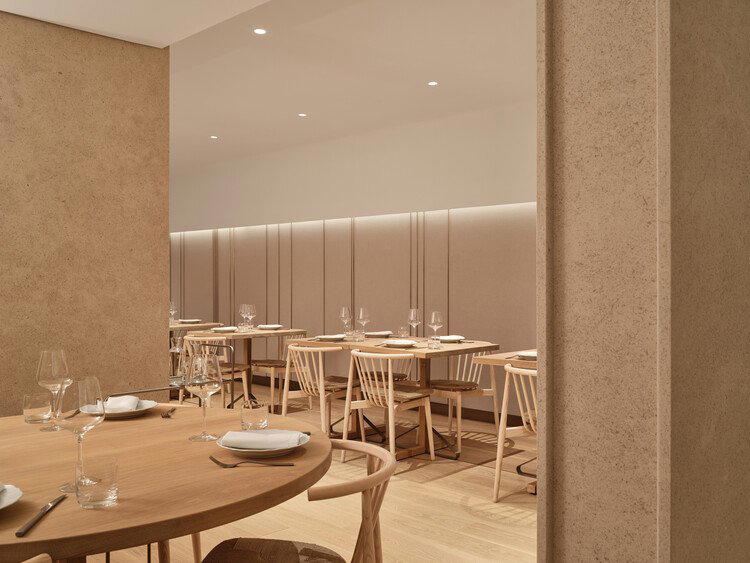
Luxe, dramatic, and intimate atmosphere with hinoki wood counter evoking traditional Tokyo sushi bars, featuring soft lighting and Zen-like serenity.