




Two Michelin stars and a consistent presence on Opinionated About Dining's North America rankings place Sushi Masaki Saito in a separate tier from Toronto's broader Japanese dining scene. Hokkaido-born, Tokyo-trained Chef Masaki Saito runs a strictly omakase counter at 88 Avenue Road, sourcing fish exclusively from Japan — a supply chain with no close rival in Canada. Reservations are essential and seats are limited.
 Discover on Pearl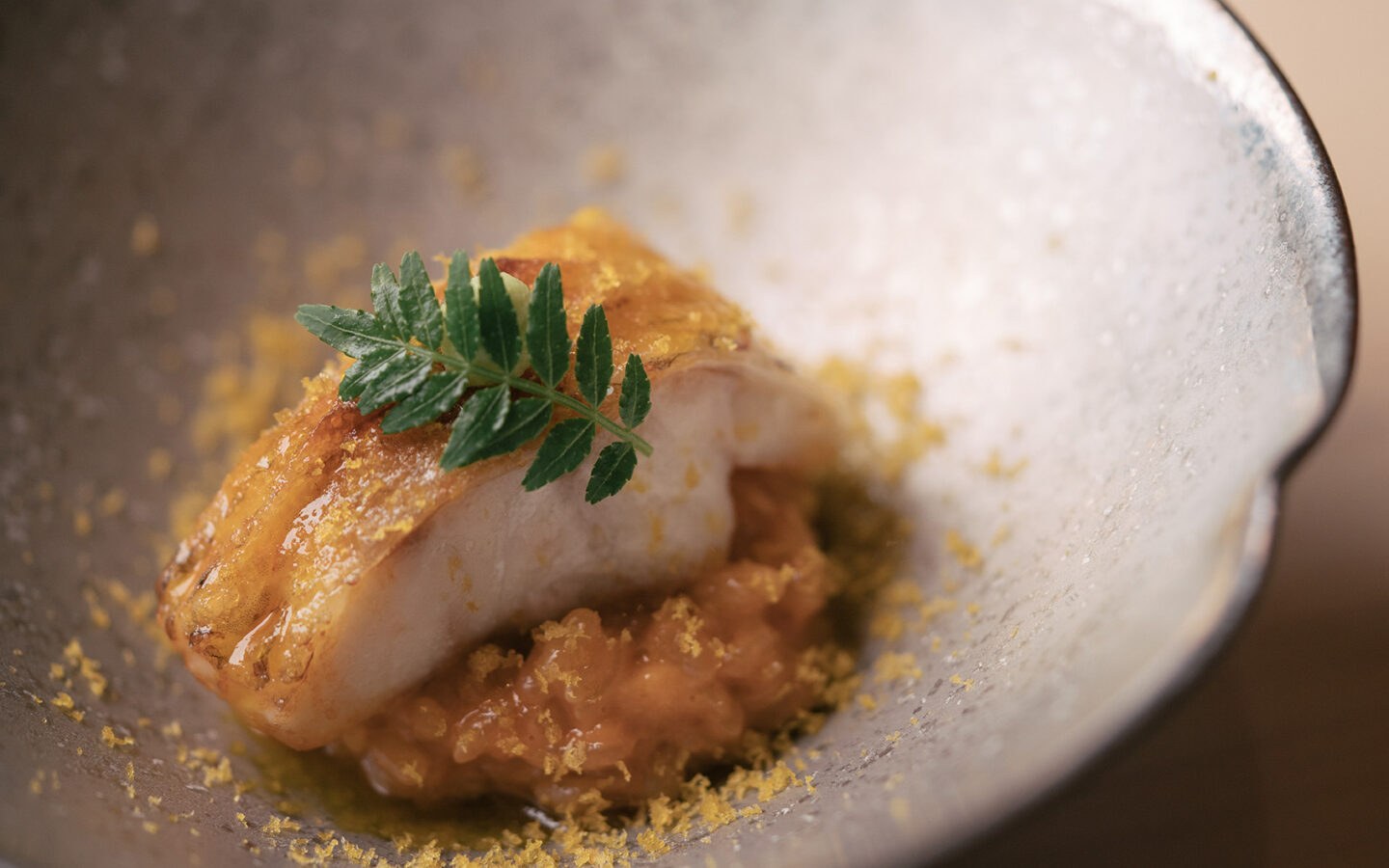
Avenue Road as a Setting for Edomae Sushi
The stretch of Avenue Road running through Yorkville places Sushi Masaki Saito in one of Toronto's most concentrated corridors of high-end dining. The neighbourhood has long pulled the city's most demanding restaurants toward its limestone townhouses and low-rise retail blocks — Alo, Don Alfonso 1890, and Aburi Hana all occupy the same general radius. What the address signals to a diner arriving at 88 Avenue Road is a certain expectation of seriousness, which the foyer delivers immediately: a marble staircase, traditional Japanese paneling, and a counter hewn from 200-year-old hinoki wood frame the room before a single piece of fish has been sliced.
The physical environment matters here more than it does at most omakase counters because the tradition demands it. Edomae sushi, the Tokyo-rooted style that Saito practises, developed in a context where the chef's workspace and the diner's experience were inseparable. The counter is not decoration; it is the stage on which the meal unfolds, and at Sushi Masaki Saito, that counter's age and material quality are themselves a statement about sourcing standards and attention to craft.
The shortlist, unlocked.
Hard-to-book tables, cellar releases, and concierge-planned trips.
Get Exclusive Access →Where Toronto's Omakase Tier Stands
Canadian cities have built credible Japanese dining scenes over the past two decades, but the gap between mid-tier omakase and the upper bracket remains wide. Toronto has several respected Japanese restaurants — Aburi Hana holds its own in the kaiseki space , but the supply chain constraints that most operate within are significant. Fish sourced domestically or through North American distributors represents a different product category than fish flown directly from Japanese markets, and the distinction shows in the glass.
Sushi Masaki Saito operates in that upper bracket explicitly. Fish comes exclusively from Japan, and the rice is a prized varietal from Niigata prefecture, served warm and seasoned with a blend of aged vinegars. No other Japanese chef in Canada is documented as maintaining sourcing connections of comparable range or cost. That claim, made in the venue's award citations, is worth stating plainly: it is the foundation on which the restaurant's peer comparisons rest.
For context outside Canada, the relevant peer set sits in New York rather than elsewhere in Toronto. Masa and Sushi Noz occupy a comparable tier on the Manhattan omakase spectrum, and Sushi Masaki Saito's two Michelin stars (awarded in both 2024 and 2025) place it inside that same narrow classification. La Liste's 2025 score of 77.5 points and its 2026 score of 76 points, alongside Opinionated About Dining's 2025 North America ranking of 60th, position the restaurant as one of the continent's most assessed omakase counters.
The Format and What It Asks of You
Omakase as a format is now well understood by the North American dining public, but the version practised here is stricter than most. Dining is entirely chef-driven, with no à la carte option. The sequence moves at Saito's pace, with each piece passed directly from his hand to the diner's , fish-side down onto the tongue, never resting on plate or counter. The protocol is not arbitrary; it reflects an edomae standard in which temperature, texture, and timing are calibrated at the moment of service and degraded by any delay.
Within that format, the sourcing breadth becomes legible. The awards text references conch clam, gizzard shad, needlefish, cherry blossom trout, and chicken grunt (isaki) as seasonal possibilities, alongside dry-aged bluefin topped with black truffle and meji-maguro with sansho pepper sauce and myoga ginger. Botan shrimp with uni sauce and hanaho, and toro with white truffles, have also appeared in documented accounts. These are not permanent fixtures; they reflect what Japanese markets are producing at a given moment, which is precisely the point of sourcing at this level.
The rice, seasoned in a handai with what documentation describes as a special blend of aged vinegars, is treated as a centrepiece of the meal rather than neutral filler , a distinction that separates serious edomae practitioners from the broader sushi category. At the calibre described in the awards citations, the rice course itself is considered a signature moment.
Recognition and What It Implies About Booking
Two consecutive years of two Michelin stars, combined with Opinionated About Dining rankings that moved from 131st in North America in 2023 to 60th in 2025, indicate a trajectory rather than a plateau. That kind of acceleration in critical consensus typically compresses availability. Seats at this counter are limited by the format itself , omakase counters cannot scale without changing the product , and visibility from those rankings has almost certainly extended booking lead times considerably.
The restaurant operates Tuesday through Friday from 6 PM to 11 PM and is closed Saturday, Sunday, and Monday. That schedule means roughly four service windows per week, each with a fixed number of covers. Readers planning a visit should treat booking as the first logistical step, not an afterthought.
Sushi Masaki Saito sits inside a broader moment for Toronto's top tier. The city's most recognised restaurants , alongside Edulis, DaNico, and the contemporary tasting-menu rooms that have helped Toronto build a sustained international profile , have moved from regional credibility to continental assessment. For the omakase specifically, the two-star designation puts the restaurant in rare company for Canada: a country that has produced serious fine dining across multiple cities, from Tanière³ in Québec City to Jérôme Ferrer's Europea in Montreal and AnnaLena in Vancouver, but has rarely produced a Japanese counter operating at this supply-chain level.
Practical Matters
The address is 88 Avenue Road, Toronto, putting the restaurant in the heart of Yorkville. The neighbourhood is walkable from Bay and Bloor subway station and well-served by ride-share. Valet and paid parking are available nearby, which matters given that Yorkville's street parking is limited in the evenings.
Price range is $$$$, consistent with the omakase format and the sourcing costs involved. Dress code information is not published, but the physical environment and service register at the formal end of the spectrum , the room's materials and the structured service protocol set that tone without a written policy needing to state it.
Know Before You Go
- Address: 88 Avenue Rd, Toronto, ON M5R 2H2
- Hours: Tuesday to Friday, 6 PM to 11 PM; closed Saturday, Sunday, and Monday
- Price range: $$$$
- Format: Omakase only , no à la carte
- Awards: Two Michelin Stars (2024, 2025); OAD Top 60 North America (2025); La Liste 77.5 pts (2025)
- Getting there: Bay/Bloor subway station is the closest transit stop; ride-share recommended for evening service
88 Avenue Rd, Toronto, ON M5R 2H2, Canada
+1 416-924-0888
Category Peers
A small peer set for context; details vary by what’s recorded in our database.
| Venue | Cuisine | Awards | Notes |
|---|---|---|---|
| Sushi Masaki Saito | Sushi, Japanese | Michelin 2 Stars | This venue |
| Alo | Contemporary | Michelin 1 Star | Contemporary, $$$$ |
| Aburi Hana | Kaiseki, Japanese | Michelin 1 Star | Kaiseki, Japanese, $$$$ |
| Don Alfonso 1890 | Contemporary Italian, Italian | Michelin 1 Star | Contemporary Italian, Italian, $$$$ |
| Edulis | Canadian, Mediterranean Cuisine | Michelin 1 Star | Canadian, Mediterranean Cuisine, $$$$ |
| Enigma Yorkville | New Canadian, Contemporary | Michelin 1 Star | New Canadian, Contemporary, $$$$ |
Need a table?
Our members enjoy priority alerts and concierge-led booking support for the world's most difficult tables.
Get Exclusive AccessThe shortlist, unlocked.
Hard-to-book tables, cellar releases, and concierge-planned trips.
Get Exclusive Access →