On Auguststraße in Berlin's Mitte district, Shiso Burger occupies a position where Japanese ingredients meet the casual-dining format that has reshaped how European cities eat. The shiso leaf in the name signals an intent to work beyond the standard burger vocabulary, placing this address inside a broader conversation about ingredient-led casual cooking in one of Germany's most food-curious cities.
Pearl is the En Primeur Club membership app — saves, bookings, and concierge access live there. Same editors, same standards.
- Address
- Auguststraße 29C, 10119 Berlin, Germany
- Phone
- +493088944687
- Website
- shisoburger.com
- Directions
- Get directions
 Saves & bookings on Pearl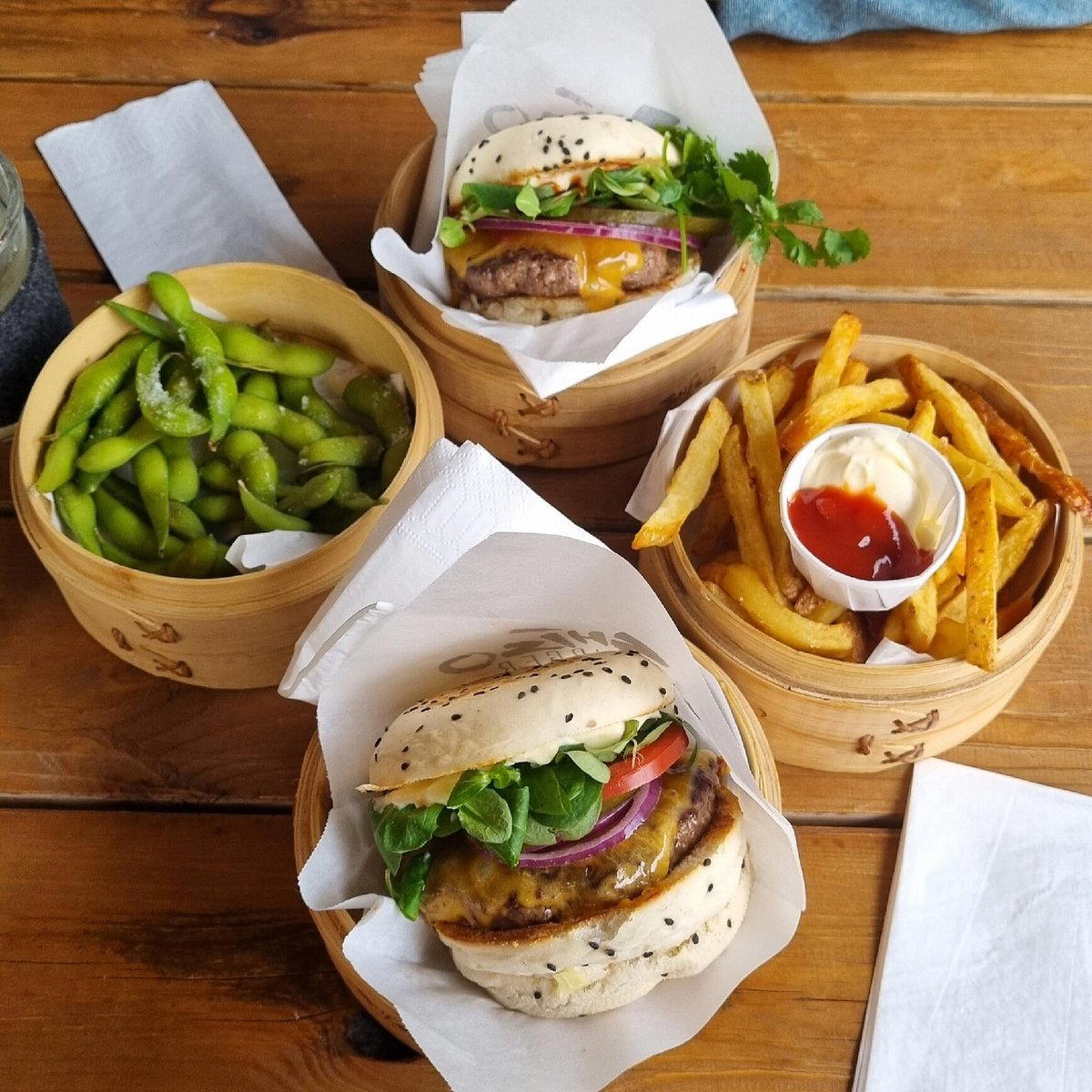
Where Auguststraße Meets a Different Kind of Burger
Berlin's Mitte district, specifically the gallery-dense stretch of Auguststraße, has spent the last decade sorting itself into two distinct registers: the white-cube contemporary art spaces and the eating and drinking spots that serve the people who move between them. Shiso Burger is a casual restaurant at Auguststraße 29C, 10119 Berlin, Germany, serving Asian Fusion Burgers and open daily from 12 to 11 PM. The street does not reward formula. What survives here tends to have a point of view, and Shiso Burger, at number 29C, takes its cue from the neighbourhood by reaching for an ingredient, the Japanese perilla leaf, that most burger operations would never consider stocking. That choice is a signal. In the broader context of Berlin's casual dining scene, it places the kitchen in conversation with the city's ingredient-led movement rather than with the fast-casual chains that dominate other corridors.
The Ingredient as Editorial Statement
Across Germany's serious dining tier, think Nobelhart & Schmutzig's hyper-regional sourcing philosophy or Rutz's ingredient-forward Modern European menu, one consistent thread is that the ingredient precedes the technique. Shiso Burger applies that same logic at a lower price register and a faster pace. The shiso leaf is a meaningful choice: it carries mild anise and mint notes, wilts quickly, and demands same-day handling if it is to contribute anything other than colour. Kitchens that commit to it are, by implication, committing to a supply chain that prioritises freshness over convenience. That is a sustainability position before it is a flavour one.
This ingredient-led approach connects to a wider movement in casual dining where the quality and provenance of components matter as much in a burger as they would in a tasting menu. Berlin has been faster than most German cities to absorb this logic at the informal end of the market. The same city that houses CODA Dessert Dining's rethought dessert formats and FACIL's considered contemporary European cooking has also produced a casual dining cohort that interrogates the sourcing behind everyday formats rather than accepting commodity defaults.
Sustainability as Structure, Not Decoration
The meaningful sustainability question for any casual kitchen is not whether it mentions ethical sourcing in its branding, but whether its operational choices reflect it. In the burger category specifically, the pressure points are protein sourcing, bread provenance, and waste generated by high-volume service. A kitchen that builds its identity around a perishable, specialist leaf is already self-selecting for tighter supply relationships and shorter ingredient cycles. The shiso itself cannot be treated as a commodity input, it is too fragile, too specific, and too little-used in German supply chains for that. Sourcing it consistently implies either a direct relationship with a grower or a supplier network that operates at a different level of specificity than a standard food service distributor would provide.
That supply-chain specificity is the kind of structural sustainability commitment that goes unnoticed in most coverage of casual dining, which tends to focus on visible signals, compostable packaging, menu language about local farms, rather than on the quieter discipline of running a menu around ingredients that require genuine sourcing effort. Germany's broader fine dining circuit has been increasingly attentive to this: Restaurant Haerlin in Hamburg and Schanz in Piesport both reflect a national conversation about the ethics of sourcing that has been filtering down from the tasting-menu tier into more everyday formats.
Berlin's Casual Dining in Context
Berlin occupies a position in the German dining hierarchy that is genuinely distinct from other major cities. Munich's restaurant scene, where venues like JAN set a high technical register, operates with a different economic logic and a different kind of diner. The Rhineland corridor, Vendôme in Bergisch Gladbach, Aqua in Wolfsburg, represents the formal end of German dining ambition. Berlin sits apart from all of that: lower average spend, higher tolerance for experimentation, and a diner base that is more interested in what a kitchen is trying to say than in how many awards validate it.
That context matters for understanding where the restaurant fits. It is not competing with Restaurant Tim Raue's Asia-inflected fine dining or with the tasting-menu formats that represent Berlin's highest formal register. It is operating in the space that Berlin does particularly well: casual, ingredient-curious, and specific enough to reward attention. For visitors moving between the city's higher-end dining and its street-level energy, this address on Auguststraße represents a point where those two registers converge.
Germany's wider fine dining map, from Waldhotel Sonnora in Dreis to Victor's Fine Dining by Christian Bau in Perl and ES:SENZ in Grassau, provides context for how casual addresses like this one fit into a national picture that runs from village-based three-star restaurants to urban street-level kitchens. Internationally, the discipline of ingredient-led casual dining finds parallels in the sourcing rigour applied at venues like Le Bernardin in New York, where ingredient primacy structures the entire operation, or the product-focused philosophy visible at Atomix, where Korean ingredients are treated with a specificity that casual formats rarely attempt. Schwarzwaldstube in Baiersbronn and Bagatelle in Trier round out the German fine dining reference points for those building a longer itinerary.
Planning Your Visit
The restaurant is located at Address: Auguststraße 29C, 10119 Berlin, in the Mitte district, within walking distance of the main gallery cluster and the S-Bahn connections at Hackescher Markt. Dress: No code applies; the Auguststraße crowd is arts-adjacent and relaxed. Budget: Consistent with Berlin's casual dining tier, where ingredient-forward burger operations typically price meaningfully above fast-casual but well below the €€€€ bracket occupied by the city's tasting-menu venues.
Comparable Venues
Comparable venues nearby, for context on price, style, and recognition.
| Venue | Cuisine | Price | Notes |
|---|---|---|---|
| Shiso BurgerThis venue — the venue you are viewing | Asian Fusion Burgers | $$ | Not listed |
| Allan's ABC | Australian-French Fusion Brunch | $$ | Prenzlauer Berg |
| Baret | Modern International with Indonesian Influences | $$$ | Museuminsel |
| Kramer Restaurant | Modern Open Fire Fusion | $$$ | Neukolln |
| House of Small Wonder | Japanese-American Fusion Brunch Cafe | $$ | Mitte |
| Kastanien Curry Junction | Indian-Mexican Fusion Curry House | $$ | Scheunenviertel |
Continue exploring
More in Berlin
Restaurants in Berlin
Browse all →
Bars in Berlin
Browse all →
Hotels in Berlin
Browse all →
Wineries in Berlin
Browse all →

At a Glance
- Trendy
- Modern
- Lively
- Casual
- Casual Hangout
- Late Night
- Group Dining
- Open Kitchen
Current opening hours
- Monday
- 12–11 PM
- Tuesday
- 12–11 PM
- Wednesday
- 12–11 PM
- Thursday
- 12–11 PM
- Friday
- 12–11 PM
- Saturday
- 12–11 PM
- Sunday
- 12–11 PM
Hours can change for holidays and private events. Last verified .
Fresh and modern venue with open kitchen, casual and energetic atmosphere; can get crowded during peak hours but maintains a welcoming vibe.