House of Small Wonder occupies a quietly distinctive position on Auguststraße in Berlin's Mitte district, where the cafe-meets-gallery format draws a crowd that moves between creative industry and neighbourhood life. The atmosphere skews Japanese-influenced without being categorically so, and the kitchen operates at a register that sits well above the typical brunch counter. Book ahead; this address fills consistently.
Pearl is the En Primeur Club membership app — saves, bookings, and concierge access live there. Same editors, same standards.
- Address
- Auguststraße 11-13, 10117 Berlin, Germany
- Phone
- +493027582877
- Website
- houseofsmallwonder.de
- Directions
- Get directions
 Saves & bookings on Pearl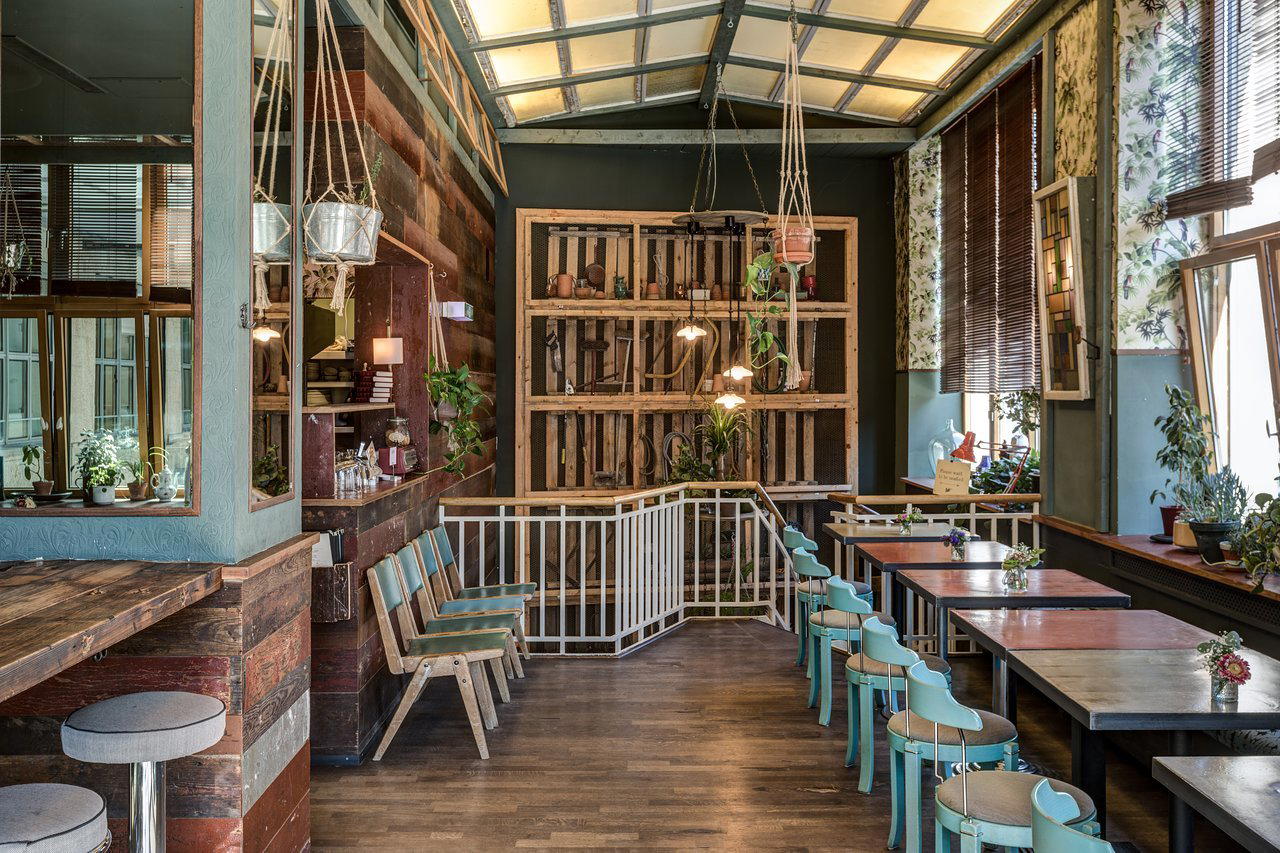
Auguststraße and the Mitte Cafe Format
Berlin's Mitte district has developed a particular kind of daytime dining institution over the past two decades: spaces that function as cafes in format but operate with the curatorial seriousness of a design studio. Auguststraße, which runs through the heart of the former gallery district between Hackescher Markt and Rosenthaler Platz, concentrates several of these. The building, typical of the area's converted courtyard typology, filters daylight through large windows in a way that makes the space feel considered without being theatrical. The crowd that gathers here on weekday mornings and weekend afternoons reflects the street itself: a mix of creative professionals, gallery visitors, and the kind of international residents Berlin has attracted in volume since the mid-2000s.
What distinguishes the Auguststraße corridor from, say, Prenzlauer Berg's more family-oriented cafe culture or Kreuzberg's louder street-level energy is the degree to which aesthetics and food quality are held at the same level of priority. Venues here tend to be small, deliberately so, and House of Small Wonder fits that pattern. The name itself signals something about the operating philosophy: small in scale, specific in reference, attentive to the kind of detail that larger operations routinely compromise.
Japanese Influence in a Berlin Context
Japanese aesthetic influence has been present in Berlin's mid-range dining scene since at least the early 2010s, but it has moved in different directions depending on the neighbourhood. In Mitte and Prenzlauer Berg, it has tended toward the cafe and brunch format rather than the full-service omakase model you find in cities like Tokyo or London. House of Small Wonder draws from this tradition, its sensibility is Japanese-influenced in the way it approaches presentation, negative space, and ingredient selection, without positioning itself as a Japanese restaurant in any strict categorical sense.
This hybrid positioning is increasingly common in European cities where Japanese visual culture has been absorbed into a broader design vocabulary. The interest for a visitor lies not in authenticity to a single tradition but in how Berlin's particular version of this fusion has developed its own logic. The kitchen at House of Small Wonder operates within that frame: the food is international in reference but grounded in the kind of careful sourcing and restrained presentation that the Mitte scene has come to expect from its better addresses.
The Team and the Front-of-House Register
Small venues in Berlin's creative dining tier live or die by the coherence of their floor operation. In a space of limited covers, every interaction between front-of-house and guest carries more weight than it would in a larger room. The restaurant works within this constraint in a way that speaks to a broader pattern: the leading small Berlin cafes and dining rooms tend to run with a tight team that covers multiple roles fluidly, where the person taking your order may also be responsible for the day's pastry selection or the room's playlist. This is less a staffing limitation than a deliberate operational culture, one that prioritises atmosphere over division of labour.
The result, when it works, is a front-of-house register that feels genuinely attentive rather than procedurally so. The difference matters: in a room this size, the tone of the space is set almost entirely by the people running it. Venues at a comparable level in Berlin's structured fine dining tier, Nobelhart & Schmutzig or Rutz, for instance, solve this problem through formal brigade structure and sommelier programs. The restaurant's approach is less codified but no less intentional in its effect.
Where It Sits in Berlin's Broader Dining Picture
Berlin's restaurant scene in 2024 is stratified in ways that weren't true a decade ago. At the leading, a cluster of Michelin-recognised addresses has consolidated: CODA Dessert Dining, FACIL, and Restaurant Tim Raue represent a tier that competes on European rather than local terms. Below that, a dense middle layer of serious but informal operators has grown considerably, driven in part by the city's population of internationally trained chefs who find Berlin's lower operating costs attractive relative to Paris, London, or New York. The restaurant sits in this middle layer, which is one interesting part of the city's food culture to follow right now.
The comparison set is genuinely wide: within Germany, the Michelin-starred register extends to destinations like Aqua in Wolfsburg, Schwarzwaldstube in Baiersbronn, and Victor's Fine Dining by Christian Bau in Perl, which operate under different expectations of formality and destination dining. The restaurant's register is categorically different from all of these. It competes laterally against other Mitte addresses rather than vertically against the starred tier.
Internationally, the closest analogues might be the kind of chef-driven all-day cafes that have emerged in Melbourne, Tokyo, and New York over the past decade. The format has proved durable because it solves a real problem: serious food in a format that doesn't require a reservation three months out or a menu that runs to twelve courses. Le Bernardin in New York City and Atomix represent the opposite end of that spectrum, full-commitment dining experiences where the investment in time and money is substantial. The restaurant's appeal is partly that it doesn't ask for either.
Planning Your Visit
The restaurant is located at Auguststraße 11-13 in Berlin's Mitte district, within walking distance of the S-Bahn stations at Hackescher Markt and Oranienburger Straße. The area is walkable and compact, which makes it easy to combine with the gallery circuit along the same street or a broader Mitte afternoon. Given the venue's scale and the neighbourhood's foot traffic, walk-ins are possible but not guaranteed, particularly on weekends when the Auguststraße corridor draws additional visitors. Arriving early or during the mid-week quieter periods gives the better chance of securing a seat without a wait.
Booking and Cost Snapshot
Comparable venues nearby, for context on price, style, and recognition.
| Venue | Cuisine | Price | Notes |
|---|---|---|---|
| House of Small WonderThis venue — the venue you are viewing | Not listed | $$ | Not listed |
| Allan's ABC | Not listed | $$ | Prenzlauer Berg, Australian-French Fusion Brunch |
| Casa Don Papa | Moabit, Filipino-Caribbean Fusion | $$$ | Not listed |
| JÓMO Restaurant | Not listed | $$$ | Prenzlauer Berg, Modern International Fusion |
| Cocolo Ramen | Mitte, Authentic Japanese Ramen | $$ | Not listed |
| Burger Joint | Mitte, Classic American Burgers | $$ | Not listed |
Continue exploring
More in Berlin
Restaurants in Berlin
Browse all →
Bars in Berlin
Browse all →
Hotels in Berlin
Browse all →

At a Glance
- Whimsical
- Cozy
- Rustic
- Bohemian
- Trendy
- Brunch
- Casual Hangout
- Group Dining
- Family
- Courtyard
- Garden
- Terrace
- Historic Building
- Design Destination
- Craft Cocktails
- Beer Program
- Garden
Current opening hours
- Monday
- 9 AM–5 PM, 5:30–11 PM
- Tuesday
- 9 AM–5 PM, 5:30–11 PM
- Wednesday
- 9 AM–5 PM, 5:30–11 PM
- Thursday
- 9 AM–5 PM, 5:30–11 PM
- Friday
- 9 AM–5 PM, 5:30–11 PM
- Saturday
- 9 AM–5 PM, 5:30–11 PM
- Sunday
- 9 AM–5 PM, 5:30–11 PM
Hours can change for holidays and private events. Last verified .
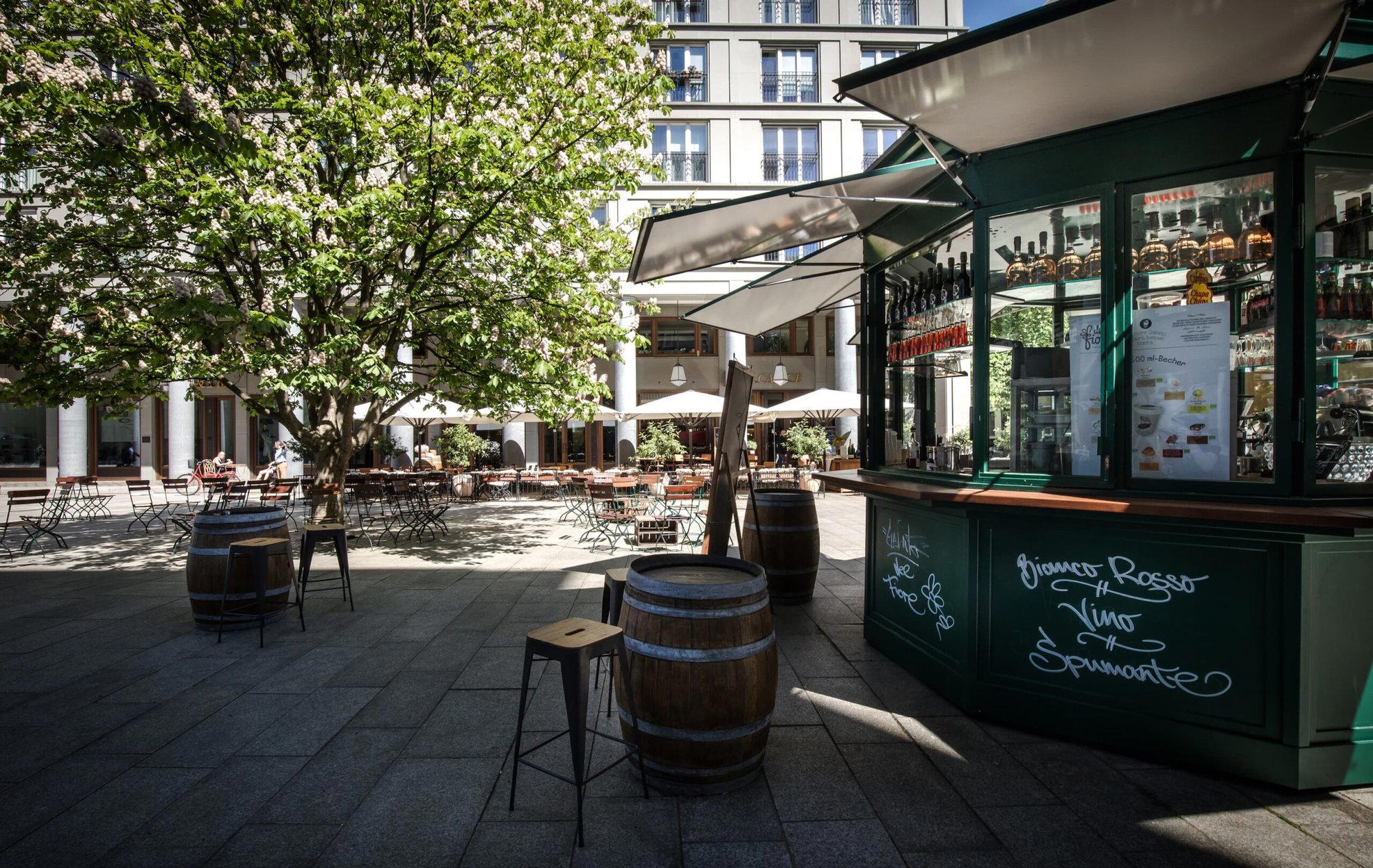
Bright and airy with high ceilings, abundant greenery hanging from ceiling and climbing walls, reclaimed wood interiors, natural light from large windows, rustic-industrial aesthetic with art deco elements in the courtyard setting.