
Shaoxiong Hanten belongs to Tokyo’s small, expensive Chinese dining tier, where seat count, reservation-only service, and repeat Tabelog 100 recognition matter more than spectacle. The Sendagaya address keeps the experience quieter than Ginza or Roppongi, with an eight-seat room that puts kitchen timing and front-of-house control at the center of the meal.
Pearl is the En Primeur Club membership app — saves, bookings, and concierge access live there. Same editors, same standards.
- Address
- 3 Chome-14-10 Sendagaya, Shibuya, Tokyo 151-0051, Japan
- Website
- koguma-hanten.com
 Saves & bookings on Pearl
Sendagaya’s restaurant rhythm is quieter than Tokyo’s better-known dining corridors: fewer lobby-level entrances, more basement rooms, less tolerance for accidental foot traffic. Shaoxiong Hanten fits that pattern. Its Chez Castor B1F address keeps it outside the high-gloss hotel dining circuit, and the small room sets the terms before a plate arrives. With eight seats, split between four counter seats and four table seats, the format directs attention to pacing, handoff, and the kitchen-floor conversation rather than room design or brand theatre.
That scale matters in Tokyo Chinese dining. The city treats Chinese cuisine as both neighbourhood comfort and high-ticket occasion, from banquet-room Cantonese to compact counters where technique is compressed into a short service window. Shaoxiong Hanten sits in the latter camp: Chinese by category, reservation-only by format, and priced for a serious dinner rather than a casual stop. Its Tabelog score of 3.85 and selection for Tabelog 100 Chinese cuisine Tokyo 2026 give it a public signal in a category where reputation often travels through regulars before visitors.
An eight-seat Chinese room built around timing, not spectacle
Tokyo’s smallest dining rooms are often read through sushi or kappo, but the same logic applies to Chinese cooking when service is intimate enough. The counter does not just bring guests closer; it reduces slack in coordination. In a room this size, kitchen rhythm, order of service, glassware movement, and front-of-house reading of the table become part of the craft. The appeal is not chef mythology, but a team-format restaurant where precision must be shared across the room.
The city’s Chinese scene rewards range. Diners may expect fire, fragrance, and generosity, but the high-price tier asks different questions: how much restraint can a kitchen show, how cleanly can a meal be paced, and how well can service translate a cuisine with regional depth into a compact Tokyo dinner. Shaoxiong Hanten’s selection history, including Tabelog 100 Chinese cuisine Tokyo recognition in 2021, 2023, 2024, and 2026, places it among restaurants that have sustained attention rather than ridden one noisy season.
The format also separates it from lower-spend Tokyo dining in practical terms, editorially rather than snobbishly. 3 Chome no Curry Ya San answers a different Tokyo need: speed, comfort, and a tighter price ceiling. 2D Cafe belongs to visual-café culture, where design leads. Shaoxiong Hanten sits in the small-capacity dinner economy, where the value is not choice but control of sequence.
Where Sendagaya fits into Tokyo's serious dining map
Sendagaya and Kita-Sando occupy a useful middle ground between Shibuya’s density, Harajuku’s youth traffic, and residential back-street calm. That geography suits restaurants that do not need a street-level parade, and shows that Tokyo’s serious tables are not confined to famous dining districts. The city’s map is full of high-conviction rooms in secondary pockets, where rent, regulars, and transit access can support focused formats without a grand public face.
Comparison clarifies the choice. French rooms such as Convivio and Sincère use another dining language, with European structure and different course expectations. Okashiya Ucchi points to dessert-led specialization at much lower spend. CURRY UP reflects Tokyo’s casual curry grammar rather than long-form dinner. Against that field, Shaoxiong Hanten is less about category novelty than Chinese cuisine treated with the same small-room seriousness often granted to sushi, tempura, or French tasting counters.
That makes it useful for travelers building a broader Tokyo itinerary rather than chasing one famous label. The city can be read through formats: grilled counters such as 124. KAGURAZAKA (Yakitori), seafood-and-charcoal addresses such as . 鮪と炭火焼き うお炭 秋葉原店, and compact Shinjuku dining rooms such as 12/10 Shinjuku ten each show a different Tokyo discipline. For a wider scan, use Our full Tokyo restaurants guide, then build the trip through Our full Tokyo hotels guide, Our full Tokyo bars guide, Our full Tokyo wineries guide, and Our full Tokyo experiences guide.
The verdict on the room, the price tier, and the right diner
The strongest case for Shaoxiong Hanten is concentration, not breadth. An eight-seat, reservation-only Chinese restaurant with private-room availability, no smoking, and a JPY 100,000-and-up dinner bracket is aimed at diners comfortable with Tokyo’s small-room rules. It is not for someone seeking a broad, casual introduction to Chinese food in Japan. It suits travelers who understand that Tokyo luxury dining often hides ambition in scale: fewer seats, tighter pacing, fewer distractions.
Payment and access details reinforce that seriousness. Credit cards are accepted for JCB, AMEX, and Diners, while electronic money and QR code payments are not listed. Parking is unavailable, normal for this part of the city and a reason to treat the restaurant as part of a rail-and-walk Tokyo evening. Kita-Sando is the nearest station, placing dinner neatly before or after a quieter night around Sendagaya rather than a high-energy Shibuya crawl.
For readers comparing Japan dining beyond Tokyo, the contrast is instructive. -Grilled beef Sukiyaki- KAMAKURA TANUKIAN 鎌倉 たぬき庵 in Kamakura frames different regional and format logic;.cafe in Osaka,.know in Kumamoto, (Shoku) Vietnam in Kawasaki, [Curry Senmon Ten] Maruyama Kyoju. in Sapporo, and [ki:] in Kyoto show how varied the country’s restaurant culture becomes once format and city are treated as seriously as cuisine. Even outside Japan, Jōdo Saké Bar in Los Angeles and Onigiri Time in Pasadena underline the same point: Japanese dining culture travels widely, but Tokyo’s compact high-end rooms remain a distinct local grammar.
Shaoxiong Hanten is known for Chinese cuisine in an unusually small Tokyo format, supported by repeat Tabelog 100 recognition and a price point in the city’s serious-dinner category. Its appeal rests on team execution: kitchen timing, front-of-house discretion, and a room small enough that any lapse would be visible. For the right diner, that pressure is the point.
The Short List
Comparable venues to anchor price and recognition.
| Venue | Cuisine | Price | Notes |
|---|---|---|---|
| Shaoxiong HantenThis venue — the venue you are viewing | $$$$ | ||
| Renge Equriosity Shinbashi | $$$$ | Chūō, Modern Shanghai Chinese Fine Dining | |
| Ino Cantonese Nihonbashi Takase | $$$$ | Chūō, Innovative Cantonese with Japanese ingredients | |
| Piaoxiang Hiroo Store | Shibuya, Traditional Sichuan Omakase | $$$$ | |
| Ryutenmon | Meguro, Cantonese Fine Dining & Dim Sum | $$$$ | |
| 赤坂 四川飯店 | $$$ | Akasaka / Nagatacho, Classic Sichuan Chinese |











At a Glance
- Intimate
- Cozy
- Hidden Gem
- Elegant
- Special Occasion
- Business Dinner
- Date Night
- Private Dining
- Standalone
- Design Destination
- Extensive Wine List
- Local Sourcing
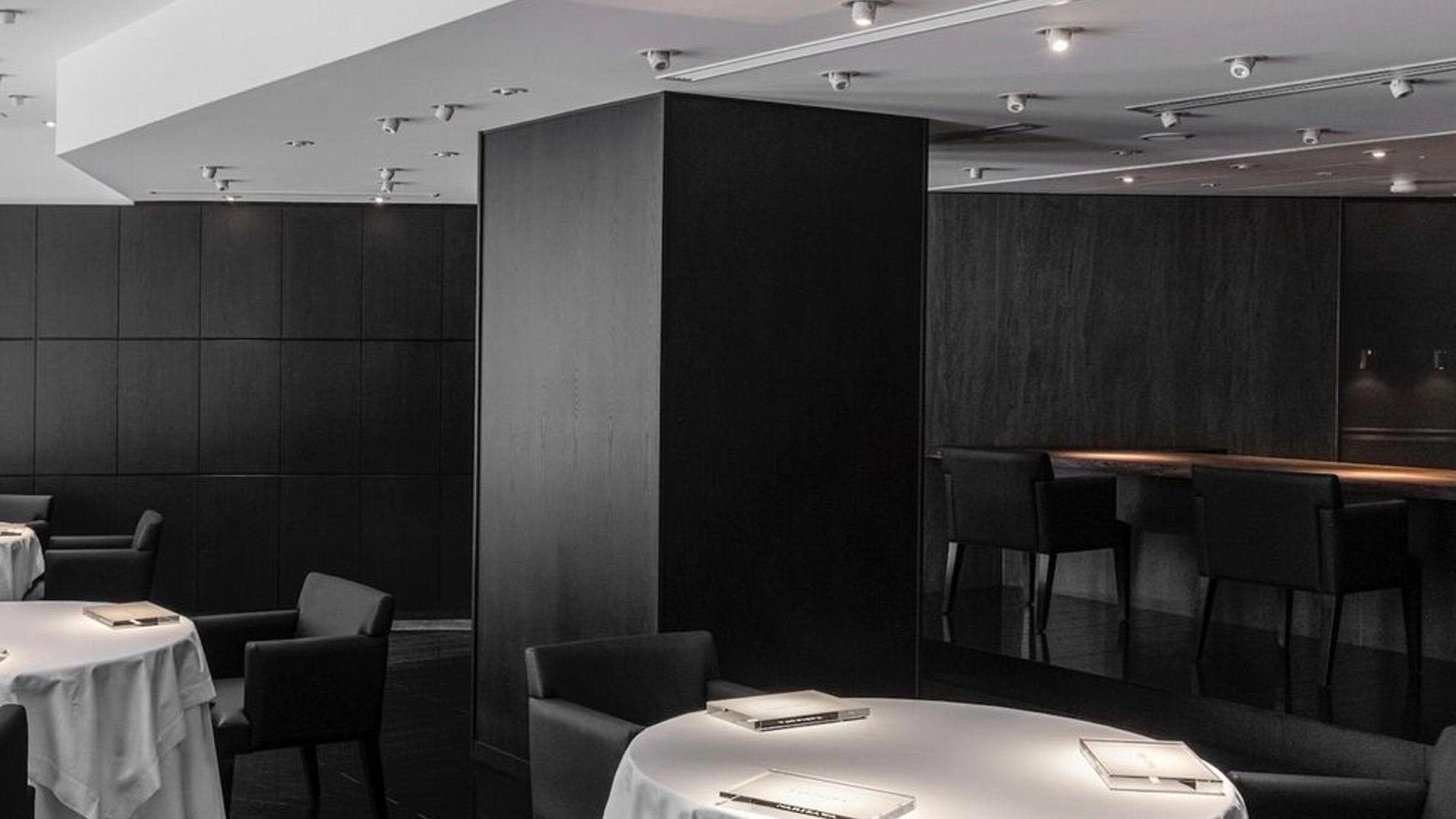
A softly lit, wood-accented room with simple concrete details creates a calm, refined atmosphere; lighting and table layout are adjusted daily to suit the specific guests and occasions, giving the space a private, almost hidden feel despite its central location.