


La Liste Top Restaurants · Tabelog Silver #119
Our verdict
Seirin places Hamamatsu inside Japan’s serious kaiseki conversation rather than treating Shizuoka as a stop between Tokyo and Kyoto. The appeal is its counter-scale reading of seasonal Japanese cuisine, backed by Tabelog Award Silver recognition in 2026, previous Gold recognition, La Liste scoring, and OAD inclusion.

Pearl is the En Primeur Club membership app — saves, bookings, and concierge access live there. Same editors, same standards.
- Address
- 222-25 Motoshirocho, Chuo Ward, Hamamatsu, Shizuoka 430-0945, Japan
- Phone
- +81534501024
- Hours
- Daily 6–11 p.m.
- Website
- instagram.com
- Directions
- Get directions
- Booking
- Book on Omakase
The menu
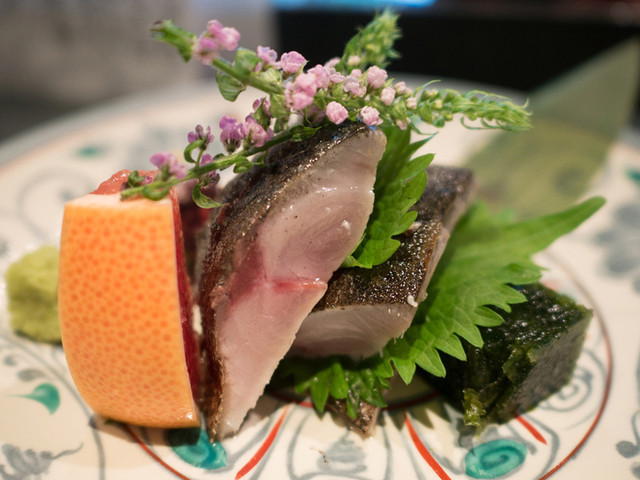
What to order
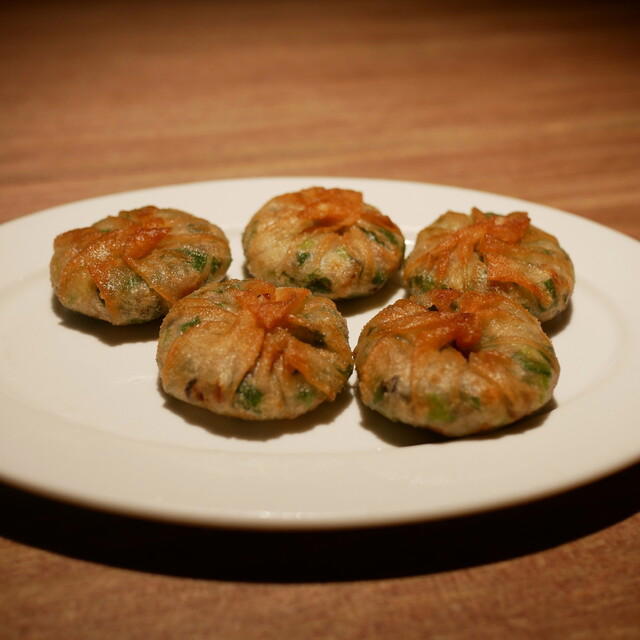
- Deshiko eel shiroyaki
- Fugu tessa
- Kuruma ebi tempura
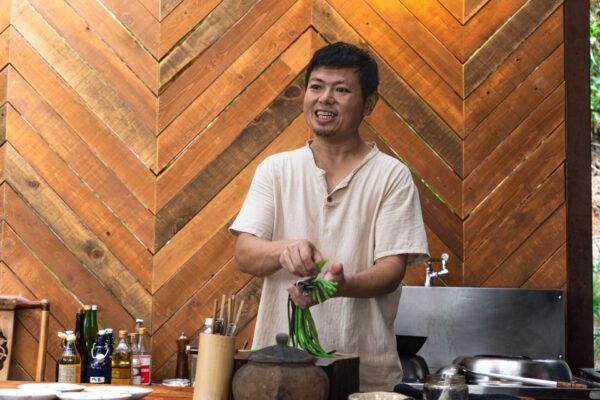
The room belongs to the small-counter school of Japanese dining: close sightlines, little distraction, and a pace that asks guests to follow sequence over spectacle. In kaiseki, that matters. The tradition is a discipline of temperature, vessel, season, restraint, and timing, not just a course progression. Seirin enters that conversation from Hamamatsu, a city many travellers know more for industry, eel, and its rail position between Tokyo and Nagoya than destination dining. The mismatch is the point: serious Japanese cuisine in regional cities often has less theatre than metropolitan equivalents, while standards can be just as exacting.
Shizuoka gives kaiseki cooks a persuasive larder: coastal fish from Suruga Bay, wasabi from mountain water systems, tea culture with agricultural depth, and vegetable seasons shifting sharply between sea-facing plains and inland highlands. The region’s advantage is proximity, not novelty, to primary ingredients Japanese cuisine has long treated with quiet seriousness. A Hamamatsu counter in this idiom sits closer to product than pageantry, which is where Seirin’s reputation makes sense.
Hamamatsu kaiseki with national-list credentials
Japan’s high-end kaiseki hierarchy is usually told through Kyoto lineage, Tokyo luxury, and ryokan dining, but the regional tier is harder to ignore. Recognition systems have made it visible. Seirin was a Tabelog Award Silver winner in 2026, after Silver in 2025 and Gold in 2024 and 2023, and appears in the Tabelog 100 Japanese cuisine EAST 2025 selection. La Liste placed it at 84 points for 2026, while Opinionated About Dining included it among its 2026 Japan recommendations. Those signals do not explain taste, but place the restaurant in a competitive bracket where seasonal consistency matters.
Kaiseki rewards cooks who make a full meal feel inevitable rather than merely expensive. A strong progression moves through appetite, aroma, broth, grilled or simmered work, rice, and closing sweetness without announcing itself too loudly. Here, chef Atsushi Hasegawa’s name functions less as biography than accountability: an eight-seat counter puts authorship in direct view, and repeated recognition over several years suggests the format has held its line beyond one season.
That scale also shapes the decision. This is not a broad restaurant for a casual scan of Shizuoka cooking. It belongs to the reservation-only, adult-course end of the spectrum, where the guest buys into Japanese cuisine as structure. The category sits apart from the looser izakaya and eel-house traditions that dominate many Hamamatsu itineraries, and should be judged against serious kaiseki rooms rather than everyday local dining.
Where it fits in Shizuoka's serious dining map
Shizuoka’s dining identity is unusually split. Coastal abundance, tea agriculture, mountain river systems, and onsen travel pull the prefecture in different directions. Kaiseki absorbs those influences better than many formats because it translates season into sequence. That makes Seirin a useful anchor for the prefecture’s higher register: it neither mimics Kyoto formality from a distance nor reduces the region to one local speciality.
Comparison clarifies the category. Asaba represents the ryokan-linked side of Shizuoka kaiseki, where lodging culture, architecture, and meal service share one rhythm. Chakaiseki Onjaku 茶懐石 温石 points to tea-kaiseki restraint, a related but more ceremonial register. Gôra Kadan and Shofukuro Honten sit in the broader luxury kaiseki universe outside the city context, while Tokuyamazushi shows how regional Japanese cuisine can become destination-led through place-specific ingredients and format discipline. Against that spread, Seirin reads as the compact Hamamatsu counter: smaller, more urban, and more focused on the meal than a wider hospitality environment.
Within the city, its relevance is practical editorially. Hamamatsu is often treated as transit, but meals like this argue for Shizuoka as a dining region with its own internal map. A traveller could pair the kaiseki end of the spectrum with Seika Kobayashi, Aozora, Blue Label, or Chabo to read the prefecture through contrast rather than checklist dining. For the wider field, Our full Shizuoka restaurants guide gives the city-by-city frame, while Our full Shizuoka hotels guide, Our full Shizuoka bars guide, Our full Shizuoka wineries guide, and Our full Shizuoka experiences guide place the meal inside a fuller itinerary.
The case for choosing it over a metropolitan counter
The strongest argument for Seirin is not that it replaces Tokyo or Kyoto kaiseki. It gives travellers a regional reading of the form with the discipline of a national-list restaurant. In Tokyo, kaiseki often competes with sushi counters, tempura specialists, French-Japanese dining rooms, and private-club scarcity. In Kyoto, the form carries historical expectation. Hamamatsu removes some of that noise, so the meal can be assessed for sequence, sourcing logic, and service focus without the mythology of better-known dining districts.
That does not make it casual. Awards at this level create pressure, and the counter magnifies every decision. Kaiseki is unforgiving because subtlety is not softness: a weak broth, a mistimed grilled course, or a season handled too literally can flatten the arc. Repeated Tabelog Award recognition matters because it points to performance across years, not one burst of attention. For a diner choosing one serious meal in Shizuoka, that continuity is a stronger signal than a louder narrative.
For travellers building a Japan itinerary around Japanese cuisine, the comparison set helps. Ajihiro, Kaiseki in Tokyo and Akasaka Asada, Kaiseki in Tokyo are metropolitan reference points for the same tradition, while more casual or category-crossing links such as -Grilled beef Sukiyaki- KAMAKURA TANUKIAN 鎌倉 たぬき庵 in Kamakura. 鮪と炭火焼き うお炭 秋葉原店 in Tokyo.cafe in Osaka.know in Kumamoto, (Shoku) Vietnam in Kawasaki, and [Curry Senmon Ten] Maruyama Kyoju. in Sapporo show how far the national dining map stretches beyond one format. Seirin belongs on the formal end, suited to diners who want a controlled seasonal progression rather than a broad sampling night.
The editorial verdict is simple: choose it when Shizuoka is part of the trip rather than a pass-through, and when the goal is to understand kaiseki as a living regional discipline. The room’s scale, repeated award history, and Hamamatsu location make it a precise choice for travellers who value sequence over spectacle and continuity over novelty.
Frequently asked questions
Is Seirin suitable for children?
Yes, for guests aged 13 and over who can eat the adult course. That policy is listed alongside Seirin’s 8-seat counter in Hamamatsu, so it is not set up as a family-style room.
What kind of setting is Seirin?
Seirin is an 8-seat counter-only kaiseki restaurant in Hamamatsu, with non-smoking seating and a reservation-only format through OMAKASE. The room is described as a relaxing space, which suits the focus and pace of kaiseki service.
What kind of cuisine does Seirin serve?
Seirin serves Kaiseki cuisine.
What are the opening hours for Seirin?
Hours at Seirin: Mon: 6–11 p.m.; Tue: 6–11 p.m.; Wed: 6–11 p.m.; Thu: 6–11 p.m.; Fri: 6–11 p.m.; Sat: 6–11 p.m.; Sun: 6–11 p.m..
What part of town is Seirin in?
Seirin is located in Shizuoka.
How It Stacks Up
Comparable venues by cuisine and price in the same metro.
| Venue | Cuisine | Price | Awards | Notes |
|---|---|---|---|---|
| SeirinThis venue — the venue you are viewing | Seasonal Shizuoka Omakase | $500+ | La Liste Top Restaurants · Tabelog Silver #119 | Not listed |
| Unagi Shun | Charcoal-Grilled Unagi Fine Dining | $150–200 | Tabelog Gold #31 | Aoi Ward |
| Tempura Naruse | Itamae Tempura | $150–200 | La Liste Top Restaurants · Tabelog Chef's Gold #7 | Aoi Ward |
| Rin | Authentic Kaiseki | $50–100 | Tabelog Bronze #370 | Atami |
| Sakume | Traditional Unagi (Grilled Eel) | $20–30 | Tabelog 100 #19 | Mikkabichosakume, Kita-ku |
| Oomura | Shizuoka chicken wings & oden izakaya | $20–30 | Tabelog 100 #76 | Aoi-ku |
Recognition history
Dated appearances from independent guides and award organizations, with the underlying list record or original source where available.
La Liste Top Restaurants
La Liste
Opinionated About Dining Top Restaurants in Japan Recommended
Opinionated About Dining
Tabelog Silver #119
Tabelog
Full recognition history (8 entries)
La Liste Top Restaurants
La Liste
Opinionated About Dining Top Restaurants in Japan Ranked #604
Opinionated About Dining
Tabelog 100 #7 · No. 7
Tabelog · Tabelog 100 - Japanese cuisine - EAST - 2025
Tabelog Silver
Tabelog
Opinionated About Dining Top Restaurants in Japan Ranked #217
Opinionated About Dining
Continue exploring
More in Shizuoka
Restaurants in Shizuoka
Browse all →

Details
- Quiet
- Elegant
- Intimate
- Minimalist
- Sophisticated
- Special Occasion
- Chefs Counter
- Open Kitchen
- Sake Program
- Local Sourcing
- Omakase
- Counter Dining
- Sake Program
Current opening hours
- Monday
- 6–11 p.m.
- Tuesday
- 6–11 p.m.
- Wednesday
- 6–11 p.m.
- Thursday
- 6–11 p.m.
- Friday
- 6–11 p.m.
- Saturday
- 6–11 p.m.
- Sunday
- 6–11 p.m.
Hours can change for holidays and private events. Last verified .
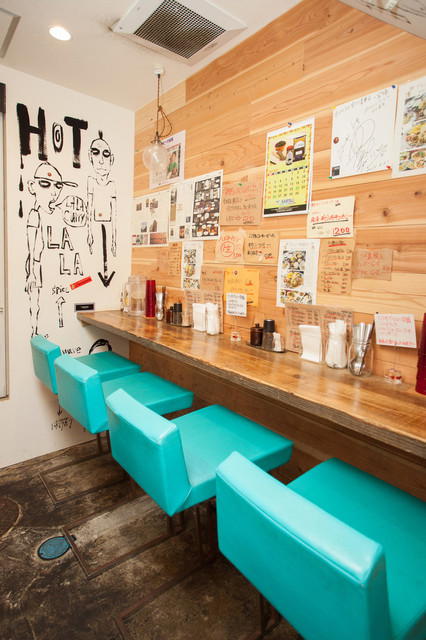
Serene counter seating with subdued lighting focused on the chef's work, stone walls, natural wood and minimal music for immersive, calming focus on food.