

Tabelog Bronze #370
Our verdict
Rin belongs to Hamamatsu’s serious unagi conversation, a city where eel is not a novelty but a civic food language. The draw is its ingredient-led focus, small daily output, and recognition from The Tabelog Award Bronze tier and OAD’s 2026 Recommended list, placing it above routine eel-house dining without turning the experience into ceremony for ceremony’s sake.

Pearl is the En Primeur Club membership app — saves, bookings, and concierge access live there. Same editors, same standards.
- Address
- 42-2 Chitosecho, Chuo Ward, Hamamatsu, Shizuoka 430-0934, Japan
- Phone
- +81 80-4526-0024
- Hours
- Daily 11:30 AM–1:30 PM
- Website
- omakase.in
- Directions
- Get directions
- Booking
- Book on Omakase
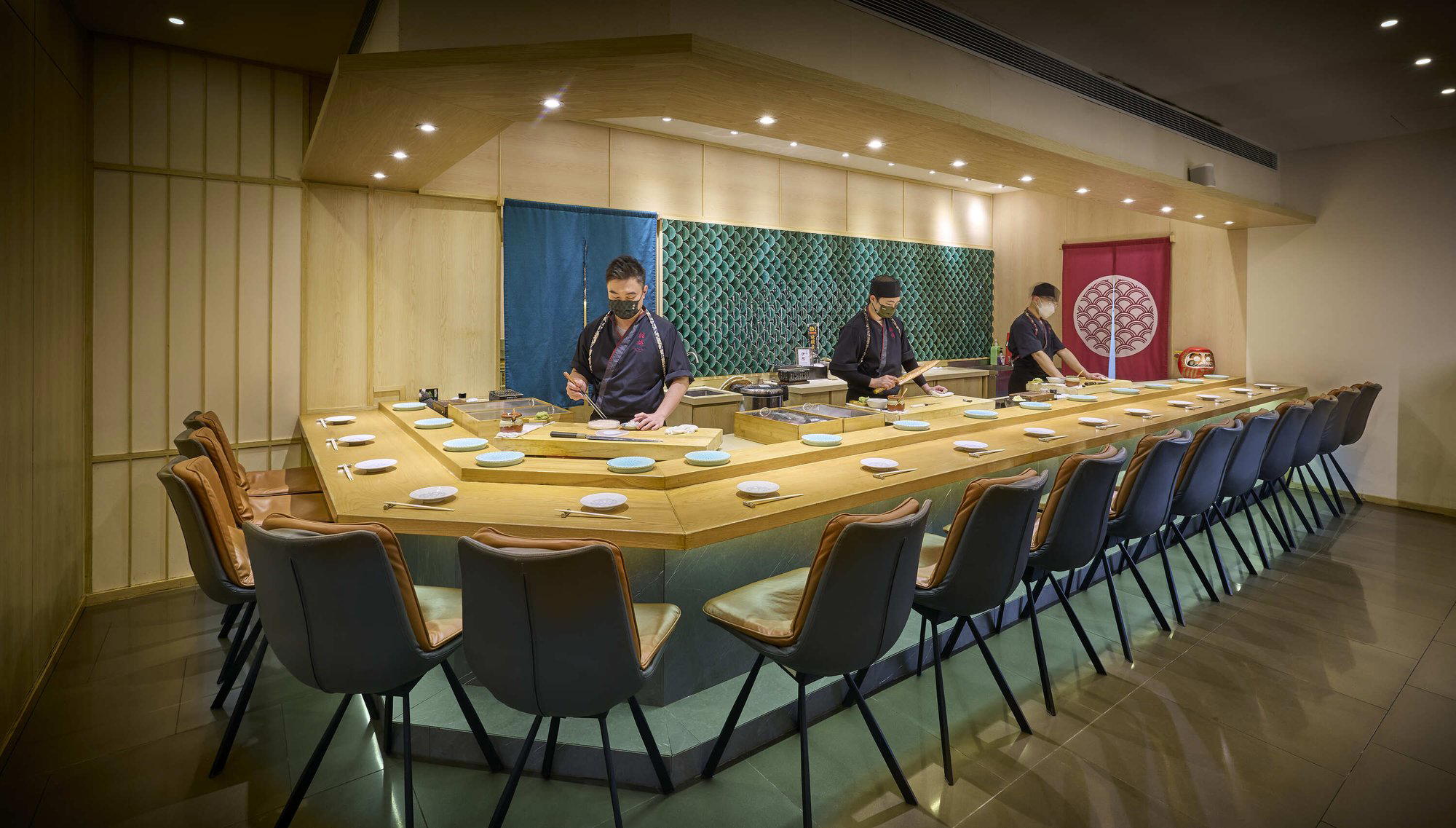
Hamamatsu announces its eel culture before the meal begins: station-area streets, small counters, old specialists, and a local appetite shaped by Lake Hamana’s long association with unagi farming. In that setting, Rin reads as part of a narrower modern tier, where the point is not abundance or theatrical luxury, but the controlled handling of a product the city already takes seriously.
Unagi in Japan is often misunderstood by travellers as a single dish rather than a set of regional habits. Hamamatsu sits in a particularly competitive pocket because eel here is local identity as much as restaurant category. The better rooms are judged on sourcing discipline, grill control, rice balance, and restraint with sauce. Rin’s place in that conversation is supported by The Tabelog Award Bronze recognition in 2024, 2025, and 2026, selection for Tabelog Unagi 100 in 2022 and 2024, and inclusion on Opinionated About Dining’s 2026 Top Restaurants in Japan Recommended list.
Hamamatsu eel culture, handled at small scale
The ingredient angle matters here because eel houses in Hamamatsu do not need to explain why unagi belongs on the table. The city’s reputation does that work already. What separates the stronger addresses is how tightly they manage the format: limited output, a focused category, and a room built for attention rather than turnover. Rin operates in that register, with a 16-seat layout and a stated daily limit of 20 meals, which changes the rhythm of the experience. This is not the mass-service version of a local specialty.
The comparison inside Hamamatsu is useful. Unagi Ryori Atsumi occupies a similar local price band, while Torihama sits in a higher listed range outside the immediate metro comparison. That spread matters because Rin is not positioned as an experimental tasting-menu restaurant; it competes in the premium end of a traditional category. The editorial question is whether a traveller wants a meal that explains Hamamatsu through eel rather than a broader tour of Shizuoka cooking. For that, the answer is clear: this is a narrow brief, and the narrowness is the strength.
Tabelog score of 4.29 in 2026 is a serious signal in Japan’s restaurant ecosystem, particularly in a category with deep local competition. Scores are not a substitute for judgment, but they do indicate sustained diner approval across a demanding audience. The Bronze awards add another layer because they place the restaurant beyond casual local acclaim and into a national recognition frame. In a city where eel can be found at many levels, those signals help distinguish a specialist from a convenient lunch stop.
A focused lunch room rather than a grand dining production
Format leans toward concentration. Counter seating and tatami-room options suggest a room that can handle both solo diners and families, but the practical character remains compact. There are no private rooms, no private-use format, and the maximum party size is listed at six, which keeps the experience closer to specialist dining than banquet-style hospitality. Children are accepted, which is useful in Japan, where some serious rooms quietly become adult-only by tone even when not by policy.
Service window is lunch only, split into two sessions. That detail gives the restaurant its shape. A meal here is planned around the day, not dropped into an open-ended evening crawl. Travellers connecting Hamamatsu with broader Shizuoka dining should treat it as an anchor meal, then build the rest of the itinerary around tea, seafood, ryokan cooking, or bars elsewhere in the prefecture. For wider planning, Our full Shizuoka restaurants guide maps the regional spread, while Our full Shizuoka hotels guide, Our full Shizuoka bars guide, Our full Shizuoka wineries guide, and Our full Shizuoka experiences guide help frame the trip beyond one table.
Payment is old-school in a way that matters for planning: credit cards, electronic money, and QR code payments are not accepted. That is not a stylistic quirk to romanticize; it is a practical constraint. The same is true of parking, which is unavailable. The better way to think about the meal is as a city-centre specialist stop near Shin Hamamatsu, not a drive-up countryside eel excursion.
Where Rin fits in a Shizuoka eating itinerary
Shizuoka’s dining identity is broader than eel. The prefecture has serious sushi, kaiseki, Chinese cooking, yakitori, and regional Japanese restaurants that pull from mountain, coast, and tea country. Rin’s role is more specific: it gives Hamamatsu a sharply defined unagi address within that wider field. Pairing it against Asaba (Kaiseki) or Aozora is less about cuisine similarity than itinerary balance. One is a focused expression of eel culture; the others point toward different Shizuoka registers.
That distinction helps avoid a common travel mistake in Japan: treating every acclaimed restaurant as interchangeable fine dining. Chabo, Blue Label, and Chinese Muramatsu belong to different decisions about appetite, mood, and regional context. Rin is the choice when the itinerary calls for a concise, ingredient-specific meal rooted in Hamamatsu’s eel tradition rather than a long, multi-category dinner.
For readers building a Japan-wide food route, the useful comparison is not prestige for prestige’s sake, but specificity. -Grilled beef Sukiyaki- KAMAKURA TANUKIAN 鎌倉 たぬき庵 in Kamakura. 鮪と炭火焼き うお炭 秋葉原店 in Tokyo.cafe in Osaka.know in Kumamoto, (Shoku) Vietnam in Kawasaki, and [Curry Senmon Ten] Maruyama Kyoju. in Sapporo each answer a different local question. Even outside Japan, places such as Jōdo Saké Bar in Los Angeles and Onigiri Time in Pasadena show how Japanese food categories travel, narrow, and adapt. Hamamatsu eel is better understood before it is compared: the appeal lies in a city, a product, and a specialist format aligned with both.
The critical case for Rin is therefore disciplined rather than expansive. It is not the address for a diner seeking breadth, late-night flexibility, or luxury-room theatre. It is the address for reading Hamamatsu through unagi at a scale small enough to make the daily limit part of the meaning. In Shizuoka, that is a more useful distinction than another vague claim of excellence.
Frequently asked questions
Would Rin be comfortable with kids?
Yes. Rin lists children welcome and is marked family friendly, with 16 seats and both counter seating and a tatami room in Hamamatsu, Shizuoka.
Is Rin formal or casual?
It reads as casual rather than formal. The room is compact at 16 seats, serves lunch only from 11:30 to 14:30, and the payment setup is simple, with no credit cards accepted.
What are the operating hours at Rin?
Hours at Rin: Mon, Tue, Wed, Thu, Fri, Sat, Sun 11:30 - 14:30.
Where is Rin located?
Rin is located in Shizuoka.
Comparable Spots, Quickly
Comparable venues by cuisine and price in the same metro.
| Venue | Cuisine | Price | Awards | Notes |
|---|---|---|---|---|
| RinThis venue — the venue you are viewing | Authentic Kaiseki | $50–100 | Tabelog Bronze #370 | Not listed |
| Suien Dosai Honten | Traditional Tonkatsu (Japanese Pork Cutlet) | $20–30 | Tabelog 100 #96 | Aoi Ward |
| Teuchi Soba Tagata | Traditional handmade soba | $20–30 | Tabelog 100 #30 | Aoi Ward |
| Asaba | Traditional Japanese Kaiseki | $100–150 | Relais Chateaux Award | Shuzenji |
| Ooyakiimo | Shizuoka oden & roasted sweet potato shop | $10–20 | Tabelog 100 #87 | Aoi-ku |
| FUJI | Traditional Shizuoka Kaiseki Omakase | $100–150 | Tabelog Silver #22 | Aoi-Ku |
Recognition history
Dated appearances from independent guides and award organizations, with the underlying list record or original source where available.
Opinionated About Dining Top Restaurants in Japan Recommended
Opinionated About Dining
Tabelog Bronze #370
Tabelog
Full recognition history (4 entries)
Tabelog Bronze
Tabelog
Tabelog 100 #78 · No. 78
Tabelog · Tabelog 100 - Unagi - 2024
Continue exploring
More in Shizuoka
Restaurants in Shizuoka
Browse all →

Details
- Modern
- Elegant
- Sophisticated
- Special Occasion
- Celebration
- Private Dining
- Sake Program
- Local Sourcing
- Tasting Menu
- Set Menu
- Sake Program
Current opening hours
- Monday
- 11:30 AM–1:30 PM
- Tuesday
- 11:30 AM–1:30 PM
- Wednesday
- 11:30 AM–1:30 PM
- Thursday
- 11:30 AM–1:30 PM
- Friday
- 11:30 AM–1:30 PM
- Saturday
- 11:30 AM–1:30 PM
- Sunday
- 11:30 AM–1:30 PM
Hours can change for holidays and private events. Last verified .
Modern and stylish with Japanese elegance, peaceful and comfortable atmosphere.