
Tabelog 100 #27
Our verdict
Fuji is a Kobe okonomiyaki counter with Tabelog 100 - Okonomiyaki - 2025 recognition, a compact 23-seat format, and a casual budget tier that keeps it grounded in everyday Kansai eating. The appeal is not ceremony; it is the way griddle cooking, solo dining, and neighborhood rhythm compress into a direct, unfussy meal near Kosoku Kobe.

Pearl is the En Primeur Club membership app, where members save venues, book tables and use the concierge.
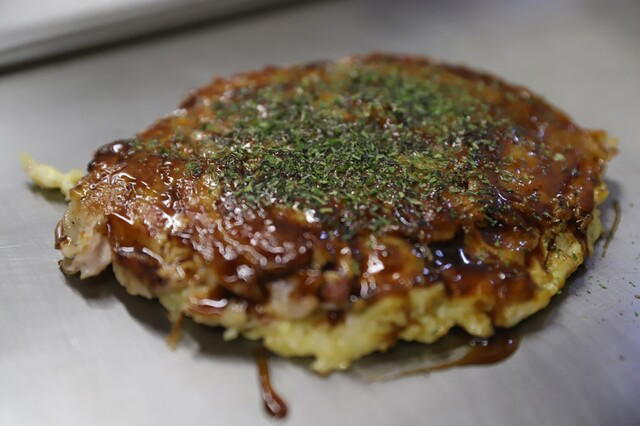
The first read is the griddle. Kobe’s okonomiyaki restaurants do not ask for hushed attention in the manner of sushi counters or kaiseki salons; they work through heat, batter, cabbage, sauce, timing, and the familiar appeal of food cooked close to the diner. Fuji belongs to that Kobe okonomiyaki conversation: practical, direct, and built around the democratic pleasure of a dish that is more about appetite and rhythm than ceremony.
Okonomiyaki is often flattened in translation as a Japanese savory pancake, but in Kansai it carries a sharper cultural meaning. It is working-city food, adaptable and filling, tied to Osaka and the surrounding region yet interpreted differently across the area. Kobe’s version sits in a city better known to visitors for beef, cafés, and Western-style yoshoku, so a serious okonomiyaki address says something useful about local appetite: the city’s dining identity is broader than steak counters and formal restaurants.
Kobe okonomiyaki without the destination-restaurant costume
The Tabelog 100 - Okonomiyaki - 2025 selection places Fuji inside a national conversation about a category that is rarely served with luxury signals. That matters. In Japan, the Hyakumeiten lists tend to reward depth within a genre, and okonomiyaki is a genre where technique is often hidden behind apparent simplicity. Batter consistency, cabbage cut, griddle control, and sauce balance make the difference between a heavy disk and a meal with lift.
The format also explains the appeal of the category. Okonomiyaki keeps the experience close to the iron plate, which is the natural stage for this cuisine. Unlike Kobe’s beef-focused rooms, where the premium language often centers on provenance and service ritual, okonomiyaki depends on immediacy and repetition. The cooking style is direct, the meal is paced by the griddle, and the category suits casual use without demanding a special occasion.
Within the Kobe comparison set, Fuji sits in approachable local-dining territory alongside Place de Pasto, Fumi, Grill Ippei Shinkaiti honten, Yoshoku no Fuji, and Okada Shokuhin Kabushiki Gaisha. The useful distinction is category rather than price alone: yoshoku and grill culture speak to Kobe’s port-city openness, while okonomiyaki keeps the lens on Kansai’s everyday flour-based cooking.
Why this kind of room matters in a beef city
Kobe’s international shorthand is beef, but that shorthand can make the city feel narrower than it is. The better reading is a layered food city: coffee culture, yoshoku kitchens, casual griddle cooking, neighborhood dining, bakeries shaped by foreign settlement history, and specialist counters that serve residents before they serve itineraries. Okonomiyaki fits that map because it is not dependent on spectacle. It is local food with enough technical discipline to support serious recognition, yet casual enough to remain part of ordinary dining.
Fuji’s recognition is also useful because it points travelers away from the usual mistake of treating inexpensive meals as filler between high-ticket reservations. In Kansai, the casual categories often carry as much regional intelligence as the formal ones. A griddle-led meal can teach more about local rhythm than a polished room designed for visitors, especially when the format makes no attempt to translate itself into luxury language.
For readers building a Kobe food itinerary, the smarter move is contrast. Pair an okonomiyaki stop with one of the city’s beef meals, then add the café register and other casual dining rooms that broaden the picture. Kobe’s restaurant map becomes more varied once it is not reduced to a single export, and Fuji is useful precisely because it keeps the itinerary grounded in everyday Kansai cooking.
How to read Fuji in a Kobe itinerary
This is the kind of meal that works when the day needs texture rather than ceremony. The draw is not a chef narrative or a long tasting structure; it is the confidence of a narrow genre. Tabelog’s 2025 okonomiyaki selection gives Fuji a clear trust signal, while the griddle-led character of the cuisine keeps the experience tied to the food’s origins rather than turning it into a performance for travelers.
The editorial case is simple: in Kobe, a serious okonomiyaki meal acts as a corrective. It reminds visitors that Kansai dining is not only about reservation difficulty, named beef, or formal service. It is also about flour, heat, sauce, and the social ease of a dish designed to be shared, customized, and eaten without ceremony. Fuji earns attention because it represents that side of the city with enough recognition to justify planning around it.
For broader trip planning, use Our full Kobe restaurants guide alongside Our full Kobe hotels guide, Our full Kobe bars guide, Our full Kobe wineries guide, and Our full Kobe experiences guide. For contrast beyond Kobe, look to other regional dining guides and casual specialist rooms across Japan and abroad, keeping Fuji in mind as the Kobe okonomiyaki reference point.
Frequently asked questions
How much does it cost to eat at Fuji?
Pricing at Fuji is listed as JPY 1,000 - JPY 1,999 JPY 1,000 - JPY 1,999.
Where is Fuji located?
Kobe.
What time does Fuji open and close?
Verified opening hours are not provided in the available venue data for Fuji.
What has Fuji built its reputation on?
Fuji is anchored by its selection for Tabelog 100 Okonomiyaki 2025, which places it among the category's notable addresses in Japan. The venue is in Kobe, and the listed price band is JPY 1,000 - JPY 1,999.
Booking and Cost Snapshot
Comparable venues at the same tier for side-by-side context.
| Venue | Cuisine | Price | Awards | Notes |
|---|---|---|---|---|
| FujiThis venue (the venue you are viewing) | Okonomiyaki (Japanese savory pancakes) | $10–20 | Tabelog 100 #27 | Not listed |
| Sansho An | Udon and curry udon shop | $10–20 | Tabelog 100 #68 | Hyōgo, Udon and curry udon shop |
| Yoshoku no Fuji | Yoshoku (Japanese-style Western cuisine) | $10–20 | Tabelog 100 #40 | Chūō, Yoshoku (Japanese-style Western cuisine) |
| Gyoza Senmon Ten Akaman Sannomiya ten | Gyoza specialty shop | $10–20 | Tabelog 100 #52 | Chūō, Gyoza specialty shop |
| Tommy's Sannomiya ten | Japanese bakery & sandwich counter | $1–10 | Tabelog 100 #9 | Chūō, Japanese bakery & sandwich counter |
| Marutaka Chuka Soba Kobe Ninomiya Ninomiya ten | Japanese Ramen | $10–20 | Tabelog 100 #14 | Chūō, Japanese Ramen |
Recognition history
Dated appearances from independent guides and award organizations, with the underlying list record or original source where available.
Tabelog 100 #27 · No. 27
Tabelog · Tabelog 100 - Okonomiyaki - 2025
Continue exploring
More in Kobe
Restaurants in Kobe
All restaurants in Kobe →
Bars in Kobe
Browse all →


Details
- Cozy
- Classic
- Casual Hangout
- Family
- Solo
- Group Dining
- After Work
- Standalone
- A La Carte
- Counter Dining
Current opening hours
- Monday
- 11:30 AM–9 PM
- Tuesday
- 11:30 AM–9 PM
- Wednesday
- 11:30 AM–9 PM
- Thursday
- 11:30 AM–9 PM
- Friday
- 11:30 AM–9 PM
- Saturday
- 11:30 AM–9 PM
- Sunday
- Closed
Hours can change for holidays and private events. Hours as of .