

A ten-generation family-run ryokan along the Katsura River in Shuzenji, Asaba occupies a former Buddhist temple and serves kaiseki in a setting where Noh theater performances still take place on the property. Ranked #163 on Opinionated About Dining's Top Restaurants in Japan in 2024, it operates at the intersection of heritage hospitality and seasonal Japanese cuisine at a level few rural properties can match.
 Discover on Pearl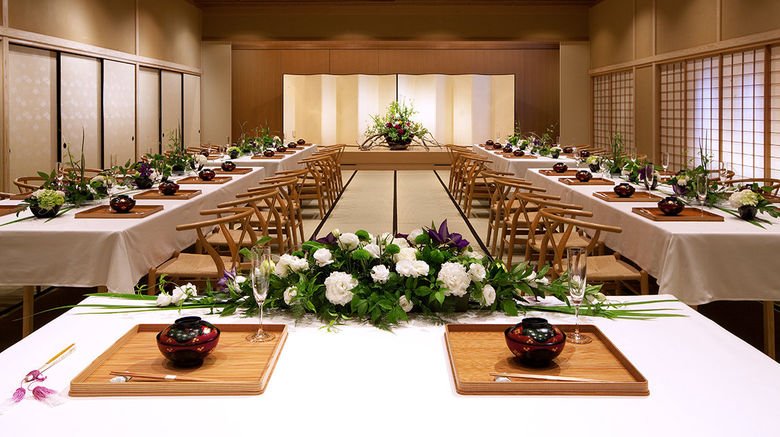
Where the Katsura River Meets a Ten-Generation Table
The approach to Shuzenji from Mishima follows Route 136 through the Izu Peninsula's forested hills, and the town itself gives little away — a modest hot-spring settlement with a famous temple at its centre. Turn left at the Kokei bridge, then right, and within 200 metres the road delivers you to something that takes a moment to place. Asaba is a ryokan, yes, but one that began its life as a Buddhist temple. Ten generations of the same family have presided over it since. The river runs alongside. On certain evenings, Noh theater is performed on the property's outdoor stage, the torchlight catching the masks in a way that has probably not changed much in centuries. Before a single dish arrives, you understand that the kaiseki served here exists within a much longer continuum.
Kaiseki as Seasonal Record
Within Japanese haute cuisine, kaiseki sits at the point where cooking becomes a form of calendrical discipline. Each course traces the season with precision: the first signs of spring in a delicate tofu preparation, summer's assertion in a chilled soup, autumn's weight in a braised dish built around root vegetables. The form originated in the tea ceremony traditions of Kyoto and spread outward across Japan's better ryokan and dedicated restaurants over centuries. At properties like Asaba, kaiseki is not extracted from the hospitality context and placed on a restaurant stage — it is delivered within the full arc of a stay, from arrival to a tatami room, through the ryokan's onsen waters, to the evening meal, and again at breakfast.
The shortlist, unlocked.
Hard-to-book tables, cellar releases, and concierge-planned trips.
Get Exclusive Access →Chef Shigekazu Noto oversees the kitchen, and the lineage he works within is shaped by both the property's Buddhist origins and the Izu Peninsula's specific larder: the coastal waters of Suruga Bay, the highland produce of inland Izu, and a regional relationship with tofu, soba, and freshwater fish that distinguishes it from the more Kyoto-centric kaiseki tradition. The kaiseki counter in Kyoto operates inside urban density, with competition driving constant refinement. The ryokan kaiseki of Izu operates under different pressures: isolation, seasonality, and the need to hold a guest's attention across an extended stay rather than a two-hour seating.
Recognition and Peer Position
Opinionated About Dining, the platform that tracks serious restaurant performance across Japan through weighted critic and peer scoring, has placed Asaba in its top 250 Japanese restaurants for three consecutive years: #142 in 2023, #163 in 2024, and #207 in 2025. The trajectory shows a slight ranking adjustment over the period, though remaining consistently inside a tier occupied by properties with dedicated critical followings. Google's 174 reviews settle at 4.5, which for a rural ryokan in a town most international visitors reach only by advance planning represents a higher-engagement audience than a metropolitan restaurant of comparable size would attract. Within Shizuoka's dining scene, Asaba sits in a different register from urban kaiseki practitioners like Seirin or the broader set of city-facing restaurants in our full Shizuoka restaurants guide. It is evaluated against a peer set of destination ryokan kaiseki properties across Japan, not against local restaurant competitors.
For comparable kaiseki benchmarks elsewhere in Japan, the critical conversation includes Gion Sasaki in Kyoto, which represents the urban master-class format, and Ifuki in Kyoto, another property working within the classical seasonal framework. Kikunoi in Tokyo offers a point of reference for how the tradition translates across formats and cities. Asaba's distinction within this peer set lies in its embeddedness: the kaiseki here is not a standalone dining experience attached to accommodation, but the culmination of a total environment that includes the former temple architecture, the river, and the Noh stage.
The Noh Stage as Context, Not Decoration
Noh theater is one of Japan's oldest performing arts, codified in the 14th century and recognised by UNESCO as intangible cultural heritage. Its aesthetic principles , restraint, suggestion over declaration, the use of negative space , align closely with those of kaiseki cooking. Both forms resist the obvious. Both ask the audience or diner to do interpretive work. At Asaba, where performances still take place on the property, this is not a decorative gesture toward cultural programming. It is a coherent statement about what kind of experience the property is building. The same sensibility that strips a Noh performance to its essential elements operates in a kaiseki kitchen that will use one ingredient to say what a lesser kitchen might use five to approximate.
This connection between aesthetic restraint and culinary philosophy is not unique to Asaba , it runs through the better end of Japanese hospitality broadly , but the physical presence of a functioning Noh stage on site makes the relationship tangible in a way that a kaiseki restaurant in a commercial building cannot replicate.
Getting to Shuzenji
Asaba is located at 3450-1 Shuzenji, Izu, and the most practical approach from Tokyo is by direct express train from Tokyo Station, which delivers passengers to Shuzenji Station in approximately two hours. From the station, the property sits roughly 2.5 kilometres away. By car from Mishima, the route follows Route 136 toward Izu-City; at Shuzenji, turn left at the Kokei bridge in front of Shuzenji Temple, then right, and the entrance appears 200 metres ahead on the left. Haneda sits approximately 130 kilometres away; Narita approximately 200 kilometres. The GPS coordinates are 34.9788, 138.9460.
Given the property's ryokan format, planning around a stay rather than a day visit makes considerably more sense. The kaiseki meal functions as part of a longer hospitality sequence, and the onsen, the river setting, and any scheduled Noh performances require time. For those building a broader Shizuoka itinerary, the prefecture offers additional dining directions through venues like Ichi Unagi for eel, LAT.34°N by Ao for French-influenced work, Rin, and FUJI. Accommodation and experience options across the prefecture are covered in our Shizuoka hotels guide, bars guide, wineries guide, and experiences guide.
For those extending into the rest of Japan's serious dining circuit, other properties worth cross-referencing include HAJIME in Osaka, Harutaka in Tokyo, akordu in Nara, Goh in Fukuoka, and 1000 in Yokohama.
The shortlist, unlocked.
Hard-to-book tables, cellar releases, and concierge-planned trips.
Get Exclusive Access →Frequently Asked Questions
Quick Comparison
A short peer set to help you calibrate price, style, and recognition.
| Venue | Cuisine | Price | Awards | Notes |
|---|---|---|---|---|
| Asaba | Kaiseki | Opinionated About Dining Top Restaurants in Japan Ranked #207 (2025); HIGHLIGHTS… | This venue | |
| Tempura Naruse | Tempura | Tempura | ||
| Unagi Shun | Eel | Eel | ||
| Seirin | Kaiseki | Kaiseki | ||
| Tempura Nakamura | Tempura | Tempura | ||
| FUJI |
Need a table?
Our members enjoy priority alerts and concierge-led booking support for the world's most difficult tables.
Get Exclusive AccessThe shortlist, unlocked.
Hard-to-book tables, cellar releases, and concierge-planned trips.
Get Exclusive Access →