Sasabune

Our verdict
Sasabune has held a place on Opinionated About Dining's North America rankings every year since 2023, sitting at #452 in 2024 and #455 in 2025. The Upper East Side counter runs omakase in the trust-the-chef tradition, with lunch and dinner service Tuesday through Saturday. It occupies a quieter register than Midtown's trophy sushi rooms, making it a reference point for the neighbourhood's serious Japanese dining.

Pearl is the En Primeur Club membership app, where members save venues, book tables and use the concierge.
The menu
What to order
- Albacore sashimi
- Baked crab hand roll
- Spicy tuna hand roll
The Upper East Side and the Omakase Tradition
New York's serious omakase counters have consolidated into two broad tiers over the past decade. At the leading sits a handful of rooms where a single dinner can exceed $500 per person before drinks, places like Joji and the stratospheric Bar Masa. Below that, a second tier of counters maintains serious technique and sourcing discipline at prices that still require planning but not the kind of financial commitment that turns a dinner into an occasion in itself. Sasabune, operating from a townhouse-level address on East 73rd Street, belongs to that second tier and has done so for long enough to have accumulated a consistent critical record.
The Upper East Side does not produce as many dining headlines as the Lower East Side or the West Village, but its Japanese dining has real depth. The neighbourhood's demographics have historically supported the kind of quiet, technically serious restaurants that operate without much fanfare and fill steadily on word of mouth. Sasabune fits that pattern. It has appeared on Opinionated About Dining's Leading Restaurants in North America list in each of the past three years, ranked at #452 in 2024 and #455 in 2025, with a Recommended citation in 2023. That kind of consistency in a competitive ranking is a stronger signal than a single-year appearance.
Counter Seating and the Logic of Proximity
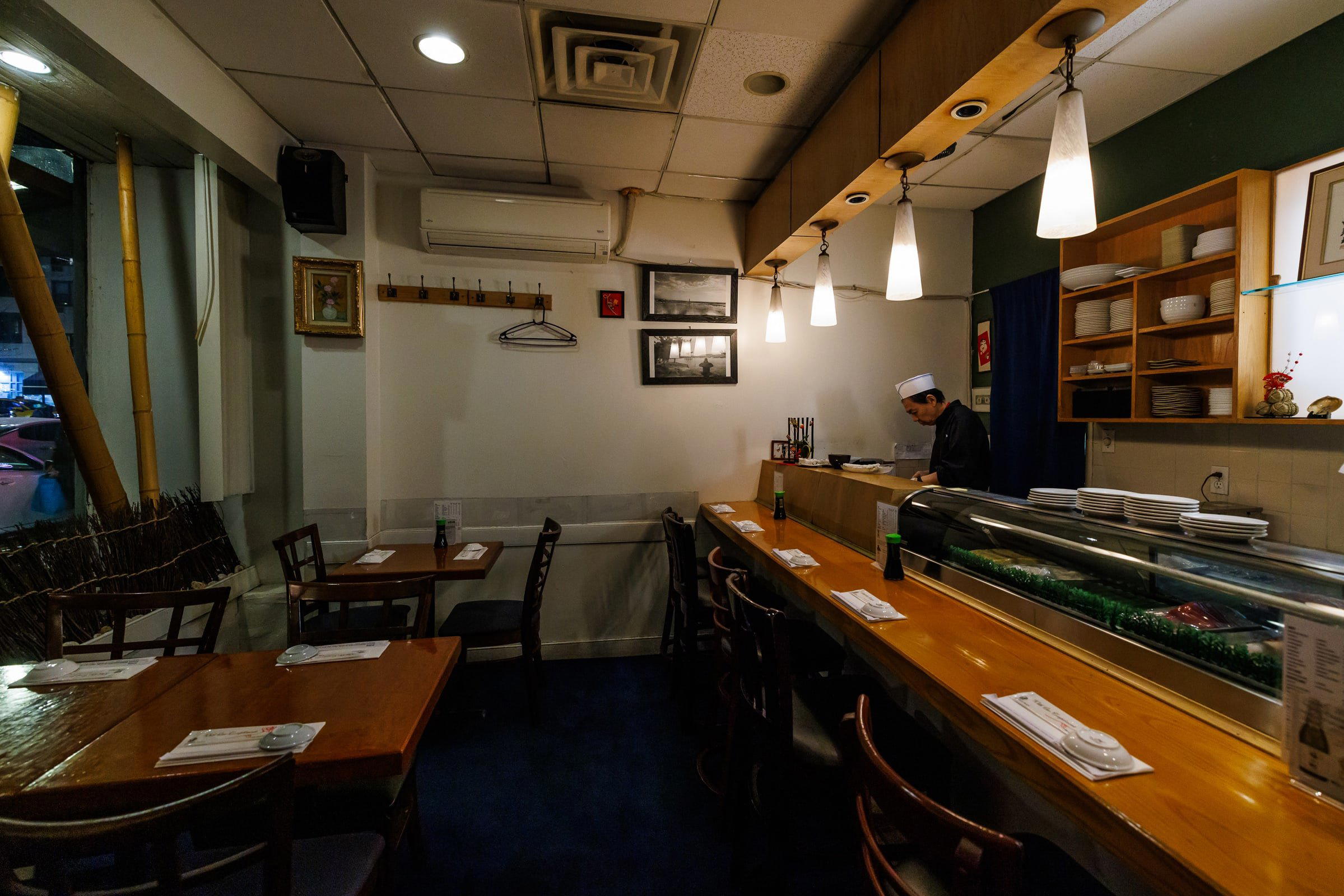
The counter format in omakase is not incidental to the experience; it is the experience. When the room is small and the seats face the preparation station directly, the choreography of the meal becomes visible in a way that a table-service room cannot replicate. The itamae works within arm's reach. The sequence of fish, the temperature of rice, the arc from lighter to richer cuts, these unfold in real time, in front of the person eating them, rather than arriving from a kitchen the diner never sees.
This physical intimacy is what separates a counter omakase from every other fine dining format. At Shion 69 Leonard Street, the intimacy is maximised by severe seat limits and a format that has received Michelin recognition. At Sasabune, the tradition operates in a different register: more accessible in booking, consistent across multiple years of critical recognition, and grounded in the trust-the-chef philosophy that defines omakase as a form. The diner does not select; the kitchen decides. That contract, established at the counter, is the point.
Counter omakase also demands a different kind of attention from the guest. There is no menu to study. Conversation with the person behind the counter is natural rather than performative. The meal moves at a pace set by the kitchen, not the table. For diners accustomed to the autonomy of à la carte dining, it requires a different orientation.
The comparison table below places Sasabune's logistics against a selection of New York restaurants at comparable or adjacent price points, to help calibrate expectations on format and booking.
| Venue | Cuisine | Format | OAD 2025 Rank (N. America) | Lunch Service |
|---|---|---|---|---|
| Sasabune | Sushi | Omakase counter | #455 | Tue–Fri |
| Joji | Sushi | Omakase counter | Ranked | Limited |
| Shion 69 Leonard Street | Sushi | Counter omakase | Ranked | No |
| Blue Ribbon Sushi | Sushi | À la carte | — | No |
| Masa | Sushi | Omakase counter | Ranked | No |
The practical differentiation here matters. Sasabune offers lunch service four days a week, Tuesday through Friday, which is relatively uncommon among New York's counter sushi operations. Many of the city's most recognised omakase rooms run dinner-only formats, which compresses demand into evening slots and extends booking lead times accordingly. A lunch window at a counter with Sasabune's critical standing represents a lower-friction entry point to that tier of dining.
The Omakase Counter in Global Context
Counter omakase format that Sasabune represents has its roots in Tokyo, where the tradition of placing yourself entirely in the hands of an itamae developed over generations. Rooms like Harutaka in Tokyo and Sushi Shikon in Hong Kong represent how that tradition has spread across Asia. New York absorbed it differently: the city's omakase scene grew out of a combination of Japanese immigration, the concentration of high-income diners willing to pay for sourced fish at Japanese market standards, and a culture of culinary import that also brought formats like the tasting menu to prominence.
American tasting-menu format runs on similar logic to omakase, fixed sequence, kitchen in control, high price per head, but the physical experience diverges sharply. The counter collapses the distance between preparation and consumption. There is no pass, no expeditor, no plating station hidden behind a swing door. The counter is both the stage and the auditorium.
What to Order, and Why the Question Misses the Point
Asking what to order at Sasabune is, in a specific sense, the wrong question. The omakase format makes the decision for you, which is precisely its value. The kitchen sequences the meal based on what is available, what is in season, and what the itamae judges to be the right progression. Guests who arrive expecting to direct the meal will find themselves redirected toward the counter's own logic.
What the format does reward is paying attention. The trust-the-chef structure at a counter like Sasabune is backed by a three-year consecutive presence on Opinionated About Dining's North America list, which is a peer-reviewed ranking drawing on the assessments of experienced independent diners rather than a single critic or a single visit. That standing is the answer to the ordering question: the kitchen has earned the right to make these decisions, and arriving with that understanding will shape the experience more than any individual dish selection could. For guests who want to understand what to look for in the counter format more broadly, the OAD recognition is the most useful orientation available in the public record.
Planning Your Visit
Sasabune is at 401 East 73rd Street on the Upper East Side. Dinner service runs Monday through Saturday from 5:30 to 9:30 pm. Lunch is available Tuesday through Friday, 12 to 2 pm. The restaurant is closed on Sundays.
For the wider context of dining and staying in New York, and our full New York City experiences guide. For reference points in other American cities operating at a comparable level of ambition, Lazy Bear in San Francisco, Providence in Los Angeles, Single Thread Farm in Healdsburg, and Emeril's in New Orleans each illustrate how cities outside New York have built serious fine dining programmes around different culinary traditions.
FAQ: What Should I Order at Sasabune?
Sasabune operates as an omakase counter, meaning there is no ordering in the conventional sense. The kitchen sets the sequence. The restaurant's consistent presence on Opinionated About Dining's North America rankings, Recommended in 2023, #452 in 2024, and #455 in 2025, reflects repeated assessment by experienced diners who have trusted that sequence. The practical preparation is not a menu decision but an orientation: arrive knowing the format, expect a progression from lighter to richer fish, and trust the counter's judgment on what is in season. That framework, rather than any specific dish, is what the critical record substantiates.
Just the Basics
A small set of peers for context, based on recorded venue fields.
| Venue | Cuisine | Price | Awards | Notes |
|---|---|---|---|---|
| SasabuneThis venue (the venue you are viewing) | Traditional Japanese Omakase | $150–200 | Not listed | Not listed |
| Le Bernardin | French Seafood Fine Dining | $300–500 | 3 Michelin Stars · World's 50 Best #13 | French, Seafood |
| Atomix | Modern Korean Tasting Menu | $300–500 | 2 Michelin Stars · World's 50 Best #7 | Modern Korean, Korean |
| Masa | Seasonal Hokkaido Tempura Omakase | $150–200 | Tabelog 100 #34 | Sushi, Japanese |
| Per Se | French Fine Dining Tasting Menu | $300–500 | 3 Michelin Stars · World's 50 Best #40 | French, Contemporary |
| Eleven Madison Park | Contemporary Plant-Based Fine Dining | $300–500 | 3 Michelin Stars · World's 50 Best #4 | French, Vegan |
Recognition history
Dated appearances from independent guides and award organizations, with the underlying list record or original source where available.
Opinionated About Dining Top Restaurants in North America Recommended
Opinionated About Dining
Full recognition history (4 entries)
Opinionated About Dining Top Restaurants in North America Ranked #455
Opinionated About Dining
Opinionated About Dining Top Restaurants in North America Ranked #452
Opinionated About Dining
Opinionated About Dining Top Restaurants in North America Recommended
Opinionated About Dining
Continue exploring
More in New York City
More from Chef Various
Browse all →
Restaurants in New York City
All restaurants in New York City →
Bars in New York City
All bars in New York City →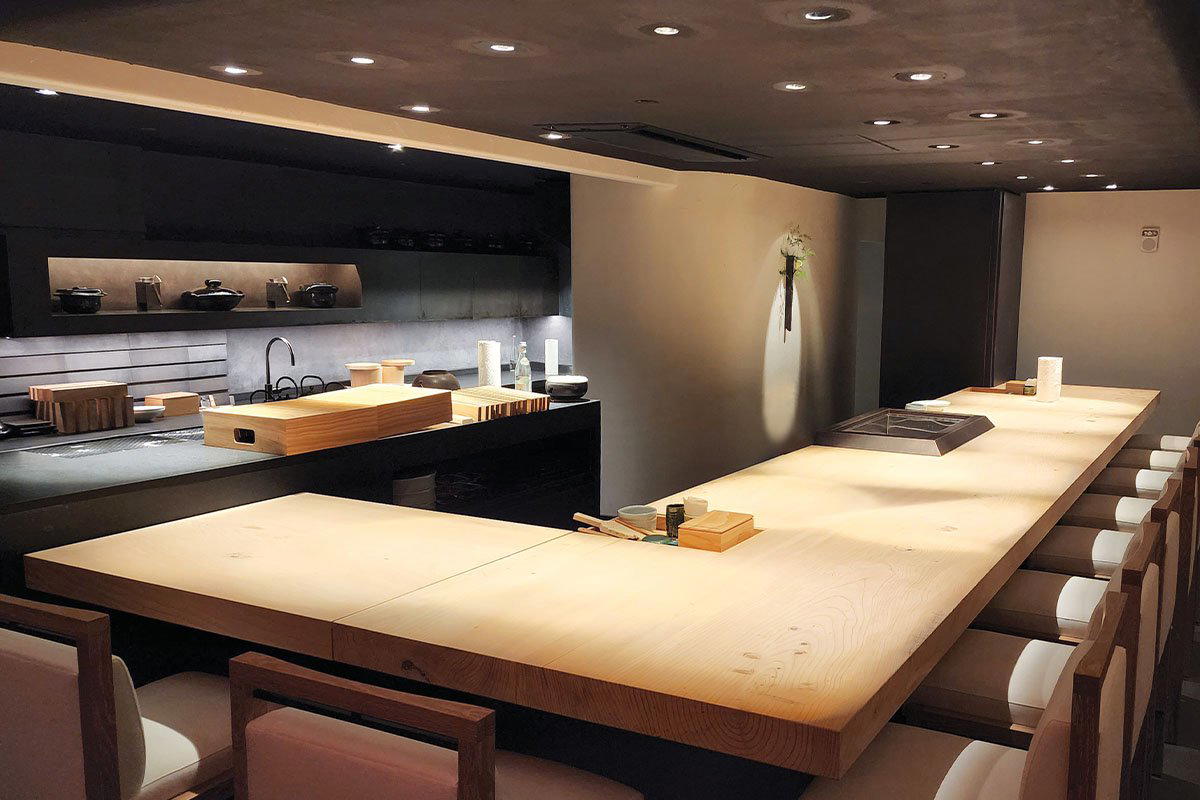






Details
- Intimate
- Elegant
- Minimalist
- Date Night
- Special Occasion
- Chefs Counter
- Sake Program
- Sustainable Seafood
- Omakase
- Counter Dining
- Sake
- Gluten Free Options
Current opening hours
- Monday
- 5:30–9:30 PM
- Tuesday
- 12–2 PM, 5:30–9:30 PM
- Wednesday
- 12–2 PM, 5:30–9:30 PM
- Thursday
- 12–2 PM, 5:30–9:30 PM
- Friday
- 12–2 PM, 5:30–9:30 PM
- Saturday
- 5:30–9:30 PM
- Sunday
- Closed
Hours can change for holidays and private events. Hours as of .
Unassuming, small, and almost cramped space with simple wood counter, quiet and efficient service creating a low-key, serious sushi atmosphere.