


1 Michelin Star · Wine Spectator Best of Award of Excellence
Our verdict
A Michelin-starred omakase counter at the base of One Vanderbilt, Joji operates in New York's upper tier of Japanese tasting formats, with nigiri built on a Koshihikari-Nanatsuboshi rice blend and seafood sourced largely from Tokyo's Toyosu Market. Ranked #262 in Opinionated About Dining's 2025 North America list, it prices firmly at the luxury end of the Midtown sushi spectrum. Closed Mondays and Sundays; lunch and dinner Tuesday through Saturday.

Pearl is the En Primeur Club membership app — saves, bookings, and concierge access live there. Same editors, same standards.
- Address
- 1 Vanderbilt Ave, New York, NY 10017
- Phone
- (212) 597-9025
- Hours
- Mon ClosedTue 5:45–8:30 PMWed–Sat 12:30–8:30 PMSun Closed
- Website
- jojiny.com
- Directions
- Get directions
- Booking
- Book on Resy
The menu
What to order
- Toro with Onion & Ponzu
- Kegani & Uni
- Wagyu Sando
Calm in the Middle of Grand Central
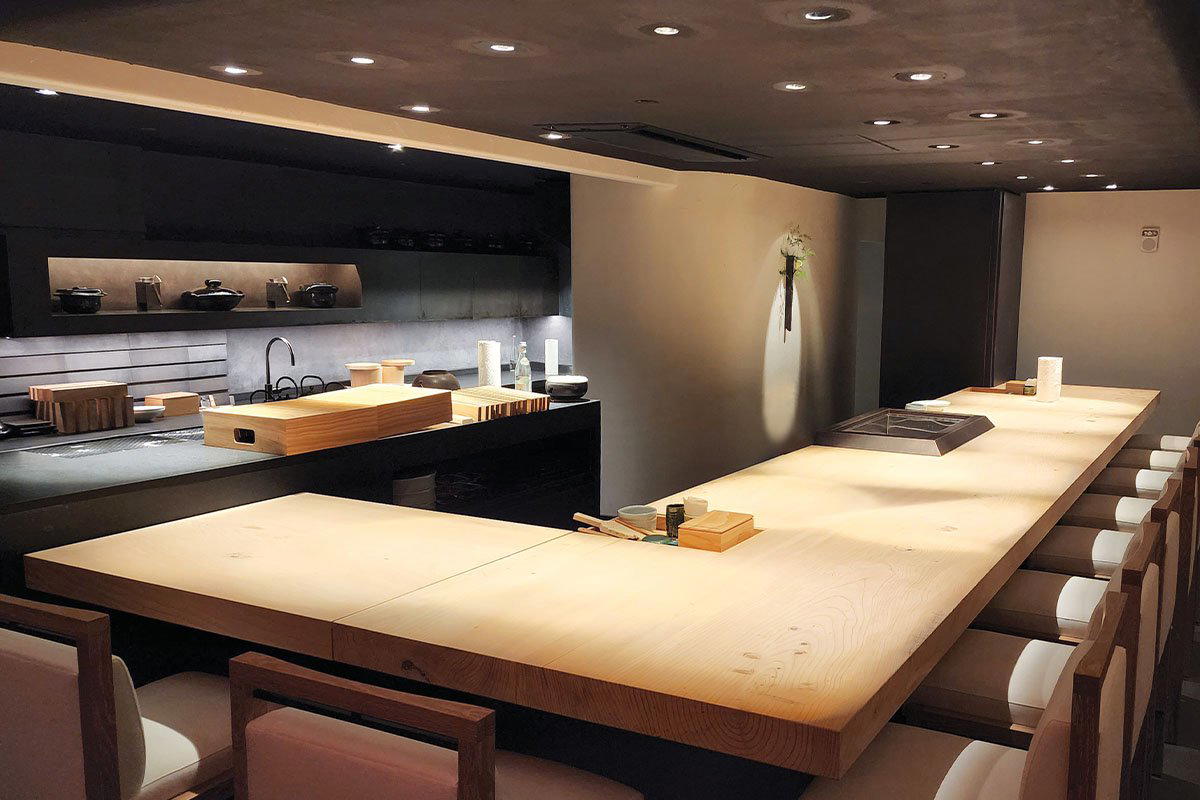
Grand Central Terminal processes roughly 750,000 people on a busy weekday. The corridor leading to Joji, tucked into the base of One Vanderbilt, carries none of that energy. The transition is abrupt in the way that very deliberate design tends to be: one moment you are in the commuter current, the next you are in a room built around quietness and precision. That contrast is not incidental to the experience. It is, in practical terms, the first course.
New York's premium omakase tier has gravitated toward this kind of controlled environment over the past decade. Counters in this bracket compete less on location visibility and more on what happens once the door closes: the temperature of the room, the pace of service, the ratio of staff to seated guests. Joji, under chef George Ruan, belongs to that cohort, and its placement inside One Vanderbilt, one of Midtown's most expensive commercial addresses, signals exactly the price tier and guest expectations it is designed to meet.
What the Price Actually Buys
Joji prices at $$$$, the leading bracket in New York dining, and the question any serious diner should ask before booking is what that tier delivers that the one below it does not. The OAD ranking gives some context: #262 in North America for 2025, up from #278 in 2024, putting it inside a competitive band that includes counters with longer waiting lists and steeper tabs. The Michelin single star, awarded in 2024, is the more widely recognised signal, but the OAD movement is arguably the more useful one for tracking trajectory.
At the top end of New York's sushi market, luxury ingredients are not a differentiator, they are the floor. What shifts from counter to counter is the sourcing specificity, the rice program, and the integration of those elements into a coherent sequence. At Joji, seafood sourced largely from Toyosu Market in Tokyo anchors the provenance story, and the nigiri rice blend, Koshihikari and Nanatsuboshi, vinegared to complement rather than compete with the fish, reflects a level of granularity that is common in Tokyo's leading counters but less consistent in New York's. That specificity is part of what the price reflects.
Luxury ingredients appear throughout: langoustine lightly cooked and layered with uni, chawanmushi topped with golden Osetra. These are not surprises at this price point, but the question is whether they are used with restraint or stacked for impression. The OAD citation, which notes that even devoted sybarites will leave satisfied, suggests the former. Stacking luxury tends to fatigue; integration tends to satisfy.
For comparison within New York's omakase market: Bar Masa sits at a similar price tier with a different format and considerably higher seat count. Sushi Sho and Shion 69 Leonard Street represent the more intimate, counter-focused end of the same bracket. Joji occupies middle ground: more polished than the smallest counters, more focused than the larger operations.
The Menu Architecture
The meal at Joji opens with small plates before moving into the nigiri sequence, a structure that gives the kitchen room to establish context before the fish takes over. The small plates blend Japanese technique with seasonal Western ingredients, an approach that has become standard across New York's higher-end Japanese counters but which, when executed with discipline, serves the practical purpose of calibrating the palate before the rice-and-fish portion of the meal begins.
The sashimi course, exemplified in the OAD description by buri with green apple, ginger, and yuzu zest, indicates a willingness to introduce acidity and brightness early, which is a considered choice at a counter where the back half of the meal will be driven by fat and umami from aged fish and luxury garnishes. The sequence logic matters at this price point. A meal that finishes with Osetra chawanmushi needs to have built toward that weight rather than arrived at it by accident.
Toyosu sourcing is worth noting for what it implies about consistency and range. Toyosu is the largest and most technically sophisticated fish market in the world; access to it does not guarantee quality, but it does guarantee variety and reliability of supply across seasons. A counter with that sourcing relationship can maintain a nigiri program that shifts with what is leading each week rather than defaulting to a fixed lineup. For a format that charges at the top of the market, that flexibility is not a luxury, it is a baseline expectation.
Midtown's Role in the New York Sushi Story
New York's serious sushi addresses have historically clustered in a few neighbourhoods: the West Village, Tribeca, the Lower East Side. Midtown has been associated more with volume and expense than with craft at the counter level. That is changing, partly because buildings like One Vanderbilt are attracting tenants who can afford to operate at low seat counts and high price points without depending on neighbourhood foot traffic to fill covers. The audience for Joji is not the lunch crowd from nearby offices in any ordinary sense; it is the subset of that crowd, and the visiting diner population, for whom the Midtown location is a feature rather than a compromise.
The Grand Central adjacency is logistically convenient for visitors arriving by train from outside the city, and the One Vanderbilt address connects the dining experience to a wider Midtown redevelopment that has made this block one of the most photographed in the city. Neither of those facts makes the food better, but they shape the context in which the meal happens, and at $$$$, context is part of what you are paying for.
For those building a broader New York dining itinerary, Blue Ribbon Sushi and Bond Street represent the tier below Joji in price and formality, useful reference points for understanding what moves between those levels. The full picture of the city's restaurant scene is mapped in our full New York City restaurants guide.
Joji in the Wider Omakase Conversation
New York's omakase market is increasingly benchmarked against Tokyo and Hong Kong, where the format originated and where, at the very leading, there is less variation in execution. Harutaka in Tokyo and Sushi Shikon in Hong Kong represent that standard in their respective cities. New York counters that source from Toyosu and operate with comparable rice program discipline are narrowing the gap, but the comparison still matters for anyone deciding whether a New York omakase at this price point is the right call against an international alternative.
Domestically, the premium tasting format question extends beyond sushi. Alinea in Chicago, The French Laundry in Napa, Single Thread Farm in Healdsburg, Lazy Bear in San Francisco, Providence in Los Angeles, and Emeril's in New Orleans each represent a different answer to what a top-tier American tasting experience should deliver. Joji's answer is narrow and Japanese in discipline: sourcing precision, rice program, seasonal sequencing, no detours.
Planning Your Visit
Joji is located at 1 Vanderbilt Ave, New York, NY 10017, accessible directly from Grand Central Terminal. Service runs Tuesday through Saturday; lunch from 12:30 PM on Wednesday through Saturday, dinner from 5:45 PM Tuesday through Saturday. The restaurant is closed Sunday and Monday.
For the rest of your New York visit, see our full New York City hotels guide, our full New York City bars guide, our full New York City wineries guide, and our full New York City experiences guide.
Quick reference: 1 Vanderbilt Ave, Midtown Manhattan. Tue dinner, Wed-Sat lunch and dinner. Closed Sun-Mon. Michelin 1 Star (2024). OAD North America #262 (2025). Price tier: $$$$.
Frequently asked questions
Is Joji more mid-range or high-end?
Pricing at Joji is listed as $$$$.
Budget and Context
| Venue | Cuisine | Price | Awards | Notes |
|---|---|---|---|---|
| JojiThis venue — the venue you are viewing | Modern Japanese Omakase | $300–500 | 1 Michelin Star · Wine Spectator Best of Award of Excellence | Not listed |
| Le Bernardin | French Seafood Fine Dining | $300–500 | 3 Michelin Stars · World's 50 Best #13 | French, Seafood |
| Atomix | Modern Korean Tasting Menu | $300–500 | 2 Michelin Stars · World's 50 Best #7 | Modern Korean, Korean |
| Masa | Seasonal Hokkaido Tempura Omakase | $150–200 | Tabelog 100 #34 | Sushi, Japanese |
| Per Se | French Fine Dining Tasting Menu | $300–500 | 3 Michelin Stars · World's 50 Best #40 | French, Contemporary |
| Eleven Madison Park | Contemporary Plant-Based Fine Dining | $300–500 | 3 Michelin Stars · World's 50 Best #4 | French, Vegan |
Recognition history
Dated appearances from independent guides and award organizations, with the underlying list record or original source where available.
Michelin 1 Star
Michelin
Opinionated About Dining Top Restaurants in North America Recommended
Opinionated About Dining
Wine Spectator Best of Award of Excellence
Wine Spectator
Full recognition history (6 entries)
Opinionated About Dining Top Restaurants in North America Ranked #262
Opinionated About Dining
Michelin 1 Star
Michelin
Opinionated About Dining Top Restaurants in North America Ranked #278
Opinionated About Dining
Continue exploring
More in New York City
Restaurants in New York City
Browse all →
Bars in New York City
Browse all →
Hotels in New York City
Browse all →




Details
- Intimate
- Elegant
- Sophisticated
- Modern
- Date Night
- Special Occasion
- Chefs Counter
- Sake Program
- Extensive Wine List
- Omakase
- Counter Dining
- Sake
- Wine
Current opening hours
- Monday
- Closed
- Tuesday
- 5:45–8:30 PM
- Wednesday
- 12:30–8:30 PM
- Thursday
- 12:30–8:30 PM
- Friday
- 12:30–8:30 PM
- Saturday
- 12:30–8:30 PM
- Sunday
- Closed
Hours can change for holidays and private events. Last verified .
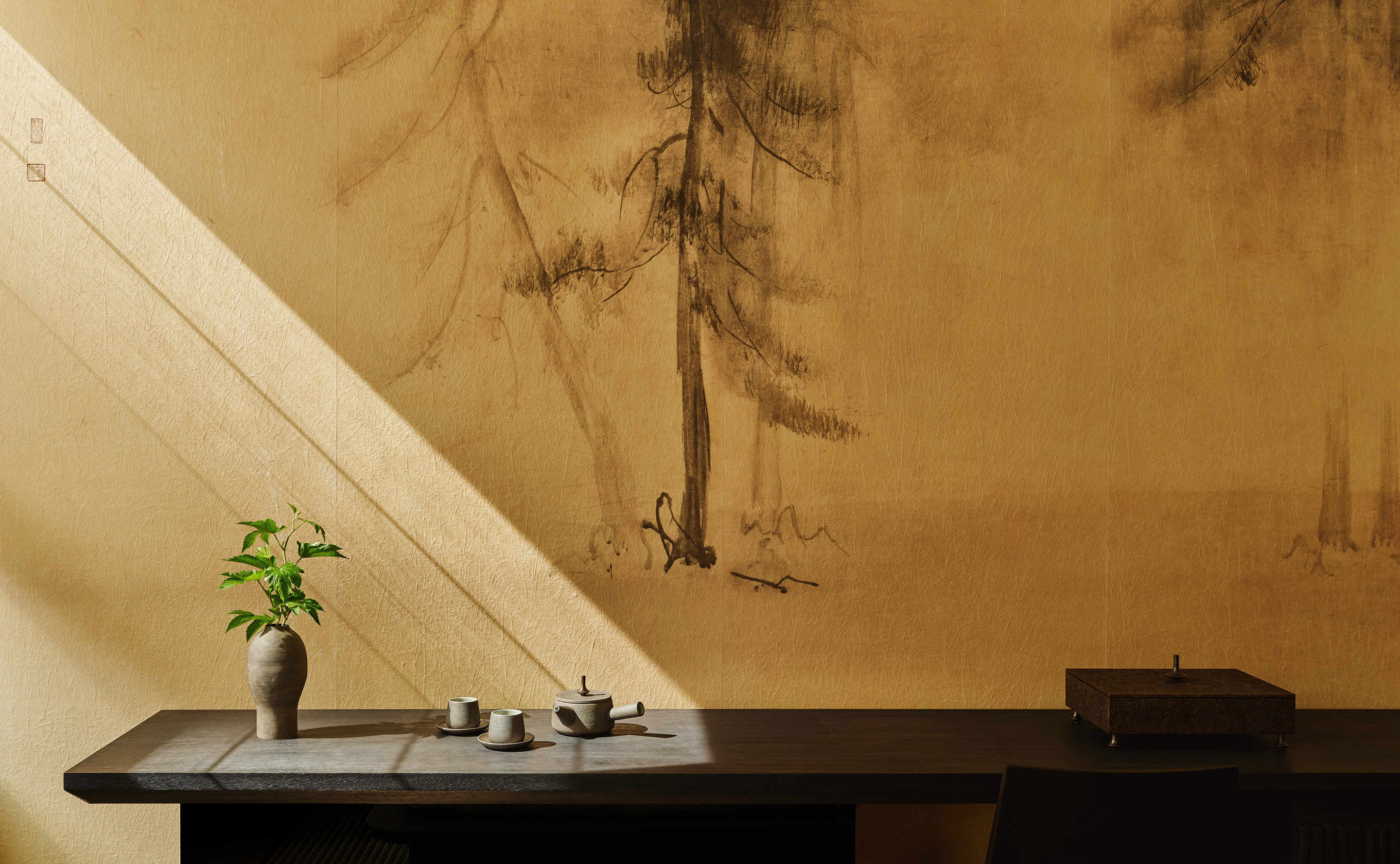
Intimate sushi counter with dark moody lighting, spotlit omakase table from a single tree, creating a quietly ornate and sophisticated escape.