Carnitas Ramirez




A cazo of bubbling lard, fresh corn tortillas, and every cut of the pig from snout to brain: Carnitas Ramirez on East 3rd Street is the kind of taqueria that earns Opinionated About Dining recognition not through refinement but through conviction. Seating is overturned paint buckets. The pork is fat-laced and pressed hard into tortillas. Regulars keep returning because nothing about it changes.
Pearl is the En Primeur Club membership app — saves, bookings, and concierge access live there. Same editors, same standards.
- Address
- 210 E 3rd St, New York, NY 10009
- Phone
- (718) 421-8555
- Website
- carnitasramirez.com
- Directions
- Get directions
 Saves & bookings on Pearl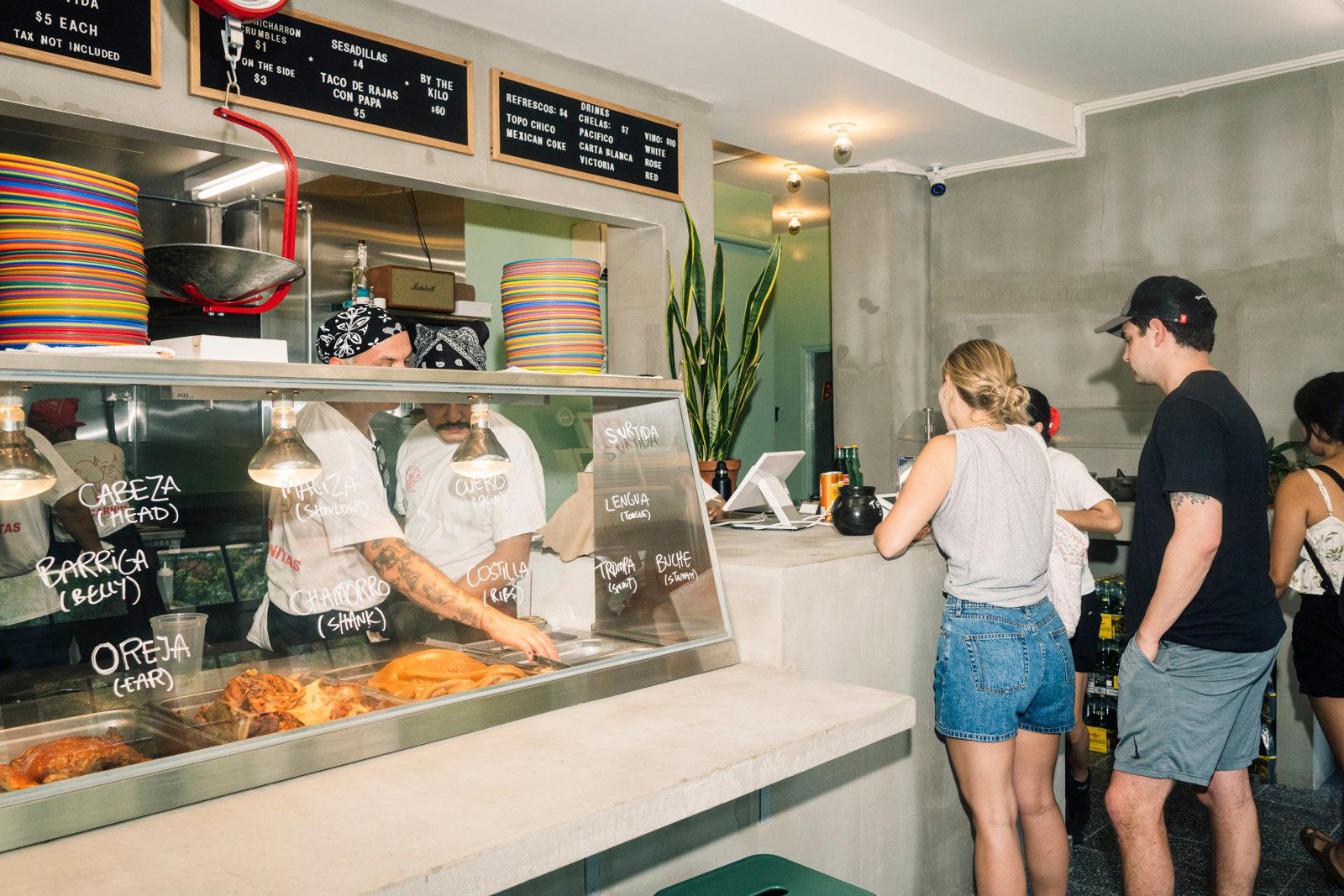
A Paint Bucket and a Cazo
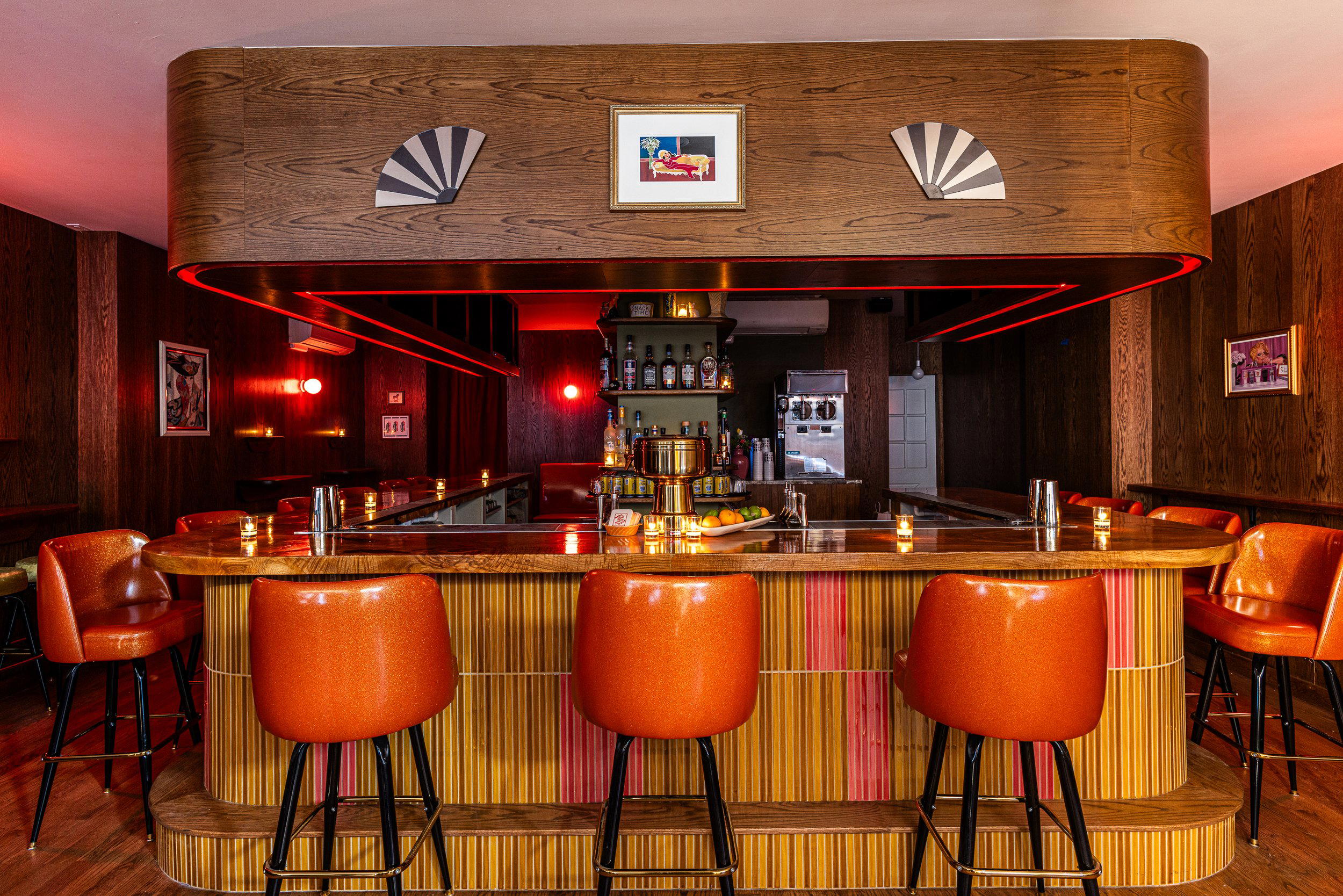
The East Village has housed generations of cheap, serious eating, Polish diners, Ukrainian canteens, Japanese ramen shops, and the block around East 3rd Street carries that tradition without ceremony. Arriving at Carnitas Ramirez, there is no signage designed to impress, no line-management strategy, no ambient playlist. What there is: the smell of rendered lard, the sound of pork fat moving in a hot cazo, and a seating arrangement built from overturned paint buckets. The environment communicates the priorities immediately.
This is the register in which particularly committed taqueria culture operates. In Mexico City, the leading carnitas stands run from dawn to sellout, the cazo kept at temperature for hours until every cut has reached its ideal texture. That tradition traveled north unevenly, New York's Mexican food scene has long skewed toward the accessible middle, with a handful of spots doing serious work at the serious end. Carnitas Ramirez sits firmly in the latter camp, having earned a spot on the Opinionated About Dining Cheap Eats in North America list for 2025, one of the more demanding cheap-eats indices in American food criticism.
The Cazo as Method
Carnitas cooked in a cazo, a wide copper or steel vessel filled with lard, is a technique that rewards patience and punishes shortcuts. The fat renders slowly, the proteins break down without drying, and different cuts finish at different rates. A competent carnitas operation requires someone to know when the tripe is done versus the snout versus the shoulder, pulling each at the right moment. Carnitas Ramirez runs the full spectrum: all cuts of the pig share equal billing, including tripe, snout, and brain. That is not a feature aimed at the adventurous-eater crowd; it is simply how carnitas is cooked when the focus is on the animal rather than the customer's comfort zone.
The corn tortillas are fresh, which matters more than almost any other variable in this format. A carnitas taco built on a mediocre tortilla is a different dish. Here the fat-laced pork is pressed into the tortilla and dressed with escabeche jalapeños and curtido onions with habanero. The escabeche provides acid to cut the fat; the habanero adds heat that sits behind the richness rather than overriding it. The assembly logic is classical. Nothing in the formula is accidental.
What the Regulars Order
Regulars order the full range, then come back for the cuts most places leave off the menu. The brain and the snout are not novelty items here, they are the benchmark by which someone who has eaten good carnitas before will judge the kitchen. A taqueria confident enough to cook brain well is confident in its technique across the board. That is what the repeat customer understands implicitly.
8 across 403 reviews is a data point worth reading carefully. At that sample size, a 4.8 is not a statistical anomaly produced by a handful of enthusiastic first visits. It reflects a consistent experience that people return to describe positively. At a taqueria where the format is fixed and the menu does not rotate for seasons or trends, consistency is the product. The regulars are not chasing something new; they are confirming that something reliable is still doing what it does.
In the context of New York's broader Mexican dining spectrum, Carnitas Ramirez occupies a different tier from places like Oxomoco, where wood-fire technique and a composed tasting format push Mexican cuisine toward a fine-dining register, or Atla, which brings a Mexico City all-day cafe sensibility to NoHo. ABC Cocina and Alta Calidad represent still another tier, Mexican-influenced cooking shaped significantly by American fine-dining conventions. None of that is wrong; it reflects the range that a city this size can sustain. But the taqueria tradition that restaurant works in answers to a different set of standards, ones closer to what you find at the source. For a sense of how another single-format Mexican street concept has built its own loyal following in New York, Birria Landia is a useful parallel in the birria space.
What the restaurant shares with those rooms is the OAD recognition logic: critics who take cheap eats seriously apply the same framework they use anywhere else. Technique, consistency, and point of view count. On those terms, a well-run cazo in the East Village qualifies.
Pujol has long made the case that Mexican cuisine belongs in the fine-dining conversation globally. The taqueria tradition makes a parallel argument from the other direction: that Mexican street food, executed with discipline, needs no formal setting to be taken seriously. Alma Fonda Fina in Denver operates in a different register, a fonda format rather than a street stand, but also reflects the broader push to treat Mexican regional cooking as a primary cuisine rather than a supporting one.
The Pandemic Origin, Read Correctly
Taqueria is run by two married couples: Kari Boden and Yvon deTassigny, and Tania Apolinar and Giovanni Cervantes. That detail circulates widely and is often read as a feel-good origin story. A more useful reading is this: the pandemic created space for small, format-specific operations to develop without the overhead structure that normally forces compromise. The conditions of 2020 and 2021, however destructive to the broader restaurant economy, allowed that kind of focused development to happen outside normal commercial pressures. The OAD recognition is the evidence that the development produced something worth returning to.
Explore More in New York City
What do regulars order at Carnitas Ramirez?
Regulars work through the full menu rather than defaulting to the safest options. The restaurant serves every cut of the pig, shoulder, tripe, snout, and brain, cooked in the same cazo. For someone returning with experience of the format, the offal cuts are the reference points: brain and snout prepared well indicate consistent technique across the whole operation. The base build is fat-laced pork pressed into fresh corn tortillas, dressed with escabeche jalapeños and curtido onions finished with habanero. The escabeche and habanero are not garnishes applied as afterthoughts; they are structural components that balance the fat in the pork. A regular's order tends to span multiple cuts across a visit, comparing textures within the same cooking medium.
Accolades, Compared
Comparable venues nearby, for context on price, style, and recognition.
| Venue | Cuisine | Price | Notes |
|---|---|---|---|
| Carnitas RamirezThis venue — the venue you are viewing | Michoacán-Style Carnitas Tacos | $ | Not listed |
| Paquitos | Authentic Mexican Taqueria | $ | East Village |
| Gueros Brooklyn | Tex-Mex Tacos | $ | Crown Heights (North) |
| Taqueria Y Fonda La Mexicana | Authentic Mexican Taqueria | $ | Upper West Side-Manhattan Valley |
| Dos Toros Taqueria | Mission-Style Mexican Taqueria | $ | Financial District-Battery Park City |
| Tacos 1986 | Tijuana-Style Tacos | $$ | West Village |
Recognition history
Dated appearances from independent guides and award organizations, with the underlying list record or original source where available.
Eater 38 #23
Eater
James Beard Award Nominee
James Beard Award
James Beard Award Semi Finalist
James Beard Award
New York Times Best Restaurants in New York City #44
New York Times
Opinionated About Dining Cheap Eats in North America Highly Recommended
Opinionated About Dining
James Beard Award Semi Finalist
James Beard Award
New York Times Best Restaurants in New York City
New York Times
Opinionated About Dining Cheap Eats in North America
Opinionated About Dining
Continue exploring
More in New York City
More from Chef Various
Browse all →
Restaurants in New York City
Browse all →

Bars in New York City
Browse all →

Hotels in New York City
Browse all →









At a Glance
- Rustic
- Lively
- Casual Hangout
- Group Dining
- Open Kitchen
- Beer Program
Current opening hours
- Monday
- Closed
- Tuesday
- Closed
- Wednesday
- 12–9 PM
- Thursday
- 12–9 PM
- Friday
- 12–10 PM
- Saturday
- 12–10 PM
- Sunday
- 12–6 PM
Hours can change for holidays and private events. Last verified .
Minimal, utilitarian counter service with industrial plastic seating and a back room with about 20 seats; bright, casual atmosphere with steam tables visible behind a pea-green counter.