San Telmo serves Modern Mediterranean Tapas on a terrace with live music, craft cocktails, and a street-scene view in L'Eixample.
Pearl is the En Primeur Club membership app — saves, bookings, and concierge access live there. Same editors, same standards.
- Address
- Carrer de Buenos Aires, 60, L'Eixample, 08036 Barcelona, Spain
- Phone
- +34934391709
- Website
- gruposantelmo.com
- Directions
- Get directions
 Saves & bookings on Pearl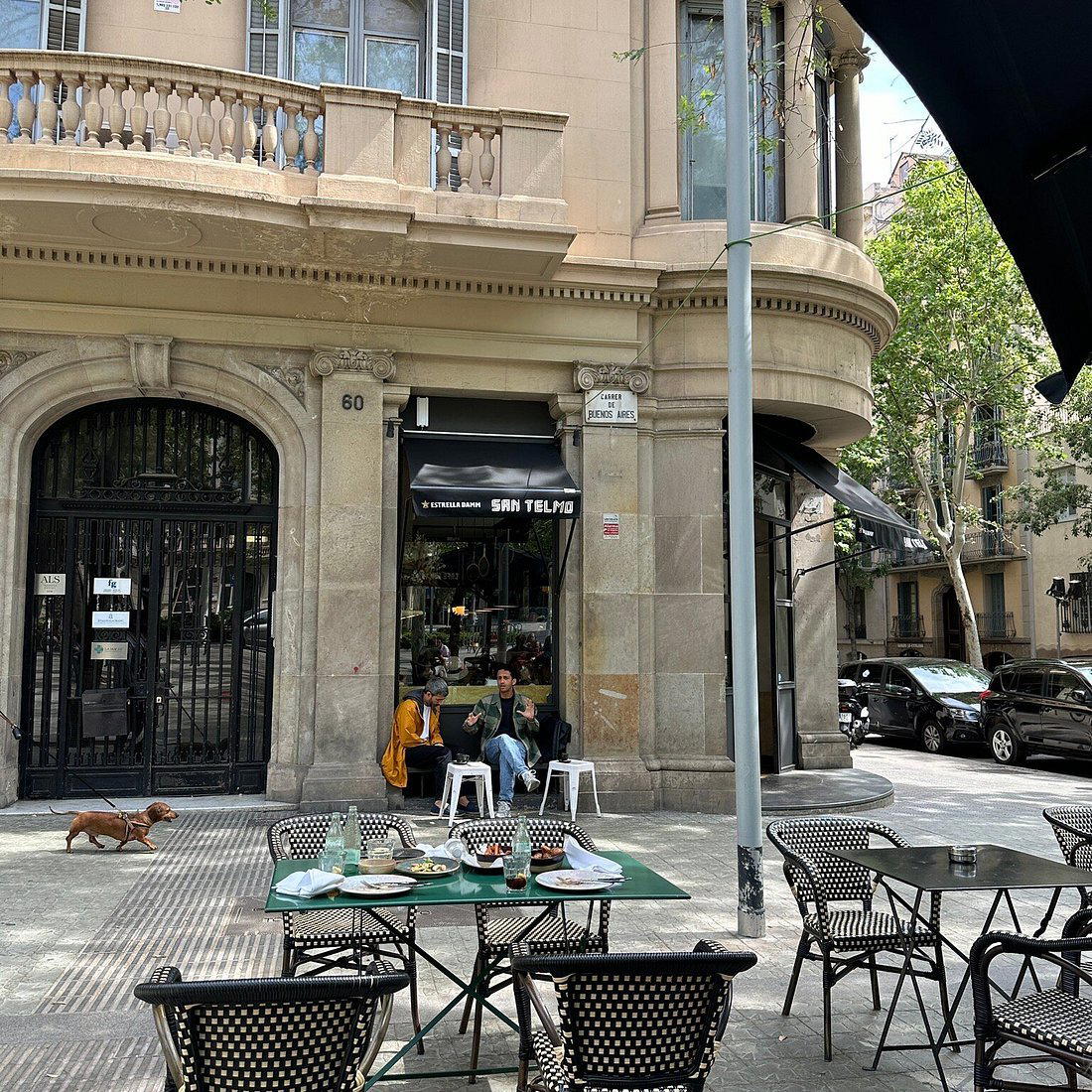
L'Eixample's Quieter Dining Register
Carrer de Buenos Aires sits in the upper reaches of L'Eixample, several blocks removed from the Rambla de Catalunya restaurant corridor and the concentration of tasting-menu addresses that cluster around Passeig de Gràcia. That distance is not incidental. The street operates at a different register from the city's haute-cuisine circuit, and San Telmo occupies a position within that quieter residential stretch where the logic of the menu, rather than the theatre of the room, tends to carry the evening.
Barcelona's dining map in L'Eixample has broadly split between two modes: the multi-course progressive format represented by addresses like Disfrutar, Lasarte, and ABaC, where a fixed sequence drives the experience, and a more elastic format where the menu's structure is itself the editorial statement. San Telmo belongs to the latter category, where what appears on the page, and how it is organised, tells you more about the kitchen's priorities than any single dish could.
How the Menu Is Organised, and What That Tells You
The architecture of a menu is rarely neutral. In Barcelona's creative-leaning tier, where peers such as Cocina Hermanos Torres and Enigma have built their reputations on highly structured sequential formats, a restaurant that opts for a more modular approach signals a different set of values. The modular menu, where dishes are organised by size, ingredient category, or cooking method rather than by a predetermined narrative arc, places more authority in the diner's hands. It also places more pressure on individual dish quality, since there is no overarching tasting sequence to carry a weaker moment.
This structural choice connects San Telmo to a tradition that runs through Spanish casual-formal dining, from the raciones culture of the Basque pintxo bars to the more elaborate sharing formats that have become common across Madrid and Barcelona over the last decade. The format acknowledges that a table of four may want different things from the same menu, and that a kitchen confident in its range can accommodate that without imposing a single narrative. It is an approach worth comparing to what kitchens elsewhere in Spain have built: El Celler de Can Roca in Girona and Mugaritz in Errenteria sit at the opposite end of the control spectrum, where the kitchen's sequence is the product. The restaurant's format is a deliberate step away from that model.
Barcelona's Broader Creative Scene and Where San Telmo Fits
Spain's restaurant culture has produced a notable concentration of technical ambition over the past two decades, and Barcelona functions as one of its principal stages. The city's most-discussed addresses, from the avant-garde formats at Disfrutar to the marine-focused precision at Aponiente in El Puerto de Santa María further south, tend to operate with fixed menus and significant advance booking requirements. The restaurant on Carrer de Buenos Aires occupies a different tier within that same creative culture: close enough to the city's fine-dining conversation to attract a table of serious diners, but structured in a way that does not demand the same level of forward planning or ceremonial commitment.
That positioning is not a shortcoming. Across Spain's dining geography, from Arzak in San Sebastián to Ricard Camarena in València and Quique Dacosta in Dénia, the upper tier is well-documented and well-booked. The more interesting question for a returning visitor to Barcelona is often where to eat on the second or third night, when a tasting-menu commitment is not the right call. That is the gap the restaurant fills within L'Eixample's dining offer.
For those curious about how Barcelona's format discipline compares to international peers, Le Bernardin in New York City and Atomix in New York City offer useful reference points for how menu architecture functions at the highest level in a different cultural context.
The L'Eixample Address and What It Signals
An address on Carrer de Buenos Aires in the upper Eixample carries particular meaning in Barcelona's dining geography. The neighbourhood is residential in character, with a density of mid-range and neighbourhood-facing restaurants that serve a local clientele rather than a tourist circuit. A restaurant that sustains a following in this environment is typically doing so on the strength of repeat custom rather than first-time footfall, which tends to produce a different kind of kitchen discipline. The incentive is consistency and seasonal relevance rather than spectacle designed for a single visit.
This contrasts with the dynamic around more tourist-adjacent addresses in the Gothic Quarter or along La Barceloneta, where menu conservatism often reflects the economics of high-volume transient trade. L'Eixample's upper reaches, by contrast, tend to attract operators willing to work a more considered format for a more demanding regular audience.
Planning Your Visit
Address: Carrer de Buenos Aires, 60, L'Eixample, 08036 Barcelona. Getting there: The nearest metro stations are Diagonal (Lines 3 and 5) and Hospital Clínic (Line 5), both within a short walk. Reservations: Recommended. Dress: smart casual. Budget: around $30 per person. Timing: Mon: 9 AM-12 AM; Tue: 9 AM-12 AM; Wed: 9 AM-12 AM; Thu: 9 AM-12:30 AM; Fri: 9 AM-1 AM; Sat: 9 AM-1 AM; Sun: 10 AM-12 AM.
Price and Positioning
Comparable venues nearby, for context on price, style, and recognition.
| Venue | Cuisine | Price | Notes |
|---|---|---|---|
| San TelmoThis venue — the venue you are viewing | Not listed | $$ | Not listed |
| Cuines Santa Caterina | Not listed | $$ | Sant Pere, Santa Caterina i la Ribera, Modern Market Cuisine with Catalan, Mediterranean, Asian & Vegetarian |
| Restaurante Echegaray | el Poblenou, Mediterranean Market Tapas | $$ | Not listed |
| The Green Spot | Not listed | $$ | Sant Pere, Santa Caterina i la Ribera, Modern Vegetarian with Vegan Options |
| Soma restaurant | Not listed | $$ | l'Antiga Esquerra de l'Eixample, Modern Mediterranean with Italian Influences |
| Macot | Not listed | $$ | Sants, Mediterranean Wine Bar with Natural Wines |
Continue exploring
More in Barcelona
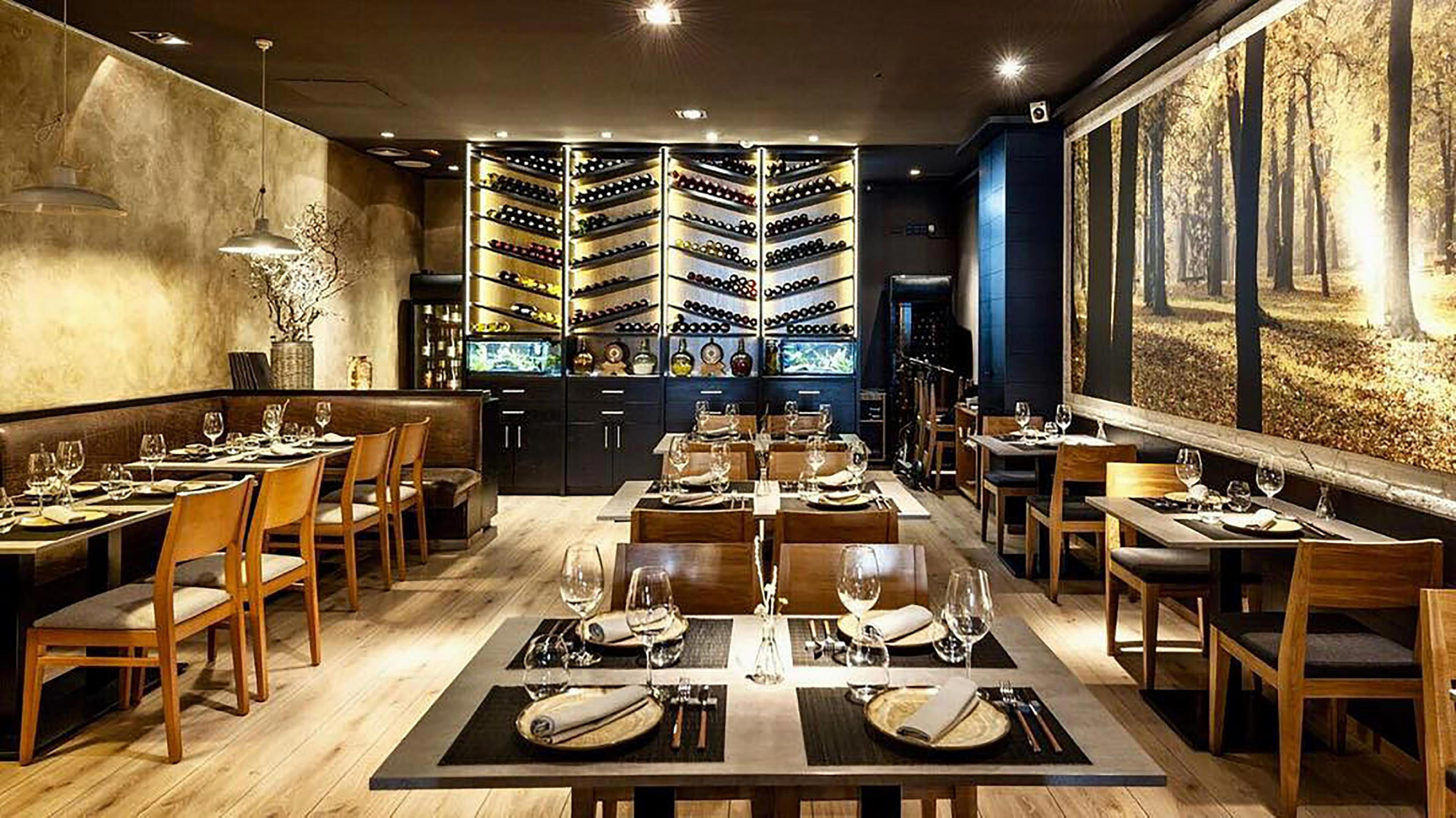
Restaurants in Barcelona
Browse all →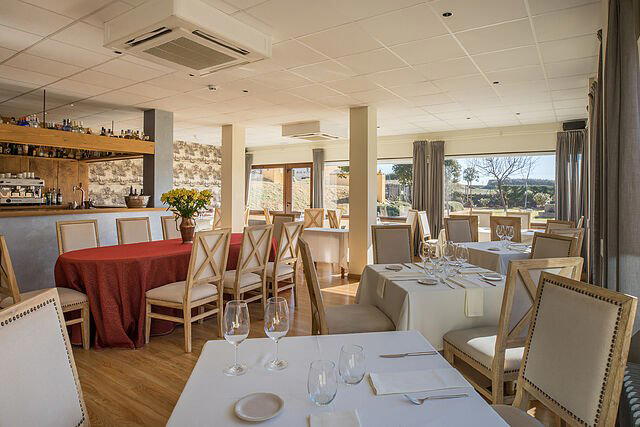
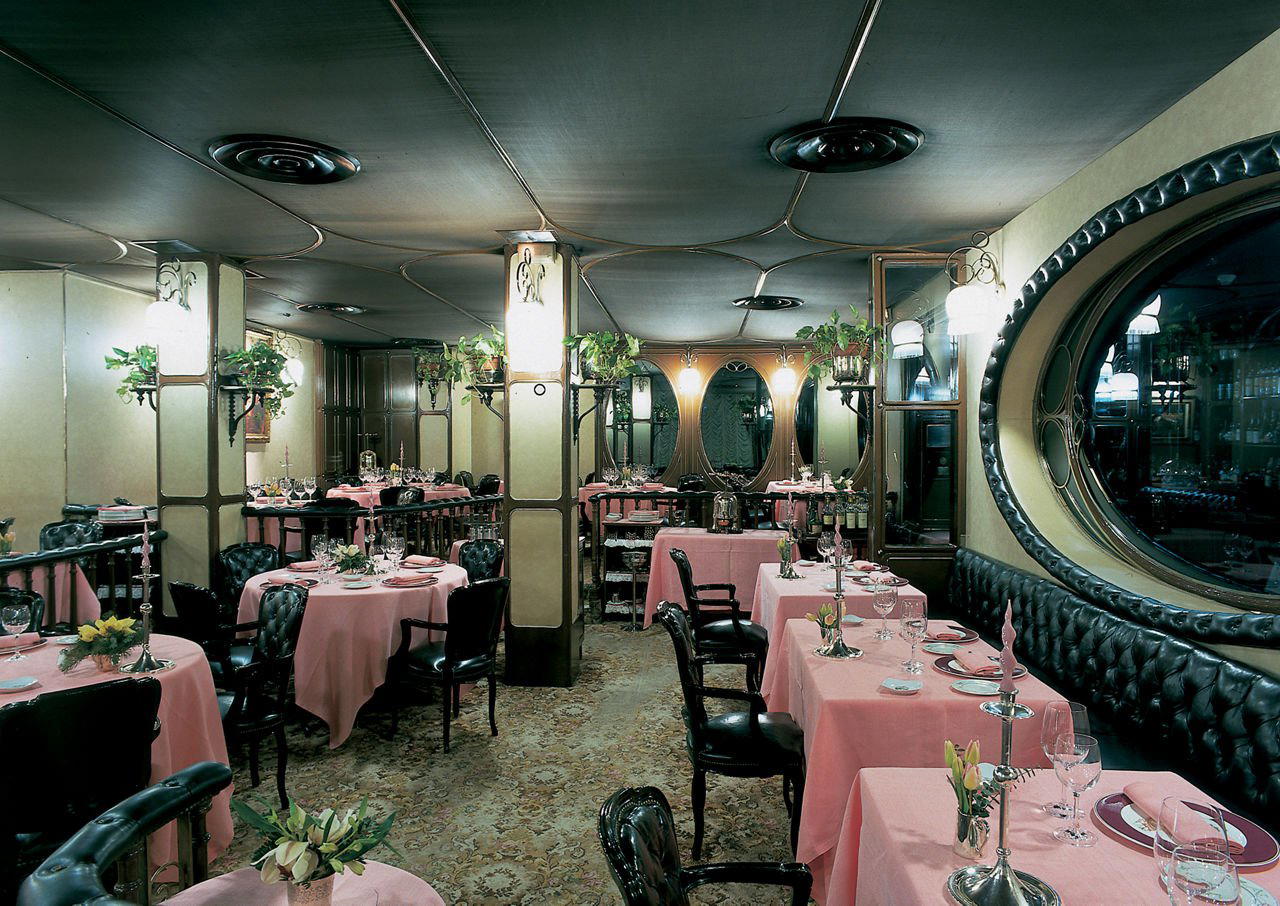
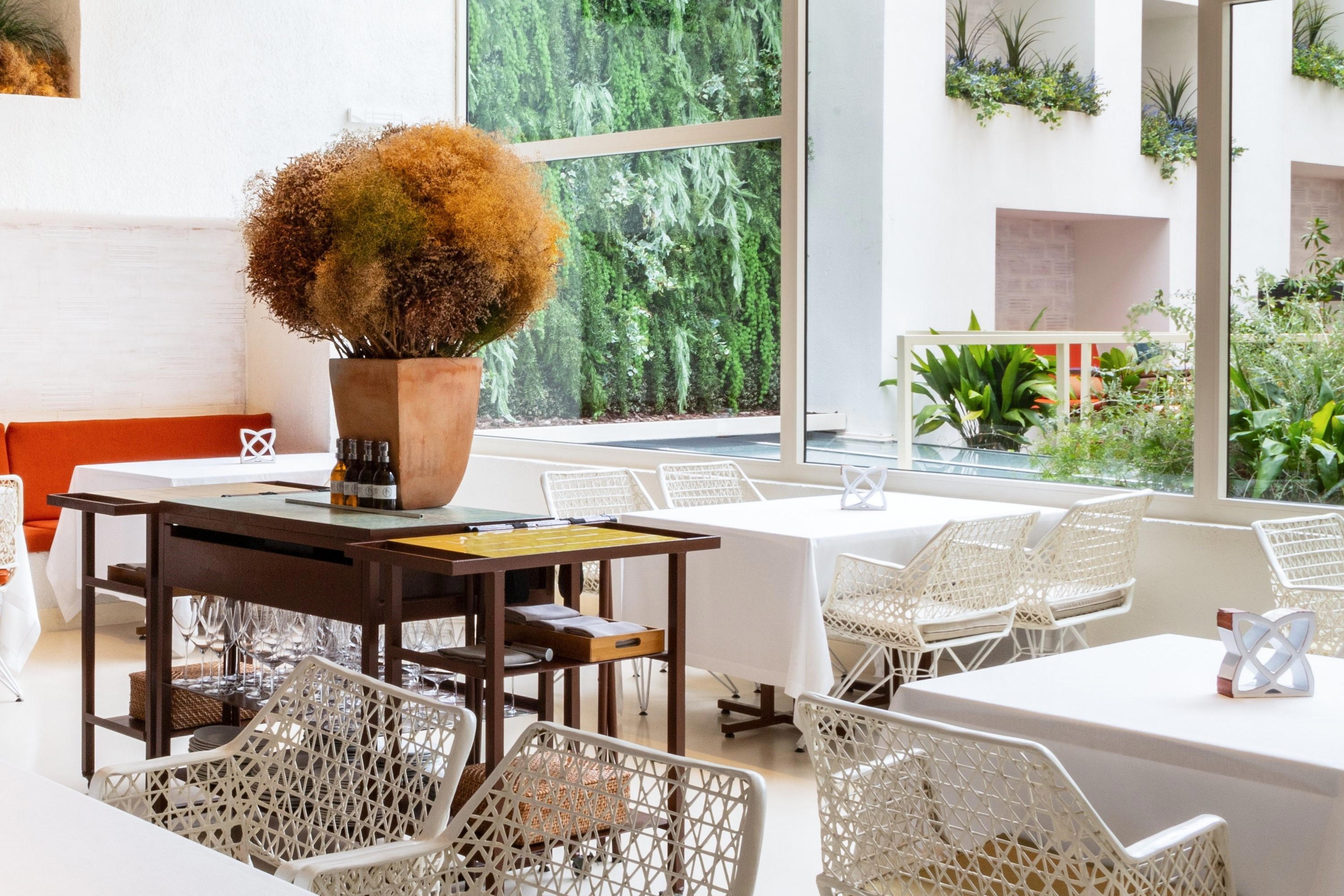
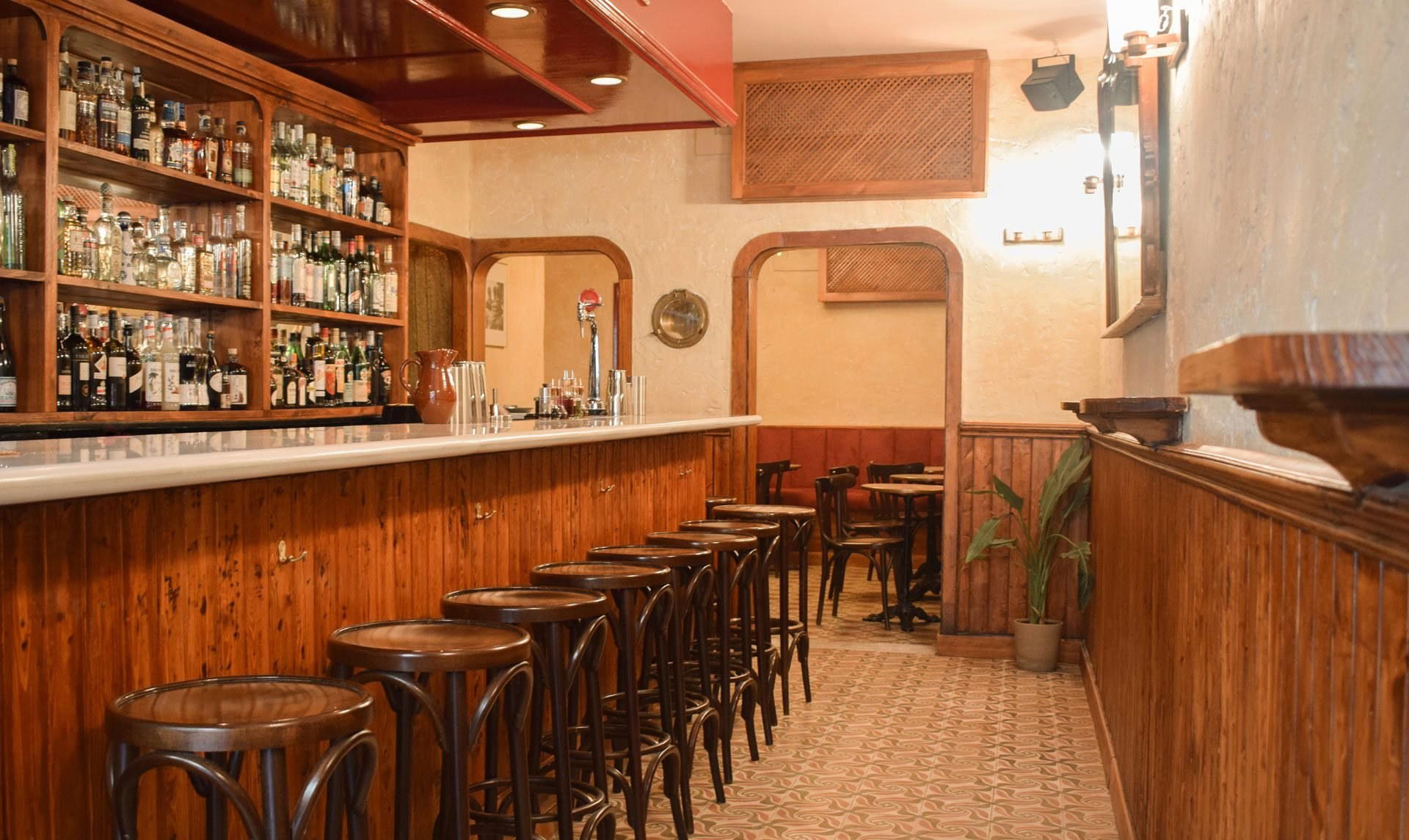
Bars in Barcelona
Browse all →
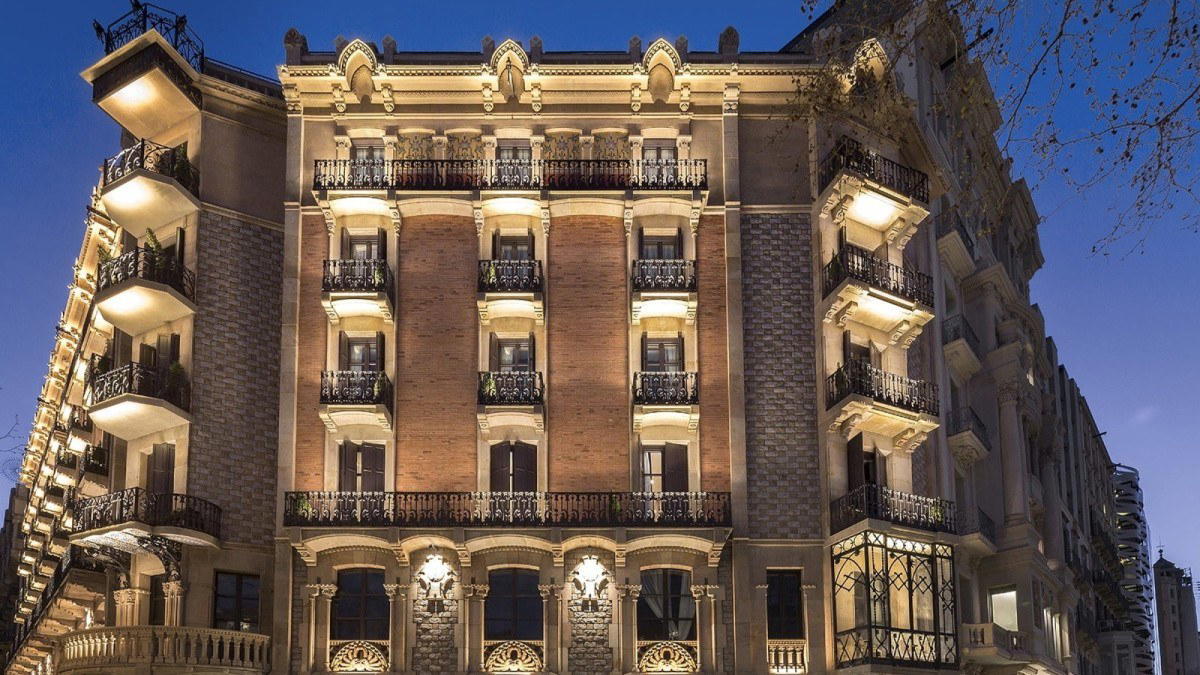
Hotels in Barcelona
Browse all →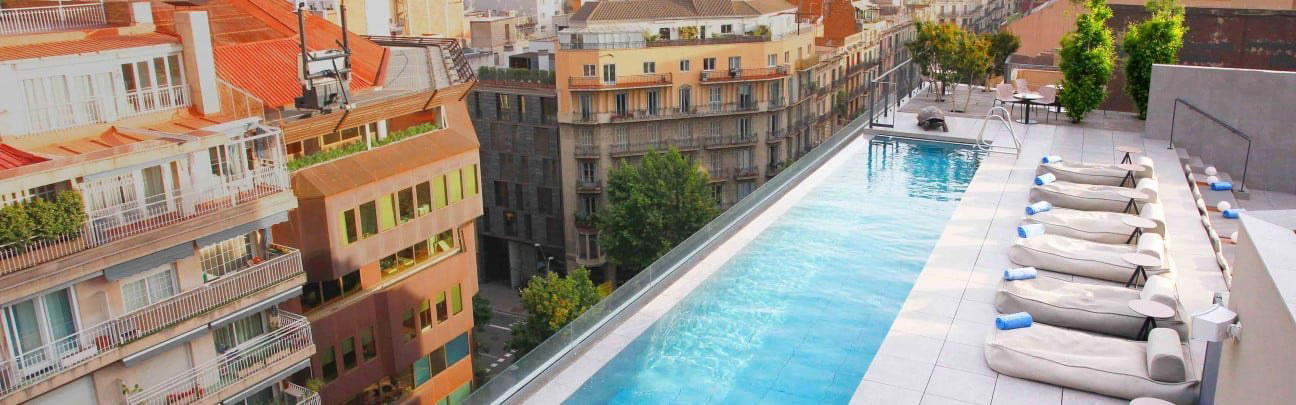
At a Glance
- Modern
- Lively
- Elegant
- Trendy
- Casual Hangout
- Group Dining
- After Work
- Brunch
- Terrace
- Live Music
- Craft Cocktails
- Street Scene
Current opening hours
- Monday
- 9 AM–12 AM
- Tuesday
- 9 AM–12 AM
- Wednesday
- 9 AM–12 AM
- Thursday
- 9 AM–12:30 AM
- Friday
- 9 AM–1 AM
- Saturday
- 9 AM–1 AM
- Sunday
- 10 AM–12 AM
Hours can change for holidays and private events. Last verified .
Sophisticated and modern atmosphere with elegant decor resembling a New York saloon, featuring live music and DJ sets.