SALOOT Kebap operates out of Billrothstraße 24 in Vienna's 19th district, bringing the kebap tradition to one of the city's quieter, residential quarters. Where Vienna's fine-dining circuit gravitates toward modern Austrian tasting menus, SALOOT represents the other register: direct, culturally rooted, and neighbourhood-scaled. A reference point for those tracing the city's broader culinary geography beyond the Innere Stadt.
Pearl is the En Primeur Club membership app — saves, bookings, and concierge access live there. Same editors, same standards.
- Address
- Billrothstraße 24, 1190 Wien, Austria
- Phone
- +436766727258
- Website
- saloot-kebap.at
- Directions
- Get directions
 Saves & bookings on Pearl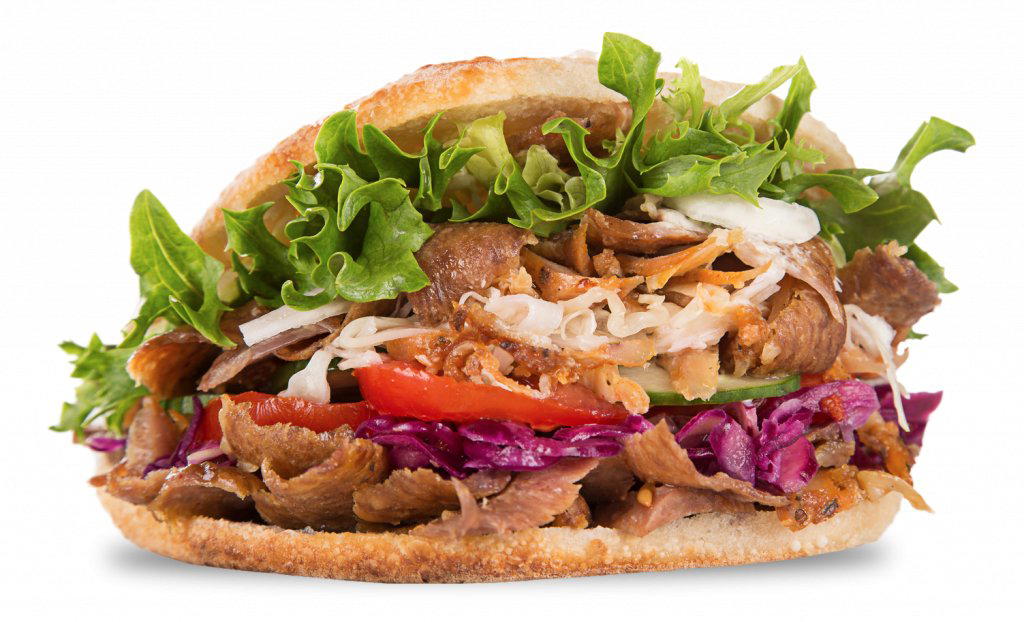
Kebap in Vienna: A Tradition the Fine-Dining Circuit Ignores
Vienna's restaurant conversation tends to orbit a familiar cluster: the creative Austrian tasting menus at Steirereck im Stadtpark, the modernist precision of Konstantin Filippou, the boundary-pushing work at Mraz & Sohn. That conversation is legitimate, but it accounts for a narrow band of how Vienna actually eats. The kebap counter, immigrant-rooted, neighbourhood-scaled, operating outside the Michelin economy entirely, has been part of the city's food fabric since the 1960s and 1970s, when significant Turkish and Kurdish migration began reshaping the culinary geography of Central European cities. Vienna absorbed that wave early, and the kebap has since moved from novelty to institution across its residential districts.
SALOOT Kebap, on Billrothstraße in the 19th district (Döbling), sits in that tradition. The 19th is not where tourists arrive by default: it is a residential, relatively affluent quarter known for its Heuriger wine taverns and detached villa streets. A kebap house here is not serving transit foot traffic. It is serving a local clientele, which sets a different baseline for quality expectation and repeat-visit accountability.
The Cultural Architecture of the Kebap Form
To understand what SALOOT Kebap represents, it helps to understand what the kebap form is and is not. The döner kebap as commonly served in Central Europe is a post-migration creation: meat seasoned and stacked on a vertical rotisserie, shaved to order, served in bread with vegetables and sauce. Its origins trace to Berlin and Vienna in the 1970s, where Turkish workers adapted Anatolian grilling traditions to a fast, portable format suited to the European street-food market. The form spread rapidly, and by the 1980s it had become among the more consumed ready-to-eat dishes across German-speaking Europe.
What distinguishes the better operators within this category is not reinvention but fidelity: quality of meat sourcing, rotisserie management, bread freshness, and sauce calibration. These are craft variables, not theatrical ones. The kebap counter has no tasting menu to hide behind, no wine program to pad the check, no plating language to signal ambition. The product is the argument. This is, in culinary terms, a demanding format, closer to the discipline of a great ramen-ya or a serious charcuterie counter than to casual dining.
Vienna's kebap scene has evolved along those lines in recent years, with a growing cohort of operators competing on sourcing and technique rather than price alone. The city's position as a transit and settlement hub for communities from Turkey, the Balkans, and the broader Middle East has produced a market with genuine knowledge and expectation. That context gives places like SALOOT Kebap a different kind of accountability than a tourist-facing operation would face.
Döbling as Dining Territory
The 19th district's food scene is less documented than the 1st, 7th, or 9th, but it sustains a range of neighbourhood operators across cuisines. The area's Heuriger tradition, wine taverns serving cold buffet plates of local produce alongside open wines, remains the dominant culinary identity. But the residential density and relatively high disposable income of the district's population support a wider range of formats than the Heuriger alone.
A kebap house at this address, on a residential street in Döbling, positions itself as a local fixture rather than a destination import. That geography matters for the reader deciding how to frame a visit: this is not a pilgrimage spot tucked inside a tourist circuit. It is a neighbourhood restaurant operating in the register of the everyday, which in the kebap category is where consistent cooking tends to live. The operators who depend on repeat local custom, rather than rotating tourist traffic, have the stronger structural incentive to maintain quality across seasons.
For context on Vienna's broader dining range, from the neighbourhood-scaled to the Michelin-decorated, the full Vienna restaurants guide maps the city's eating across price tiers and districts. Elsewhere in Austria, the fine-dining register is represented by operations including Döllerer in Golling an der Salzach, Ikarus in Salzburg, and Obauer in Werfen, a different register entirely, but useful for understanding the range the country's restaurant culture spans.
Where SALOOT Kebap Sits in the Category
Vienna's kebap market is fragmented: dozens of operators across the city's districts, ranging from late-night takeaway windows to sit-down restaurants with expanded menus. The 19th district location positions the restaurant toward the neighbourhood-restaurant end of that spectrum rather than the high-volume city-centre end. This distinction usually correlates with a calmer service tempo and a menu that may extend beyond the basic döner format into broader kebap and grilled meat territory.
Comparable neighbourhood-scaled operations in other European cities tend to develop loyal local followings that sustain them across years without requiring either the footprint or the marketing infrastructure of a chain. Vienna's residential districts have supported this model consistently. For readers who follow the European kebap category with the same seriousness they bring to, say, tracking the natural wine bar scene or the ramen counter circuit, Döbling's quieter operators are worth noting.
The broader fine-dining context in Vienna, represented by venues like Amador, Doubek, and the creative tasting menus at Mraz & Sohn, operates in a fundamentally different economic and gastronomic register. But both registers belong to the same city food system, and understanding one without the other produces an incomplete picture of where Vienna eats.
For international reference points on how cities absorb and refine immigrant food traditions at scale, Atomix in New York City represents one trajectory (Korean fine dining refined to tasting-menu format), while Le Bernardin illustrates how a transplanted culinary tradition can anchor itself in a city's upper tier. The kebap counter sits at a different point on that arc, closer to origin, less mediated by fine-dining convention, but the cultural mechanics are comparable.
Austria's regional fine-dining circuit extends well beyond Vienna: Griggeler Stuba in Lech, Gourmetrestaurant Tannenhof in Sankt Anton am Arlberg, Kräuterreich by Vitus Winkler in Sankt Veit im Pongau, Landhaus Bacher in Mautern an der Donau, Schwarzer Adler in Hall in Tirol, Restaurant 141 by Joachim Jaud in Mieming, and Ois in Neufelden each anchor a different regional food identity. The country's culinary range is wider than its star-driven tasting-menu count suggests.
Know Before You Go
- Address: Billrothstraße 24, 1190 Wien, Austria
- District: Döbling (19th), Vienna
- Category: Kebap / neighbourhood restaurant
- Booking: Recommended
- Price range: About $10 per person
- Hours: Mon-Sun 8:00 AM-10:00 PM
Cost Snapshot
Comparable venues nearby, for context on price, style, and recognition.
| Venue | Cuisine | Price | Notes |
|---|---|---|---|
| SALOOT KebapThis venue — the venue you are viewing | Doebling, Turkish Kebab & Street Food | $ | Not listed |
| Kurze Pause | Not listed | $ | Brigittenauer Brucke, Turkish Kebab & Pizza |
| Has Döner | Gaudenzdorf, Turkish Döner Kebab | $ | Not listed |
| FERHAT DÖNER | Favoriten, Authentic Turkish Döner Kebab | $ | Not listed |
| Die Döneria | Inner City, Turkish Döner Kebab | $ | Not listed |
| Nar | Not listed | $$ | Rudolfsheim, Turkish & Levantine Kebab House |
Continue exploring
More in Vienna
Restaurants in Vienna
Browse all →
Bars in Vienna
Browse all →
Hotels in Vienna
Browse all →


At a Glance
- Lively
- Trendy
- Casual Hangout
Current opening hours
- Monday
- 8 AM–10 PM
- Tuesday
- 8 AM–10 PM
- Wednesday
- 8 AM–10 PM
- Thursday
- 8 AM–10 PM
- Friday
- 8 AM–10 PM
- Saturday
- 8 AM–10 PM
- Sunday
- 8 AM–10 PM
Hours can change for holidays and private events. Last verified .
Casual fast-food atmosphere focused on quick, fresh preparations.