Michelin Bib Gourmand
Our verdict
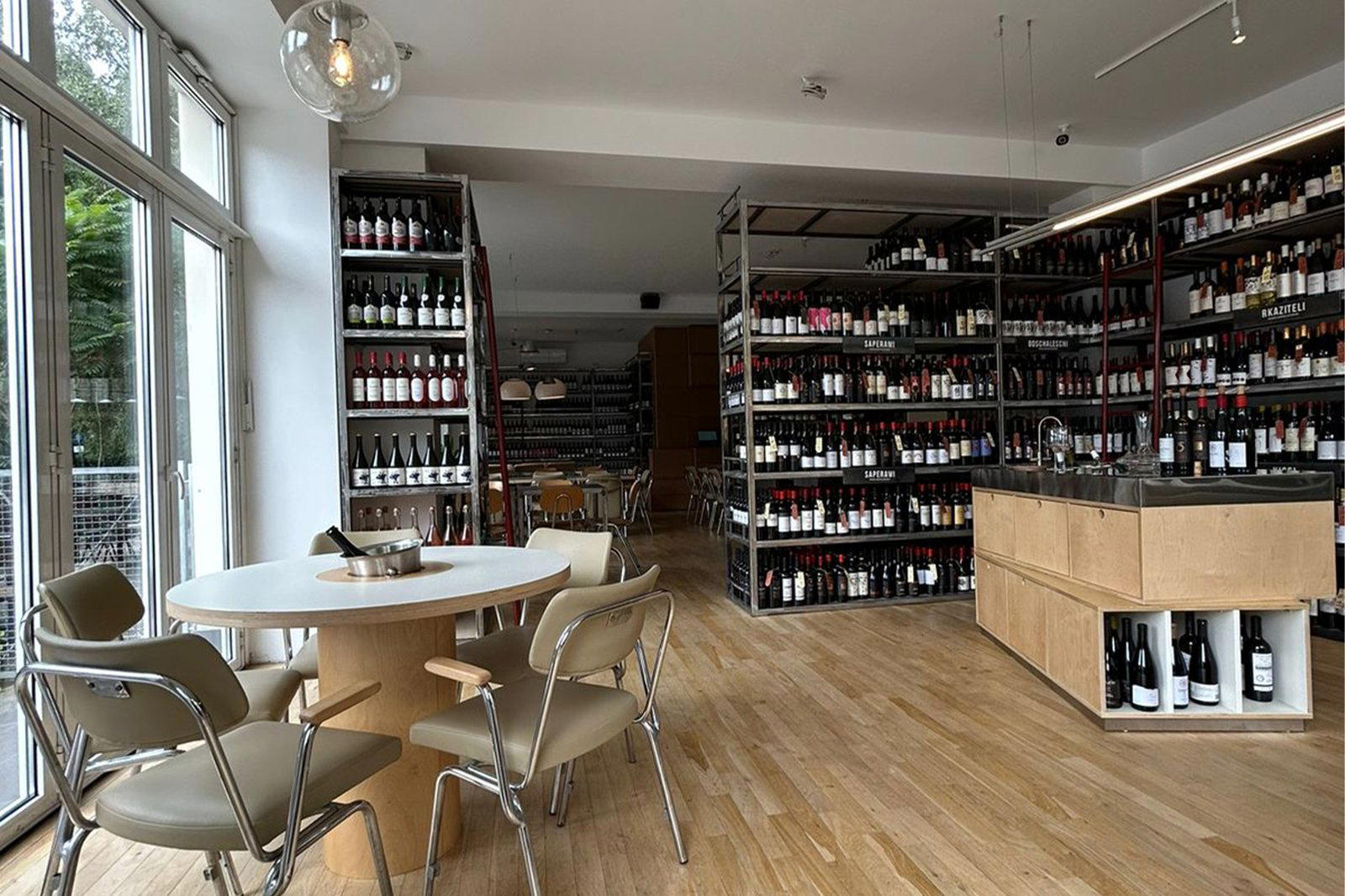
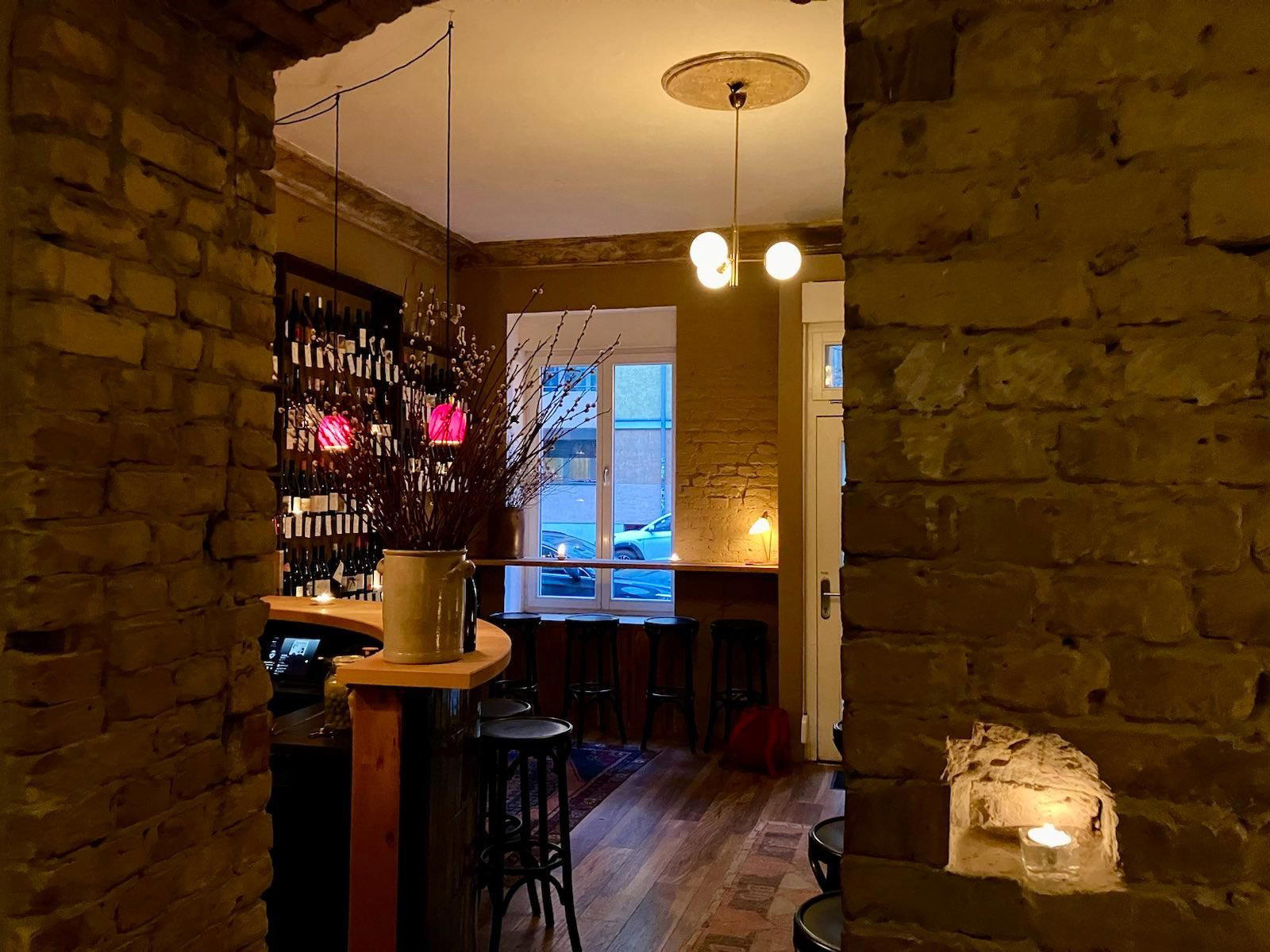
Salhino occupies a corner address in Berlin's Charlottenburg district, on Waitzstraße in the 10629 postcode that sits closer to the residential calm of Wilmersdorf than to the city's more theatrical dining corridors. With Berlin's serious restaurant scene increasingly defined by tasting-menu formality and Michelin ambition, Salhino represents the quieter register of the city's dining culture, worth knowing about precisely because it operates outside the usual recognition circuits.

Pearl is the En Primeur Club membership app, where members save venues, book tables and use the concierge.
A Corner of Charlottenburg That Dining Guides Tend to Skip
Waitzstraße runs through one of Berlin's more composed residential pockets, a few blocks west of Kurfürstendamm where the avenue's commercial noise gives way to apartment buildings, neighbourhood grocers, and the kind of address that doesn't announce itself. Salhino sits at number one on that street, a position that, in most European cities, would place a restaurant in the middle of a scene. Here, it places it at a remove from one, which is precisely the point. Berlin's dining culture has spent the last decade sorting itself into two legible tiers: the Michelin-tracked tasting-menu circuit that runs through places like Rutz, FACIL, and Nobelhart & Schmutzig, and a looser, neighbourhood-anchored layer that operates on different terms altogether. Salhino belongs to the second register.
The Ritual Before the Food Arrives
In many European cities, the pacing of a meal, how long you are expected to sit, how many covers the room turns in an evening, whether the menu moves at your speed or the kitchen's, tells you more about a restaurant's identity than the cuisine type does. Berlin's Charlottenburg has historically supported a more deliberate dining rhythm than, say, Mitte or Prenzlauer Berg. The neighbourhood draws an older, more established residential crowd, and restaurants here tend to reflect that: longer evenings, less pressure to clear the table, a format closer to the Central European tradition of the meal as an extended social event rather than a production to be orchestrated and concluded. Salhino, at its Waitzstraße address, sits inside that tradition. The address alone signals something about pace and expectation before a dish is served.
This is worth contrasting with what Berlin's headline dining scene has moved toward. The €€€€-tier operations, CODA Dessert Dining, for instance, with its dessert-anchored tasting format, or FACIL's contemporary European approach inside the Mandala Hotel, are built around controlled sequencing, where the kitchen dictates the tempo. The neighbourhood restaurant format that Salhino appears to occupy offers a different compact with the guest: the meal unfolds more conversationally, and the kitchen's role is to support an evening rather than to choreograph one.
Where Charlottenburg Sits in Berlin's Dining Geography
Understanding why Salhino's location matters requires a brief account of how Berlin's restaurant geography actually works. The city does not have a single dominant dining district in the way that, say, London's Mayfair or Tokyo's Ginza concentrate premium dining into a walkable zone. Berlin's serious kitchens are distributed: Restaurant Tim Raue operates near Checkpoint Charlie in Mitte; Nobelhart & Schmutzig anchors Friedrichstraße; FACIL is embedded in a Potsdamer Platz hotel. Charlottenburg, by contrast, was West Berlin's commercial centre before reunification and has since settled into a more subdued identity, wealthier and quieter than the eastern districts that dominate the city's contemporary cultural narrative, and therefore somewhat overlooked by the food press that gravitates toward newer, more aggressively positioned openings.
That geographical context matters for Salhino. A restaurant on Waitzstraße is not making a bid for the same attention as one on Invalidenstraße or in a Mitte courtyard. It is, instead, part of a neighbourhood's daily life, a different kind of ambition, and one that German dining culture has historically valued. Germany's broader fine-dining geography rewards this kind of deliberate regional or neighbourhood specificity: venues like Waldhotel Sonnora in Dreis or Schanz in Piesport have built serious reputations precisely by operating outside urban dining hubs rather than within them.
What the Absence of Data Signals
The same pattern appears elsewhere in Germany's dining culture. Venues like Bagatelle in Trier or JAN in Munich sit in the documented tier; the equivalent neighbourhood operations in those cities often do not. That gap between the documented and the undocumented is not necessarily a quality judgment, it is a function of which venues invest in formal recognition infrastructure and which do not.
Salhino in the Broader German Fine-Dining Frame
Germany's serious restaurant culture is, by international standards, more geographically dispersed than its reputation suggests. Three-Michelin-star operations like Aqua in Wolfsburg, Victor's Fine Dining by Christian Bau in Perl, and Schwarzwaldstube in Baiersbronn operate far from any major urban centre. Hamburg's Restaurant Haerlin and the Bergisch Gladbach address of Vendôme follow a similar pattern. Berlin, for all its cultural visibility, does not dominate Germany's Michelin map in the way that Paris dominates France's or London dominates the UK's. This creates space for Berlin neighbourhood restaurants to exist and function without competing directly against the country's most recognised kitchens. Salhino operates in that space. For international reference points on what a committed tasting-menu counter looks like at its most rigorous, Atomix in New York City and Le Bernardin sit at the opposite end of the documentation and recognition spectrum, useful for calibrating where Berlin's neighbourhood tier sits by contrast. Similarly, ES:SENZ in Grassau illustrates how destination dining in Germany can anchor itself to a specific landscape rather than a city address.
Planning a Visit
Frequently asked questions
What part of town is Salhino in?
Salhino is located at Waitzstraße 1, 10629 Berlin, Germany, Berlin.
Is Salhino in Berlin suitable for a sit-down dinner, and how does its Charlottenburg location compare to other Berlin dining districts?
Salhino sits at Waitzstraße 1 in Charlottenburg, a district that historically anchored West Berlin's civic and commercial life and still carries a more settled, less trend-driven character than Mitte or Neukölln. Berlin's restaurant geography is unusually decentralised, no single district monopolises serious cooking, which means a Charlottenburg address carries neighbourhood credibility without the scene pressure of the city's more photographed quarters.
What dish is Salhino famous for?
The absence of a documented kitchen identity is itself notable, venues that generate no public menu trail in Berlin's heavily covered dining scene typically operate at a deliberately local scale. Visiting without expectations shaped by press coverage is, in this case, the honest approach.
How hard is it to get a table at Salhino?
No booking policy, reservations platform, or phone number is listed for Salhino at Waitzstraße 1, 10629 Berlin. In Charlottenburg's residential pocket west of Kurfürstendamm, smaller rooms often operate on walk-in or direct contact only. Arriving in person to gauge capacity and ask about availability is the most reliable approach given the current absence of public booking infrastructure.
What is Salhino known for?
Salhino's address on Waitzstraße places it in one of Charlottenburg's quieter residential stretches, a part of Berlin that dining guides rarely prioritise relative to Mitte or Prenzlauer Berg. Without documented awards, a named chef, or a published cuisine type, its local reputation appears to operate outside formal critical channels. That positioning, sustained without press support in a city with a competitive restaurant scene, is a signal worth taking seriously.
Recognition Snapshot
Comparable venues nearby, for context on price, style, and recognition.
| Venue | Cuisine | Price | Awards | Notes |
|---|---|---|---|---|
| SalhinoThis venue (the venue you are viewing) | Authentic Georgian | $20–30 | Michelin Bib Gourmand | Not listed |
| gio´s homemade food | Authentic Georgian | Not listed | Not listed | Kreuzberg |
| Superfoods | Superfood Organic Deli | Not listed | Not listed | Charlottenburg |
| La Cave Prenzlauer Berg | Wine Bar | Not listed | Not listed | Prenzlauer Berg |
| Kanal61 | Modern Bistro Sharing Plates | Not listed | Not listed | Kreuzberg |
Recognition history
Dated appearances from independent guides and award organizations, with the underlying list record or original source where available.
Michelin Bib Gourmand
Michelin