Sakura
Our verdict
Sakura sits on Main Street in Walpole, MA, representing the kind of neighborhood Japanese restaurant that anchors suburban dining in New England. With limited publicly verified data available, the full picture emerges best through a visit or direct inquiry at 691 Main St, Walpole, MA 02081. See our Walpole guide for broader context on the local dining scene.

Pearl is the En Primeur Club membership app — saves, bookings, and concierge access live there. Same editors, same standards.
- Address
- 691 Main St, Walpole, MA 02081
- Phone
- (508) 660-1870
- Hours
- Mon–Thu 11 AM–9:30 PMFri–Sat 11 AM–10:30 PMSun 11:45 AM–9:30 PM
- Website
- sakurawalpolema.com
- Directions
- Get directions
- Booking
- Book on OpenTable
The menu
What to order
- General Gau's Chicken
- Crab Rangoon
- Fresh Sushi Rolls
- Poke Bowl
- Ramen
Japanese Dining in Suburban New England: Where Sakura Sits
Main Street addresses in small Massachusetts towns carry a particular kind of dining logic. The restaurants that survive on them tend to do so by becoming genuinely useful to their communities, not by chasing trends from Boston's South End or Cambridge's Kendall Square. Sakura, at 691 Main St in Walpole, MA, occupies that kind of position: a Japanese restaurant in a town where the dining options are selective and the regulars return because the room feels familiar and the food earns their loyalty over years, not single visits.
Japanese cuisine in suburban America occupies a complicated cultural position. At its thinnest, it collapses into a sushi-and-teriyaki checklist calibrated for the widest possible audience. At its most considered, even a modest neighborhood operation can reflect genuine craft traditions: the precision of rice preparation, the sourcing discipline behind raw fish, the patience embedded in stock-based dishes that reward slow cooking. The difference between those two versions of a Japanese restaurant is usually felt more than seen, and it becomes clear quickly to anyone who eats Japanese food with any regularity.
Walpole is not a dining destination in the way that a Boston neighborhood commands attention, but that is not the relevant comparison. The relevant frame is what the town's dining options offer residents who want something beyond chain-restaurant defaults. For that audience, a well-run Japanese restaurant on Main Street is a meaningful anchor. Our full Walpole restaurants guide covers the broader local picture, including Kosmos, which represents a different point on the town's dining spectrum.
The Cultural Weight Behind the Cuisine
Japanese cuisine carries one of the most codified culinary traditions in the world. The Japanese government has formally sought UNESCO recognition for washoku, the traditional dietary culture, and that institutional seriousness reflects something real about how food functions in Japanese cultural life. Seasonality is not a marketing concept in that tradition; it is an organizing principle. The appearance of a particular fish or vegetable at a particular moment in the year has genuine weight, and kitchens that take the tradition seriously structure their menus accordingly.
That context matters when thinking about what a Japanese restaurant outside Japan is actually doing. The leading American interpretations, whether at the counter-format omakase operations in Manhattan or the more accessible neighborhood spots in smaller cities, share a common thread: they treat the sourcing and preparation of ingredients as the point, rather than the décor or the presentation theater. Restaurants like Atomix in New York City demonstrate what happens when Korean culinary tradition receives similarly serious treatment in an American context, earning recognition precisely because the cultural roots were honored rather than flattened for accessibility.
The broader American fine dining conversation includes venues across very different registers: Le Bernardin in New York City, Alinea in Chicago, The French Laundry in Napa, Lazy Bear in San Francisco, Providence in Los Angeles, Blue Hill at Stone Barns in Tarrytown, Addison in San Diego, The Inn at Little Washington, Single Thread Farm in Healdsburg, Bacchanalia in Atlanta, and Emeril's in New Orleans. That tier operates at price points and with institutional recognition that places it in an entirely separate competitive set from a Main Street neighborhood restaurant in a Massachusetts suburb. The comparison is useful not to diminish Sakura but to clarify what it is: a community-scale operation where the measure of quality is consistency and value relative to local alternatives, not alignment with a national awards circuit.
What to Expect from the Room and the Experience
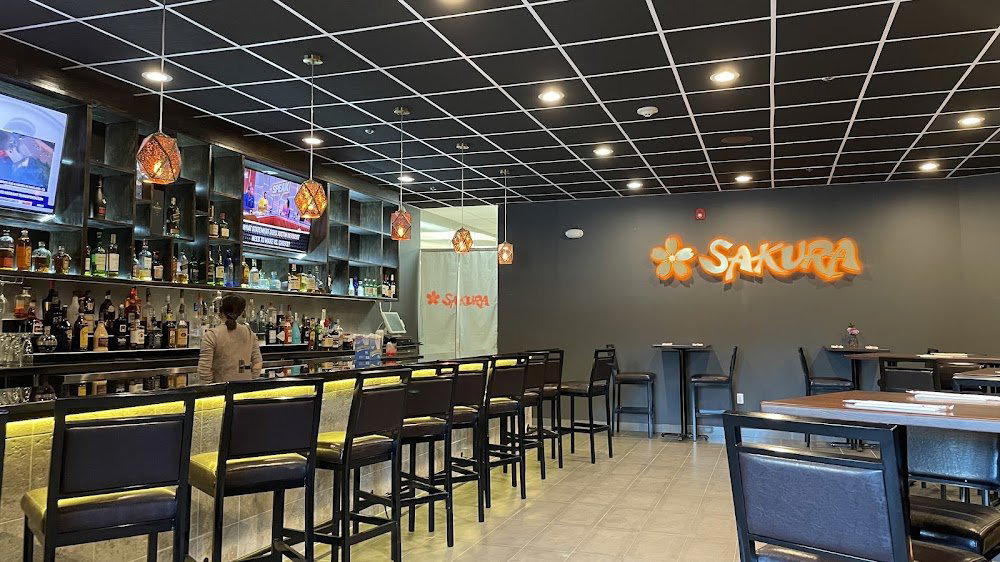
What can be said is that Japanese restaurants of this scale and location type in New England typically run compact dining rooms, often with a sushi bar as the operational and visual anchor. The sushi bar format is itself a cultural artifact: it creates a direct relationship between the kitchen and the diner that is relatively rare in Western dining formats, and in skilled hands it functions as a kind of transparency that rewards attention.
Diners approaching a neighborhood Japanese restaurant in this context should arrive with a practical orientation. The value proposition is usually found in the kitchen's core competencies rather than in extensive or elaborate preparations. Sashimi quality, the condition of the rice, and the balance of a direct miso-based broth are better indicators of a kitchen's seriousness than an ambitious special or an elaborate roll constructed for visual impact. Other American venues working in adjacent cultural territory, such as Causa in Washington, D.C. or Brutø in Denver, show that regional and cultural specificity at any scale can be a genuine differentiator when applied with consistency.
Planning a Visit to Sakura
Sakura is located at 691 Main St, Walpole, MA 02081. For those traveling from greater Boston, Walpole is accessible via the MBTA Franklin/Foxboro commuter rail line, making it a reasonable destination for suburban dining without requiring a car. The address sits on Main Street, which is walkable from the Walpole station. Given the limited dining options in the immediate area, arriving with a reservation or calling ahead is the practical approach, particularly on weekend evenings when local demand concentrates.
For broader regional context, Frasca Food and Wine in Boulder and 8½ Otto e Mezzo Bombana in Hong Kong represent how cuisine rooted in specific traditions can translate across geographies when the underlying craft discipline travels with it. That is ultimately the question any culturally rooted restaurant, at any scale, has to answer for its own audience.
Frequently asked questions
Is Sakura a family-friendly restaurant?
Japanese restaurants on suburban Main Street corridors like Walpole's tend to draw a broad cross-section of diners, including families. Sakura's 691 Main St address places it in a walkable town-center setting that typically supports casual, multi-generational visits.
Is Sakura in Walpole worth the drive from Boston?
Walpole sits roughly 22 miles southwest of Boston along the Route 1A and I-95 corridor, making Sakura a reasonable destination for South Shore and suburban commuters rather than a cross-city trip. Japanese restaurants embedded in small New England town centers often build loyalty through consistency and value rather than culinary spectacle. Whether the drive makes sense depends on what the current menu and pricing deliver, neither of which is confirmed in verified data at this time.
What dish is Sakura famous for?
No specific signature dish is confirmed in verified records for Sakura. The restaurant serves Japanese cuisine at 691 Main St in Walpole, MA, and the full menu scope is best confirmed directly with the venue before visiting.
Booking and Cost Snapshot
Comparable venues nearby, for context on price, style, and recognition.
| Venue | Cuisine | Price | Notes |
|---|---|---|---|
| SakuraThis venue — the venue you are viewing | Modern Japanese & Chinese Fusion | $20–30 | Not listed |
| Kosmos | Modern Greek | $30–50 | Walpole, Modern Greek |
| Shojo | Modern Asian Fusion | $30–50 | Chinatown, Modern Asian Fusion |
| 3 Restaurant | American Barbecue | Not listed | Downtown Franklin, American Barbecue |
| Fuji at Newton | Modern Upscale Japanese | $30–50 | Newtonville, Modern Upscale Japanese |
| Prairie Fire | Wood-Fired Italian Pizza and Pasta | Not listed | Coolidge Corner, Wood-Fired Italian Pizza and Pasta |
Continue exploring
More in Walpole
Restaurants in Walpole
Browse all →
Bars in Walpole
Browse all →
Hotels in Walpole
Browse all →
Wineries in Walpole
Browse all →

Details
- Casual
- Modern
- Cozy
- Casual Hangout
- Group Dining
- Family
- Standalone
- Beer Program
- A La Carte
- Counter Dining
- Bubble Tea
- Full Bar
- Gluten Free Options
- Vegetarian Friendly
Current opening hours
- Monday
- 11 AM–9:30 PM
- Tuesday
- 11 AM–9:30 PM
- Wednesday
- 11 AM–9:30 PM
- Thursday
- 11 AM–9:30 PM
- Friday
- 11 AM–10:30 PM
- Saturday
- 11 AM–10:30 PM
- Sunday
- 11:45 AM–9:30 PM
Hours can change for holidays and private events. Last verified .
Relaxed, neighborhood-style dining with casual atmosphere and friendly service.