À la Tête de Lard
On a narrow street in Strasbourg's old town, À la Tête de Lard addresses the question that defines the city's most interesting dining tier: what happens when classical Alsatian ingredients meet technique drawn from outside the region? The address at 3 Rue Hannong places it inside a dense cluster of serious tables, where the competition is pointed and the expectations of a well-travelled clientele are correspondingly high.
Pearl is the En Primeur Club membership app — saves, bookings, and concierge access live there. Same editors, same standards.
- Address
- 3 Rue Hannong, 67000 Strasbourg, France
- Phone
- +33388321356
- Directions
- Get directions
 Saves & bookings on Pearl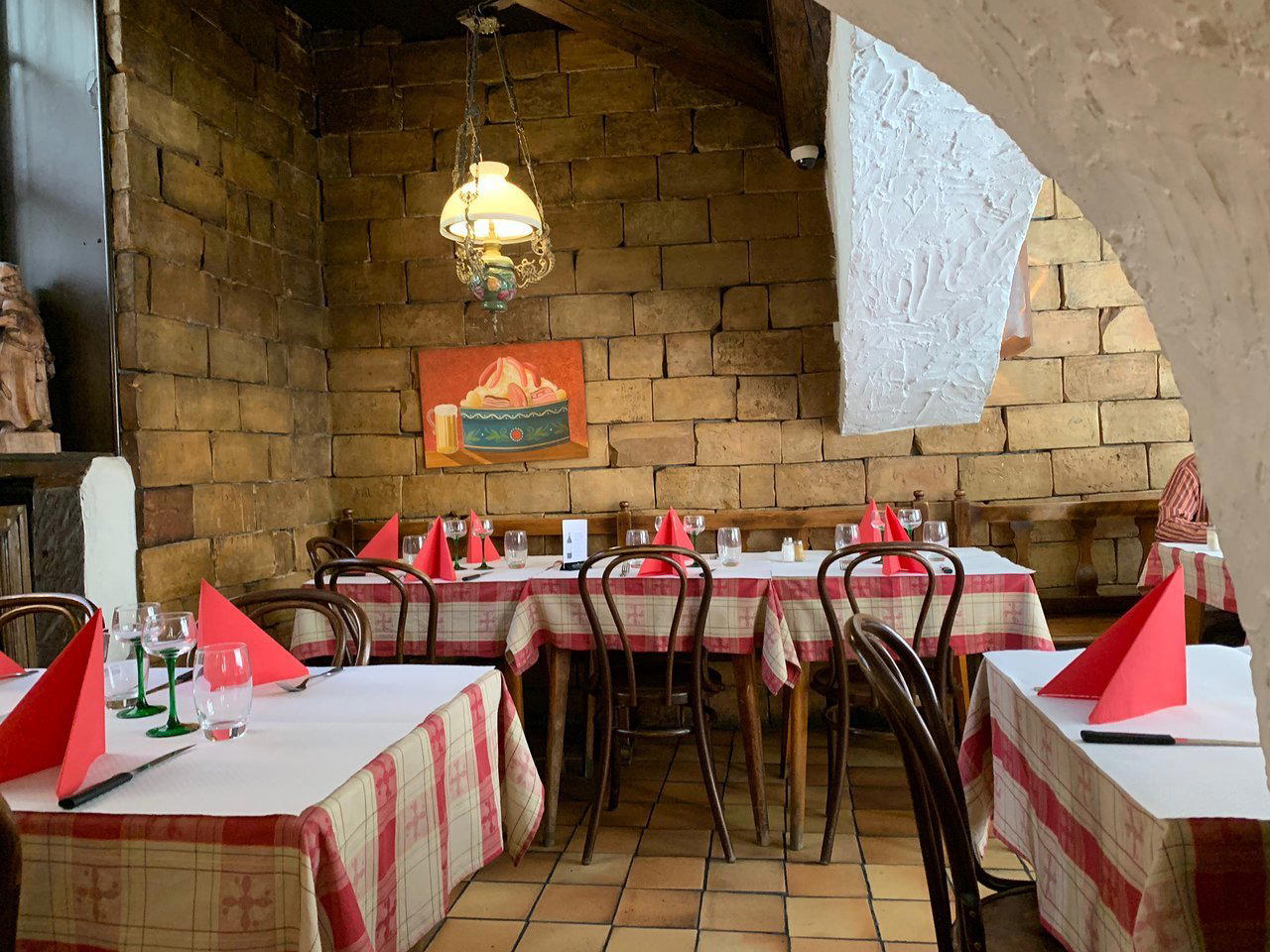
Where Alsace Meets the Kitchen
That name, translating roughly to "the head of lard," signals something deliberate. It is a provocation and a declaration, this kitchen is not distancing itself from Alsatian tradition but working directly through it, at a moment when the more interesting Strasbourg tables are doing exactly that. The address is 3 Rue Hannong, a street in the old city that sits within comfortable reach of the cathedral quarter, where foot traffic is high but the dining scene has enough density to sustain tables operating at different registers.
Strasbourg's serious restaurants often balance regional rootedness with imported method. Au Crocodile, the city's long-standing benchmark for formal Alsatian-modern cooking, operates at the €€€€ tier with a format that inherits from haute cuisine orthodoxy. 1741 and de:ja sit in the creative and modern tiers at comparable price points, each approaching local product with techniques drawn from outside Alsace. À la Tête de Lard enters this conversation from a distinct angle: the name commits to the larder before the method, which is a meaningful editorial stance in a city where the temptation to aestheticize local food into abstraction is real.
Local Ingredients, Borrowed Precision
Alsatian cooking is built on preserved, fatty, and fermented products. Lard, pork fat rendered and stored, is foundational, not decorative. The question in Strasbourg cooking is whether that foundation can carry outside technique without losing its directness. The stronger tables treat local ingredients as primary and technique as instrumental.
This approach has precedent across French regional cooking at the highest level. Auberge de l'Ill in Illhaeusern, the Alsatian three-star that has operated across generations, demonstrated early that classical French technique could work in service of regional ingredients without erasing their character. Further afield, Bras in Laguiole built an entire vocabulary around Aubrac terroir, and Flocons de Sel in Megève has done the same for Alpine product. The operative principle in each case is the same: the region's ingredients set the ceiling, and technique exists to meet it. À la Tête de Lard's positioning suggests alignment with that principle rather than departure from it.
The Scene Around Rue Hannong
The neighbourhood context helps define where this table sits. Rue Hannong falls within Strasbourg's central axis, close enough to the Petite France district and the cathedral to draw visitors but embedded in a part of the city with enough working restaurants to develop its own character. Tables like Les Funambules and Umami operate nearby at the modern cuisine tier, which signals that the immediate area supports a range of serious formats rather than defaulting to tourist-facing winstubs. That density creates a comparative frame: a diner choosing between these tables is making a decision about format, register, and culinary emphasis rather than simply choosing between good and adequate.
Reservations are recommended, especially on Friday and Saturday evenings, and the Christmas market season brings heavier demand from late November through December.
Placing À la Tête de Lard in the French Register
The French table that most closely captures the spirit of working directly through regional fat and preserved product without apology is harder to pin to a single address. Troisgros - Le Bois sans Feuilles in Ouches has spent decades demonstrating that conviction and restraint are compatible at the highest level. Mirazur in Menton operates at the opposite end of the country with a product-first philosophy that treats technique as subordinate to ingredient. These are reference points for understanding the French culinary conversation that a table with the restaurant's apparent orientation is entering, even if the scale and price tier differ substantially.
For readers with a broader frame of reference, the intersection of local ingredient and imported technique is a pattern visible across premium dining internationally. Atomix in New York City applies Korean culinary logic to a fine dining format, and Le Bernardin has sustained a French seafood discipline in an American city for decades. The principle, that a strong culinary identity can absorb technical influence without being diluted by it, travels well. In Strasbourg, the specific version of that principle involves pork fat, fermentation, and a culinary tradition that is German as much as it is French, which gives the regional cooking its particular density and character.
Planning Your Visit
The address at 3 Rue Hannong is in central Strasbourg. Reservations are recommended, particularly for Friday and Saturday evenings. Strasbourg's dining scene peaks in the autumn and winter months, when the regional cooking tradition, built around warming, preserved, and fatty product, aligns most directly with what the season demands. Arriving in that window, between October and early January, means encountering the city's food culture at its most coherent, though the Christmas market period specifically requires hotel and restaurant bookings to be secured well in advance.
Comparable Spots
Comparable venues nearby, for context on price, style, and recognition.
| Venue | Cuisine | Price | Notes |
|---|---|---|---|
| À la Tête de LardThis venue — the venue you are viewing | Traditional Alsatian Winstub | $$ | Not listed |
| Le Bistrot d'Antoine | Traditional French Bistro | $$ | Centre |
| La Cuiller à Pot | Seasonal Alsatian Bistro | $$ | Centre |
| Muensterstuewel | Traditional Alsatian Winstub | $$ | Centre |
| Saint Sépulcre | Traditional Alsatian Winstub | $$ | Centre |
| Zuem Strissel | Traditional Alsatian Winstub | $$ | Centre |
Continue exploring
More in Strasbourg
Restaurants in Strasbourg
Browse all →

Bars in Strasbourg
Browse all →


Hotels in Strasbourg
Browse all →
At a Glance
- Rustic
- Cozy
- Classic
- Casual Hangout
- Date Night
- Historic Building
Current opening hours
- Monday
- 12–2 PM, 6:30–10 PM
- Tuesday
- 12–2 PM, 6:30–10 PM
- Wednesday
- 12–2 PM, 6:30–10 PM
- Thursday
- 12–2 PM, 6:30–10 PM
- Friday
- 12–2 PM, 6:30–10 PM
- Saturday
- 12–2 PM, 6:30–10 PM
- Sunday
- 6:30–10 PM
Hours can change for holidays and private events. Last verified .
Rustic and somewhat dated decor featuring wood paneling, red-and-white Vichy curtains, Soufflenheim pottery on walls, and warm, traditional Alsatian atmosphere.