
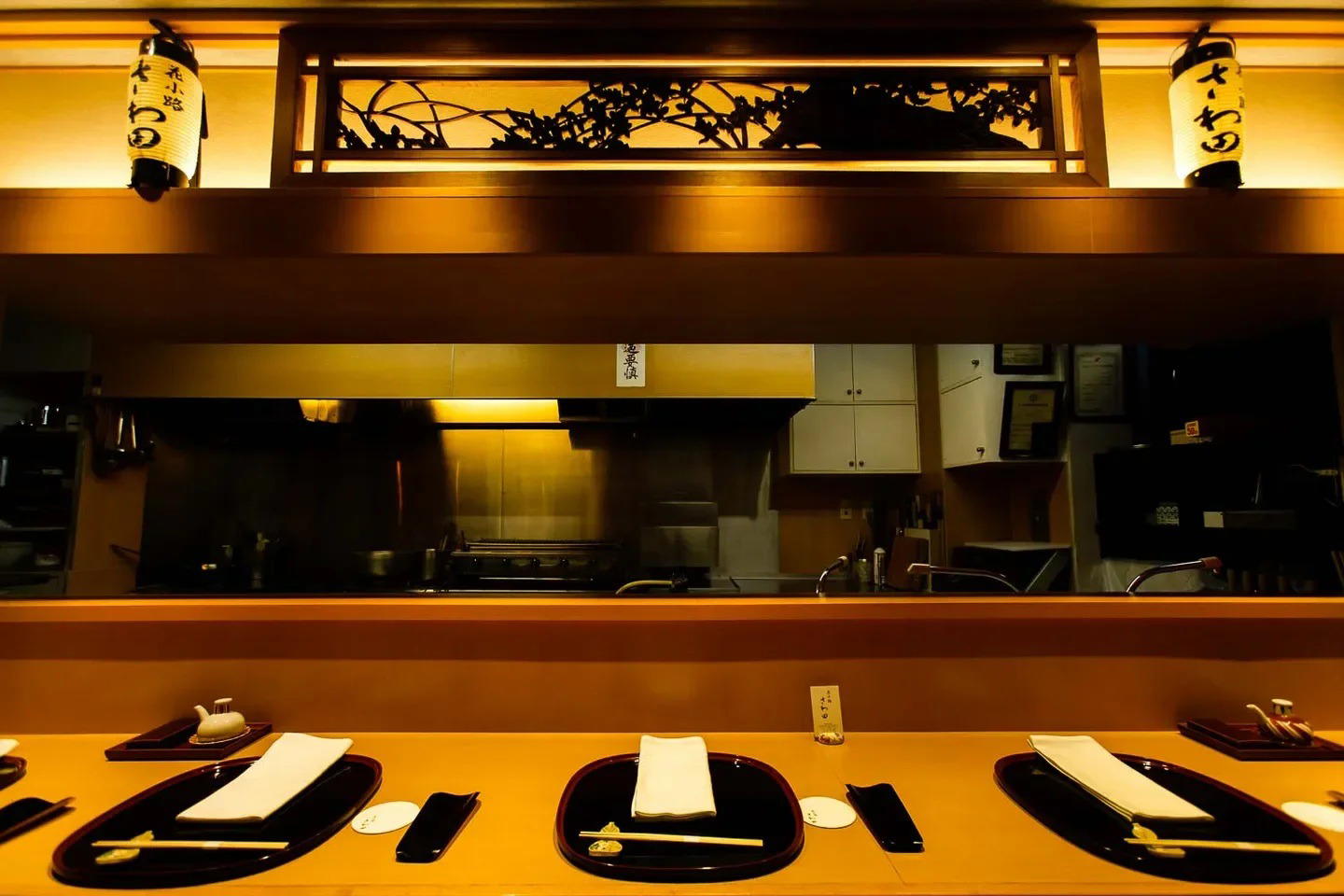
Saiko Gyoza Bo is a compact Kita-Senju izakaya with a dumpling focus, counter seating, and a regulars-first rhythm rather than a polished dining-room script. Its Tabelog 100 Izakaya EAST 2025 selection places it within Tokyo’s serious low-capacity drinking-food culture, where format discipline matters as much as menu ambition.
Pearl is the En Primeur Club membership app — saves, bookings, and concierge access live there. Same editors, same standards.
- Address
- 1 Chome-39 Senju, Adachi City, Tokyo 120-0034, Japan
- Phone
- +81 80-2034-4558
- Website
- arinet.blue.coocan.jp
 Saves & bookings on Pearl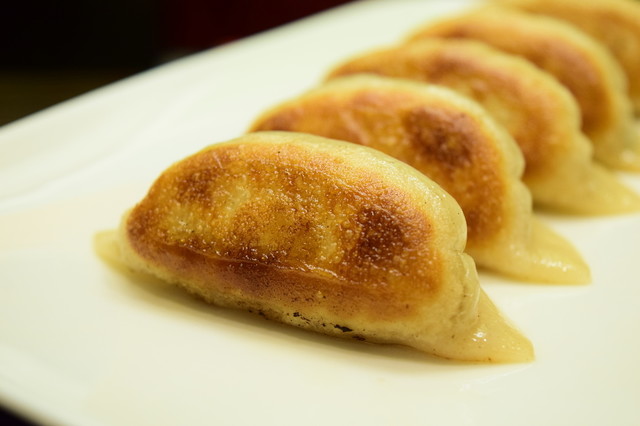
Approaching Kita-Senju after dark, Tokyo changes register. Polished dining gives way to station-side alleys, narrow counters, and drinking rooms built for repeat customers, not spectacle. Saiko Gyoza Bo follows that older izakaya logic: small, rule-bound, and shaped by the assumption that food and alcohol belong to the same evening.
In Tokyo, izakaya can mean chain-store beer halls or serious specialist counters. The stronger version is defined less by luxury than compression: few seats, short social distance between guest and counter, and a menu that rewards people who understand the house rhythm. Saiko Gyoza Bo’s selection for Tabelog 100 Izakaya EAST 2025 places it where regularity, restraint, and repeat credibility matter more than decorative ambition.
A six-seat izakaya where the regulars' code shapes the room
Tokyo’s small-counter culture has its own etiquette. The room is not for lingering groups, complicated substitutions, or visitors treating the address as a quick trophy stop. At this scale, every seat changes the atmosphere, and the counter works well when guests read the room quickly: order drinks, settle in, and let the kitchen set the pace.
Saiko Gyoza Bo makes that code explicit. It is an izakaya, not a dumpling shop with optional drinks, and its rules point to adult drinking culture: alcohol is central, soft-drink-only dining is not the premise, and minors are not the audience. The result is less formal than a tasting counter but more exacting than a snack stop. For travelers, casual means no ceremony, not no expectations.
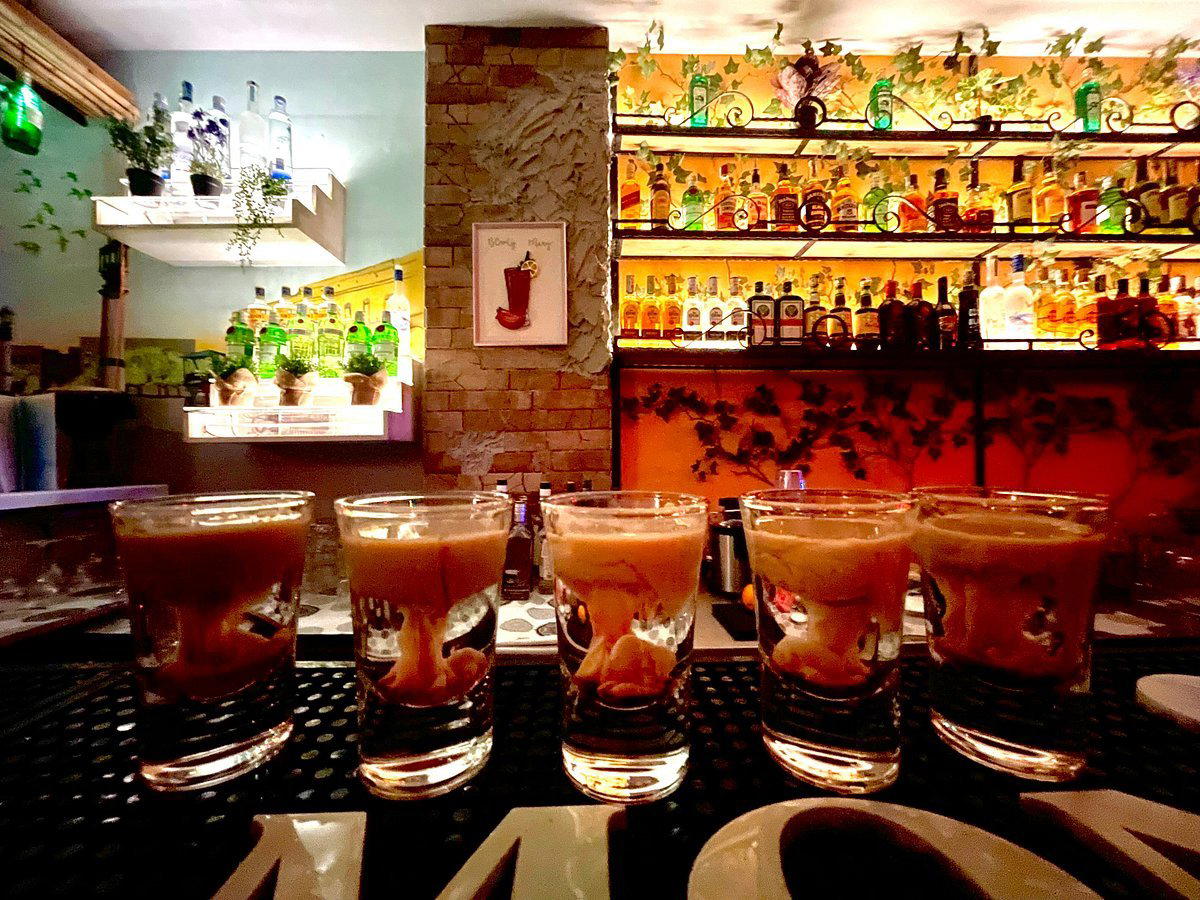
The regulars’ perspective explains the appeal. In a large restaurant, consistency is often managerial; at a six-seat counter, it is social. The same faces, ordering patterns, and compact evening window create an unwritten menu around the listed one. Gyoza, dim sum, sake, shochu, and wine sit within a drinking-room structure where the point is not breadth, but how a small set of choices can carry a night.
Kita-Senju helps. This northern Tokyo interchange has commuter density, local loyalty, and less international dining theatre than Ginza, Aoyama, or Roppongi. Serious eating here often looks plain from outside. Recognition tends to confirm what regulars already know rather than turn a place into a destination machine.
Gyoza as drinking food, not side order
Gyoza in Tokyo has two identities. One is fast, cheap, and functional, attached to ramen counters and lunch sets. The other belongs to izakaya drinking: dumplings as a salty, repeated, drink-compatible anchor. The restaurant sits in the second camp. Its Tabelog 100 dumpling selections in 2019 and 2021, followed by izakaya recognition in 2024 and 2025, trace that dual identity. The kitchen is read not only as a dumpling specialist, but as a drinking-food address with dumplings at its centre.
That shift matters. Tokyo’s high-end conversation often overvalues rarity, chef biography, and presentation. Izakaya culture rewards another intelligence: food that carries repetition. A dish needs no long explanation if guests want it again with another round. Strong izakaya counters understand seasoning, heat, and portioning through that repeat logic.
The drinks list reinforces this without forcing a sommelier narrative. Sake and shochu belong naturally; wine broadens the evening without changing it. This is not pairing-menu language, but the older language of choosing what keeps the table moving.
Against Tokyo peers in the same everyday-price orbit, the distinction is tightness, not luxury. Tachiataru works in a similarly modest bracket, while BOSSA BURGER occupies a different casual lane. Senju Takeyabu represents another Kita-Senju register, with soba and a higher dinner spend. Sushi Tanaka sits in a sushi category where price and ritual reset expectations. The restaurant is narrower: an adult izakaya counter where dumplings and drinks do the heavy lifting.
How to place it in a Tokyo food itinerary
This is not an address to schedule like a grand restaurant reservation. It suits travelers who understand Tokyo’s smaller food pleasures: rooms with rules, close-range cooking, and evenings that depend on behaving like a guest rather than a consumer. The lack of reservation availability favours patience, flexibility, and early planning around Kita-Senju, not a cross-city dash at peak time.
For a broader Tokyo plan, the contrast helps. Akihabara drinking food at . 鮪と炭火焼き うお炭 秋葉原店, Shinjuku specificity at 12/10 Shinjuku ten, yakitori structure at 124. KAGURAZAKA (Yakitori), visual café culture at 2D Cafe, and curry focus at 3 Chome no Curry Ya San each show another slice of the city’s dining grammar. For the wider map, use Our full Tokyo restaurants guide, with parallel planning through Our full Tokyo hotels guide, Our full Tokyo bars guide, Our full Tokyo wineries guide, and Our full Tokyo experiences guide.
Japan’s smaller specialist addresses also clarify the pattern across cities. -Grilled beef Sukiyaki- KAMAKURA TANUKIAN 鎌倉 たぬき庵 in Kamakura.cafe in Osaka.know in Kumamoto, (Shoku) Vietnam in Kawasaki, [Curry Senmon Ten] Maruyama Kyoju. in Sapporo, and [ki:] in Kyoto all point to the same lesson: serious casual dining in Japan is often strongest when the format is narrow. Outside Japan, Jōdo Saké Bar in Los Angeles and Onigiri Time in Pasadena show how Japanese drinking and snack cultures translate differently away from their native urban habits.
The editorial read is simple: the restaurant is for diners who value counter discipline over comfort-padding. It is casual in dress and atmosphere, but not in conduct. The reward is a sharper understanding of Tokyo izakaya culture, where the room’s smallness is not a quirk; it is the mechanism that keeps the experience intact.
A Pricing-First Comparison
Comparable venues at the same tier.
| Venue | Cuisine | Price | Notes |
|---|---|---|---|
| Saiko Gyoza BoThis venue — the venue you are viewing | Adachi, Japanese Izakaya & Dumplings | $$ | Not listed |
| 餃子歩兵 | Ginza, Kyoto-style Gyoza | $$ | Not listed |
| Tonkatsu Maisen (とんかつ まい泉) | Omotesando, Tonkatsu Specialist | $$ | Not listed |
| 浅草むぎとろ本店 | Not listed | $$ | Taitō, Traditional Japanese Tororo Kaiseki |
| 川田 | Chūō, Sushi Omakase | Not listed | Not listed |
| Mienoumi | Not listed | $$ | Kōtō, Chanko Nabe (Sumo Wrestler Hot Pot) |
Recognition history
Dated appearances from independent guides and award organizations, with the underlying list record or original source where available.
Tabelog 100 #36 · No. 36
Tabelog · Tabelog 100 - Izakaya - EAST - 2025







At a Glance
- Cozy
- Lively
- Intimate
- Casual Hangout
- After Work
- Group Dining
- Solo
- Standalone
- Beer Program
Current opening hours
- Monday
- 5–11 PM
- Tuesday
- 5–11 PM
- Wednesday
- 5–11 PM
- Thursday
- 5–11 PM
- Friday
- 5–11 PM
- Saturday
- Closed
- Sunday
- Closed
Hours can change for holidays and private events. Last verified .
A compact, down-to-earth neighborhood izakaya with a casual, cozy feel where guests enjoy gyoza and dim sum alongside drinks in a relaxed, local atmosphere.