
Tabelog 100 #69
Our verdict
Sachi places Fuchu inside Hiroshima’s okonomiyaki conversation without turning the meal into ceremony. The draw is a compact, counter-led format built around the hot plate, a category where local sourcing, batter discipline, cabbage handling, noodles, and sauce matter more than luxury signals. Its Tabelog 100 Okonomiyaki selections in 2024 and 2025 give the room a credible place among Japan’s specialist okonomiyaki addresses.

Pearl is the En Primeur Club membership app — saves, bookings, and concierge access live there. Same editors, same standards.
- Address
- 750 Fuchucho, Fuchu, Hiroshima 726-0005, Japan
- Phone
- +81 847-43-4508
- Hours
- Mon–Tue ClosedWed–Sun 11 AM–2:30 PM, 5–8 PM
- Website
- tabelog.com
- Directions
- Get directions
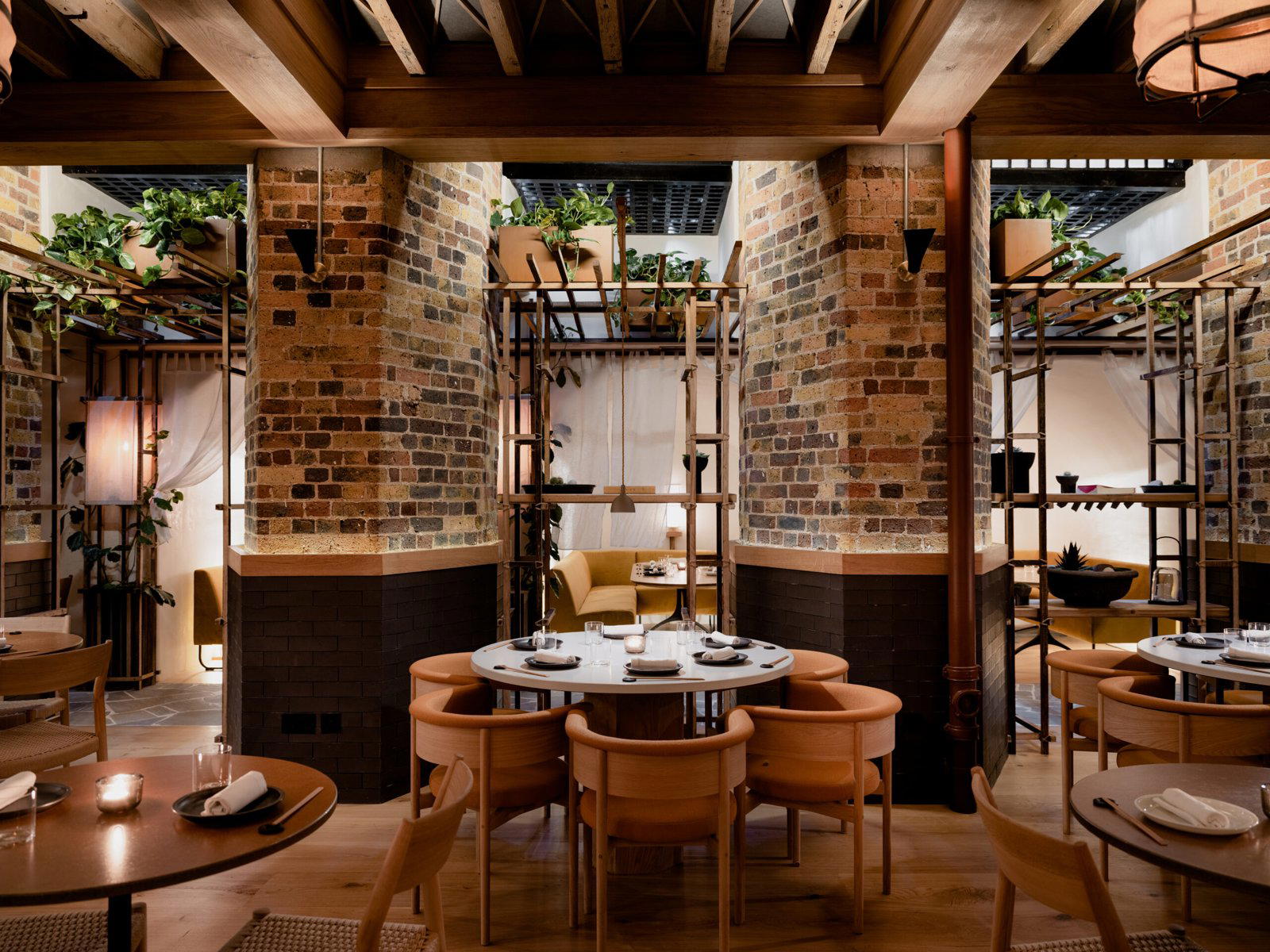
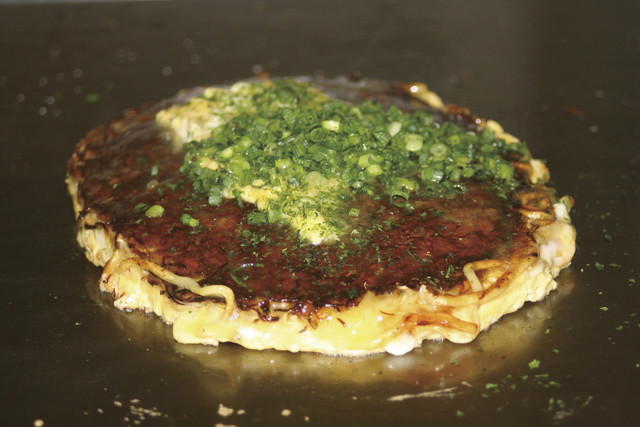
The room is built around the hot plate, not theatre. The format keeps the cooking surface central and makes the meal feel direct, practical, and close to the craft. That says much about okonomiyaki culture: the meal is casual, but the technique is not. Sachi belongs to the small-restaurant tier where the griddle is the stage, and the gap between a routine pancake and a serious one comes down to timing, compression, heat control, and the handling of everyday ingredients.
Fuchu matters here. Okonomiyaki is often discussed through bigger-city counter culture, yet regional specialists have their own grammar of repeat custom, everyday meals, solo diners, and cooking that rewards regularity. A place selected for Tabelog Hyakumeiten in 2025 sits in that specialist conversation without fine-dining expense, with Sachi listed in the okonomiyaki category and carrying a Tabelog score of 3.63.
Okonomiyaki as ingredient logic, not luxury theatre
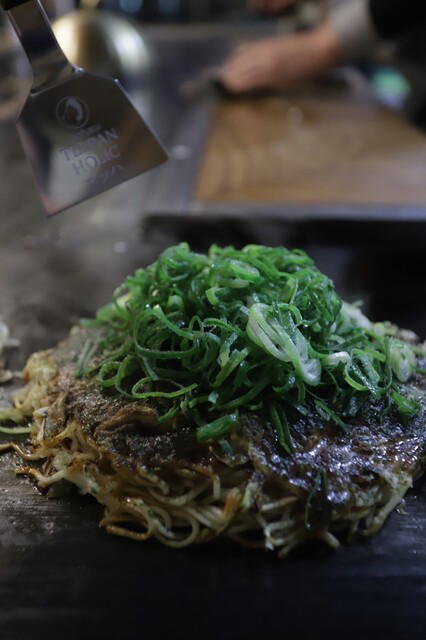
Okonomiyaki is often translated as a Japanese savory pancake, but that undersells the form. It is better understood as a griddle composition whose success depends on batter, cabbage, egg, sauce, and other shop-by-shop choices being handled in the right sequence. The point is not rare produce, but what happens when ordinary ingredients are cut, stacked, steamed, browned, and finished with discipline.
That is where Sachi’s category becomes interesting for a serious eater. Ingredient sourcing here is not tasting-menu provenance; it is the practical intelligence of vegetables that can take heat, components that hold texture, eggs that finish cleanly, and sauce used with restraint rather than as camouflage. The low-price okonomiyaki bracket leaves little room for decorative luxury, so quality has to show in execution. A Tabelog score of 3.63 and 2025 Tabelog Hyakumeiten recognition are useful signals because they point to consistency within a competitive comfort-food category, not luxury spending.
Okonomiyaki also has a rhythm that rewards watching. The griddle work is legible: ingredients arrive as sequence rather than as anonymous mass, and the cooking depends on heat, timing, and structure. That distinction gives the hot-plate format editorial value. It lets the diner read the cooking as process and makes the meal feel closer to craft than a quick starch fix. For broader regional context, Our full Fuchu restaurants guide places Sachi alongside the city’s wider dining choices.
A compact Fuchu room with Tabelog category recognition
Scale is part of the argument. Sachi is best understood as a focused okonomiyaki specialist rather than a broad, all-purpose dining room. That is common in serious griddle-led shops, where control of the hot plate is central and the distance between preparation and service is short. It also keeps the experience grounded. This is not a destination built around linen, ceremony, or chef biography; it is a local okonomiyaki stop whose recognition comes from performance inside a narrow category.
Tabelog’s Hyakumeiten lists are especially useful for foods such as okonomiyaki because they separate category specialists from general-purpose restaurants. Sachi’s selection for Tabelog Hyakumeiten in 2025 places it among addresses judged within the okonomiyaki field rather than against unrelated fine-dining rooms. That matters for travelers. A broad fine-dining framework can miss the point of a place like this, while a category list captures why a small Fuchu specialist can matter to someone tracing Japanese comfort-food culture beyond the obvious urban itinerary.
Compared with out-of-metro peers such as ラルドワーズ, Le Miroir, 中国料理 蓮華, エルバ, and Vietnamese Aobaba Fukuyama ten, the relevant comparison is not cuisine-to-cuisine ranking but format. Those names show the variety of dining outside the main metropolitan circuit, while Sachi represents the specialist end: narrow category, modest spend, direct cooking, and recognition tied to one dish family. For travelers building a wider Japan route, that specificity is often more revealing than another general restaurant stop.
The practical character also fits Fuchu rather than a resort itinerary. The appeal is straightforward: okonomiyaki, a modest budget, and a venue whose reputation is tied to its category rather than to ceremony. Sachi’s listed budget is Dinner: JPY 1,000 - JPY 1,999; Lunch: - JPY 999, which keeps the emphasis on everyday value. That affordability is part of the point, because the meal has to justify itself through execution rather than through luxury signals.
How to place it in a Fuchu itinerary
Sachi works better as a precise food stop than the center of a long evening. The strongest reason to go is to understand how okonomiyaki culture works in Fuchu: hot-plate focus, local utility, and category recognition without luxury pricing. The location is simply Fuchu, so it makes the most sense as part of a regional food detour planned around the city rather than as a stand-alone destination built on ceremony or elaborate service.
Fuchu planning is often broader than one meal. Readers mapping a stay can pair the restaurant search with Our full Fuchu hotels guide, then check after-dinner options through Our full Fuchu bars guide. Wine-focused travelers can use Our full Fuchu wineries guide, while cultural planning sits in Our full Fuchu experiences guide. For wider Japan dining research, compare Sachi with other dining in Fuchu and with broader restaurant formats elsewhere, keeping the focus on what this venue specifically offers: a modestly priced okonomiyaki specialist in Fuchu with 2025 Tabelog Hyakumeiten recognition.
Frequently asked questions
Is Sachi suitable for children?
Sachi is a modest okonomiyaki venue in Fuchu. Check the venue's official channels for the latest details on family visits and service conditions.
What's the vibe at Sachi?
It is a focused okonomiyaki spot where the draw is direct, griddle-led cooking rather than luxury ceremony. The mood is casual, practical, and centered on the dish.
What does dinner at Sachi typically cost?
Pricing at Sachi is listed as Dinner: JPY 1,000 - JPY 1,999; Lunch: - JPY 999.
When can I go to Sachi?
Check Sachi's official channels or current listing before visiting, as operating hours can change.
Where is Sachi in Fuchu?
Fuchu.
What's the defining dish or idea at Sachi?
Sachi is an okonomiyaki spot, and the category recognition matters here: it was selected for Tabelog Hyakumeiten in 2025. The draw is Japanese savory pancake in a specialist setting where the cooking is the focus.
Snapshot
Comparable venues by cuisine and price in the same metro.
| Venue | Cuisine | Price | Awards | Notes |
|---|---|---|---|---|
| SachiThis venue — the venue you are viewing | Okonomiyaki & Japanese Comfort Food | $10–20 | Tabelog 100 #69 | Not listed |
| つけめん 頑者 新横浜ラーメン博物館店 | Tsukemen (Dipping Ramen) | $1–10 | Not listed | Shin-Yokohama |
| Koja Sobaya (古謝そば屋) | Authentic Miyako Soba | $1–10 | Not listed | Hirara, Miyakojima City |
| Mingei Chadokoro Fukatsuya | Traditional Japanese Tea House | $1–10 | Not listed | Fukuyama City |
| Suzaki Foods Shop | Sanuki Udon | $1–10 | Not listed | Takasecho, Mitoyo City |
| Jiyouken (滋養軒) | Traditional Hakodate shio ramen | $1–10 | Tabelog 100 #32 | Daimon (大門) |
Recognition history
Dated appearances from independent guides and award organizations, with the underlying list record or original source where available.
Tabelog 100 #69 · No. 69
Tabelog · Tabelog 100 - Okonomiyaki - 2025


Details
- Cozy
- Lively
- Classic
- Casual Hangout
- Family
- Group Dining
- Solo
- After Work
- Late Night
- Standalone
- Open Kitchen
- Beer Program
- A La Carte
- Counter Dining
- Family Style
- Beer
Current opening hours
- Monday
- Closed
- Tuesday
- Closed
- Wednesday
- 11 AM–2:30 PM, 5–8 PM
- Thursday
- 11 AM–2:30 PM, 5–8 PM
- Friday
- 11 AM–2:30 PM, 5–8 PM
- Saturday
- 11 AM–2:30 PM, 5–8 PM
- Sunday
- 11 AM–2:30 PM, 5–8 PM
Hours can change for holidays and private events. Last verified .