
Tabelog 100 #77
Our verdict
Hira no Ya puts Fukuyama’s Fuchu-yaki tradition in a small, practical format rather than a destination-dining costume. Its Tabelog 100 Okonomiyaki selections in 2023 and 2025 give it a national signal, but the draw is more local: Hiroshima-style griddle cooking, a compact room, and a price tier that keeps the focus on everyday craft.

Pearl is the En Primeur Club membership app — saves, bookings, and concierge access live there. Same editors, same standards.
- Address
- 2 Chome-28-38 Hikinocho, Fukuyama, Hiroshima 721-0942, Japan
- Phone
- +81 84-941-6980
- Hours
- Mon–Tue 11 AM–2 PM, 5–8 PMWed–Thu ClosedFri–Sun 11 AM–2 PM, 5–8 PM
- Website
- www1.megaegg.ne.jp
- Directions
- Get directions
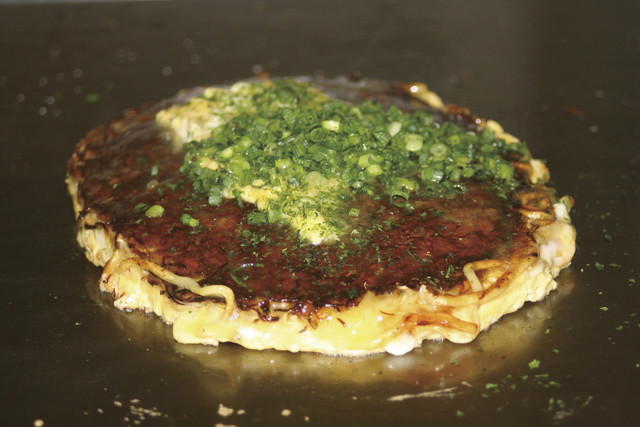
Approaching a serious okonomiyaki counter in Fukuyama is about heat, rhythm, and appetite. The griddle is the center: batter, cabbage, sauce, and steam converging in a form that looks casual until regional distinctions matter. Fukuyama has its own place in Japan’s okonomiyaki conversation, and Hira no Ya belongs to that local dining map.
That matters because travellers often flatten okonomiyaki into one national category. Different regions and shops handle the batter, cabbage, toppings, and cooking sequence in distinct ways, and the details become visible on the griddle. The result is not conventional luxury. It is regional technique, everyday appetite, and repeatable execution, judged by people who eat this food often enough to notice imbalance.
Okonomiyaki, local appetite, and the griddle as quality control
The ingredient argument is direct: okonomiyaki succeeds when inexpensive components behave precisely. Cabbage must soften without going slack, the surface needs enough contact for texture, and savoury fat and sauce have to season rather than swamp the stack. Sourcing is less about rare produce than everyday ingredients built into a griddle dish with a local accent. The category rewards repetition. A kitchen résumé matters less than proof that the room can turn out the same regional form meal after meal.
Hira no Ya has that proof through Tabelog’s Okonomiyaki Tabelog 100 selection in 2025, a useful signal where Michelin-style luxury markers often miss the point. Its 3.73 score also places it in a serious band for a casual specialist, particularly outside Japan’s largest restaurant markets. Read those numbers correctly: they do not make a local griddle shop haute cuisine. They show the local format judged against other okonomiyaki specialists, where texture, timing, and regional fidelity matter more than service theatre.
The format reinforces the food. A griddle-led okonomiyaki meal keeps the cooking within the room’s attention, and that suits the genre better than a sprawling dining room because the process is not hidden backstage. The category favours eating close to the heat when possible; crispness and steam are time-sensitive, and few foods benefit less from becoming a delayed snack.
How it fits Fukuyama's dining map
Fukuyama’s dining scene is not built around one headline cuisine. It moves between everyday set meals, specialist counters, steak and kaiseki formats, eel, yakitori, and local drinking rooms. That spread shows in the city’s price bands. Steak Kaiseki Miyako Kasuga sits higher; Unagi Nakasho and Tori Tsune occupy more expensive specialist territory; Tonshou is closer to the everyday range. In that field, Hira no Ya reads as a low-ticket regional specialist with national category recognition, a specific and useful position rather than a generic recommendation.
For travellers, the appeal is not rarity. It is that Fukuyama can be read through food locals do not need explained to them. A meal here pairs naturally with a broader city itinerary: compare its griddle-driven regionalism with other Fukuyama dining rooms, from everyday local counters to more formal Japanese meals, specialist restaurants, and casual stops. The broader city edit sits in Our full Fukuyama restaurants guide, while planning beyond the table belongs in Our full Fukuyama hotels guide, Our full Fukuyama bars guide, Our full Fukuyama wineries guide, and Our full Fukuyama experiences guide.
Who should prioritize it
This is the right stop for travellers who care about regional Japanese food beyond sushi, ramen, and kaiseki. Okonomiyaki can look simple, but regional variants test how well a city protects everyday craft. The decision is not about formality or spectacle; it is whether a meal can explain a place through its staples. In that sense, Hira no Ya is more instructive than many higher-spend meals because the ingredients, price tier, and room scale keep the cultural signal clean.
It also suits diners who prefer compact, food-first meals over celebratory productions. The experience is casual rather than ceremonial, with the savoury weight and directness expected from an okonomiyaki specialist. Hira no Ya’s value lies in the clarity of the format: a recognized local griddle address where the food, not the surrounding theatre, remains the anchor.
Payment, timing, and access logistics deserve attention in Japan’s smaller-city dining culture, especially for travellers used to large-city flexibility. Public listings place Hira no Ya in Fukuyama, so it is best approached as a specific local stop rather than a catch-all recommendation. The practical case is simple: come for okonomiyaki, expect an everyday price band, and treat the meal as part of Fukuyama’s broader casual dining fabric.
For a wider Japan comparison, low-price specialist dining can carry as much regional information as formal formats. Across Japan and beyond, small-format restaurants often explain a place through one clear idea rather than through luxury signals. The common thread is not spectacle, but a clear format executed with conviction. In Fukuyama, that format is okonomiyaki on the griddle, priced for regular eating and recognized within Japan’s okonomiyaki category.
Frequently asked questions
Is Hira no Ya okay with children?
The listing does not specify a children policy. Hira no Ya is an okonomiyaki restaurant in Fukuyama. Families planning to visit should check the venue's official channels for the latest details.
Is Hira no Ya formal or casual?
Casual. Hira no Ya in Fukuyama is listed as an okonomiyaki spot, with dinner at JPY 1,000 to JPY 1,999 and lunch up to JPY 999, which places it firmly in everyday dining territory.
What price level is Hira no Ya?
Pricing at Hira no Ya is listed as JPY 1,000 - JPY 1,999 - JPY 999.
When is Hira no Ya open?
Public ground-truth details provided do not include opening hours for Hira no Ya. Check the venue's official channels for the latest schedule.
Where exactly is Hira no Ya?
Fukuyama.
Quick Comparison
Comparable venues by cuisine and price in the same metro.
| Venue | Cuisine | Price | Awards | Notes |
|---|---|---|---|---|
| Hira no YaThis venue — the venue you are viewing | Hiroshima-style okonomiyaki & Bingo Fuchu-yaki | $10–20 | Tabelog 100 #77 | Not listed |
| Mingei Chadokoro Fukatsuya | Traditional Japanese Tea House | $1–10 | Not listed | Fukuyama City |
| Jiyuken | Japanese Izakaya with Western Fusion | Not listed | Not listed | Motomachi |
| Sarrasin | Soba and Kawachi duck specialty | $50–100 | Tabelog 100 #53 | Meijicho |
| お好み焼き ちょっとよんない | Hiroshima-Style Okonomiyaki | $10–20 | Not listed | 鞆町鞆 |
| Vietnamese Aobaba Fukuyama ten | Casual Vietnamese noodle house & restaurant | Not listed | Tabelog 100 #47 | Fukuyama |
Recognition history
Dated appearances from independent guides and award organizations, with the underlying list record or original source where available.
Tabelog 100 #77 · No. 77
Tabelog · Tabelog 100 - Okonomiyaki - 2025
Details
- Cozy
- Classic
- Casual Hangout
- Solo
- Family
- Group Dining
- Late Night
- Chefs Counter
- Standalone
- A La Carte
- Counter Dining
Current opening hours
- Monday
- 11 AM–2 PM, 5–8 PM
- Tuesday
- 11 AM–2 PM, 5–8 PM
- Wednesday
- Closed
- Thursday
- Closed
- Friday
- 11 AM–2 PM, 5–8 PM
- Saturday
- 11 AM–2 PM, 5–8 PM
- Sunday
- 11 AM–2 PM, 5–8 PM
Hours can change for holidays and private events. Last verified .
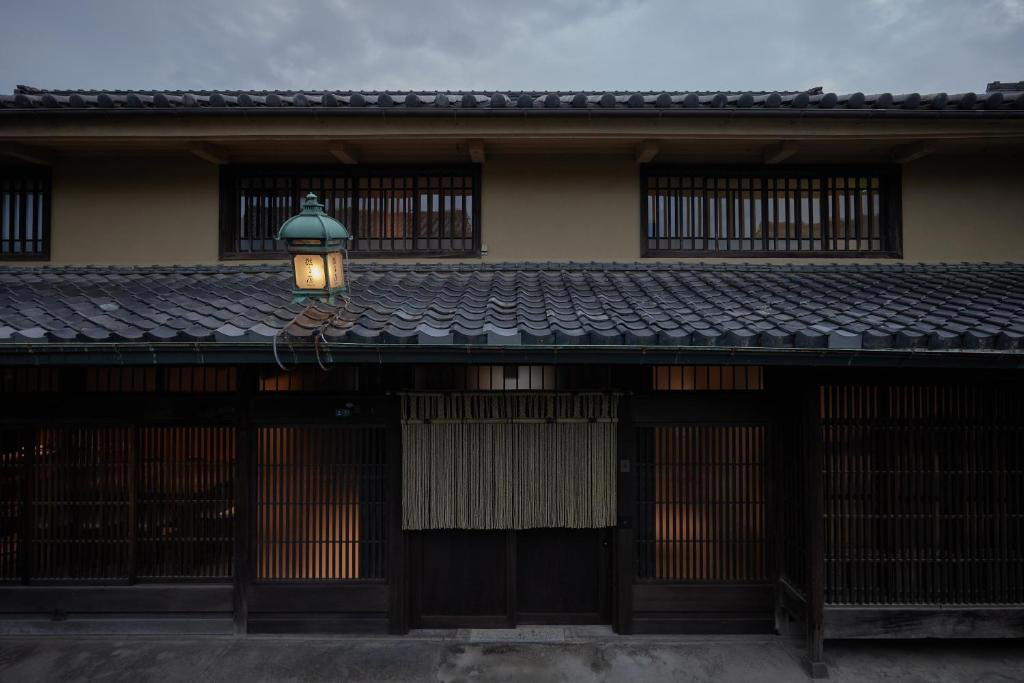
A modest, old-school neighborhood okonomiyaki joint with a homey, unpretentious atmosphere and the feel of a long-loved local favorite rather than a polished modern restaurant.