Ryôdô


Ryôdô holds a Michelin star and a 4-Radish rating from We're Smart, the latter for a menu built entirely on vegetables, a rare combination in European fine dining. Situated in Hollerich, Luxembourg City, the restaurant applies Japanese culinary precision to plant-based ingredients at €€€€ pricing, placing it in a small comparable set that bridges the discipline of kaiseki with a modern, produce-led philosophy.
Pearl is the En Primeur Club membership app — saves, bookings, and concierge access live there. Same editors, same standards.
- Address
- 27 Rue Raymond Poincaré, 2342 Hollerich Luxembourg
- Phone
- +352 27 76 92 85
- Website
- ryodoes.com
- Directions
- Get directions
 Saves & bookings on Pearl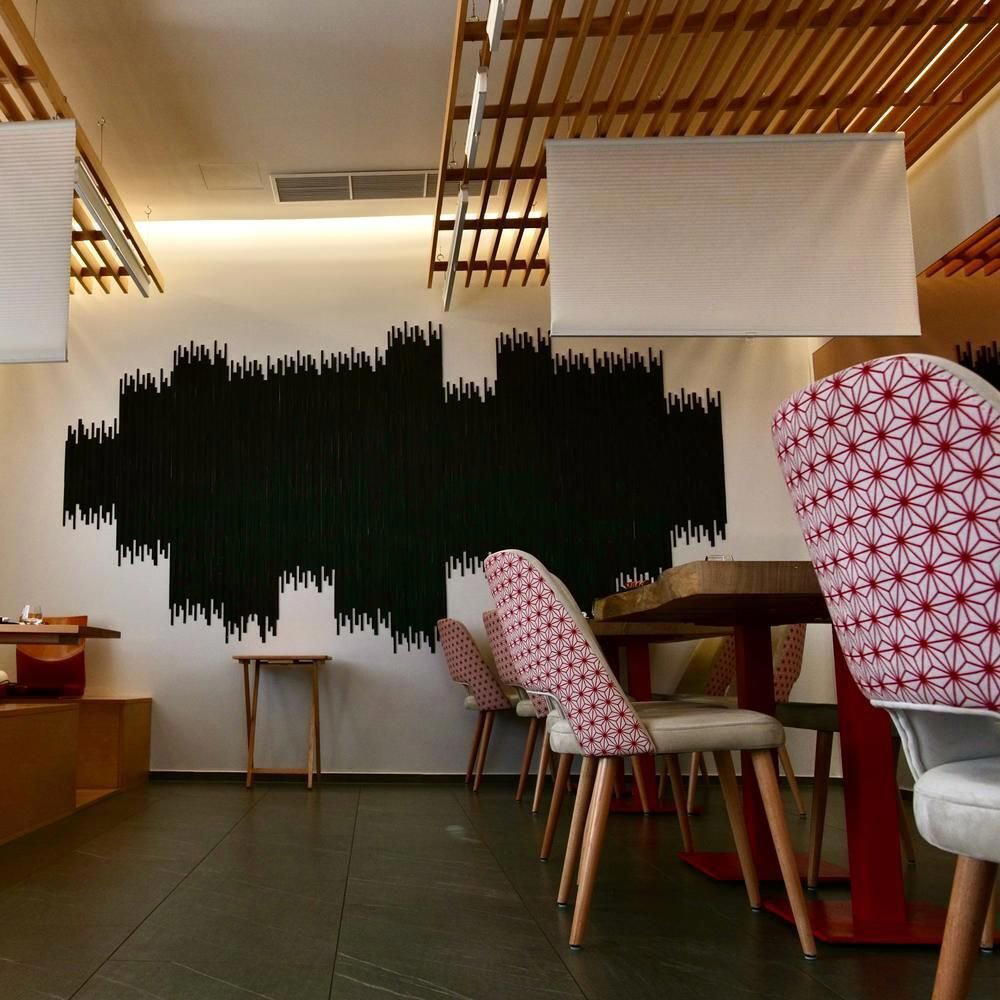
Hollerich, a Starred Counter, and the Geometry of Japanese Vegetable Cooking
Hollerich sits just southwest of Luxembourg City's financial centre, a neighbourhood that has shifted over the past decade from light-industrial anonymity toward a quieter kind of creative density. The streets around Rue Raymond Poincaré don't announce themselves with the visible energy of the Grund or Clausen dining quarters, which makes Ryôdô's presence here more pointed: a Michelin-starred Japanese restaurant, working exclusively with vegetables, in a district that rewards those who look past the obvious addresses. The €€€€ price tier places it squarely alongside Léa Linster and Ma Langue Sourit at the summit of Luxembourg's fine-dining bracket, yet its nearest culinary counterparts are in Tokyo and Kyoto.
The Discipline That Arrives Before the First Course
Japanese haute cuisine, kaiseki in particular, is defined by a formal relationship with vegetables that long predates the European plant-based movement. Temple food traditions, shojin ryori, established centuries ago that cooking without meat or fish requires not simplification but escalation: longer preparation, more precise knife work, a deeper understanding of texture states and temperature sequencing. What is relatively new is the application of that framework outside Japan, in a European fine-dining register. The emergence of restaurants like Ryôdô in continental cities represents a specific evolution: Japanese technical discipline exported to new produce contexts, with the seasonal logic of kaiseki applied to ingredients sourced from European soil.
Ryôdô's 100% vegetable menu is not a dietary accommodation or a marketing angle. The We're Smart Green Guide, which rates restaurants specifically on their use of vegetables, awarded it 4 Powerful Radishes, signalling that inspectors assessed the plant-based commitment as integral to the cooking rather than incidental. Michelin, whose 2024 and 2025 editions both carry the restaurant's star, validates the technical execution from the other direction. The two award systems rarely converge on the same address; when they do, the implication is that precision and produce philosophy are operating at the same level simultaneously.
For a regional comparison, Japanese restaurants with comparable credentials tend to cluster in major European capitals. Luxembourg's fine-dining scene, strong relative to the city's size, skews toward French and contemporary European formats. Apdikt represents creative European cooking at a comparable price tier, and Archibald De Prince demonstrates the organic, produce-forward European angle. Ryôdô occupies a different register entirely, it is the only address in Luxembourg where Japanese kaiseki logic and an exclusively plant-based menu exist in the same kitchen.
Japanese Precision Applied to European Produce
The editorial angle most relevant to Ryôdô is the intersection of imported method and local ingredients. Japanese haute cuisine developed its vocabulary around specific produce: tofu, dashi, seasonal mountain vegetables, lacquered rice. Transplanted to Luxembourg, that vocabulary must be re-spoken in a different botanical dialect. European root vegetables, alliums, legumes, and brassicas carry different water content, starch density, and cellular structure than their Japanese counterparts. Applying kaiseki-level technique, the careful management of heat, the attention to cutting angle and its effect on texture, the staging of courses by temperature and intensity, to European seasonal produce is a compositional exercise that demands either a deep knowledge of both traditions or a willingness to work empirically across them.
This is the territory that distinguishes the more interesting Japanese outposts outside Japan from the ones that simply reproduce familiar formats. Restaurants like Myojaku and Kagurazaka Ishikawa in Tokyo, or Isshisoden Nakamura and Gion Matayoshi in Kyoto, operate within their native ingredient context. Hayato in Los Angeles is one of the more discussed examples of Japanese kaiseki discipline relocated to a North American produce environment. Ryôdô occupies a comparable position in the European context, a restaurant where the cooking tradition is Japanese but the raw material is drawn from continental soil, and where the result has earned sustained Michelin recognition across two consecutive editions.
The plant-based constraint adds a further layer to this. Kaiseki in Japan traditionally includes fish and seafood as central elements of the seasonal progression. A kaiseki-informed menu that removes these requires structural rethinking: what carries the umami register, how does the sequence build without dashi made from katsuobushi, where do the textural contrasts come from without the play between raw fish and cooked rice. The We're Smart 4-Radish rating suggests that Ryôdô has resolved these questions at a high level, not by mimicking meat or fish but by finding within the vegetable kingdom the same range of intensities and contrasts that a full-spectrum menu achieves through a wider ingredient set.
Situating Ryôdô in Luxembourg's Fine Dining Context
Luxembourg City punches considerably above its population weight in fine dining. The concentration of EU institutions, international finance, and affluent cross-border professionals sustains a restaurant market calibrated to expense-account standards, with several addresses holding or recently holding Michelin recognition. The French culinary tradition dominates: Ma Langue Sourit and Léa Linster both operate in the Modern French register at the leading price tier. Fani represents serious Italian at a different price point. The city's dining breadth, relative to its size, is genuine.
Within that context, Ryôdô's positioning is deliberately narrow. The €€€€ tier signals that it prices against the city's leading French tables, not against casual Japanese restaurants.
Planning a Visit
Ryôdô is at 27 Rue Raymond Poincaré in the Hollerich quarter, a short distance from Luxembourg City's main rail station, which makes it accessible from Brussels, Paris, and Frankfurt for those travelling by train. The address is in the €€€€ tier, and given the Michelin star and the specificity of the format, advance booking is advisable, the combination of fine-dining seat count norms and a distinctive enough concept to draw visitors from outside Luxembourg creates demand that typically outpaces availability on short notice.
Guests with specific dietary requirements beyond the vegetable menu should verify directly before booking, as the format is already defined by a plant-based constraint rather than built to accommodate a wide range of substitutions. For those building a longer Luxembourg itinerary, the city's hotel and cultural infrastructure is covered in our Luxembourg hotels guide, and the bar and wine scenes, the Moselle valley produces creditable whites not far from the city, are in our Luxembourg bars guide and wineries guide.
For Japanese fine dining reference points elsewhere, to calibrate what Michelin-recognised Japanese cooking looks like in its home context, Azabu Kadowaki, Ginza Fukuju, and Kashiwaya Osaka Senriyama provide the comparative benchmark against which Ryôdô's achievement in a European city context becomes most legible.
Awards and Standing
Comparable venues nearby, for context on price, style, and recognition.
| Venue | Cuisine | Price | Awards | Notes |
|---|---|---|---|---|
| Ryôdô | Michelin-Starred Japanese Fine Dining | $$$$ | Michelin 1 Star | Hollerich |
| Apdikt | French Contemporary Fine Dining | $$$$ | Michelin 1 Star | Steinfort |
| Grünewald Chef’s Table | Modern French Chef's Table | $$$$ | Michelin 1 Star | Dommeldange |
| Mosconi | Italian Fine Dining | $$$$ | Michelin 1 Star | Grund |
| Fields by René Mathieu | Modern Plant-Based Fine Dining | $$$$ | Michelin 1 Star | Findel |
| Bazaar | Lebanese Mezze | $$$ | Bib Gourmand | Ville Haute |
Recognition history
Dated appearances from independent guides and award organizations, with the underlying list record or original source where available.
Michelin 1 Star
Michelin
Michelin 1 Star
Michelin
We're Smart World 3 Radishes
We're Smart World
Michelin 1 Star
Michelin
Continue exploring
More in Luxembourg
Restaurants in Luxembourg
Browse all →
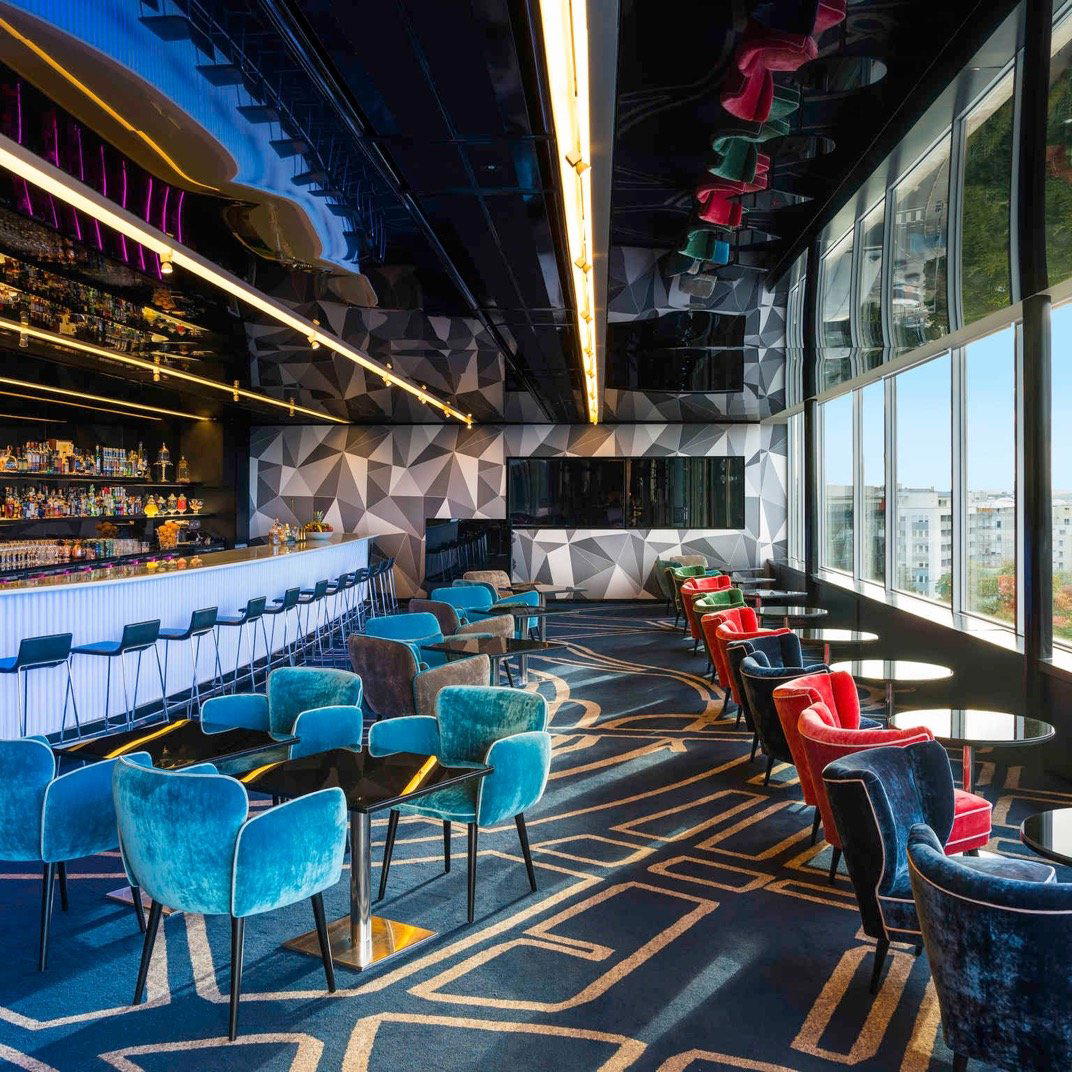
Bars in Luxembourg
Browse all →

Hotels in Luxembourg
Browse all →
At a Glance
- Elegant
- Intimate
- Minimalist
- Sophisticated
- Special Occasion
- Date Night
- Celebration
- Sake Program
Current opening hours
- Monday
- Closed
- Tuesday
- 7–8:30 PM
- Wednesday
- 7–8:30 PM
- Thursday
- 12–1:30 PM, 7–8:30 PM
- Friday
- 12–1:30 PM, 7–8:30 PM
- Saturday
- 12–1:30 PM, 7–8:30 PM
- Sunday
- Closed
Hours can change for holidays and private events. Last verified .
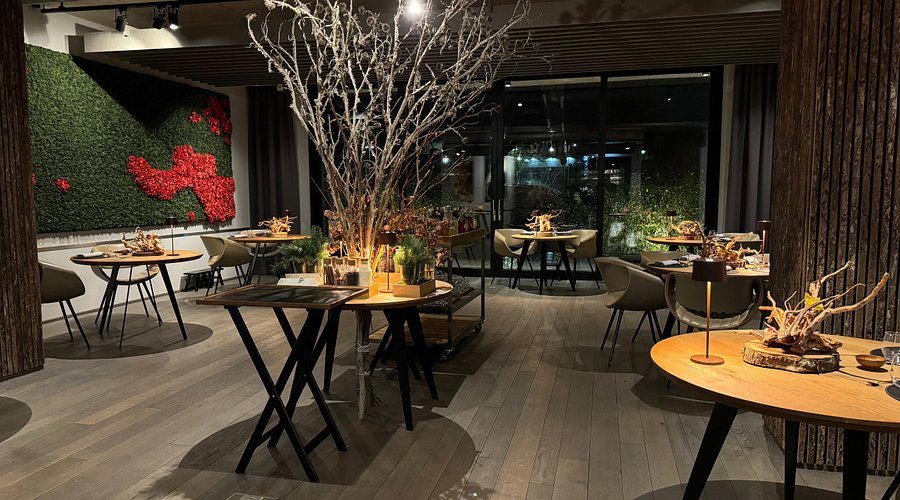
Luminous minimalist interior with light wooden furnishings and an elegant, quiet atmosphere focused on the culinary experience.