Léa Linster




Holding two Michelin stars and 85 points in La Liste 2026, Léa Linster in Fréiseng operates at the uppermost tier of Luxembourg's formal dining scene. Under chef Louis Linster, the kitchen continues the restaurant's vegetable-forward approach to classical French cooking — a tradition rooted in the 1989 Bocuse d'Or victory that first placed this address on the European map.
 Discover on Pearl
A Village Address at the Leading of Luxembourg Gastronomy
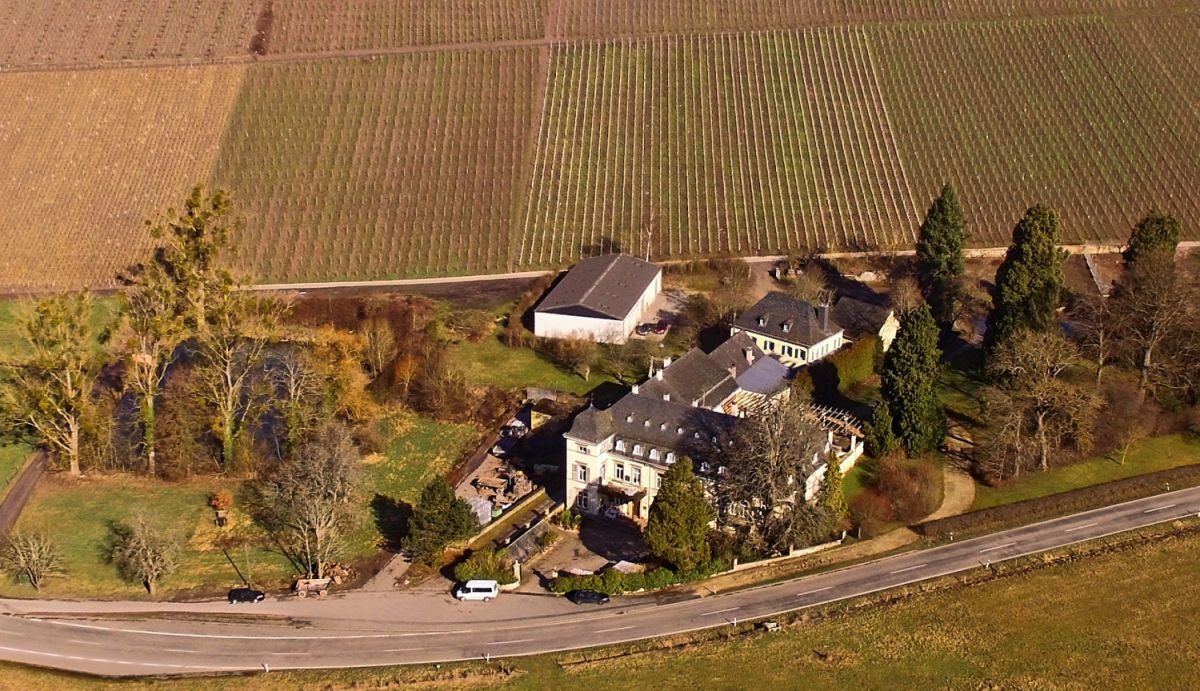
The drive south from Luxembourg City toward Fréiseng shifts the register before you arrive. The Grand Duchy's restaurant culture splits fairly cleanly between the capital's urban dining corridor and a handful of destination addresses in the surrounding countryside, and Léa Linster belongs to the latter category. Located at 17 Letzebuergerstrooss in the village of Fréiseng, the property sits in a part of Luxembourg where the formality of a serious French kitchen coexists with the quieter cadence of rural life. Arriving, you sense the deliberateness of that positioning: this is not a restaurant that needs the theatre of a city address to announce itself.
Within the broader pattern of high-end dining in small European nations, there is a recurring tension between the pull of international recognition and the maintenance of local identity. Léa Linster resolves that tension in a particular direction. The 1989 Bocuse d'Or victory placed the restaurant in the conversation alongside the most formally recognised kitchens in Europe, but the address has remained in Fréiseng, and the cooking has remained tethered to Luxembourg's agricultural calendar. For the European fine dining circuit, where provenance claims are now near-universal, that consistency over decades carries weight that younger operations cannot replicate.
The Service Architecture of French Fine Dining
At the two-Michelin-star level, the front-of-house becomes as much a subject of critical attention as the kitchen. Classical French service — the kind that operates across multiple courses over two to three hours — requires a choreography that is both invisible and precise. The sommelier's timing, the maître d's ability to read a table, the sequencing of removes: these are skills that take years to calibrate in a room, and they are what distinguish a genuinely formal French restaurant from one that borrows the aesthetic without the underlying discipline.
At this tier of Luxembourg dining, where the formal French model is represented by a small peer group including Hostellerie du Grünewald and La Maison Lefèvre, the front-of-house becomes a differentiating factor. Léa Linster has operated at the formal end of this spectrum for decades, and the service tradition here pre-dates the current wave of interest in precision hospitality. That continuity matters: a room that has been calibrated over years produces a different experience from one that is newly assembled. Opinionated About Dining, which ranks Léa Linster at number 465 in its Classical European list for 2025, effectively codes this as a restaurant operating within a long-established idiom rather than as a contemporary reinvention.
The wine dimension reinforces this reading. A kitchen that builds menus around lobster with Soisson beans, beef fillet with vitelotte potatoes, and the lamb preparation that won the Bocuse d'Or demands a cellar and a sommelier approach to match. The Loire, Burgundy, and Moselle are the natural reference points for a kitchen of this profile in this part of Europe , and Luxembourg's own Moselle wines, produced in a region that sits directly adjacent, provide a local dimension that few comparable French kitchens in the broader region can claim as their own. For guests who want to read the full Luxembourg dining and drinks picture, our full Luxembourg wineries guide maps the domestic wine context in detail.
Vegetables as a Structural Principle
Within the formal French tradition, the treatment of vegetables has often been secondary , a garnish function rather than a compositional one. What the Bocuse d'Or jury recognised in 1989, and what La Liste has continued to document through scores of 81 points in 2025 and 85 points in 2026, is a kitchen that treats vegetable variety and texture as load-bearing elements of a dish. Soisson beans alongside lobster, sweet potatoes and turnips with beef fillet, seasonal greens against the apple-crusted lamb: these are not decorative additions but flavour arguments.
This approach positions Léa Linster at a specific intersection within Modern French cooking. It is not the austere minimalism of the Parisian natural wine scene, nor is it the maximalist plate-building of contemporary tasting menus. It sits closer to a classical French framework in which the relationship between protein and accompaniment is considered and precise, but where the accompaniment receives equal creative attention. Across the wider Modern French category in this part of Europe, from Schanz in Piesport to Colonnade in Lucerne, the vegetable question is handled with varying degrees of ambition. Léa Linster's vegetable-forward position has been a consistent editorial line, not a recent adjustment to trend.
Chef Louis Linster now leads the kitchen, continuing the approach that the restaurant has developed across multiple decades. The transition from founder to second generation in high-end European restaurants is a well-documented inflection point: establishments sometimes tighten their formal identity, sometimes shift register significantly. The award trajectory here , moving from one Michelin star in 2024 to two stars in 2025, alongside the La Liste score increase , suggests the kitchen is in an active phase of development rather than maintenance mode.
Where It Sits in the Luxembourg Dining Picture
Luxembourg's formal restaurant scene is concentrated enough that peer comparisons are meaningful. Bistronome and Artis represent different price and formality registers. De Pefferkär works a creative format distinct from the classical French framework. What Léa Linster occupies is the position at the formal ceiling of Luxembourg dining: two Michelin stars, La Liste recognition in the upper eighties, and a history that gives it a different kind of authority from newer entrants at the same price point.
The Google rating of 4.8 across 357 reviews is worth noting in this context. At the €€€€ price tier, guest reviews tend to polarise around service expectations , formal restaurants attract more demanding critical attention , making a sustained score at that level a reasonable indicator of front-of-house consistency. For this category of restaurant, sustained review quality over a meaningful sample is as informative as the headline score.
Within the broader Modern French category across the region, the reference points are instructive. Alex Dilling at Hotel Café Royal in London and Sketch, The Lecture Room and Library operate in larger markets with different competitive dynamics. La Table du Lausanne Palace and La Table du Valrose in Rougemont share the Swiss-region context of formal French cooking in smaller national markets. Coeur D'Artichaut in Münster and Mühle in Schluchsee are worth reading against Léa Linster for anyone calibrating what Modern French looks like across the German-speaking border region. The underlying point is that Léa Linster competes in a European peer set, not merely a national one, and the La Liste and Michelin data position it accordingly.
Planning a Visit
Fréiseng is accessible from Luxembourg City by car in under thirty minutes, making this a viable dinner destination rather than a dedicated overnight trip, though the formality and length of the meal at this level typically argues for unhurried travel. Bookings at two-Michelin-star restaurants in this tier of the European market generally require advance planning of several weeks, particularly for weekend evenings. The address is 17 Letzebuergerstrooss, 5752 Fréiseng. Contact and booking details are leading confirmed directly through current channels, as specific availability shifts seasonally.
For guests building a broader Luxembourg itinerary, EP Club's full Luxembourg restaurants guide covers the complete dining picture. The Luxembourg hotels guide maps accommodation options from the capital outward. The Luxembourg bars guide and Luxembourg experiences guide round out the itinerary planning for anyone spending more than a single evening in the Grand Duchy.
What Dish Is Léa Linster Famous For?
The lamb preparation that won the Bocuse d'Or in 1989 remains the restaurant's most referenced dish: lamb with an apple crust, accompanied by fresh seasonal vegetables. That victory, the only one achieved by a solo female chef in the competition's history, secured the restaurant's place in the formal record of European gastronomy. The dish appears on the current menu and functions as a direct line between the kitchen's founding achievement and its present practice. Other preparations associated with the kitchen's vegetable-forward philosophy include lobster with Soisson beans and dragon mayonnaise, and beef fillet with sweet potatoes, turnips, and vitelotte potatoes , each structured to give equal compositional weight to the vegetable components.
At a Glance
A compact peer set to orient you in the local landscape.
| Venue | Notes | Price |
|---|---|---|
| Léa Linster | This venue | €€€€ |
| Ma Langue Sourit | Contemporary French, Modern Cuisine, €€€€ | €€€€ |
| Grünewald Chef’s Table | Modern Cuisine, €€€€ | €€€€ |
| Guillou Campagne | Classic French, €€€ | €€€ |
| Apdikt | Creative, €€€ | €€€ |
| Archibald De Prince | Organic, €€€€ | €€€€ |
Continue exploring
More in Luxembourg
Restaurants in Luxembourg
Browse all →
Hotels in Luxembourg
Browse all →

At a Glance
- Elegant
- Sophisticated
- Intimate
- Classic
- Special Occasion
- Date Night
- Celebration
- Terrace
- Extensive Wine List
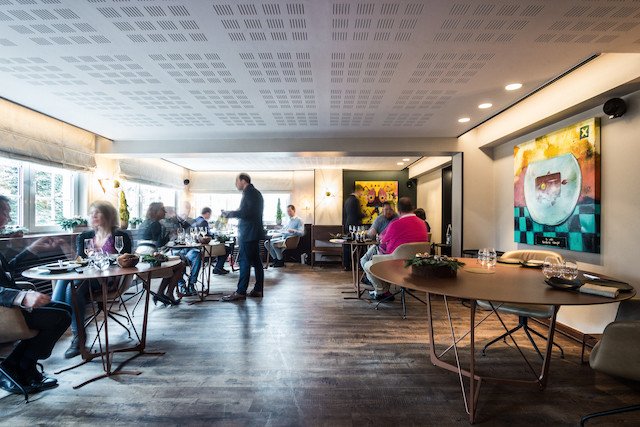
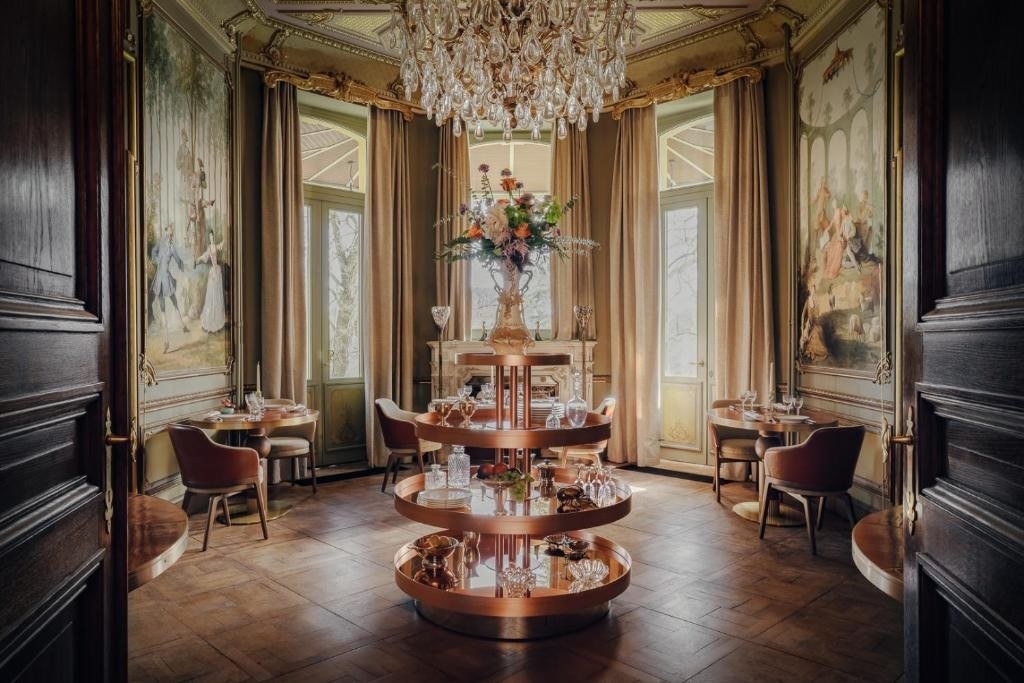
Quintessentially sleek and classy dining room adorned with modern art, described as elegant and cosy by guests.