Riccardo Osteria
Our verdict
Riccardo Osteria occupies a West Loop address on Lake Street, placing it inside one of Chicago's most competitive dining corridors. The kitchen works Italian territory in a neighbourhood where the stakes are set by nationally recognised tasting-menu rooms. For visitors planning around the area's premium restaurant tier, it earns a considered place on any itinerary.
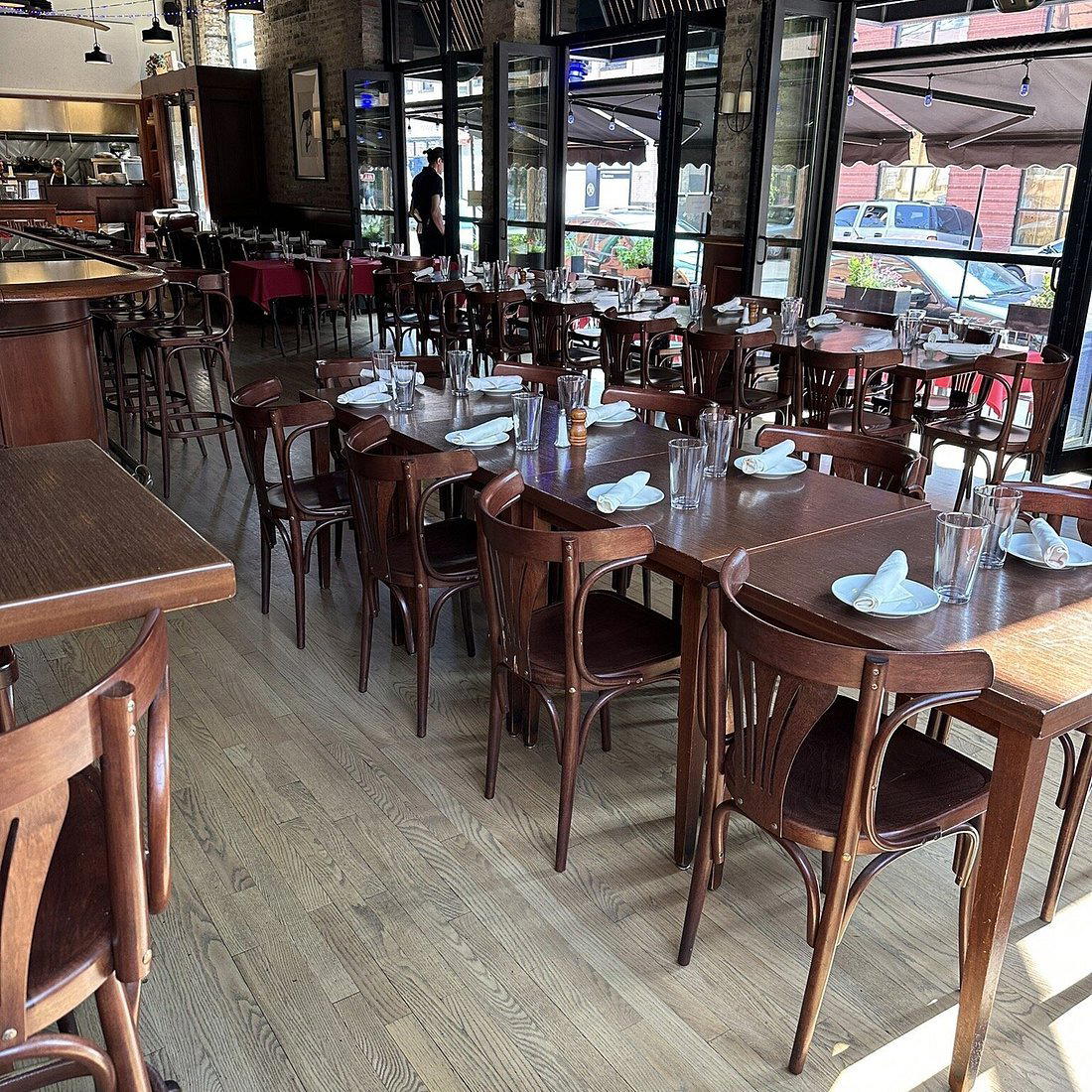
The menu
What to order
- Tagliatelle Bolognese
- Osso Buco
- Veal Chop Emiliana
- Pizzaccia Sardenara
West Loop, Italian, and the Weight of the Address
Lake Street in Chicago's West Loop carries a particular kind of pressure. Within a few blocks, you are in proximity to some of the most discussed tasting-menu rooms in the country: Alinea, which reshaped how American diners think about format and progression, and Smyth, which built its reputation on a quieter kind of precision. The neighbourhood has, over the past decade, accumulated enough Michelin attention to shift expectations for every table that opens nearby. Riccardo Osteria sits at 1023 W Lake St inside that context, operating Italian-leaning cuisine in a corridor where the reference points are set at the highest register.
That positioning matters before you even consider the menu. Chicago's Italian dining scene has always existed on a spectrum from red-sauce neighbourhood rooms to more considered trattorias that reference the regional specificity of the Italian peninsula rather than a generalised idea of it. The West Loop end of that spectrum tends to attract kitchens with something to prove, partly because the foot traffic skews toward guests who have already eaten at Oriole or Next Restaurant and arrive with calibrated palates. Riccardo Osteria operates in that refined register of expectation.
Planning Around a Neighbourhood That Books Early
The editorial angle that most shapes how you should approach Riccardo Osteria is logistical. The West Loop's premium dining tier books on timelines that reward early planning. Rooms at this address level do not hold tables for walk-ins on weekend evenings, and the gap between deciding you want to eat somewhere on Lake Street and actually sitting down can run to several weeks during peak periods. That pattern applies across the corridor: Kasama, a few neighbourhoods over, runs a similarly forward-booked calendar for its tasting-menu seats.
For Riccardo Osteria specifically, the practical recommendation is to treat booking as the first act of the visit, not an afterthought. If you are building a Chicago itinerary around the West Loop's Italian and Italian-adjacent rooms, the planning sequence should run: confirm dates, identify your preferred evening, then book as far in advance as the reservation system permits. The venue's website is the most direct route to current availability information, and checking directly rather than relying on third-party availability snapshots will give you the most accurate picture.
Across American premium dining broadly, Italian-format rooms tend to have slightly different booking dynamics than tasting-menu-only venues. A room with an à la carte or semi-flexible format can absorb last-minute tables at bar seats or early seatings in ways that a fixed-progression counter cannot. Whether Riccardo Osteria uses that model or a more structured approach is best confirmed at the time of booking. The West Loop's baseline, though, is that commitment and forward planning pay off.
Italian Cooking in the American Fine-Dining Conversation
Italian cuisine occupies an interesting structural position in American fine dining. At one end of the country, rooms like Le Bernardin in New York City have defined what French-adjacent technical cooking looks like at the highest level. Internationally, 8 1/2 Otto e Mezzo Bombana in Hong Kong demonstrates how Italian cooking exports into luxury markets outside Europe. In the American context, the Italian fine-dining room faces a particular challenge: the cuisine is simultaneously familiar enough that guests arrive with expectations and specific enough, region by region in Italy, that the kitchen has meaningful choices about how much of that specificity to surface.
Kitchens that work this territory well tend to resolve the tension by committing to a point of view: either the warmth and directness of a serious trattoria, or the more architectural approach of contemporary Italian fine dining where individual ingredients carry the weight of the experience. The West Loop, with its density of technically ambitious rooms, tends to attract the latter sensibility. Broader American comparisons include Lazy Bear in San Francisco and Single Thread Farm in Healdsburg, both of which have built reputations on defined culinary perspectives rather than genre breadth.
Chicago's Italian Dining Tier: Where the Room Fits
Chicago's Italian restaurant scene divides more clearly than in some cities. There is a large middle tier of neighbourhood pasta rooms that deliver reliable regional cooking without much editorial ambition, and then a smaller group of kitchens that position themselves against the city's wider fine-dining conversation. Riccardo Osteria's Lake Street address puts it geographically inside the latter group's territory, where the pricing and the guest expectation align with the West Loop's premium standard.
That standard has national benchmarks. At the far end of the American fine-dining axis, rooms like The French Laundry in Napa, Blue Hill at Stone Barns in Tarrytown, and Addison in San Diego have set a tier of expectation for what a serious American dining room delivers in terms of sourcing, service, and format discipline. Chicago's West Loop operates a few degrees below that ceiling but significantly above the city's mid-market. Rooms like Providence in Los Angeles, Bacchanalia in Atlanta, and The Inn at Little Washington in Washington occupy analogous positions in their own cities: serious kitchens with regional identities that read as premium without necessarily operating in the tasting-menu-only format.
For a fuller map of where Riccardo Osteria sits relative to Chicago's wider dining field, the EP Club Chicago restaurants guide covers the city's premium tier with neighbourhood-level granularity. Internationally, the Italian fine-dining comparison extends to rooms like Emeril's in New Orleans and Atomix in New York City, each of which has carved a distinct identity within its city's competitive set in ways that parallel what an ambitious Italian room in Chicago's West Loop is attempting.
Before You Go
Reservations: Book directly through the venue's website as early as your schedule allows; the West Loop corridor operates on a forward-booked calendar, particularly for evening sittings. Address: 1023 W Lake St, Chicago, IL 60607. Getting there: The Green and Pink CTA lines stop at Morgan, a short walk from the address; street parking is available but limited during peak dinner hours. Dress: The West Loop's premium dining tier defaults to smart casual as a floor; err toward that or above for an evening here. Budget: Pricing details are best confirmed at the time of booking, as they reflect the current menu format.
Frequently asked questions
What's Riccardo Osteria's location?
Riccardo Osteria is located at 1023 W Lake St, Chicago, IL 60607, Chicago.
How does Riccardo Osteria fit into Chicago's broader Italian dining scene?
Chicago's Italian restaurant tier separates sharply between neighbourhood pasta rooms and the city's more ambitious Italian fine-dining addresses. Riccardo Osteria's position on Lake Street in the West Loop places it geographically alongside some of Chicago's most-discussed kitchens, a neighbourhood where diners arrive with calibrated expectations. Whether the kitchen pitches at the casual trattoria register or the formal fine-dining register is best confirmed before booking, as that distinction shapes everything from dress code to spend.
What should I eat at Riccardo Osteria?
The menu at Riccardo Osteria sits within the Italian tradition, which in Chicago's West Loop typically means house-made pasta, regional proteins, and a wine list weighted toward the peninsula. Given the address on Lake Street, a corridor where kitchens compete with some of the city's most technically demanding rooms, expect cooking oriented around restraint and ingredient quality rather than elaborate plating. Consult the current menu directly with the venue, as seasonal rotations are common in this tier.
What's the best way to book Riccardo Osteria?
Book as far ahead as your schedule permits. The West Loop dining corridor, particularly along the Lake Street stretch, operates on calendars that fill weeks out for prime weekend slots. check the venue's official channels to confirm current reservation channels, since booking platforms and policies shift. Midweek seatings at 1023 W Lake St tend to carry more flexibility than Friday or Saturday.
Cuisine and Recognition
Comparable options at a glance, pulled from our tracked venues.
| Venue | Cuisine | Price | Awards | Notes |
|---|---|---|---|---|
| Riccardo OsteriaThis venue (the venue you are viewing) | Authentic Northern Italian Osteria | Not listed | Not listed | Not listed |
| Alinea | Avant-Garde Molecular Gastronomy | $300–500 | 2 Michelin Stars · World's 50 Best #37 | Progressive American, Creative |
| Smyth | Modern American Tasting Menu | $200–300 | 3 Michelin Stars · World's 50 Best #1 | Progressive American, Contemporary |
| Next Restaurant | Avant-Garde Themed Tasting Menus | Not listed | 1 Michelin Star · We're Smart World 2 Radishes | American Cuisine |
| Kasama | Modern Filipino | $30–50 | 2 Michelin Stars · World's 50 Best #31 | Filipino |
| Boka | Modern American Seasonal Fine Dining | $150–200 | 1 Michelin Star · La Liste Top Restaurants | New American, Contemporary |