Lou Malnati's Pizza

Our verdict
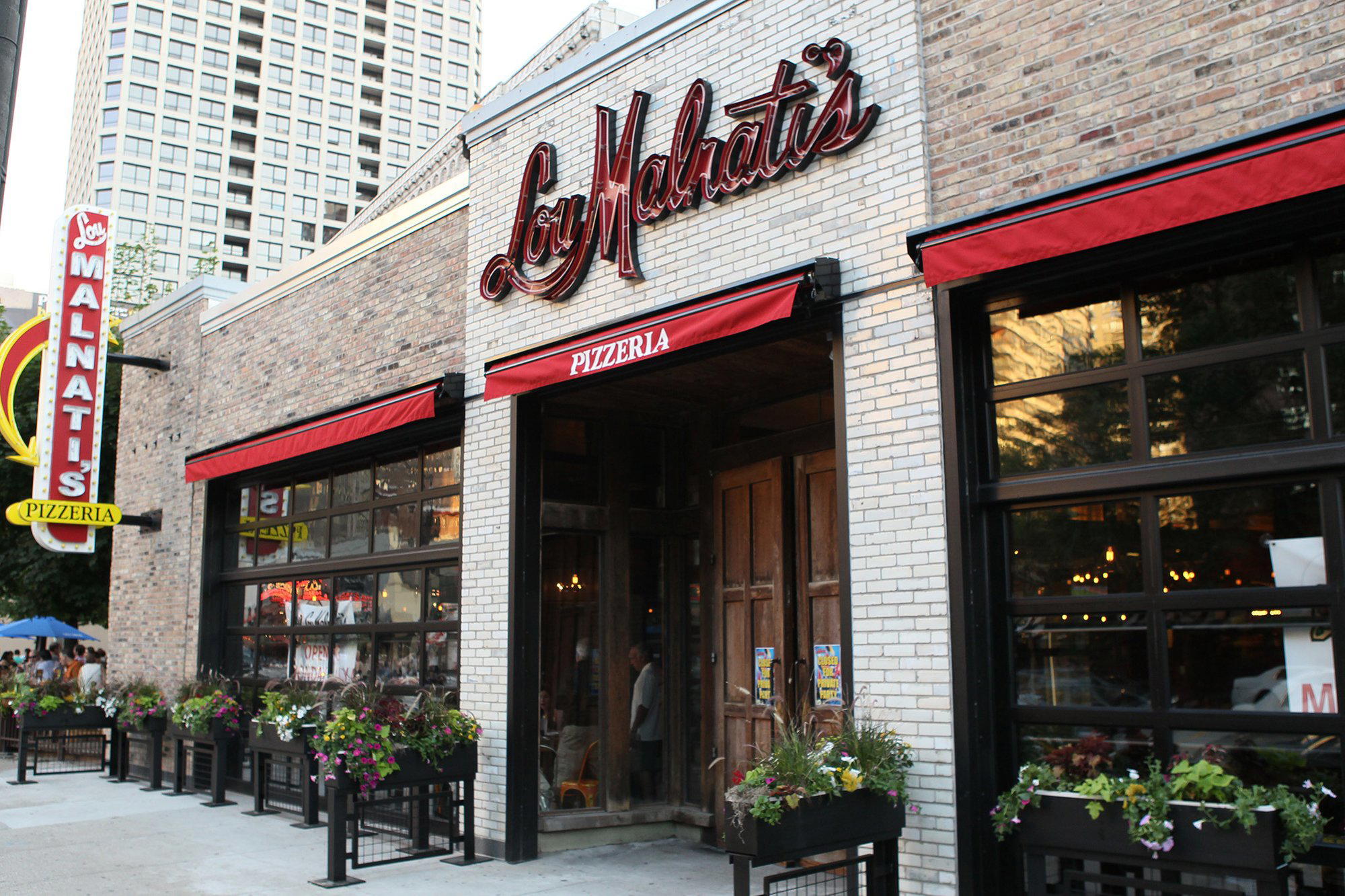
Lou Malnati's on Wells Street sits at the center of Chicago's deep-dish conversation, a format the city has debated, defended, and exported for decades. The River North address draws locals and visitors alike to a style of pizza defined by its butter-crust base, layered construction, and the kind of institutional reputation that accumulates over generations rather than press cycles.

Pearl is the En Primeur Club membership app, where members save venues, book tables and use the concierge.
The menu
What to order
- Malnati Chicago Classic
- The Lou
- Margherita Pesto Pizza
- Veggie
The Architecture of a Chicago Institution
There is a particular kind of American dining room that earns its authority through repetition rather than reinvention. The Wells Street location of Lou Malnati's, sitting at 439 N Wells St in Chicago's River North neighborhood, belongs to that category. The space reads as a working pizzeria rather than a destination showcase: booths worn into comfort, low lighting that signals familiarity over theater, and the persistent smell of butter and tomato that arrives before the food does. In a neighborhood where new openings compete on design vocabulary and cocktail programs, Lou Malnati's holds a different kind of ground.
River North in Chicago operates as a high-density dining corridor, home to everything from four-star tasting menus to fast-casual counters. The deep-dish format, however, belongs to a separate logic entirely. It is not a chef-driven concept or a rotating seasonal program. It is an argument about what pizza should be, one Chicago has been having with the rest of the country for the better part of a century. Lou Malnati's sits close to the center of that argument, positioned alongside Giordano's and Gino's East in the public imagination but holding a distinct identity in the city's own internal hierarchy.
What Deep-Dish Actually Means, Structurally
The deep-dish format is less a style of pizza than a construction methodology. Where Neapolitan pizza is an exercise in restraint, blistered and eaten within minutes of leaving the oven, Chicago's signature format inverts the structural logic entirely. The crust lines the walls of a steel pan, butter worked into the dough to produce a flaky, almost pastry-like base. Cheese goes down first, directly on the crust, before the toppings. Tomato sauce sits on leading, crushed and relatively uncooked, protecting the interior from the extended bake time required by the format's depth. The result eats more like a savory pie than what most of the world considers pizza, which is precisely the source of its cultural friction and local pride.
That structural inversion is worth understanding before you sit down. This is not food designed for speed. A deep-dish pizza at Lou Malnati's requires somewhere between 35 and 45 minutes from order to table depending on size, which is not a service failing but an engineering constraint. The waiting time is part of the format's social contract, one that has shaped how Chicagoans eat together at these tables for decades.
The Room as a Physical Record
The editorial angle on Lou Malnati's Wells Street location is less about design in the contemporary sense and more about what an absence of redesign communicates. The room has not been updated to chase current aesthetics, and that choice carries meaning. In a hospitality era when virtually every neighborhood restaurant category has been subject to some form of branded interior refresh, the worn consistency of a Malnati's dining room is itself a signal. Regulars read it as trustworthiness. Visitors from outside Chicago often read it as authenticity they were told to seek out.
The seating arrangement follows the booth-and-table format common to mid-century American restaurants, prioritizing coverage and turnover over atmosphere. There is no counter seating, no chef's table, no designed focal point. The kitchen is the focal point, in the sense that everything in the room orients toward what comes out of it. Chicago's fine dining scene, represented by places like Alinea, Smyth, and Oriole, operates on an entirely different register of spatial experience. Lou Malnati's is the counter-argument: a room where the food is so specifically itself that the container needs only to stay out of the way.
Lou Malnati's in Chicago's Broader Dining Map
Chicago's restaurant scene has diversified considerably over the past decade. Kasama brought Filipino fine dining to a national conversation. Next Restaurant built a format around rotating culinary eras. These represent a Chicago comfortable with concept and ambition. But the city's identity abroad, what gets invoked when someone hasn't been to Chicago but knows something about it, still runs heavily through deep-dish. Lou Malnati's functions as part of that shorthand, alongside the lakefront and the architecture, as a reference point that precedes the visit.
That kind of pre-visit reputation is a different category of trust signal than a Michelin star or a James Beard Award. Peer-to-peer trust of that kind sustains institutions across American cities: think of Emeril's in New Orleans or the institutional anchors that hold a dining city's narrative together across decades. Lou Malnati's occupies that position in Chicago's pizza conversation specifically.
For readers tracking the broader American fine dining scene, the contrast is instructive. Le Bernardin in New York, The French Laundry in Napa, Lazy Bear in San Francisco, Providence in Los Angeles, Blue Hill at Stone Barns, Addison in San Diego, The Inn at Little Washington, Bacchanalia in Atlanta, Atomix in New York, and 8 1/2 Otto e Mezzo Bombana in Hong Kong all represent the tasting-menu, technique-forward, chef-as-author model. Lou Malnati's represents the opposite end of the institutional spectrum: format-first, city-specific, and deliberately resistant to the idea that a restaurant needs to evolve to remain relevant. Both categories have their place in a serious dining itinerary. See our full Chicago restaurants guide for how to sequence them across a visit.
Planning Your Visit
Know Before You Go
- Address: 439 N Wells St, Chicago, IL 60654 (River North)
- Format: Full-service sit-down pizzeria; walk-ins accepted
- Wait time: Budget 35-45 minutes from order to table for deep-dish; consider ordering immediately on arrival
- Neighborhood context: River North; walkable from the Loop and the Magnificent Mile
- Group sizing: Deep-dish is priced and portioned by pizza size, making it well-suited to groups of two to four sharing
Frequently asked questions
Where is Lou Malnati's Pizza located?
Lou Malnati's Pizza is located at 439 N Wells St, Chicago, IL 60654, Chicago.
How does Lou Malnati's Pizza connect to the origins of Chicago deep-dish?
The Malnati family name is directly tied to the kitchens where Chicago deep-dish took its current form in the mid-20th century, placing this operation at the source rather than the imitation end of the format. That lineage makes the Wells Street location a reference point for understanding what separates Chicago-style deep-dish from the versions that followed elsewhere in the country. For anyone mapping the history of American regional pizza, Chicago is the city and Malnati's is one of the primary texts.
What should I order at Lou Malnati's Pizza?
The deep-dish is the ordering anchor at the Wells Street location, full stop. The butter-crust construction, layered with cheese beneath the sauce rather than above it, defines what Chicago-style pizza means structurally, and skipping it in favor of a thin-crust option misses the point of coming here. Plan for a 30-45 minute bake time and order accordingly.
What's the best way to book Lou Malnati's Pizza?
The Wells Street location at 439 N Wells St operates as a walk-in friendly venue, so reservation pressure is lighter than at Chicago's tasting-menu tier. Weekday lunches and early dinners are the path of least resistance; weekend evenings in River North draw neighborhood foot traffic that can extend wait times. Arriving before 6 p.m. on Fridays or Saturdays is the practical move.
Comparison Snapshot
Comparable venues nearby, for context on price, style, and recognition.
| Venue | Cuisine | Price | Awards | Notes |
|---|---|---|---|---|
| Lou Malnati's PizzaThis venue (the venue you are viewing) | Chicago Deep Dish Pizza | $20–30 | Not listed | Not listed |
| Trattoria Gianni | Regional Italian Trattoria | $30–50 | Not listed | Lincoln Park |
| Tufano's Vernon Park Tap | Classic Italian-American | $20–30 | James Beard Award America's Classics · Diners, Drive-Ins and Dives Featured Restaurant | Little Italy |
| Franco's Ristorante | Classic Italian Trattoria | $20–30 | Not listed | Bridgeport |
| Robert's Pizza and Dough Company | Artisan Thin-Crust Pizza | Not listed | Not listed | River North |
| Nonnina | Homemade Italian Trattoria | $50–100 | Not listed | River North |
Recognition history
Dated appearances from independent guides and award organizations, with the underlying list record or original source where available.
Opinionated About Dining Cheap Eats in North America Recommended
Opinionated About Dining
Continue exploring
More in Chicago
Restaurants in Chicago
All restaurants in Chicago →
Bars in Chicago
All bars in Chicago →
Details
- Classic
- Well Known
- Cozy
- Family
- Group Dining
- Casual Hangout
- Historic Building
- Beer Program
- A La Carte
- Vegetarian Friendly
- Gluten Free Options
Current opening hours
- Monday
- 11 AM–11 PM
- Tuesday
- 11 AM–11 PM
- Wednesday
- 11 AM–11 PM
- Thursday
- 11 AM–11 PM
- Friday
- 11 AM–12 AM
- Saturday
- 11 AM–12 AM
- Sunday
- 11 AM–11 PM
Hours can change for holidays and private events. Hours as of .
Casual family-friendly pizzeria atmosphere centered around hearty deep dish pizza dining.