Our verdict
Set within the historic grounds of Põltsamaa Castle, Restoran Oberpahlen - Vein & Roog occupies one of central Estonia's most atmospheric addresses. The name itself signals a dual identity: wine and food, framed by medieval stonework and the agricultural traditions of Jõgeva County. For travellers moving between Tallinn and Tartu, it represents a deliberate stop rather than an incidental one.

Pearl is the En Primeur Club membership app, where members save venues, book tables and use the concierge.
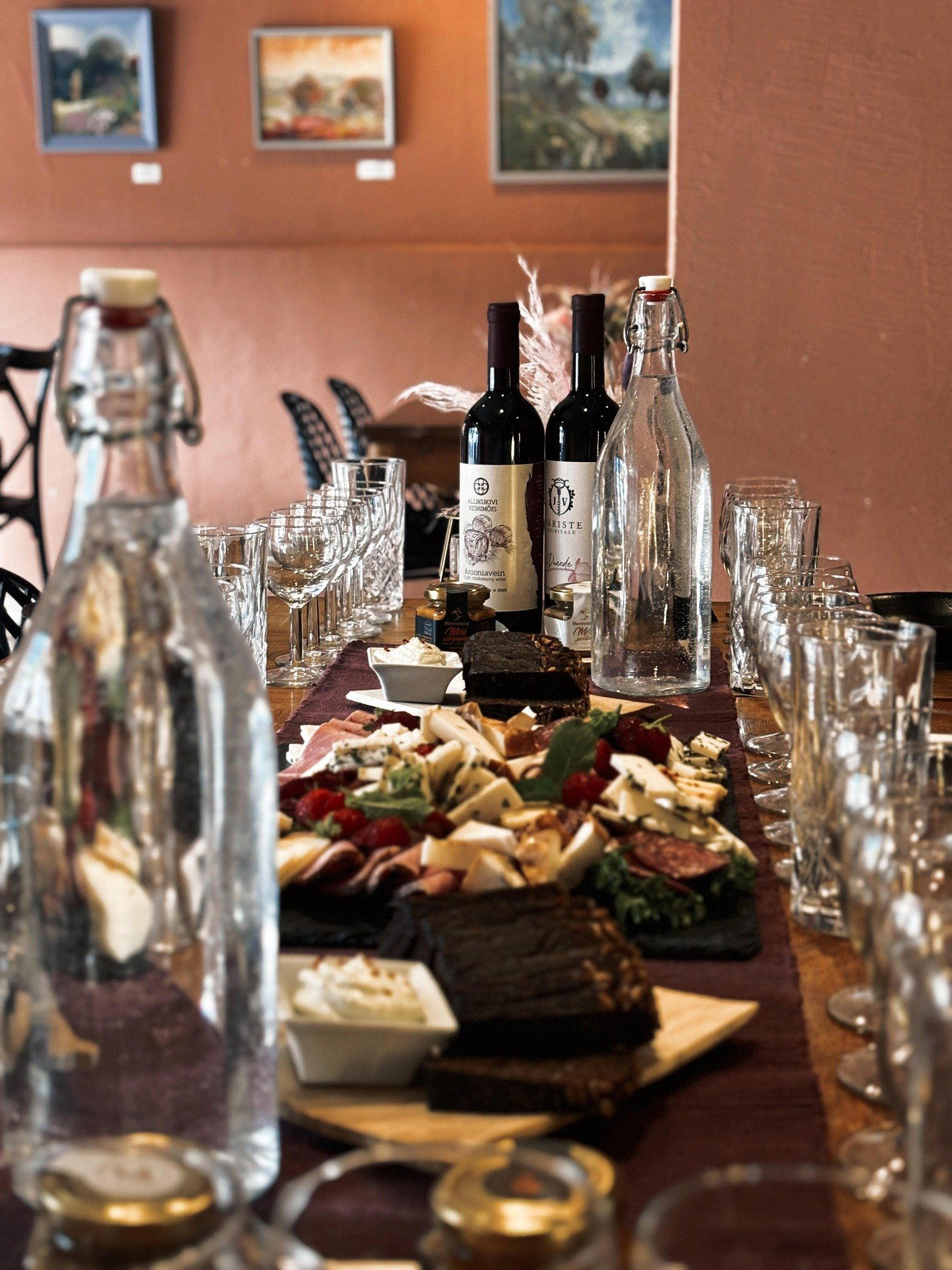
Castle Grounds and the Meaning of Place
There is a particular kind of Estonian dining that only makes sense in context. Põltsamaa, a small town in Jõgeva County roughly equidistant between Tallinn and Tartu, has spent centuries at the intersection of agriculture, aristocratic estate culture, and the kind of rural self-sufficiency that shaped what people here actually ate. Restoran Oberpahlen - Vein & Roog sits at Lossi Lossihoov 1, inside the grounds of Põltsamaa Castle, a setting that carries its own argument about why food should be rooted in the land around it. The name Oberpahlen is the historic German designation for Põltsamaa, a reference to the Baltic German estate-owning class whose influence over Estonian agriculture ran from the medieval period through the nineteenth century. Vein & Roog translates directly as Wine & Food. The pairing of those two words, in Estonian, inside a historic German-named castle context, is a compressed cultural statement.
Approaching the castle grounds, the scale of the setting registers before the restaurant does. Põltsamaa Castle's ruins and partial restorations have made the site one of the more visited heritage addresses in central Estonia, drawing travellers who treat the town as a half-day stop on the Tallinn-Tartu corridor. The restaurant occupies that heritage space without performing it, which is the more difficult achievement. For our full Poltsamaa restaurants guide, Oberpahlen represents the town's most contextually specific address.
Where Central Estonia's Ingredients Come From
The editorial angle that matters most for a restaurant in this location is sourcing. Jõgeva County sits in the agricultural heartland of Estonia, a region where grain farming, dairy, and small-scale vegetable production have defined the rural economy for generations. Estonian cuisine, at its more considered end, has spent the past decade reconnecting with this inheritance rather than importing techniques wholesale from Scandinavian or Western European trends. The movement visible in Tallinn at places like 180° by Matthias Diether, where Estonian ingredients are processed through high-technique European frameworks, takes a different form in a county-town setting. Here, proximity to producers is not a branding decision but a practical reality. The farms are nearby. The supply chains are short by necessity as much as by philosophy.
Central Estonian cooking, when it draws on its immediate surroundings, has access to rye-based traditions, preserved and fermented foods, freshwater fish from the Põltsamaa River, and seasonal produce cycles that are more compressed than those of southern Europe. A restaurant operating in this environment and taking its sourcing seriously will build menus around what the county produces in each season rather than maintaining a fixed offering year-round.
The contrast with urban Estonian dining is instructive. At Kohvik in Viljandi, a similarly sized historic town to the south, the relationship between setting and menu has shaped what the space means to its visitors. The same logic applies in Põltsamaa, where the castle grounds create an expectation of connection between place and plate that the restaurant name and address both reinforce.
The Wine Side of the Equation
The inclusion of Vein in the restaurant's name positions wine as a co-equal element of the experience rather than a supporting service. Estonia does not have a domestic wine industry of any scale, which means wine programming here is almost entirely a curation question: which producers, from which regions, at what price points, and with what rationale. Across Estonia's more considered restaurant operations, there has been a shift toward natural and low-intervention producers, particularly from Georgia, France, and the broader Baltic region, alongside a continued reliance on classical European appellations for guests seeking familiarity. For comparison, Valgeranna Veinitall in Audru has made wine its central organizing principle in a comparable small-town setting, demonstrating that serious wine programming outside Tallinn and Tartu is a viable model. The branding places wine alongside food.
Restaurants in smaller Estonian towns that anchor themselves to wine tend to draw a different visitor profile than those in larger cities. The drive-from-Tallinn or stop-on-the-way-to-Tartu traveller often has higher baseline expectations and more reference points against which to compare. The same dynamic operates at places like Franzia in Narva Joesuu and Kolm. Restoran in Voru, both of which serve a visitor base that is partly local and partly transient.
The Broader Estonian Regional Scene
Understanding Oberpahlen requires placing it within the tier of Estonian dining that sits below Tallinn's flagship addresses but above the purely functional. The comparison set includes Kohvik Kaar in Narva, Kuur in Vihtra, and Ilmaveere in Obinitsa, each of which operates in a geographically specific context and draws meaning from that specificity. At the more casual end of the Estonian spectrum, Burger Bros in Rakvere and Kärme Küülik in Haapsalu show how smaller Estonian towns sustain a range of formats. Oberpahlen occupies the more considered position in that range: a restaurant where the address, the name, and the wine-and-food framing signal a deliberate attempt at something above the everyday.
Internationally, the ambition expressed by restaurants in heritage settings, combining local sourcing with wine curation in a building with historical resonance, has precedents at every scale. At the most technically demanding end, Le Bernardin in New York City and Atomix in New York City represent the maximum expression of sourcing philosophy and tasting-menu discipline. Oberpahlen operates at a different scale and in a different context, but the underlying question each restaurant answers, where does this food come from and why does that matter, is the same.
Planning a Visit
Põltsamaa is accessible by road from both Tallinn (roughly 120 kilometres to the northwest) and Tartu (approximately 50 kilometres to the southeast), making it a practical stop on a journey between the two cities rather than a destination requiring a dedicated trip. The castle grounds at Lossi Lossihoov 1 are the organizing point for the visit. Check directly before travelling. For travellers who combine Põltsamaa with nearby coastal and lakeside options, KABE Beach in Kaberneeme, Wana Kala Kõrts in Neeme, Kalana ÄÄR in Kalana, and Eva Sushi in Tartu extend the regional picture in different directions, from waterside traditional cooking to urban Japanese in Tartu's café district. For a fuller read on dining across the region, the Everest Thai/Nepalese Restaurant in Parnu demonstrates how smaller Estonian cities absorb international formats alongside local traditions.
Frequently asked questions
What kind of setting is Restoran Oberpahlen - Vein & Roog?
Oberpahlen occupies the courtyard grounds of Põltsamaa Castle, a medieval structure in the small Jõgeva County town of Põltsamaa. The physical address, Lossi Lossihoov 1, places it inside the castle precinct itself, so the architecture provides the atmosphere rather than any designed interior concept. The dual name, Vein & Roog (Wine & Food in Estonian), signals that this is a sit-down restaurant where the wine program carries equal weight to the kitchen.
How Restoran Oberpahlen - Vein & Roog Poltsamaa Guide compares with similar nearby venues.
| Venue | Cuisine |
|---|---|
| Restoran Oberpahlen - Vein & RoogThis venue (the venue you are viewing) | Estonian Wine & Food |
Continue exploring
More in Poltsamaa
Details
- Classic
- Elegant
- Cozy
- Special Occasion
- Date Night
- Historic Building
- Wine Cellar
- Extensive Wine List
- Local Sourcing
- A La Carte
- Vegan Options
Current opening hours
- Monday
- Closed
- Tuesday
- Closed
- Wednesday
- Closed
- Thursday
- 12–6 PM
- Friday
- 12–9 PM
- Saturday
- 12–9 PM
- Sunday
- 12–6 PM
Hours can change for holidays and private events. Hours as of .
Pleasant atmosphere blending history, style, and culinary experiences in a castle setting with cozy outdoor seating and blankets.