Restaurant La Truffe Dans Tous Ses États
Our verdict
In Bouc-Bel-Air, a small commune just south of Aix-en-Provence, Restaurant La Truffe Dans Tous Ses États has built its identity around a single ingredient that Provence has long prized above most others: the black truffle. The name translates roughly as 'Truffle in All Its States,' a declaration of intent that places ingredient sourcing at the centre of every decision made in the kitchen.

Pearl is the En Primeur Club membership app — saves, bookings, and concierge access live there. Same editors, same standards.
- Address
- 2010 Av. de la Croix d'Or 43°26'58.0"N 5°23'50.5"E, 13320 Bouc-Bel-Air, France
- Phone
- +33442600692
- Hours
- Mon–Tue ClosedWed 5–11 PMThu–Sat 10 AM–11 PMSun 10 AM–4 PM
- Directions
- Get directions
- Booking
- Book on the venue's website
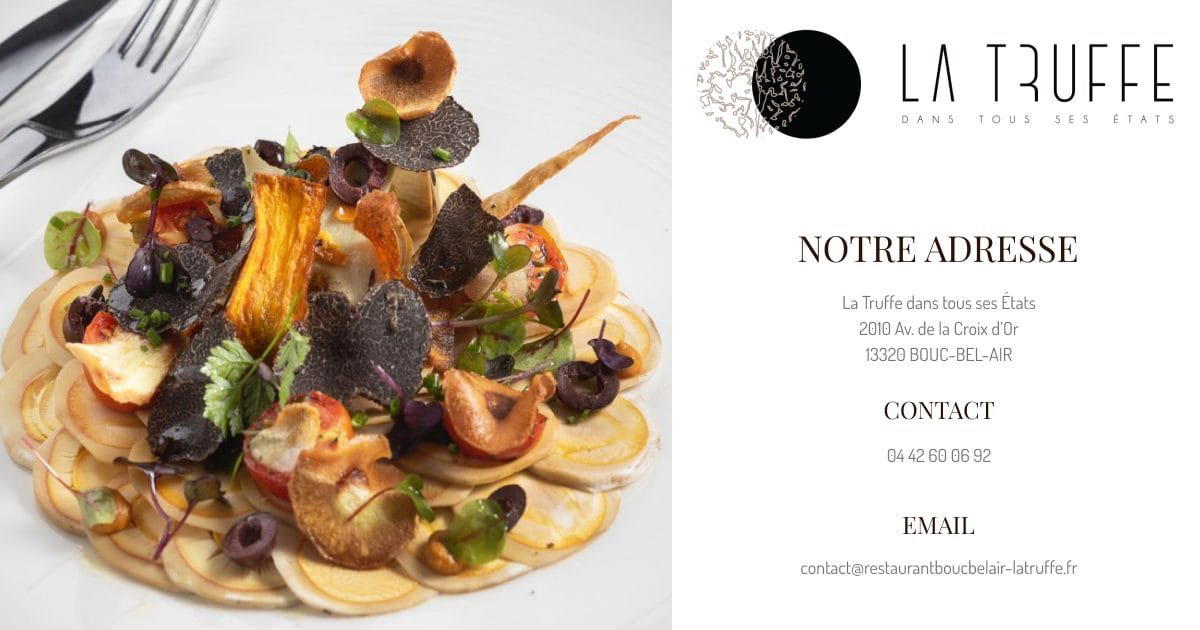
Where Provence Meets a Single, Defining Ingredient
The road from Aix-en-Provence to Bouc-Bel-Air runs through the kind of dry, scrubby garrigue that has defined Provençal agriculture for centuries. This is truffle country in the broader sense: the Var and Vaucluse departments to the north and east remain among France's most productive truffle territories, and the towns ringing Aix have historically served as commercial hubs for the ingredient. Arriving at Restaurant La Truffe Dans Tous Ses États, you are entering a dining room that exists, in a fairly literal way, because of what grows underground within a few hours' drive.
The restaurant's name carries its thesis openly: truffle in every state, every preparation, every register of a meal. That kind of ingredient-specific positioning is relatively uncommon in French regional dining, where the tendency runs toward broad regional identity rather than monofocus. It places the venue in a small peer group that includes highly specialised operations elsewhere in France, where a single prized ingredient becomes the organising principle of the menu rather than a seasonal supplement to it. For a full picture of the southern French fine dining context, see our full Bouc Bel Air restaurants guide.
The Truffle Sourcing Question, and Why It Matters Here
In most French fine dining, the black truffle (Tuber melanosporum) appears as an accent: shaved over a scrambled egg, folded into a butter sauce, occasionally tucked under poultry skin. This treatment reflects both the ingredient's cost and its tendency to dominate. A restaurant that inverts that logic, building its entire identity around the truffle across multiple preparations and courses, is making a claim about sourcing confidence as much as culinary preference.
The Périgord and the Tricastin plain in the Drôme produce the bulk of France's registered truffle harvest, but Provence also contributes significantly, particularly around Apt and the Luberon. Bouc-Bel-Air's position south of Aix puts it at a reasonable distance from those growing zones, and restaurants in this area have historically benefited from relatively direct access to regional negociants and local producers who operate outside the mainstream wholesale channels that feed Parisian kitchens.
That proximity matters for quality and timing. Black truffles reach their peak in January and February, and the shorter the chain between harvest and kitchen, the more aromatic the ingredient arrives. A restaurant structured around truffle as its central offering has every reason to invest in those sourcing relationships, because without them the concept collapses. This is the logic that separates ingredient-led restaurants from ingredient-decorated ones.
Across France, there are a handful of restaurants where this level of commitment to a single ingredient is visible in the same way. Bras in Laguiole has long organised its identity around the wild plants and mountain produce of the Aubrac. Auberge du Vieux Puits in Fontjoncouse demonstrates how a remote Languedoc setting can build a three-Michelin-star identity around what the surrounding land provides. The principle is the same even where the ingredients differ: sourcing depth creates the conditions for culinary credibility.
Bouc-Bel-Air as a Dining Destination
Bouc-Bel-Air sits within the Aix-en-Provence metropolitan area, roughly 15 kilometres south of the city centre by road. It is not, in the conventional sense, a dining destination: there is no historic old town to anchor an evening, no well-known hotel strip, no concentration of restaurants that would generate independent foot traffic. What exists instead is a quiet residential commune where a restaurant of this specificity can operate largely on reputation and repeat custom, drawing from Aix, Marseille, and the broader Bouches-du-Rhône catchment.
Marseille's dining scene, anchored at the high end by operations like AM par Alexandre Mazzia, demonstrates that southern Provence can sustain serious creative cooking with national recognition. The audience that follows that kind of cooking is also, generally, the audience capable of making the journey to Bouc-Bel-Air for a restaurant with a sufficiently distinct proposition.
Access is primarily by car. The address sits on the Avenue de la Croix d'Or, and the surrounding area is suburban rather than scenic. This is not a destination where the approach prepares you atmospherically for what follows. The restaurant is the destination, not the neighbourhood.
Placing the Concept in the Broader French Truffle Dining Tradition
France has a long history of truffle-dedicated dining formats, from the seasonal truffle menus that appear at restaurants like L'Oustau de Baumanière in Les Baux through winter, to dedicated truffle markets in Richerenches and Carpentras that serve as social and culinary events in their own right. What distinguishes a restaurant built entirely around the ingredient from these seasonal expressions is the year-round commitment the name implies.
That commitment raises questions that any serious diner should bring to the experience: What happens to the concept outside the peak truffle season? How does the kitchen sustain its core identity when Tuber melanosporum is unavailable or available only at diminished quality? These are not criticisms but structural questions that the format itself invites. The answers reveal how deep the sourcing relationships actually run and whether the restaurant maintains quality discipline when the central ingredient is at its most expensive and least aromatic.
For comparison, the seasonal ingredient discipline visible at restaurants like Mirazur in Menton or Flocons de Sel in Megève shows how the strongest French regional kitchens handle the tension between concept and seasonal availability. The truffle format is, in some ways, a harder version of that same problem.
Planning a Visit
The restaurant is located at 2010 Avenue de la Croix d'Or, Bouc-Bel-Air, 13320. The January-to-February window is the period when black truffle quality peaks in Provence, making it the most logical time to visit a restaurant built around the ingredient. Booking ahead is advisable for any truffle-focused restaurant in the region during peak season, when demand from local and visiting diners tends to concentrate.
For those planning a broader southern France itinerary, the region offers serious dining across multiple price points and styles. Christopher Coutanceau in La Rochelle and Auberge de l'Ill in Illhaeusern represent the kind of deeply rooted regional identity that French fine dining does at its most convincing. Further afield, Alléno Paris au Pavillon Ledoyen, Troisgros in Ouches, Paul Bocuse in Collonges-au-Mont-d'Or, Assiette Champenoise in Reims, Au Crocodile in Strasbourg, Georges Blanc in Vonnas, La Marine in Noirmoutier-en-l'île, Le Bernardin in New York City, and Atomix in New York City each offer a distinct point of reference for what serious restaurant culture looks like at different price tiers and in different culinary traditions.
Frequently asked questions
Would Restaurant La Truffe Dans Tous Ses États be comfortable with kids?
The restaurant's concept centres entirely on Tuber melanosporum black truffle across every dish, which is a specific and pronounced flavour that most children find off-putting. Located at 2010 Avenue de la Croix d'Or in Bouc-Bel-Air, this is a destination built around a single, assertive ingredient rather than broad menu variety. Families with young children would likely find the format limiting; older teenagers with an interest in French gastronomy are a better fit.
How would you describe the vibe at Restaurant La Truffe Dans Tous Ses États?
Bouc-Bel-Air is a suburban commune on the southern edge of the Aix-en-Provence metropolitan area, which sets the register well before you arrive: this is not a city-centre showcase restaurant built for theatre and foot traffic. The concept, a restaurant organised around a single defining ingredient, suggests a focused, ingredient-led atmosphere rather than a performance dining environment. Expect something closer to a dedicated tasting room than a grand Provençal maison.
Is Restaurant La Truffe Dans Tous Ses États open year-round, and does the menu change with truffle seasonality?
Tuber melanosporum, the Périgord black truffle central to Provençal truffle cuisine, has a tight natural season running roughly from late November through early March. Restaurants built around this ingredient, as the name here explicitly suggests, often adjust their offering or operating calendar to reflect that window.
What should I order at Restaurant La Truffe Dans Tous Ses États?
The name translates directly as 'Truffle in All Its States,' which signals that the kitchen applies the ingredient across multiple preparations and techniques rather than as a single seasonal garnish. In the broader French truffle dining tradition, this format typically spans raw, preserved, cooked, and emulsified expressions of the truffle within a single meal. Ordering à la carte, if available, would still place Tuber melanosporum at the centre; the multi-course format is almost certainly the more revealing way to experience the concept.
What's the address for Restaurant La Truffe Dans Tous Ses États?
Restaurant La Truffe Dans Tous Ses États is located at 2010 Av. de la Croix d'Or 43°26'58.0"N 5°23'50.5"E, 13320 Bouc-Bel-Air, France, Bouc Bel Air.
What's the best way to book Restaurant La Truffe Dans Tous Ses États?
Advance reservation is strongly advisable given the niche format.
Side-by-Side Snapshot
Comparable venues nearby, for context on price, style, and recognition.
| Venue | Cuisine | Price | Notes |
|---|---|---|---|
| Restaurant La Truffe Dans Tous Ses ÉtatsThis venue — the venue you are viewing | Truffle-Focused French Fine Dining | $50–100 | Not listed |
| LA TABLE DU PIGONNET | Modern Provençal Fine Dining | $50–100 | Pont De L'Arc |
| Dior Des Lices | Modern French Mediterranean | $150–200 | Place des Lices |
| L'Artimon | Modern French Mediterranean Seafood | Not listed | Bassin de Plaisance |
| Maison Blanche | Modern French Fine Dining | Not listed | 8th arrondissement |
| Le Garage | Creative French Gastronomic | $30–50 | Jonquières |
Continue exploring
More in Bouc Bel Air
Restaurants in Bouc Bel Air
Browse all →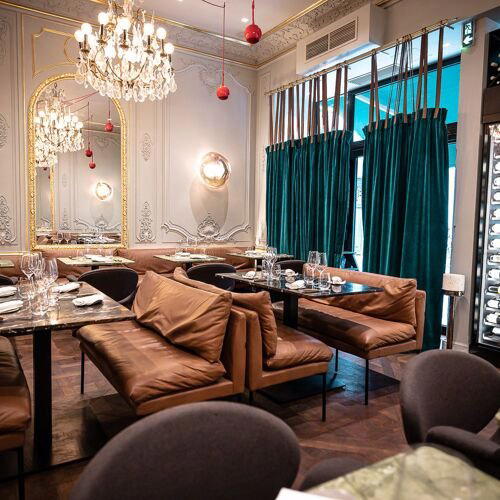
Bars in Bouc Bel Air
Browse all →
Hotels in Bouc Bel Air
Browse all →

Restaurant La Truffe Dans Tous Ses États
The wine
- Wine program
- Curated wine list
- Extensive wine list
- Sommelier-led
Details
- Elegant
- Romantic
- Intimate
- Sophisticated
- Date Night
- Special Occasion
- Private Dining
- Extensive Wine List
- Sommelier Led
- Tasting Menu
- Allergy Accommodating
Current opening hours
- Monday
- Closed
- Tuesday
- Closed
- Wednesday
- 5–11 PM
- Thursday
- 10 AM–11 PM
- Friday
- 10 AM–11 PM
- Saturday
- 10 AM–11 PM
- Sunday
- 10 AM–4 PM
Hours can change for holidays and private events. Last verified .
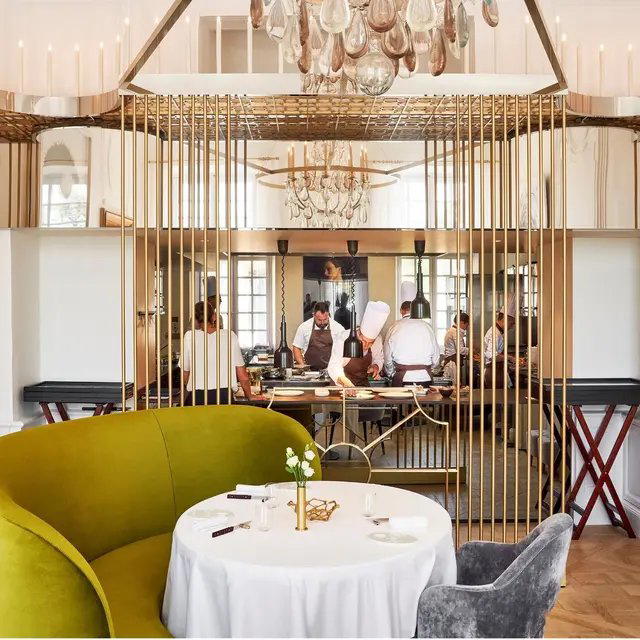
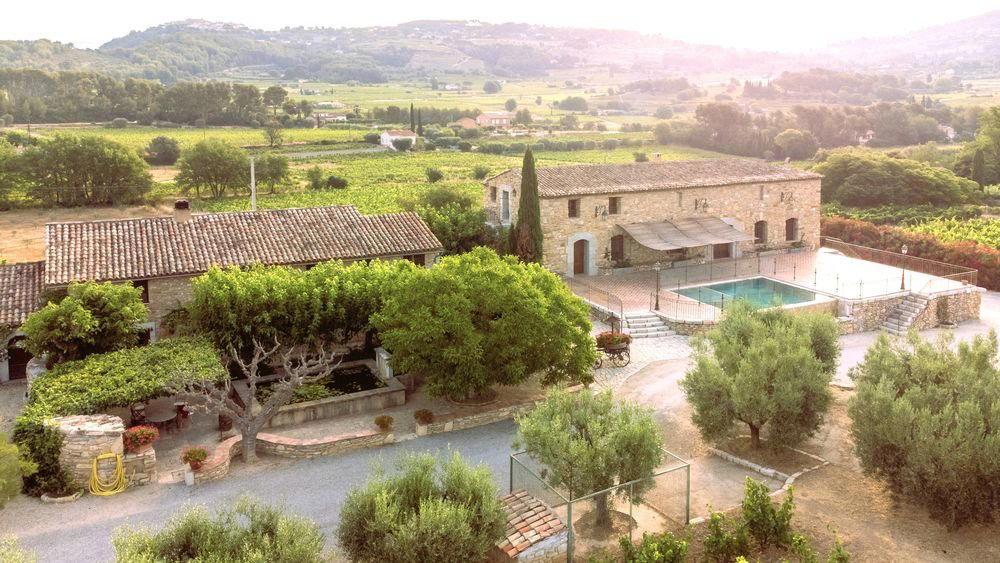
Elegant and intimate setting with a pleasant decor that allows for privacy between tables, creating a refined and romantic atmosphere.