A Croatian restaurant on Hohenzollernstraße in Koblenz, Restaurant Croatia sits within a city better known for its Mittelrhein wine bars and German-French brasserie tradition. For visitors seeking a departure from the regional norm, it represents one of the few addresses in Koblenz where Balkan and Adriatic cooking traditions anchor the menu rather than appear as footnotes.
Pearl is the En Primeur Club membership app — saves, bookings, and concierge access live there. Same editors, same standards.
- Address
- Hohenzollernstraße 116, 56068 Koblenz, Germany
- Phone
- +4926197339510
- Website
- speisekartenweb.de
- Directions
- Get directions
 Saves & bookings on Pearl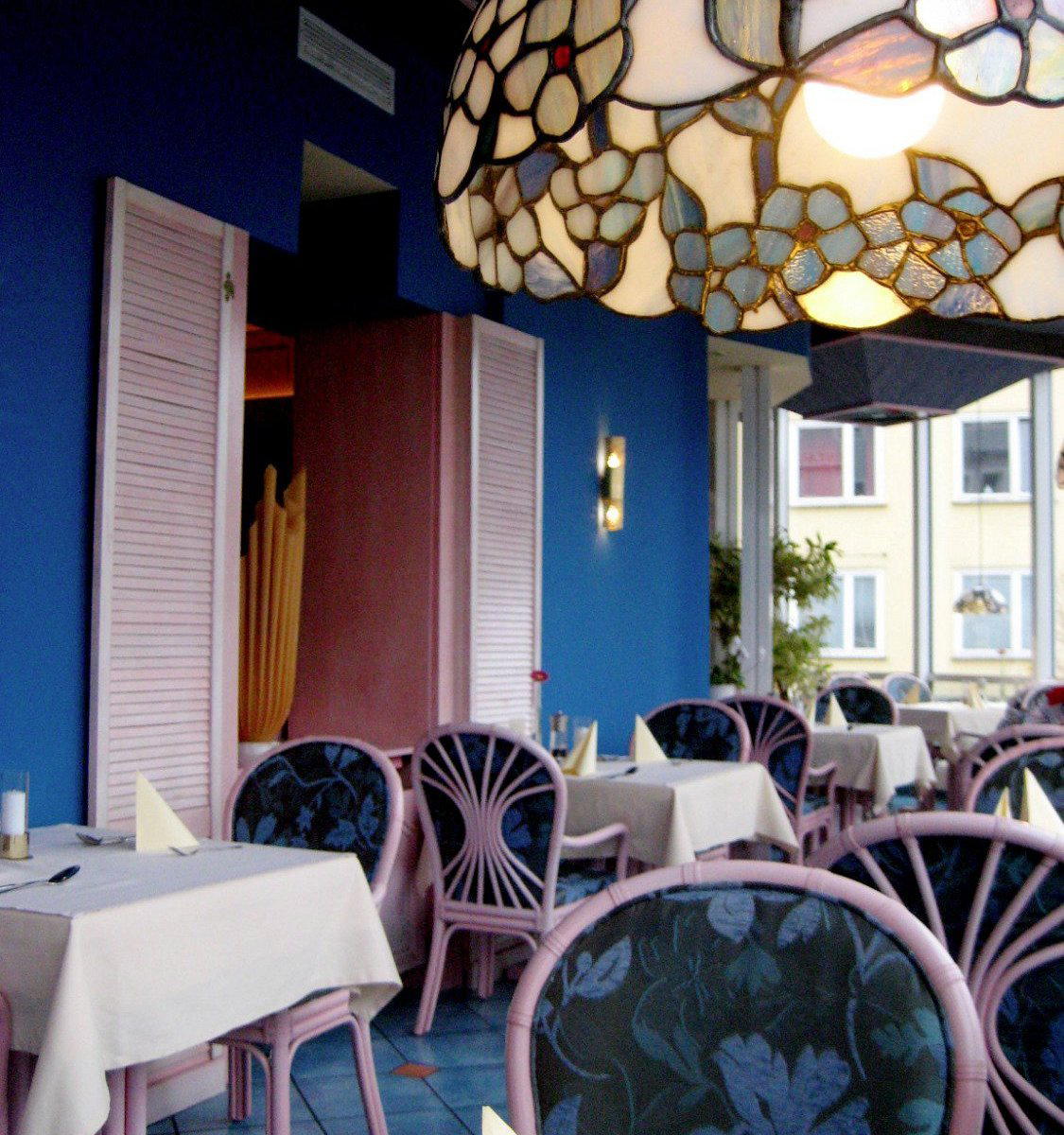
Croatian Cooking in a German River City
Koblenz sits at the confluence of the Rhine and the Moselle, and its restaurant scene has historically reflected that geography: German-French brasserie cooking, Mittelrhein Riesling lists, and the occasional fine-dining counter pushing toward the precision end of modern European cuisine. Addresses like Gotthardt's by Yannick Noack and Schiller's Manufaktur define the upper register of that tradition, while Verbene and FÄHRHAUS Koblenz occupy its more casual mid-range. Restaurant Croatia on Hohenzollernstraße 116 sits outside that local hierarchy entirely, drawing instead from the Adriatic and Balkan cooking traditions that rarely surface in a mid-sized German city of this profile.
Croatian cuisine in Germany is not a well-mapped category. Unlike Italian or Turkish cooking, which have deep infrastructure across German cities, Adriatic and Balkan traditions tend to appear in one-off, family-run addresses with little critical apparatus around them.
What the Menu Reveals About the Kitchen's Priorities
The architecture of a Croatian menu, when executed with attention to origin, tends to split along a coastal-interior axis. Coastal Croatian cooking leans on the Adriatic for its protein sources: grilled fish, octopus prepared simply with olive oil and capers, and shellfish from the Dalmatian coast. Interior Croatian and Slavonian cooking moves toward heavier preparations, game, smoked meats, and paprika-driven stews that share more DNA with Hungarian and Serbian traditions than with the Mediterranean. A kitchen that takes both seriously tends to present them as distinct sections, or at least signals in its sourcing which tradition it is working from.
Without access to the current menu at Restaurant Croatia, it is not possible to confirm which end of that spectrum the kitchen favours. What the address on Hohenzollernstraße does confirm is a neighbourhood context: the street runs through a residential part of Koblenz with strong local patronage patterns, which tends to shape menus toward regularity and portion generosity rather than tasting-menu precision. That is not a criticism. The most reliable Croatian cooking in European cities away from the coast often lives in exactly this kind of address, where the kitchen is not performing for critics but cooking for a community.
For reference, the formal end of German fine dining is well represented elsewhere in the country. Aqua in Wolfsburg, Schwarzwaldstube in Baiersbronn, and Vendôme in Bergisch Gladbach anchor the Michelin-starred tier. JAN in Munich and CODA Dessert Dining in Berlin push at format boundaries in different ways. Restaurant Croatia does not compete in that register, nor does it need to. Its value proposition is specificity of tradition in a city where that tradition is otherwise absent.
Adriatic Cooking in a Rhineland Context
The Adriatic coast — Croatia's Dalmatian stretch in particular — has developed one of the more coherent regional food identities in the Eastern Mediterranean. Olive oil production, dry-cured meats like kulen and pršut, and a grilling culture that treats fish with considerable restraint in its seasoning have made Dalmatian cooking recognisable across European cities with Croatian diaspora communities. In Germany, that diaspora is substantial: Croatian migration to Germany dates to the 1960s guest-worker programmes, and restaurant addresses serving that community have existed in German cities for decades, though they have rarely attracted broad critical attention.
What separates the stronger addresses in this category from the weaker ones is usually sourcing discipline and menu focus. A menu that tries to represent Croatian, Serbian, Bosnian, and Macedonian cooking simultaneously tends to spread too thin. The kitchens that hold up over time are typically those that pick a lane, whether that is Dalmatian coastal, Slavonian inland, or Istrian, and stay in it. The Istrian tradition in particular, with its proximity to Italian cooking via Trieste and its use of truffles, prosciutto, and locally produced white wines, has begun to attract attention from food media in recent years as a coherent culinary region in its own right.
Germany's wider restaurant scene increasingly accommodates this kind of specificity. At the more experimental end, ES:SENZ in Grassau and Victor's Fine Dining by Christian Bau in Perl demonstrate how European regional traditions can be interpreted at high precision. Waldhotel Sonnora in Dreis and Schanz in Piesport show what rootedness in a specific regional identity can produce at the three-star level. The same logic applies, at a different scale, to neighbourhood restaurants that commit to a cuisine outside the German mainstream.
Placing It Within Koblenz
Koblenz's dining scene is smaller than its historical prominence might suggest. The city's position as a gateway to the Mittelrhein UNESCO wine region draws day-trippers and river cruise passengers, but sustained dinner-table traffic tends to concentrate in a handful of reliable addresses. GERHARDS GENUSSGESELLSCHAFT and the other mid-range addresses in the city centre serve that passing trade well. Restaurant Croatia, on the other hand, sits further along Hohenzollernstraße in a part of the city where the customer base is more likely to be local and returning than tourist and first-time.
That distinction matters when thinking about how to visit. Addresses anchored in local patronage tend to reward advance contact and some familiarity with the menu's rhythms. They are also more likely to have regulars who can give a clearer picture of what the kitchen does consistently well than any single visit would reveal. For visitors approaching Koblenz with time to spare beyond the standard Deutsches Eck and cable-car itinerary, the full Koblenz restaurants guide provides broader orientation across price tiers and cuisine types.
For a wider comparison frame, Restaurant Haerlin in Hamburg and, further afield, Le Bernardin in New York City and Atomix in New York City represent the global upper tier of what precision and specificity can look like in a restaurant committed to a single culinary tradition. Restaurant Croatia operates at a different scale and with different ambitions, but the underlying logic of commitment to a specific cooking tradition is the same.
Planning a Visit
Restaurant Croatia is located at Hohenzollernstraße 116, 56068 Koblenz. Current phone, hours, and booking method are not confirmed in available records, so visiting the address directly or checking current listings before travel is advisable. Given the neighbourhood character and likely local patronage base, arriving with some flexibility on timing and without rigid expectations about format will serve most visitors better than approaching it as a ticketed dining experience.
How Restaurant Croatia Koblenz compares with similar nearby venues.
| Venue | Cuisine | Price |
|---|---|---|
| Verbene | Modern Cuisine | €€€€ |
Continue exploring
More in Koblenz
Restaurants in Koblenz
Browse all →
Bars in Koblenz
Browse all →
Hotels in Koblenz
Browse all →
At a Glance
- Cozy
- Group Dining
- Casual Hangout
Current opening hours
- Monday
- Closed
- Tuesday
- 11:30 AM–2:30 PM, 5:30–9:30 PM
- Wednesday
- 11:30 AM–2:30 PM, 5:30–9:30 PM
- Thursday
- 11:30 AM–2:30 PM, 5:30–9:30 PM
- Friday
- 11:30 AM–2:30 PM, 5:30–9:30 PM
- Saturday
- 11:30 AM–2:30 PM, 5:30–9:30 PM
- Sunday
- 11:30 AM–2:30 PM, 5:30–9:30 PM
Hours can change for holidays and private events. Last verified .
Inviting atmosphere with friendly service praised by diners.
Know Before You Go
- Getting there
- Hohenzollernstraße 116, 56068 Koblenz, Germany