Schlicht. Esslokal occupies a quieter residential stretch of Koblenz's Moselweiß district, away from the tourist corridors around the Deutsches Eck. The name, 'schlicht' translates roughly as plain or unadorned, signals an intention that shapes the entire experience: cooking that does not dress itself up, in a room that follows the same logic. For Koblenz dining, that restraint is itself a position.
Pearl is the En Primeur Club membership app — saves, bookings, and concierge access live there. Same editors, same standards.
- Address
- Moselweißer Str. 6, 56073 Koblenz, Germany
- Phone
- +4926195232255
- Website
- schlicht-esslokal.com
- Directions
- Get directions
 Saves & bookings on Pearl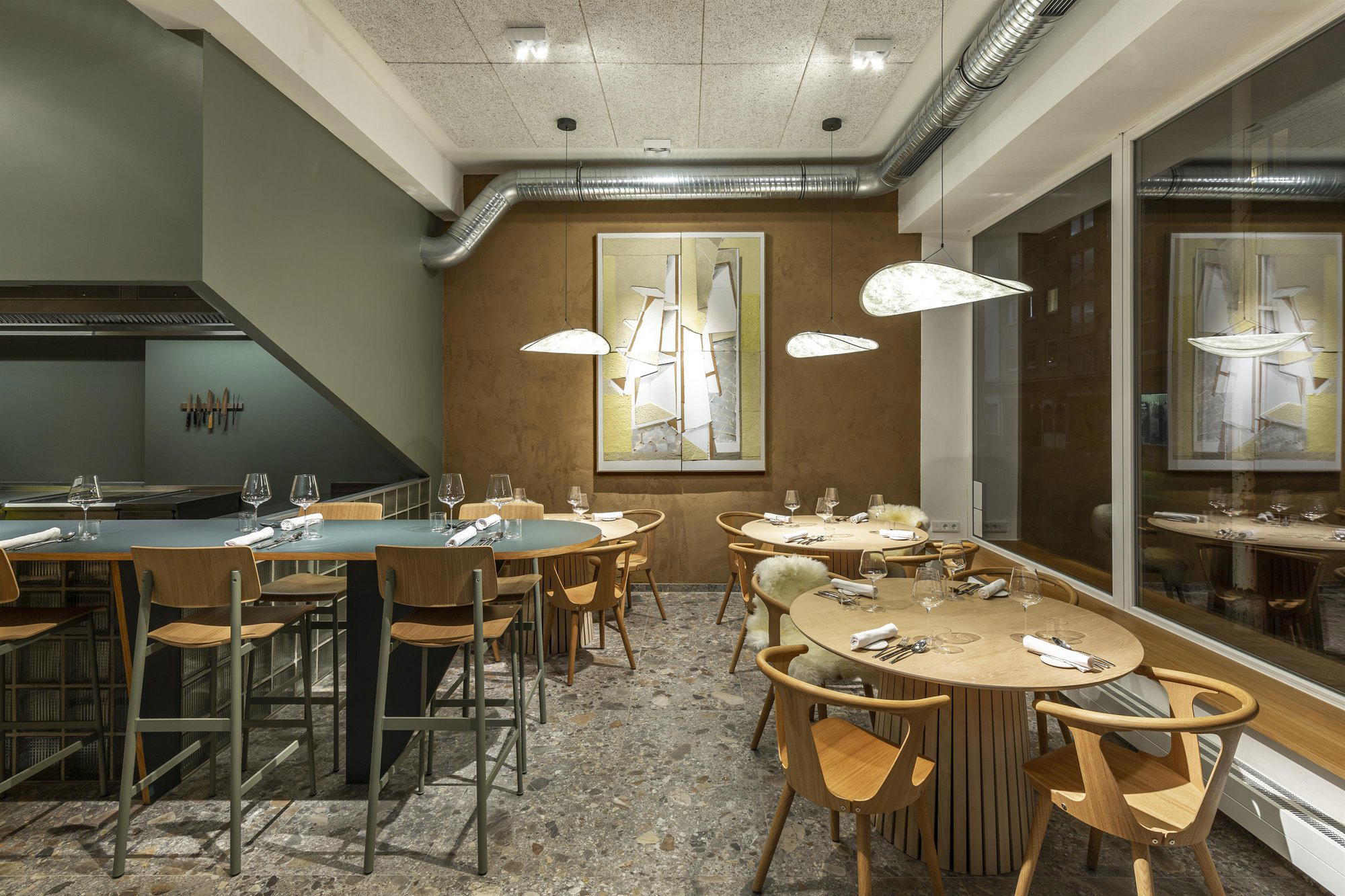
Restraint as a Statement: Dining in Koblenz's Quieter Quarter
Moselweiß sits south of Koblenz's centre, a residential neighbourhood that most visitors pass through on the way to somewhere else. The address on Moselweißer Straße places Schlicht. Esslokal firmly outside the gravitational pull of the old town's tourist dining circuit, and that distance is not incidental. In a city where the confluence of the Rhine and Moselle draws crowds toward obvious landmarks and their surrounding restaurant strips, the choice to operate from a quieter, less trafficked street is an editorial statement before the food arrives.
The name itself carries the argument. 'Schlicht' in German denotes plainness, simplicity, the absence of unnecessary decoration. It is the word a craftsman uses to describe work that does not seek approval through ornament. Set against the four-figure tasting menus and formal dining rooms that define the upper end of regional dining, venues like Gotthardt's by Yannick Noack and Schiller's Manufaktur, both operating at the €€€€ tier, a name like Schlicht. Esslokal positions itself in deliberate contrast.
Where Koblenz Sits in Germany's Dining Geography
Koblenz rarely appears in the same conversation as Germany's headline dining cities. The Rhineland-Palatinate region has genuine fine-dining credentials, Waldhotel Sonnora in Dreis and Schanz in Piesport draw serious diners into the Eifel and Moselle valley respectively, but Koblenz itself functions more as a regional hub than a destination dining city. That context matters when reading the local scene. The city supports a range of formats, from the French-inflected FÄHRHAUS Koblenz to the neighbourhood-rooted GERHARDS GENUSSGESELLSCHAFT, but the scene as a whole operates at a different register than Hamburg's Restaurant Haerlin or Munich's JAN.
Within that context, a restaurant that names itself after plainness occupies an interesting niche. Across German cities, there is a recognisable format, call it the esslokal tradition, that prioritises directness over ceremony. The word 'Esslokal' is itself somewhat old-fashioned, a term for an eating place without the pretension of 'Restaurant'. It implies function. It implies that the food is the point. This is a different competitive logic from the grand-gesture dining that earns coverage in national food media, and it serves a different reader.
The Booking Question: What You Need to Know Before You Go
That absence is itself informative. Restaurants of this type in German cities frequently operate without a substantial digital footprint, relying instead on neighbourhood word-of-mouth, repeat clientele, and physical presence. It is a model that works when the room has regulars and the kitchen has rhythm.
The practical implication for a first-time visitor is that advance contact requires legwork. One reliable approach for restaurants without confirmed online booking systems in Germany is direct visit during service to make a reservation in person, or sourcing a contact number through local aggregators such as Google Maps listings, which are sometimes more current than static data sources. The Moselweißer Straße 6 address is confirmed; the gap is in remote booking access.
Contrast this with the friction of securing a table at Germany's most sought-after addresses. Aqua in Wolfsburg, Victor's Fine Dining by Christian Bau in Perl, and ES:SENZ in Grassau all require months of planning, dedicated booking windows, and in some cases waiting lists. A neighbourhood esslokal in Koblenz operates at the opposite end of that friction curve, the challenge is not competition for a coveted slot but simply locating the right channel to make contact. Once resolved, the path to the table should be considerably shorter.
For visitors arriving in Koblenz without a reservation, the city's dining scene does offer alternatives across formats: Verbene represents the modern cuisine strand. But for those specifically drawn to the Schlicht. Esslokal proposition, the stripped-back room, the name's implicit promise of cooking without performance, the Moselweiß address is worth the additional planning step.
Reading the Format Against the Wider Scene
German dining has produced a number of restaurants that use formal simplicity as a differentiator, though that tendency tends to be more visible at the high end, CODA Dessert Dining in Berlin and Vendôme in Bergisch Gladbach both occupy conceptually focused formats, though at different price and recognition levels. The esslokal format is a different tradition: less about conceptual precision and more about the honest transaction of good food served without theatre.
That tradition has international counterparts. The bistrot économe format in France, the trattoria di quartiere in Italy, the neighbourhood canteen that earns its reputation through consistency rather than spectacle, these are the peer references for a restaurant named Schlicht. Esslokal, even if the comparison set sits across borders. At the furthest end of the spectrum, places like Le Bernardin in New York City and Atomix in New York City demonstrate what formality and investment produce; the esslokal model makes an implicit argument that those qualities are not prerequisites for a worthwhile meal.
For the reader planning a Koblenz visit, the question is not whether the restaurant competes with Schwarzwaldstube in Baiersbronn, it does not, and was never intended to. The question is whether the Moselweiß neighbourhood has a serious eating place that rewards the walk from the centre. The address and the name suggest it does.
Planning Your Visit
The restaurant is located at Moselweißer Str. 6, 56073 Koblenz. The Moselweiß district is accessible from central Koblenz by local bus or a fifteen-to-twenty minute walk south from the main train station. Reservations are essential, and the restaurant is closed Monday, Tuesday, and Sunday, with evening service Wednesday through Saturday. The restaurant sits within a district that has a genuine residential character, which means the surrounding streets reward a short walk rather than a dash in and out.
Fast Comparison
Comparable venues nearby, for context on price, style, and recognition.
| Venue | Cuisine | Price | Notes |
|---|---|---|---|
| Schlicht. EsslokalThis venue — the venue you are viewing | Modern Regional German Fine Dining | $$$ | Not listed |
| GERHARDS GENUSSGESELLSCHAFT | Modern German & French Fine Dining | $$$ | Deutsches Eck |
| Kraut&Rüben - Koblenz | Vegan/Vegetarian Bowls | $$ | Rauental |
| Liesers Bistro | German Bistro | $$$ | Görresplatz |
| FÄHRHAUS Koblenz | Avant-Garde French-Mediterranean Fine Dining | $$$$ | An der Fähre |
| PROJECT VEGAN | Modern Vegan Vietnamese | $$ | Deutsches Eck |
Continue exploring
More in Koblenz
Restaurants in Koblenz
Browse all →
Bars in Koblenz
Browse all →
Hotels in Koblenz
Browse all →
At a Glance
- Relaxed
- Modern
- Cozy
- Intimate
- Minimalist
- Date Night
- Special Occasion
- Open Kitchen
- Extensive Wine List
- Natural Wine
- Local Sourcing
- Organic
Current opening hours
- Monday
- Closed
- Tuesday
- Closed
- Wednesday
- 6–10 PM
- Thursday
- 6–10 PM
- Friday
- 7–11:30 PM
- Saturday
- 7–11:30 PM
- Sunday
- Closed
Hours can change for holidays and private events. Last verified .
Relaxed and informal atmosphere that feels like home, with pleasant noise levels and unpretentious service.