Regent Thai Cuisine
On 18th Street NW in Adams Morgan, Regent Thai Cuisine occupies a stretch of D.C. where neighbourhood Thai restaurants have quietly held ground against the city's rising tide of tasting-menu formats and chef-driven concepts. The cooking draws on the regional specificity that distinguishes Thai cuisine from its pan-Asian neighbours, and the address puts it within walking distance of some of the capital's most competitive dining blocks.
Pearl is the En Primeur Club membership app — saves, bookings, and concierge access live there. Same editors, same standards.
- Address
- 1910 18th St NW, Washington, DC 20009
- Phone
- +12022321781
- Website
- regentthai.com
- Directions
- Get directions
 Saves & bookings on Pearl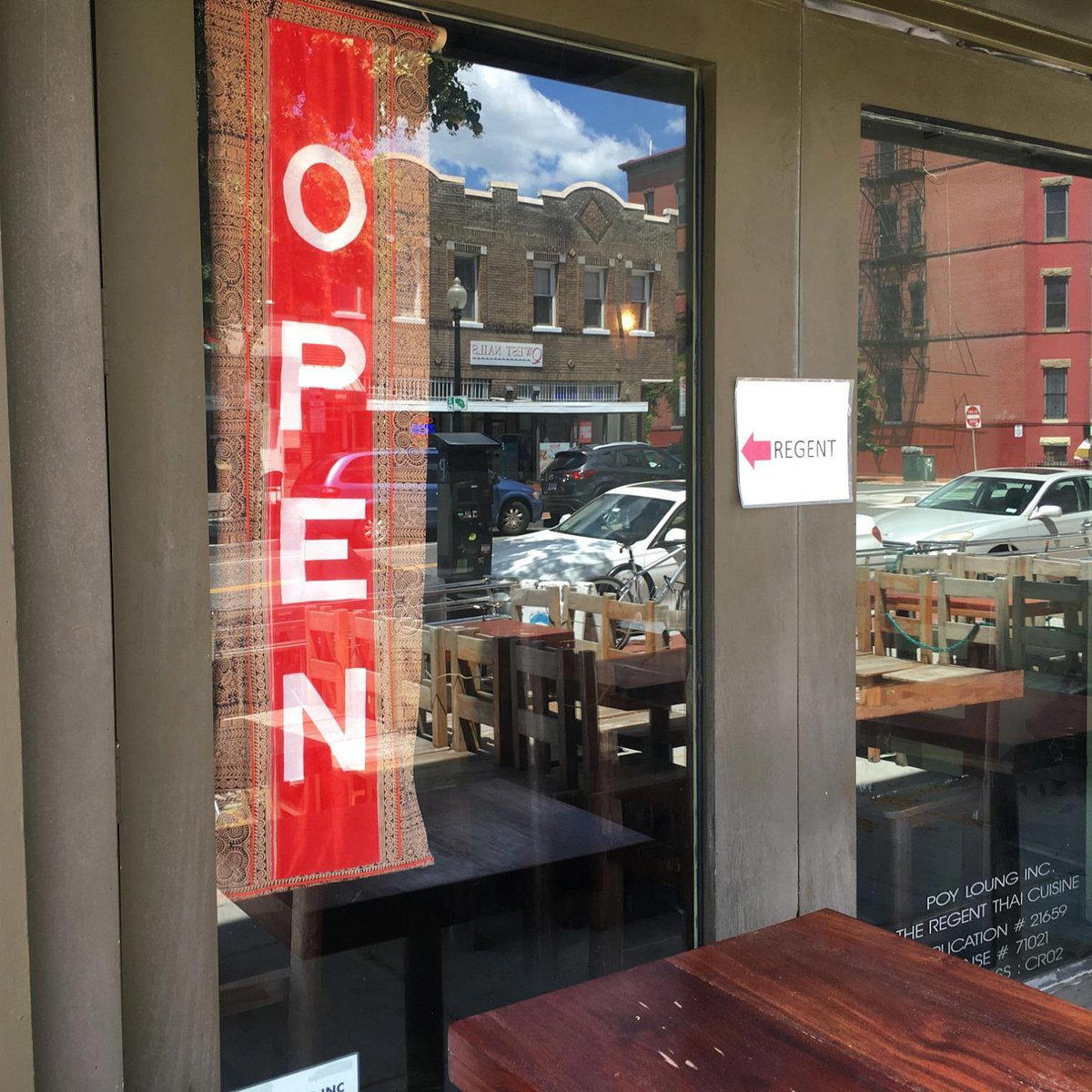
Adams Morgan and the Case for the Neighbourhood Thai Counter
There is a particular kind of restaurant that D.C.'s dining conversation tends to skip over. Not because the food is unremarkable, but because the format does not fit neatly into the omakase-or-tasting-menu binary that dominates editorial coverage. Thai restaurants of the neighbourhood-anchor variety sit in this gap. They are not competing with Jônt or minibar for the same diner, and they are not trying to. They are holding a different kind of ground: the reliable, mid-evening destination where the cooking carries the room without theatrical production framing it.
Regent Thai Cuisine, at 1910 18th St NW, sits inside Adams Morgan, one of D.C.'s most food-dense corridors. The 18th Street strip has long functioned as a neighbourhood that absorbs new openings at a faster rate than most parts of the city, which means longevity here signals something. A restaurant that holds its position in Adams Morgan across cycles of new competition is not doing so by accident.
The Progression That Defines Thai Cooking at This Register
Thai cuisine, when cooked with attention to sequencing rather than simultaneity, operates through a logic of contrasts. The meal moves from lighter, acid-forward preparations toward richer, coconut-based curries, and then toward the aromatic heat of dry-spiced dishes. This is not a convention imposed from outside Thai culinary tradition; it reflects how the cuisine was historically assembled across courses in household and restaurant contexts in Bangkok and the regional capitals of Chiang Mai and Hat Yai.
At a restaurant like Regent Thai, the editorial interest lies less in any single dish and more in whether the kitchen respects this progression or collapses it into a single register of sweetened, Americanised approximations. The distinction matters because D.C. diners who have encountered Thai food only in its adapted form are working from a different reference point than those who have eaten at the source. The Adams Morgan location, with its demographic diversity and international resident population, creates a room where both reference points coexist at adjacent tables.
Dishes that anchor the early part of a Thai meal tend to be the ones that reveal much about a kitchen's technique: the clarity of a tom kha, the balance of fish sauce and lime in a larb, the texture control in a papaya salad where the crunch is deliberate rather than accidental. These are not forgiving preparations. They expose shortcuts immediately.
Where Regent Thai Sits in D.C.'s Broader Dining Picture
Washington's restaurant scene has polarised in recent years between high-investment tasting-menu operations and the neighbourhood institutions that predate the city's current fine-dining ambitions. Regent Thai belongs to the latter category, occupying a price point and format that sits well below the $$$$ tier represented by peers like Causa, Albi, and Oyster Oyster. That is not a criticism. It is a different competitive set entirely.
The relevant comparison for Regent Thai is not what is happening at the tasting-menu counter but what is happening across D.C.'s broader Southeast Asian dining corridor. Thai, Vietnamese, and Lao kitchens in the D.C. area have in some cases made the transition toward more composed, regionally specific presentations. In others, they have held to the format that built their audience: accessible, familiar, consistent. Regent Thai's 18th Street address places it in a neighbourhood where foot traffic supports the latter model, and where the dining room fills across a range of occasions rather than primarily destination-driven evenings.
Regent Thai operates in a register that complements rather than competes with those rooms.
Seasonal Timing and the Rhythm of 18th Street
Adams Morgan shifts noticeably with the seasons. In warmer months, the 18th Street strip operates as an outdoor dining corridor, with tables extending onto the pavement and the foot traffic that comes with D.C.'s long spring and summer evenings. For a Thai kitchen, this seasonal shift matters in practical terms: cold preparations, lighter curries, and herb-forward dishes read differently in July than in February. Restaurants in this neighbourhood that calibrate their menu emphasis to the season tend to hold their audience across the year rather than relying on a single peak period.
Richer curries and slow-cooked preparations become the natural draw, which aligns with how Thai cooking has historically handled colder climates, whether in the highlands of northern Thailand or in the diaspora contexts of cities like D.C. and Chicago.
Placing Regent Thai Against the National Thai Register
Thai cooking at its most precise in the United States tends to cluster in a few cities: Houston's Westheimer corridor, Los Angeles's Thai Town on Hollywood Boulevard, and pockets of Chicago and New York where the diaspora population is dense enough to sustain highly regional cooking. D.C. sits slightly outside this tier in terms of concentration, which means that the Thai restaurants holding ground here are doing so in a market where the competition is spread across cuisines rather than concentrated within a single tradition.
Nationally, the conversation around Thai cuisine in upscale formats has been shaped in part by what is happening at destination restaurants across the country. The progression-focused, course-by-course format that places like Alinea in Chicago and Lazy Bear in San Francisco have applied to European-rooted cooking has found fewer equivalents in Thai contexts at the national level, though that is beginning to shift. Regent Thai, as a neighbourhood-format restaurant rather than a concept-driven one, represents the anchor end of that spectrum rather than the experimental end.
Know Before You Go
- Address: 1910 18th St NW, Washington, DC 20009
- Neighbourhood: Adams Morgan
- Cuisine: Thai
- Price tier: Mid-range neighbourhood format
- Leading approach: Walk-in friendly
- Seasonal note: Pavement seating and walk-in traffic peak May through September; quieter reservation-led dining from October onward
Peers You’d Cross-Shop
Comparable venues nearby, for context on price, style, and recognition.
| Venue | Cuisine | Price | Notes |
|---|---|---|---|
| Regent Thai CuisineThis venue — the venue you are viewing | Traditional Thai Cuisine | $$ | Not listed |
| Rice | Modern Thai | $$ | Logan Circle |
| 1608 14th St NW | Modern Thai | $$ | Logan Circle |
| Little Serow | Northern Thai Prix Fixe | $$ | Dupont Circle |
| La Tomate | Regional Italian Bistro | $$ | Dupont Circle |
| Beefsteak | Vegetable-Centric Fast Casual | $$ | Dupont Circle |
Continue exploring
More in Washington DC
Restaurants in Washington DC
Browse all →
Bars in Washington DC
Browse all →
Hotels in Washington DC
Browse all →

At a Glance
- Casual
- Lively
- Casual Hangout
- Group Dining
- After Work
- Standalone
- Beer Program
Current opening hours
- Monday
- 5–11 PM
- Tuesday
- 5–11 PM
- Wednesday
- 5–11 PM
- Thursday
- 5–11 PM
- Friday
- 12–3 PM, 5–11 PM
- Saturday
- 12–3 PM, 5–11 PM
- Sunday
- 12–3 PM, 5–11 PM
Hours can change for holidays and private events. Last verified .
Casual and warm atmosphere with attentive service; guests appreciate the friendly staff and relaxed dining environment.