Beefsteak
Our verdict
Beefsteak at 1528 Connecticut Ave NW plants itself in the middle of Washington, D.C.'s Dupont Circle corridor, where the city's professional and residential worlds overlap. The address situates it within a dining strip that skews toward accessible, ingredient-led concepts rather than formal tasting rooms. It is a reference point for D.C.'s vegetable-forward fast-casual tier.

Connecticut Avenue and the Case for Vegetable-Driven Fast Casual
Dupont Circle has long functioned as one of Washington's more reliable dining corridors, threading together independent operators, neighborhood regulars, and the kind of weekday lunch crowd that wants something considered without the overhead of a full-service meal. Beefsteak, at 1528 Connecticut Ave NW, occupies a position in that ecosystem that is easy to underestimate: a vegetable-focused fast-casual concept that arrived when D.C.'s dining conversation was beginning to take plant-forward cooking seriously as a category rather than a dietary accommodation.
The broader shift in American restaurant culture toward produce-as-protagonist has played out differently depending on the city. In D.C. it has coexisted with the kind of high-commitment fine dining represented by venues like Jônt and minibar by José Andrés at one end, and accessible neighborhood formats at the other. Beefsteak operates closer to the accessible end, but with a sourcing and preparation intentionality that separates it from generic grab-and-go.
The Progression of a Meal: How the Format Works
Fast-casual concepts live or die by how well their format structures a coherent eating experience. The build-your-own bowl model, which Beefsteak follows, can read as assembly rather than cooking if the component quality doesn't hold up on its own. The stronger iterations of this format treat each element as a finished preparation rather than a raw ingredient waiting to be combined, so the arc of the meal depends on the kitchen's discipline at the component level rather than on a chef orchestrating plate by plate.
At this price tier and format type, the sequencing logic shifts: instead of a tasting progression selected by a kitchen team, the guest controls pacing and combination. That places more interpretive demand on the diner, but it also means that understanding what's on offer before you arrive pays off. The bowl format rewards pairing grains with acidic elements and textured proteins, and the pleasure of the meal is largely in those contrasts rather than in any single ingredient. It is a different kind of editorial judgment from what you encounter at Oyster Oyster or Albi, but it is still a judgment call.
The comparison to D.C.'s broader plant-focused dining tier is instructive. Oyster Oyster operates at the $$$ level with a structured tasting approach and a sustainability credential that has earned serious press attention. Beefsteak targets a different access point: lower commitment, higher frequency, same underlying argument that vegetables deserve as much kitchen attention as protein.
Where Beefsteak Sits in D.C.'s Dining Tier
Washington's restaurant scene in the past decade has deepened considerably at the upper end. The city now supports multi-course destination dining at formats that compete with Le Bernardin in New York City, The French Laundry in Napa, and Smyth in Chicago. It has also developed a mid-tier of serious independent operators Causa and its Peruvian tasting format at $$$$, Albi with its Middle Eastern fine dining credentials, that reflect a city confident enough in its culinary identity to support genuine variety.
Beefsteak occupies a different functional role in that ecosystem. It is not competing with The Inn at Little Washington or with the kind of farm-to-table precision you find at Blue Hill at Stone Barns or Single Thread Farm in Healdsburg. It is answering a different question: what does daily, affordable vegetable-forward eating look like in a city whose lunch culture is still dominated by sandwiches and salad chains? That question has genuine stakes, and the fact that the concept has maintained a presence on Connecticut Avenue reflects a real demand for the answer.
For comparison, the restaurant tier immediately above Beefsteak in D.C. venues like Rooster & Owl at $$$ with a contemporary tasting format, or Rose's Luxury with its New American approach, involves a meaningfully higher per-head spend and a longer time commitment. Beefsteak functions as a gateway into produce-led thinking for guests who might later find their way to Oyster Oyster's more structured vegetable-focused dining, or who split their week between fast-casual lunches and occasional fine dining at Addison in San Diego-level destination experiences when traveling.
The Connecticut Ave Address and How to Plan Your Visit
The 1528 Connecticut Ave NW address puts Beefsteak squarely in the upper Dupont Circle stretch, walkable from the Dupont Circle Metro stop on the Red Line and from several hotel clusters along Massachusetts Ave. The format suits a quick pre-meeting lunch or a post-work early dinner more than a leisurely Saturday evening. For visitors building a D.C. itinerary around food, it makes most sense as a calibration meal, a low-commitment entry point before dinner reservations at more involved venues. Booking is not typically required for this format tier; counter service means walk-in access is the norm, though midday weekday crowds in a dense corridor can extend wait times at the order point.
For a fuller picture of what D.C.'s dining scene offers across price points and formats, the EP Club Washington, D.C. restaurants guide covers the full range from fast-casual to tasting-menu destinations. Those planning evenings at the higher end of the city's dining tier might also consider how Beefsteak compares in concept, if not in formality, with vegetable-focused programs at Providence in Los Angeles or the ingredient-led approach at Lazy Bear in San Francisco, both of which bring the same underlying argument, that produce deserves technical rigor, to a fine dining context.
Internationally, the same argument is being made at very different price points. Atelier Moessmer Norbert Niederkofler in Brunico represents the European end of that spectrum: a Michelin-level commitment to alpine ingredients and zero-waste cooking. Atomix in New York City brings Korean technique to bear on seasonal produce in a tasting format. Beefsteak is not in that tier, but it is part of the same cultural argument about what deserves to sit at the center of the plate.
Frequently asked questions
What's the address for Beefsteak?
Beefsteak is located at 1528 Connecticut Ave NW, Washington, DC 20036, Washington, D.C.
How does Beefsteak compare to other vegetable-focused restaurants in Washington D.C.?
Beefsteak occupies a specific gap in the D.C. dining tier: vegetable-forward cooking executed at fast-casual speed and pricing, without the tasting-menu context that defines produce-driven dining at the city's upper end. The Connecticut Ave NW address places it in Dupont Circle, a corridor that supports independent operators but has fewer fast-casual options built entirely around vegetables. That positioning, rather than any single award or credential, defines where it sits in the Washington D.C. restaurant scene.
What should I order at Beefsteak?
Beefsteak's format centers on build-your-own vegetable bowls, so the order logic follows your choice of base, toppings, and sauces rather than a fixed menu hierarchy. The Dupont Circle location at 1528 Connecticut Ave NW runs a rotating selection tied to seasonal produce. Start with the grain or greens base, then layer cooked and raw vegetables before finishing with a sauce. The kitchen's strength is in the vegetable cookery itself, so prioritize the warm components.
Should I book Beefsteak in advance?
Beefsteak operates as a fast-casual counter, which means walk-ins are the standard mode of entry. No reservation system applies at the Connecticut Ave NW address. Lunch hours on weekdays draw the densest foot traffic from the surrounding Dupont Circle office and residential population, so timing your visit outside the midday rush is the practical workaround.
What makes Beefsteak worth seeking out?
In a Washington D.C. fast-casual market that defaults to grain bowls built around protein, Beefsteak positions vegetables as the primary ingredient rather than an afterthought. The 1528 Connecticut Ave NW location is a short walk from the Dupont Circle Metro stop on the Red Line, making it a genuinely convenient option in a neighborhood with otherwise limited fast-casual depth at this price point. The format is disciplined: a focused menu executed quickly without the sprawl that undermines many competitors.
Can Beefsteak adjust for dietary needs?
The build-your-own bowl structure at Beefsteak inherently accommodates a range of dietary approaches. Because vegetables anchor the menu rather than meat or dairy, vegan and vegetarian configurations require no special substitutions. Those with gluten sensitivities should check individual components at the counter, as sauce and grain options vary.
Is Beefsteak worth it?
Beefsteak operates in the fast-casual tier, which keeps the cost well below Washington D.C.'s destination dining options along the same Connecticut Ave corridor. For a quick, produce-focused meal near Dupont Circle, the format delivers a more considered vegetable program than most competitors at the same price point. It functions best as a reliable weekday option rather than a destination in its own right.
Reputation First
A quick snapshot of similar venues for side-by-side context.
| Venue | Cuisine | Price | Awards | Notes |
|---|---|---|---|---|
| BeefsteakThis venue (the venue you are viewing) | Vegetable-Centric Fast Casual | Not listed | Not listed | Not listed |
| Oyster Oyster | Modern Vegetable-Focused Tasting Menu | Not listed | 1 Michelin Star · James Beard Award Outstanding Chef #1 | New American, Vegetarian, Vegetarian (Sustainable) |
| Albi | Modern Levantine Fine Dining | $300–500 | 1 Michelin Star · World's 50 Best #6 | United States, Middle Eastern |
| Causa | Modern Peruvian Fine Dining | $150–200 | 1 Michelin Star · James Beard Award Best Chef: Mid-Atlantic | Peruvian |
| Rooster & Owl | Modern Global Fusion Fine Dining | $50–100 | 1 Michelin Star · Washingtonian 100 Very Best Restaurants #65 | Contemporary |
| Rose’s Luxury | Modern American Fine Dining | $200–300 | 1 Michelin Star · James Beard Award Best Chefs | New American, Contemporary |
Continue exploring
More in Washington DC
Restaurants in Washington DC
All restaurants in Washington DC →
Bars in Washington DC
All bars in Washington DC →


Details
- Modern
- Trendy
- Lively
- Casual Hangout
- Open Kitchen
- Local Sourcing
- A La Carte
- Vegetarian Friendly
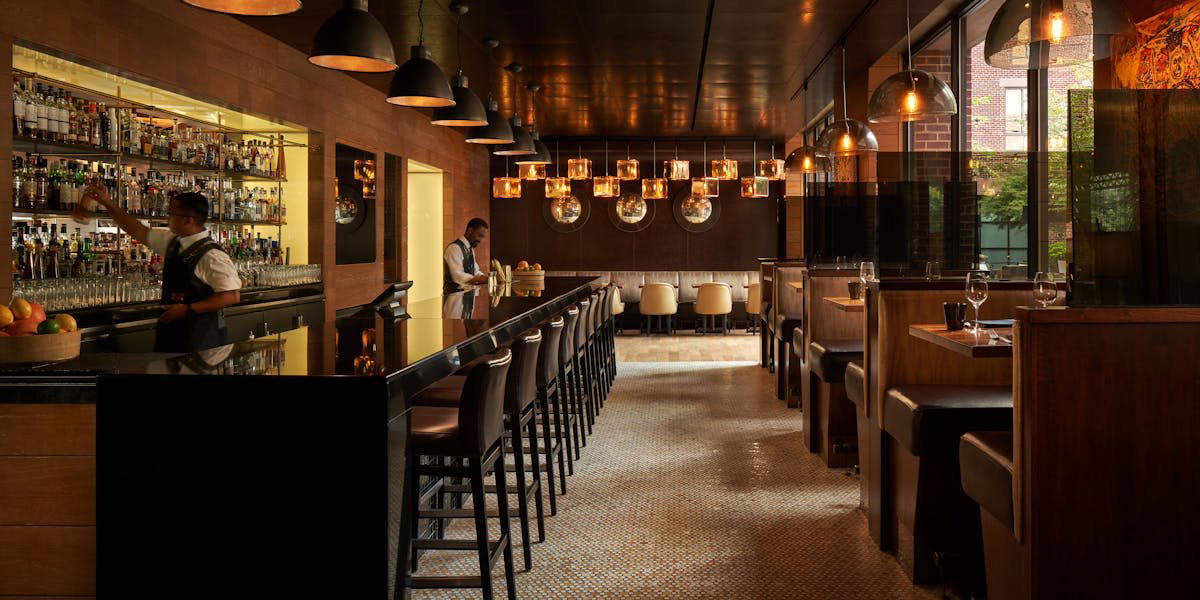
Lively and playful atmosphere immersing guests in a vegetable-centric universe.