
Nagoya’s ramen scene rewards precision over ceremony, and Ramen Suiren fits that pattern with a counter-led format, sub-¥1,000 pricing, and selection for Tabelog 100 - Ramen - AICHI - 2025. It is better understood as a focused everyday ramen address than a milestone dining room, though its small scale gives even a casual bowl a sense of occasion.
Pearl is the En Primeur Club membership app — saves, bookings, and concierge access live there. Same editors, same standards.
- Address
- Japan, 〒466-0831 Aichi, Nagoya, Showa Ward, Hanamitori, 3 Chome−11 ハートイン 杁中 1A
- Phone
- +81 52-833-0572
- Website
- ra-mensuilen.amebaownd.com
 Saves & bookings on Pearl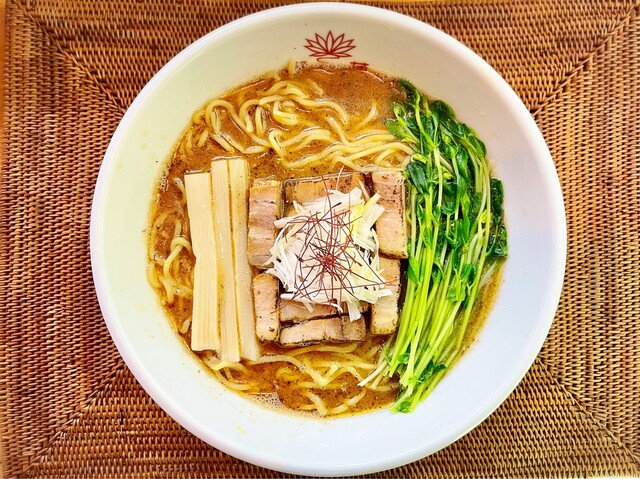
Approaching a serious ramen counter in Nagoya is a different form of occasion dining from the city’s reservation-heavy sushi and French rooms. The ritual is compressed: a short wait, a seat at the counter, a bowl that has to justify itself quickly. Ramen Suiren belongs to that compact, high-expectation tier, where the room is small, the cooking is narrow in focus, and reputation is built bowl by bowl rather than through ceremony.
That matters in Nagoya, a city whose dining identity often gets flattened between Tokyo ambition and Kansai habit. The more useful reading is local: Nagoya has a practical appetite, but it also rewards specialists that hold a line for years. In that setting, ramen can carry the emotional weight of a celebration without adopting the trappings of a formal meal. A counter seat, a limited service window, and a kitchen with a long-running audience create their own pressure.
A counter meal with the discipline of a specialist shop
Ramen’s appeal as occasion dining lies in its refusal to over-explain itself. The format is brief, public, and unforgiving. A small counter shop has little room to hide weak broth, poorly timed noodles, or a confused identity. Ramen Suiren’s selection for Tabelog 100 - Ramen - AICHI - 2025 places it inside Aichi’s recognized ramen conversation, a more useful signal than generic popularity because the category is crowded and fiercely local.
The shop’s structure reinforces that reading. Ten counter seats make the meal intimate without turning it into theatre. The seating also changes how a group should think about the occasion: this is not a long-table birthday or a drawn-out business dinner. It suits a precise, low-friction celebration, especially for diners who would rather mark an achievement with a serious bowl than a multi-course bill. The price range sits in the everyday ramen bracket, which sharpens the point. The occasion comes from scarcity, focus, and local reputation, not spend.
Compared with Nagoya’s higher-ticket dining rooms, the distinction is stark. Sekine and Sushi Yasuke occupy a premium reservation economy, while La Liliana works in a European dining register with a broader meal arc. Ramen Suiren operates in a different social grammar: faster, more solitary if needed, and more dependent on timing. That does not make it lesser. It makes it a cleaner test of what the diner is seeking. For a formal anniversary, the counter may feel too compressed. For a quiet personal milestone, it can feel exactly right.
Why ramen in Nagoya rewards decisive diners
Nagoya’s ramen culture does not need to imitate Tokyo’s queue mythology to matter. The city has enough local density to support specialists, and Aichi’s Tabelog 100 ramen selections give outside diners a practical map through that field. The restaurant’s Tabelog score of 3.63 and 2025 listing indicate a shop with sustained recognition rather than a passing social-media spike. Those signals are useful because ramen evaluation is unusually sensitive to repeat local custom: a bowl that travels well on photographs may not hold regulars over years.
The restaurant opened in May 2004, giving it more than two decades in a category where trends turn quickly. That longevity is the strongest editorial clue here. Modern ramen has splintered into polished chicken-clear broths, heavy tonkotsu variants, shellfish-driven bowls, regional nostalgia, and hybrid styles aimed at younger diners. A small Nagoya counter that remains visible in 2026 is participating in that wider evolution while keeping the economics close to ramen’s democratic core.
There is also a practical cultural point. In Japan, a meal does not need a white tablecloth to carry significance. The choice of ramen for a milestone says something about the diner: taste over display, timing over lingering, repetition over novelty. The solo-dining signal is especially relevant. Ramen counters allow celebration without performance, which is why they remain useful for the traveller marking a private win, the local eating after work, or two friends who know that a good bowl can say enough.
How to place it in a Nagoya itinerary
The smart way to use the restaurant is as a focused anchor rather than a flexible fallback. The counter format, limited scale, and no-reservation setup reward diners who build the day around it instead of treating it as an afterthought. Irinaka, in Showa Ward, sits outside the hotel-heavy core, so the meal works better when paired with a neighbourhood-minded day than with a rushed central Nagoya schedule.
For travellers mapping the wider city, Our full Nagoya restaurants guide gives the broader dining frame, while Our full Nagoya hotels guide, Our full Nagoya bars guide, Our full Nagoya wineries guide, and Our full Nagoya experiences guide help shape the rest of the day. Within the restaurant field, nearby and comparable Nagoya pages such as 1022, 451, Aaron, Alan., and All Day Dining Montmartre show how varied the city’s dining register has become.
Readers building a Japan-wide food itinerary can use the same logic beyond Nagoya: choose places by format, not just cuisine label. A counter, a curry specialist, a casual café, or a sake bar each solves a different dining problem. Useful reference points include -Grilled beef Sukiyaki- KAMAKURA TANUKIAN 鎌倉 たぬき庵 in Kamakura. 鮪と炭火焼き うお炭 秋葉原店 in Tokyo.cafe in Osaka.know in Kumamoto, (Shoku) Vietnam in Kawasaki, [Curry Senmon Ten] Maruyama Kyoju. in Sapporo, Jōdo Saké Bar in Los Angeles, and Onigiri Time in Pasadena.
The verdict is simple: the restaurant is not the place to manufacture grandeur. Its value is in the opposite direction, a small counter meal that uses focus, reputation, and longevity to make ramen feel consequential. For Nagoya, that is a useful corrective to the idea that special-occasion dining has to be expensive, slow, or dressed in ceremony.
The Essentials
Comparable venues at similar price and category levels.
| Venue | Cuisine | Price | Notes |
|---|---|---|---|
| Ramen SuirenThis venue — the venue you are viewing | Shōwa, Cozy Bali-inspired ramen counter | $ | Not listed |
| Chuka Soba Shirakabe Aoi | Not listed | $ | Higashi, Traditional Japanese Ramen & Maze-soba |
| Menya Hayabusa Meieki ten | Nakamura, Modern seafood ramen | $ | Not listed |
| Sapporo Ramen Ezo Men Rock Shinsakae ten | Naka, Sapporo-style Ramen | $ | Not listed |
| Niboshi Chuka Soba Gyogyo | Kita, Niboshi-focused Ramen & Tsukemen | $ | Not listed |
| Kakuozan Kichi Imo Honten | Not listed | $ | Chikusa, Japanese sweet potato confectionery shop |
Recognition history
Dated appearances from independent guides and award organizations, with the underlying list record or original source where available.
Tabelog 100 #46 · No. 46
Tabelog · Tabelog 100 - Ramen - AICHI - 2025
Continue exploring
More in Nagoya
Restaurants in Nagoya
Browse all →

At a Glance
- Cozy
- Intimate
- Whimsical
- Solo
- Casual Hangout
- After Work
- Chefs Counter
- Standalone
- Design Destination
Current opening hours
- Monday
- 11:30 AM–1:50 PM
- Tuesday
- Closed
- Wednesday
- Closed
- Thursday
- 11:30 AM–1:50 PM, 6:30–8:50 PM
- Friday
- 11:30 AM–1:50 PM, 6:30–8:50 PM
- Saturday
- 11:30 AM–1:50 PM
- Sunday
- 11:30 AM–1:50 PM
Hours can change for holidays and private events. Last verified .
A tiny counter-only ramen shop with about ten seats, decorated with Bali frog statues, Balinese cat figures, and gamelan music, creating an intimate, slightly whimsical Asian resort feel despite its casual neighborhood setting.