
Kakuozan Kichi Imo Honten belongs to Nagoya’s compact but serious wagashi circuit, with roasted sweet potato and daigakuimo rather than ceremony-led sweets as its focus. Tabelog selected it for the Japanese traditional sweets and Japanese sweets cafe EAST 100 in 2023, a useful signal for travellers trying to sort casual sweet shops from destination-level specialists.
Pearl is the En Primeur Club membership app — saves, bookings, and concierge access live there. Same editors, same standards.
- Address
- Japan, 〒464-0821 Aichi, Nagoya, Chikusa Ward, Suemoritori, 1 Chome−1 弘法屋ビル 1F
- Phone
- +81 52-763-2010
- Website
- kichiimo.com
 Saves & bookings on Pearl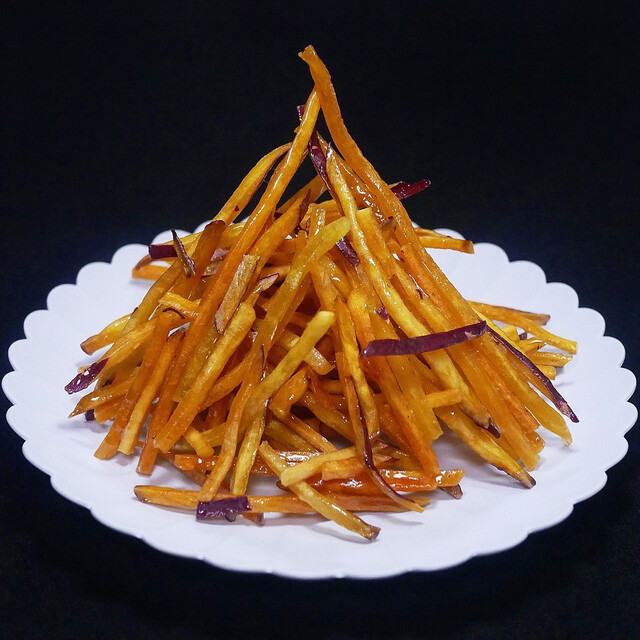
Approaching a specialist wagashi shop in Nagoya is a different proposition from walking into a dining room. The decision is faster, the ritual is shorter, and the margin for error is often in timing: what is ready, what travels well, and whether the counter format suits a planned day across the city. Kakuozan Kichi Imo Honten sits in that practical category of Japanese sweets culture, where the point is not a long seat at a table but a focused purchase built around roasted sweet potato, daigakuimo, and related wagashi.
Nagoya’s food reputation is usually pulled toward miso katsu, hitsumabushi, kishimen, and coffee-shop morning sets, but its sweets culture rewards a slower read. Kakuozan and the wider Chikusa area put the traveller closer to neighbourhood specialists than station-building food halls. That matters because wagashi here is not only a souvenir category; it is part of daily urban eating, priced for repeat custom and judged by consistency rather than theatrics.
Sweet potato wagashi, treated as a specialist format rather than a dessert course
The draw is the narrowness of the brief. Roasted sweet potato and daigakuimo form a more specific lane than broad patisserie or full-service sweets cafes, and that focus changes the way to assess the stop. This is take-out culture, not a lingering cafe itinerary. The useful comparison is with other low-price Nagoya sweet counters such as Baika Do and Wagashi Karyo ocobo, both operating in the sub-¥1,000 band, rather than with higher-spend dining rooms such as CORK. In that company, recognition and category discipline matter more than table design.
The Tabelog 100 selection for Japanese traditional sweets and Japanese sweets cafe EAST in 2023 gives the shop a clear trust signal inside a crowded field. Earlier selections in the sweets EAST category in 2018, 2019, and 2020 also place it in a recurring recognition pattern rather than a single-season spike. Tabelog’s listed score of 3.60 is not the language of global fine dining, but in Japan’s dense review culture it marks a shop that has moved beyond casual neighbourhood notice.
That context is useful for travellers building a Nagoya day around food rather than a single reservation. A sweet-potato specialist can sit between bigger meals, before a hotel check-in, or after a temple or residential-area walk. It also makes sense beside broader city planning: Our full Nagoya restaurants guide maps the dining range, while Our full Nagoya hotels guide, Our full Nagoya bars guide, Our full Nagoya wineries guide, and Our full Nagoya experiences guide help separate a quick sweets stop from the rest of the itinerary.
Why planning matters even when there is no table to secure
For travellers used to restaurant booking calendars, a take-out wagashi counter can look simple. It is not always simple in practice. The constraint is not a seat; it is the small-window nature of fresh sweets, cash handling, transport, and the decision to visit early enough that the counter has range. Kakuozan Kichi Imo Honten is founded in 1989 and operates as a take-out specialty, so the experience belongs to the older Japanese model of a focused shop rather than the contemporary all-day cafe built for long stays and photos.
Payment is part of that planning. Credit cards are not accepted, which puts this in the category of Japanese food stops where cash is not a quaint detail but the operating assumption. Parking is unavailable, and the sensible approach is to treat the stop as part of a walking or transit route rather than a drive-up errand. The nearest-station anchor is Kakuozan Station, which places the shop in a neighbourhood where short food stops can be combined with other local errands rather than treated as a stand-alone cross-city expedition.
The low spend changes expectations. In Nagoya, ¥1,000 can mean a snack, a sweet counter purchase, or a tightly edited specialty item; it rarely buys ceremony. That is the right lens here. Travellers looking for a seated dessert salon should compare the category before going; those reading the city through small specialists will understand why a shop like this earns attention. Nearby comparison points in Nagoya include tbz Kakuouzan honten for a slightly higher casual spend band and Wagashi Karyo ocobo for another sub-¥1,000 sweets reference.
How it fits into a wider Japan food itinerary
Japan’s regional food travel is often distorted by reservation anxiety: sushi counters, kappo rooms, and omakase calendars take up the planning oxygen. Sweets specialists work differently. They reward the traveller who leaves gaps between fixed meals and reads neighbourhoods through small, single-purpose shops. In that sense, Kakuozan Kichi Imo Honten is closer in spirit to a compact craft stop than to a restaurant booking.
For a wider comparison across Japan and beyond, the internal map matters more than forcing one hierarchy. Nagoya diners can cross-reference other city listings such as 1022, 451, Aaron, Alan., and All Day Dining Montmartre when deciding how much of a day should be snack-led versus meal-led. The same logic travels well across the country: -Grilled beef Sukiyaki- KAMAKURA TANUKIAN 鎌倉 たぬき庵 in Kamakura. 鮪と炭火焼き うお炭 秋葉原店 in Tokyo.cafe in Osaka.know in Kumamoto, (Shoku) Vietnam in Kawasaki, and [Curry Senmon Ten] Maruyama Kyoju. in Sapporo all sit in different planning categories, from meal anchors to casual stops. Even overseas Japanese-leaning addresses such as Jōdo Saké Bar in Los Angeles and Onigiri Time in Pasadena show the same traveller question: is this a destination meal, a precise snack, or a useful hinge between larger plans?
The critical read is direct: this is a Nagoya sweets specialist for travellers who care about category and logistics as much as reputation. The award history supports the detour, the take-out format keeps the commitment light, and the sweet-potato focus gives the stop a clear reason to exist within a city already full of casual food. Treat it as a calibrated insert in the day, not the day’s main event.
Cuisine-First Comparison
Comparable options at the same price tier.
| Venue | Cuisine | Price | Notes |
|---|---|---|---|
| Kakuozan Kichi Imo HontenThis venue — the venue you are viewing | Japanese sweet potato confectionery shop | $ | Not listed |
| Menya Tamagusuku | Okinawan-style Ramen & Soki Soba | $ | Chikusa |
| Tsutsui Shogetsu | Japanese Traditional Sweets | $ | Higashi |
| Tsubameya Dainagoya birudingu ten | Traditional Japanese wagashi & dorayaki shop | $ | Nakamura |
| Menya Hayabusa Meieki ten | Modern seafood ramen | $ | Nakamura |
| Mensou Nanaya | Creative Ramen & Tsukemen | $ | Not listed |
Recognition history
Dated appearances from independent guides and award organizations, with the underlying list record or original source where available.
Tabelog 100 #10 · No. 10
Tabelog · Tabelog 100 - Japanese traditional sweets / Japanese sweets cafe - EAST - 2023
Continue exploring
More in Nagoya
Restaurants in Nagoya
Browse all →

At a Glance
- Classic
- Cozy
- Solo
- Family
- Casual Hangout
- After Work
- Standalone
- Street Scene
Current opening hours
- Monday
- 10 AM–6 PM
- Tuesday
- 10 AM–6 PM
- Wednesday
- 10 AM–6 PM
- Thursday
- 10 AM–6 PM
- Friday
- 10 AM–6 PM
- Saturday
- 10 AM–6 PM
- Sunday
- 10 AM–6 PM
Hours can change for holidays and private events. Last verified .
A simple, traditional Japanese sweet shop tucked into a historic cultural street near Kakuozan temple, with a compact retail space focused on takeaway, calm atmosphere, and displays of neatly packaged sweet potato confections suited for gifts and omiyage.