
Nagoya’s ramen culture rewards compact counters with a clear point of view, and Niboshi Chuka Soba Gyogyo sits squarely in that lane: dried-sardine chuka soba and tsukemen, 13 counter seats, cash-only payment, and recognition in Tabelog’s Ramen AICHI 100 for 2025. The Kurokawa-area shop is a low-price, high-focus stop for travelers reading Nagoya through its everyday noodle craft rather than its formal dining rooms.
Pearl is the En Primeur Club membership app — saves, bookings, and concierge access live there. Same editors, same standards.
- Address
- 愛知県名古屋市北区水草町2-55-1
- Website
- tabelog.com
 Saves & bookings on Pearl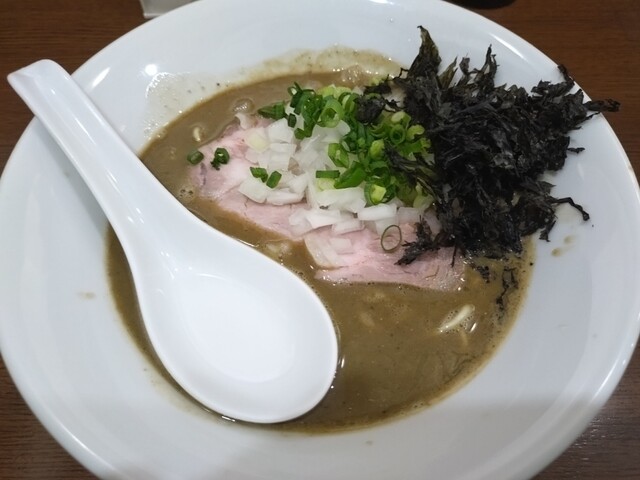
Approaching a serious ramen counter in Nagoya usually means trading ceremony for compression: a small room, a short menu, a queue that moves by bowl rather than by table, and the sound of broth work happening within arm’s reach. In Kita-ku, Niboshi Chuka Soba Gyogyo belongs to that compact school. The format is counter-only, the category is ramen and tsukemen, and the signal is not luxury but focus: dried fish, wheat noodles, and a pace built around solo diners as much as families.
Nagoya is often read through miso katsu, kishimen, tebasaki, and coffee-shop breakfasts, but its noodle culture is broader than the city’s headline foods suggest. Ramen here does not carry the same tourist shorthand as Sapporo miso or Hakata tonkotsu, which makes the Aichi ramen conversation more local and more granular. Recognition in Tabelog’s Ramen AICHI 100 for 2025 places Niboshi Chuka Soba Gyogyo inside that regional conversation rather than in a national spectacle tier. The rating context is equally grounded: a Tabelog score of 3.62, a 13-seat counter, and a price band that keeps the meal in everyday territory.
Dried-sardine ramen as a low-waste Japanese pantry logic
Niboshi ramen has an environmental story before anyone turns it into a slogan. Dried sardines belong to Japan’s preservation pantry, the same practical logic that made kombu, katsuobushi, dried shiitake, and fermented seasonings central to everyday cooking. Small fish are dried for storage, concentration, and transport; the result is a broth culture built on intensity rather than excess. That matters in a ramen city where heavy animal broths and high-labor bowls can dominate attention. A niboshi-led shop points the lens toward shelf-stable ingredients, compact kitchens, and a style that can deliver depth without leaning on luxury inputs.
The name makes the thesis plain: chuka soba anchored by niboshi, with tsukemen also part of the category. That split says something about contemporary ramen in Aichi. Chuka soba reads as the more direct bowl, while tsukemen gives noodles and dipping broth separate identities. In both cases, the counter format keeps the experience closer to craft food than restaurant theater. There is no need to invent a chef narrative when the tradition itself is the story: preserved fish, disciplined extraction, and a bowl designed for repeat local use.
Within Nagoya’s affordable noodle bracket, the comparison is instructive. Men Senmon Ten Ajiyoshi occupies the same sub-¥1,000 band, while Tenichi and Curry Udon Shachinoya move across the ¥1,000 to ¥1,999 range depending on meal period. Kurokawa Yuuan Tei sits higher, and Yakiniku Horumon Gensho is in another spending category altogether. The point is not that ramen is cheap by default; it is that a recognized counter can remain financially accessible while competing on clarity of specialization. For travelers, that is the appeal of this tier: the meal carries local credibility without requiring a tasting-menu commitment.
The counter is the experience, not a prelude to it
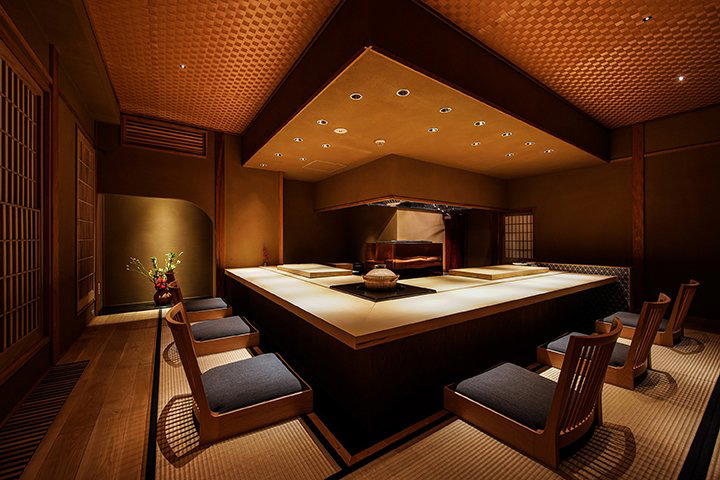
Counter-only ramen changes how a meal behaves. Service rhythm, turnover, and the view into production become part of the format. With 13 seats, Niboshi Chuka Soba Gyogyo fits the narrow-room model common to Japanese ramen shops: limited capacity, focused ordering, and little separation between kitchen and guest. This is where Nagoya’s casual dining strength shows itself. The city can be businesslike, practical, and deeply particular about everyday food, and ramen counters turn that personality into a dining structure.
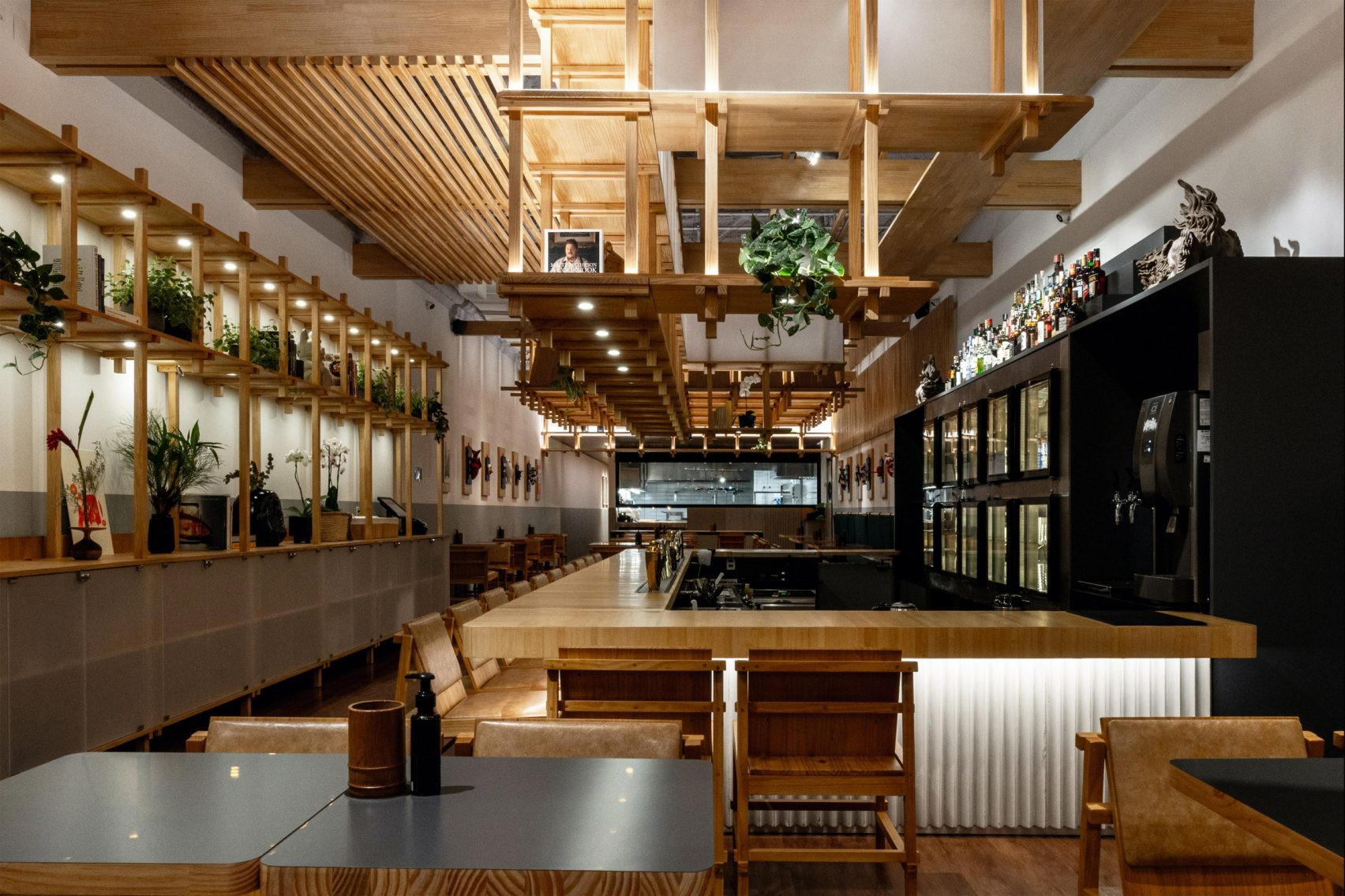
The shop also reads as more inclusive than many small-format counters. Children are welcome, and the setting is marked as family friendly as well as solo dining friendly. That combination is useful in Japan, where compact counters can sometimes feel oriented toward lone office workers or dedicated noodle chasers. Here, the low price band, non-smoking room, and counter seating define the experience more than décor language. The setting is spare in the way functional ramen rooms tend to be spare: the attention goes to the bowl, the turnover, and the decision between soup noodles and dipping noodles.
There are practical frictions, and they are part of the read. Reservations are unavailable, payment is cash-only, and digital payment methods are not accepted. The nearest station is Kurokawa, with the shop listed 1,333 meters from the station; three parking spaces are available in front, with coin parking nearby. Those details shape who the counter serves. It is not built for the hotel-lobby visitor who wants friction removed. It is built for diners willing to move on ramen’s terms, which is often how stronger regional bowls are found.
How to place it in a Nagoya itinerary
For an EP Club reader, the decision is less about chasing a famous name and more about category balance. Nagoya rewards meals that mix formal reservations with casual precision, and this counter belongs in the latter slot. Pair it with a broader read of the city through Our full Nagoya restaurants guide, then build the rest of the trip around Our full Nagoya hotels guide, Our full Nagoya bars guide, Our full Nagoya wineries guide, and Our full Nagoya experiences guide. The better use case is lunch or an early, efficient dinner on a day when the city’s heavier specialties would crowd the schedule.
Readers mapping Japanese regional dining beyond Nagoya can cross-reference other restaurant pages without treating them as direct peers: 1022, 451, Aaron, Alan., and All Day Dining Montmartre. For a wider Japan-and-beyond casual dining thread, see -Grilled beef Sukiyaki- KAMAKURA TANUKIAN 鎌倉 たぬき庵 in Kamakura. 鮪と炭火焼き うお炭 秋葉原店 in Tokyo.cafe in Osaka.know in Kumamoto, (Shoku) Vietnam in Kawasaki, [Curry Senmon Ten] Maruyama Kyoju. in Sapporo, Jōdo Saké Bar in Los Angeles, and Onigiri Time in Pasadena.
The editorial case is clean: a 2025 Tabelog Ramen AICHI 100 selection, a tightly scaled counter, and a niboshi-led format that connects flavor concentration with Japan’s preserved-ingredient tradition. Niboshi Chuka Soba Gyogyo is not a grand occasion restaurant. It is a Nagoya ramen stop with a defined language, low financial barrier, and enough logistical edge to feel local rather than packaged for visitors.
Peers You’d Cross-Shop
Comparable venues by cuisine and price in the same metro.
| Venue | Cuisine | Price | Notes |
|---|---|---|---|
| Niboshi Chuka Soba GyogyoThis venue — the venue you are viewing | Niboshi-focused Ramen & Tsukemen | $ | Not listed |
| Taylor Tail | Japanese Bakery-Cafe | $ | Higashi |
| Chuka Soba Ueda Seimen Ten | Japanese Ramen | $ | Naka |
| Naruto Ya | Ramen & Tsukemen Shop | $ | Naka |
| Kanmidokoro Shibafuku | Japanese Sweets | $ | Naka |
| Atsuta Miso Ramen Buriyu | Japanese Ramen | $ | Atsuta |
Recognition history
Dated appearances from independent guides and award organizations, with the underlying list record or original source where available.
Tabelog 100 #25 · No. 25
Tabelog · Tabelog 100 - Ramen - AICHI - 2025
Continue exploring
More in Nagoya
Restaurants in Nagoya
Browse all →
At a Glance
- Cozy
- Solo
- Family
- Casual Hangout
- After Work
- Late Night
- Standalone
A small, counter-only ramen shop with a relaxed, hideout-like feel in a residential neighborhood, geared to solo diners and families rather than lingering gatherings.