
Menya Hayabusa Meieki ten belongs to Nagoya’s compact ramen culture around the station, where counter service, quick pacing, and specialty broths matter more than ceremony. Its Tabelog Ramen AICHI 100 selection for 2025 places it in a tighter regional bracket, with ramen, abura-soba, and maze-soba forming the core decision for diners.
Pearl is the En Primeur Club membership app — saves, bookings, and concierge access live there. Same editors, same standards.
- Address
- 15-14 Takebashicho, Nakamura Ward, Nagoya, Aichi 453-0016, Japan
- Phone
- +81 52-451-2133
- Website
- sanquan.co.jp
 Saves & bookings on Pearl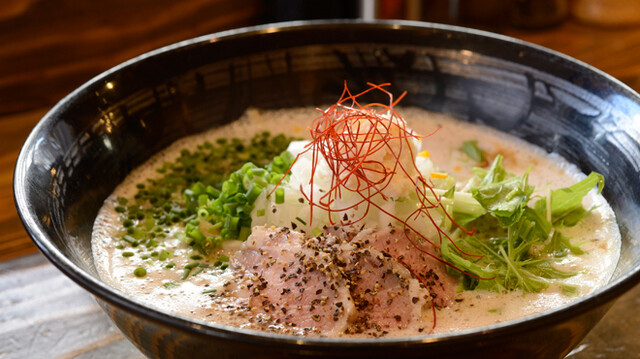
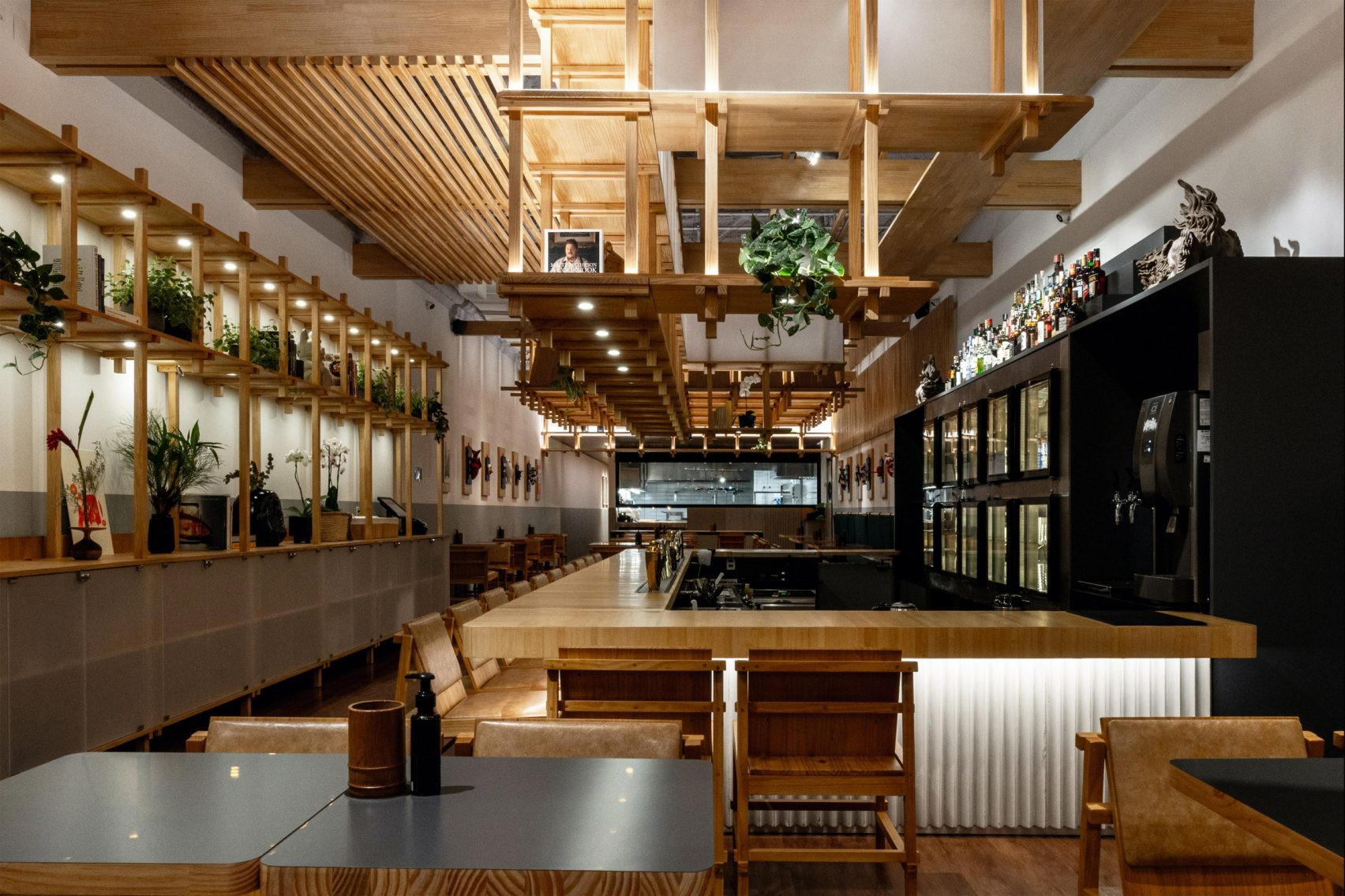
The ramen ritual near Nagoya Station is built on movement: commuters peeling away from the west-side flow, solo diners reading ticket-machine logic, steam rising over counter seats, and bowls landing with little ceremony. In that setting, the room matters less as décor than as choreography. A 19-seat format, with counter places and tables set farther back, keeps the meal close to the kitchen’s rhythm rather than stretching it into a long restaurant evening.
Menya Hayabusa Meieki ten sits inside that station-adjacent category, but it is not a generic transit bowl. The shop’s 2025 selection for Tabelog Ramen AICHI 100 gives it a regional marker in a prefecture where ramen competition is dense and highly local. Nagoya’s noodle culture has long been comfortable with strong seasoning, late meals, and solo dining; this address reads as part of that practical tradition, with enough specialist identity to pull diners beyond pure convenience.
Seafood ramen, dry noodles, and the station-counter rhythm
The useful way to read the menu is by format. Ramen, abura-soba, and maze-soba ask for different expectations: soup-first depth, oil-dressed concentration, or mixed-noodle intensity. The kitchen is described around fish-focused cooking, and that matters in Nagoya, where richer meat-based bowls and assertive local seasoning can dominate casual noodle routes. A seafood-led ramen shop near the station gives travelers a cleaner alternative without moving into austere dining.
The Italian-chef angle is relevant only because it helps explain why the shop is framed around seafood and cross-category noodle construction rather than a single orthodox ramen school. It should not be over-romanticized. Japan’s ramen scene has absorbed French, Chinese, Italian, and regional Japanese techniques for decades; the stronger point here is that the bowl is positioned as contemporary station ramen rather than nostalgia ramen. The meal remains fast, direct, and counter-led.
Among nearby comparison points, Chuka Soba Raian, Niboshi Ramen 88 Honten, and Betokon Ramen Shinkyo Meieki nishiguchi ten sit in a lower listed spend bracket, while Suzunami Esuka ten occupies a similar casual range and CALA CARMEN moves into a different dining tier. That spread explains the decision clearly: this is not the cheapest ramen stop around Meieki, and it is not trying to compete with a sit-down Spanish or broader restaurant evening. Its lane is specialty noodles with quick-service discipline.
How to behave at a Nagoya ramen counter
Ramen etiquette in Japan rewards decisiveness. Read the categories before stepping into the ordering flow, avoid treating the counter like a lounge, and understand that turnover is part of the craft. Solo dining is normal, families are accommodated, and counter seating is not a lesser option; it is often the point. The pacing gives the kitchen control over noodles, broth temperature, and bowl timing in a way that a slower table format cannot.
For visitors using Nagoya as a rail hub, the value is not only the bowl but the absence of friction. English menu support lowers the barrier for non-Japanese readers, non-smoking rules make the room easier for mixed groups, and the lack of private rooms signals the type of meal on offer: public, efficient, and built around noodles rather than occasion dining. Payment constraints also matter in Japan’s smaller casual restaurants, where cash readiness remains part of the traveler’s basic kit.
The 2025 Tabelog recognition is the strongest trust signal here, not because awards settle taste, but because regional ramen lists tend to reward local consistency and category loyalty. A score of 3.61 on Tabelog places the shop in a credible everyday-specialist zone rather than a destination-only fantasy. The opening date in 2017 also matters: in a high-turnover casual dining category, several years of operation near a major station suggests the concept has held its ground.
Where it fits in a Nagoya eating day
Nagoya rewards strategic eating. The city can pull a traveler toward miso-katsu, kishimen, hitsumabushi, coffee-shop breakfasts, izakaya grazing, and late ramen in the same day. A seafood-leaning noodle stop near Meieki works because it does not consume the whole itinerary. It can sit before a train, after a bar, or between heavier local meals without turning lunch into a production.
Readers building a broader city plan should treat this as one node in a larger Nagoya map rather than the whole argument for eating here. For restaurant context, start with Our full Nagoya restaurants guide, then compare nearby and citywide listings such as 1022, 451, Aaron, Alan., and All Day Dining Montmartre. For the rest of the trip, keep Our full Nagoya hotels guide, Our full Nagoya bars guide, Our full Nagoya wineries guide, and Our full Nagoya experiences guide close.
Japan’s casual dining range is also easier to understand across cities. A traveler moving beyond Nagoya can compare quick, specific formats through -Grilled beef Sukiyaki- KAMAKURA TANUKIAN 鎌倉 たぬき庵 in Kamakura. 鮪と炭火焼き うお炭 秋葉原店 in Tokyo.cafe in Osaka.know in Kumamoto, (Shoku) Vietnam in Kawasaki, and [Curry Senmon Ten] Maruyama Kyoju. in Sapporo. For a North American contrast in Japanese drinking and snack culture, Jōdo Saké Bar in Los Angeles and Onigiri Time in Pasadena show how formats change once they leave Japan.
The editorial verdict is simple: Menya Hayabusa Meieki ten is strongest for diners who understand ramen as a timed, practical ritual rather than a leisurely tasting-menu substitute. Its appeal lies in a narrow combination of station access, seafood-oriented noodle identity, counter pacing, and regional recognition. In a city where casual meals can be as revealing as formal ones, that is enough reason to take it seriously.
Style and Standing
Comparable venues at similar price and category levels.
| Venue | Cuisine | Price | Notes |
|---|---|---|---|
| Menya Hayabusa Meieki tenThis venue — the venue you are viewing | Modern seafood ramen | $ | Not listed |
| Tsubame Sanjo | Niigata-style Tsubame-Sanjo ramen | $ | Naka |
| Oosu Bakery | Japanese Bakery Café | $ | Naka |
| Kanmidokoro Shibafuku | Japanese Sweets | $ | Naka |
| Kourai Dojo | Nagoya Kourai-kei ramen | $ | Chikusa |
| Banrai Tei | Traditional Yokohama Iekei Ramen | $ | Midori |
Recognition history
Dated appearances from independent guides and award organizations, with the underlying list record or original source where available.
Tabelog 100 #81 · No. 81
Tabelog · Tabelog 100 - Ramen - AICHI - 2025
Continue exploring
More in Nagoya
Restaurants in Nagoya
Browse all →
At a Glance
- Lively
- Cozy
- Solo
- Casual Hangout
- Late Night
- After Work
- Standalone
Current opening hours
- Monday
- 5:30 PM–12:30 AM
- Tuesday
- 11:30 AM–2:30 PM, 5:30 PM–12:30 AM
- Wednesday
- 11:30 AM–2:30 PM, 5:30 PM–12:30 AM
- Thursday
- 11:30 AM–2:30 PM, 5:30 PM–12:30 AM
- Friday
- 11:30 AM–2:30 PM, 5:30 PM–3 AM
- Saturday
- 11:30 AM–2:30 PM, 5:30 PM–3 AM
- Sunday
- 11:30 AM–2:30 PM, 5:30 PM–1:30 AM
Hours can change for holidays and private events. Last verified .
Compact ramen shop with counter-focused seating, bright but simple décor, and a bustling atmosphere fueled by quick-turnover solo diners and small parties.